Skip to content
Healthcare Call Center Solutions
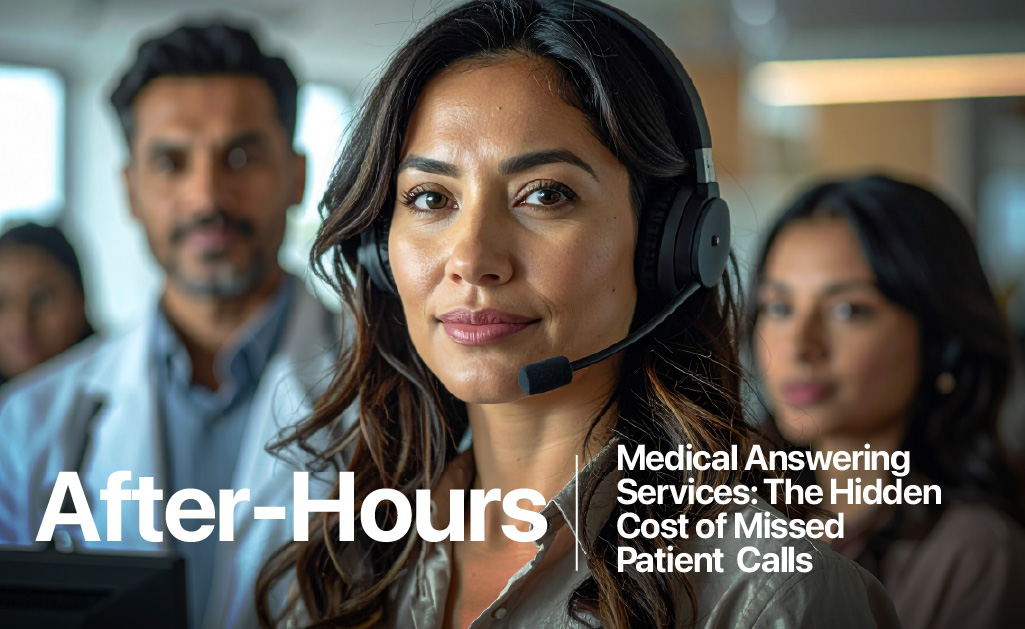
Is Your Voicemail Costing You Patients?
Why After-Hours Medical Answering Services Are Non-Negotiable
Discover how an after-hours medical answering service protects patient trust, prevents lost revenue, and delivers HIPAA-compliant care when your office is closed.
TL;DR — Quick Takeaways
- Voicemail is a liability: Missed after-hours calls result in lost revenue, patient churn, and increased risk.
- 24/7 access is expected: Patients increasingly seek care outside normal office hours.
- HIPAA compliance is mandatory: Secure escalation protocols and EHR access are non-negotiable.
- Nearshore outsourcing wins: Practices reduce costs by up to 60% while improving patient experience.
What happens when a patient calls your practice at 7 PM on a Tuesday? For too many, the answer is a frustrating, impersonal voicemail. It’s a tiny gap in your service that can have huge consequences, chipping away at patient trust, damaging your reputation, and hitting your bottom line where it hurts.
An after-hours medical answering service is more than just a call-forwarding setup; it’s a specialized, HIPAA-compliant extension of your front desk. Instead of a patient hitting a cold voicemail, a live, trained agent answers, ready to handle everything from urgent escalations to routine appointment scheduling.
Why After-Hours Patient Calls Can Make Or Break Your Practice
An unanswered call isn’t just a missed message. It’s a lost opportunity to provide care, build loyalty, and secure revenue.
The numbers are pretty telling. Research shows that 43% of patients start their search for a new healthcare provider after typical business hours. When those potential patients are met with a voicemail, a staggering 27% of them just hang up and never call back. For a small practice, losing just three of those callers a week can add up to over $40,000 in lost revenue every single year. You can dig into more of these healthcare call center statistics here.
The Real Cost of a Voicemail Box
Let’s be blunt: relying on a voicemail after hours sends a clear message to your patients: “We’re not here for you when you actually need us.” That feeling of unavailability doesn’t just erode confidence; it actively pushes patients toward your competitors who offer the 24/7 access they expect. The damage goes far beyond a few missed appointments.
Today, a professional after-hours medical answering service isn’t a luxury—it’s a core part of modern patient care. It turns a major vulnerability into a powerful engine for patient retention and practice growth.
The difference between a live answer and a voicemail is the difference between a retained patient and a lost one. Every after-hours call is a critical touchpoint that defines your practice’s commitment to patient care.
The table below breaks down exactly what’s at stake when a call goes unanswered after hours. It’s not just about missed messages; it’s about the real, tangible costs that can hold your practice back.
The Real Cost of a Missed After-Hours Patient Call
| Impact Area | Consequence for Your Practice |
|---|---|
| Direct Revenue | Immediate loss of appointment booking revenue. Patients who can’t reach you will simply book with another provider who answers the phone. |
| Patient Loyalty | Trust erodes quickly. Patients perceive a lack of access as a lack of care, making them more likely to switch practices permanently. |
| Practice Reputation | Negative online reviews often stem from poor accessibility. A single bad review about not being able to reach someone can deter dozens of new patients. |
| Medical Liability | A missed urgent call can lead to delayed care, potentially resulting in negative patient outcomes and increasing your practice’s liability risk. |
| Staff Burnout | In-house staff or on-call physicians become overwhelmed by non-urgent messages, leading to fatigue and reduced quality of care during business hours. |
| Competitive Disadvantage | Competitors offering 24/7 live answering services immediately appear more modern, accessible, and patient-focused, capturing market share you’re leaving on the table. |
Thinking about the strategic value of a medical call center is the first step toward building a more resilient, patient-focused practice. The right after-hours solution isn’t just an expense—it’s a direct investment in your practice’s long-term health and success.
How a Modern After-Hours Medical
Answering Service Actually Works
Forget the old idea of a disconnected, overseas call center. A top-tier after hours medical answering service isn’t just taking messages—it’s a deeply integrated and intelligent extension of your own front office. The entire process is a carefully designed workflow built to deliver precise, compassionate care the moment a patient calls.
Think of your office phone system like a smart traffic controller. When the office closes, it doesn’t just send calls to a dead-end voicemail. Instead, it seamlessly reroutes them to your answering service partner. This handoff is completely invisible to the patient, who is simply met with a prompt, professional greeting.
From that first “hello,” the entire call is guided by your practice’s unique DNA.
The Anatomy of an After-Hours Call
A highly trained agent—often bilingual—immediately pulls up a customized script and protocol built specifically for your practice. This isn’t some generic, one-size-fits-all script. The agent acts as your proxy, armed with the information needed to handle a huge range of scenarios with both empathy and accuracy.
Let’s walk through a real-world example:
A worried parent calls at 10 PM about their child’s high fever. Using your pre-approved script, the agent gathers the critical details: the child’s age, temperature, and any other symptoms. From there, the system uses your established protocols to determine the call’s urgency.
- Urgent Scenario: The agent sees this meets the criteria for an urgent escalation. They instantly connect the parent to the on-call physician through a secure, recorded line.
- Non-Urgent Scenario: A patient calls to reschedule an appointment. The agent accesses your scheduling software, finds an open slot, and books it in real-time, triggering an automated confirmation.

The Technology Behind the Empathy
Today’s best services are powered by technology that ensures every call is handled efficiently and compliantly. Every single action—from the initial greeting to the final resolution—is logged in a secure system. Detailed notes, call recordings, and outcomes are all captured and ready for your team the next morning. This creates a seamless handover, getting rid of the guesswork and administrative scramble that comes with a full voicemail inbox.
A modern answering service transforms a reactive voicemail system into a proactive patient care tool. It ensures that every call is an opportunity to strengthen patient trust, even when your office is dark.
This intelligent workflow is what makes a reliable after hours medical answering service tick. It’s a powerful blend of compassionate human interaction and smart technology, ensuring every patient feels heard, helped, and valued, no matter when they call. To see how this works in practice, you can learn more about our professional answering call service and its benefits.
Essential Features Your After-Hours Medical
Answering Service Must Have
Not all answering services are created equal, especially when patient health is on the line. Picking a partner for your medical practice isn’t like finding a generic virtual receptionist; it’s a decision that hits right at the heart of patient safety, data security, and your own team’s sanity.
A true healthcare partner is built on a foundation of specialized, non-negotiable features. Think of it like hiring a new team member. You wouldn’t bring someone on who couldn’t use your scheduling software or didn’t grasp the basics of patient privacy. The same logic applies here. The right features are what separate a basic message-taker from an integrated extension of your care team.

1. Ironclad HIPAA Compliance
Let’s get this out of the way first: this is the absolute baseline. The price of entry. Any service that handles Protected Health Information (PHI) must be rigorously compliant with the Health Insurance Portability and Accountability Act (HIPAA).
This goes way beyond a simple promise on a website. It demands tangible proof and battle-tested security protocols. A truly compliant service won’t hesitate to sign a Business Associate Agreement (BAA), which legally binds them to protect your patients’ data just as you do. Their agents should have continuous, documented training on privacy rules, and all their communication channels—from messaging to data transfers—must be secure and encrypted.
For a deeper dive, our guide on choosing a HIPAA-compliant call center unpacks all the critical requirements you should be looking for.
2. Seamless EHR and Scheduling Integration
A standalone answering service that just takes messages creates a pile of administrative work for your staff the next morning. A modern, effective service plugs directly into your existing Electronic Health Record (EHR) and appointment scheduling software. This is a total game-changer for efficiency.
Picture this: a patient calls at 9 PM to book their first appointment. Instead of an agent scribbling a note for your team, they access your live calendar, find an open slot that works for the patient, and book it in real-time. The patient gets an instant confirmation, and the appointment is already sitting in your EHR system when your team arrives. No more phone tag, no more backlog.
3. Customizable Escalation Protocols
Every practice has its own unique rhythm and its own definition of what constitutes an emergency. A one-size-fits-all approach to handling after-hours calls isn’t just inefficient; it can be downright dangerous. Your answering service absolutely must allow for fully customizable escalation protocols that you get to define.
This means you sit down with them and create clear, step-by-step instructions for different situations.
- Routine Inquiries: A question about office hours or directions gets logged for the morning staff to handle. Simple.
- Urgent Symptoms: A caller describing specific, pre-defined symptoms (like chest pain or a high fever in an infant) immediately triggers a live patch-through to the on-call physician. No delays.
- Prescription Refills: The agent gathers all the necessary info and sends a secure message to the right clinical staff queue.
These rules ensure that true emergencies get handled instantly while routine matters are managed efficiently, protecting your physicians’ time and focus.
Your answering service is the guardian of your practice after hours. The right features aren’t just about convenience; they are the bedrock of patient safety, data security, and operational excellence.
4. Bilingual and Culturally Competent Support
In today’s beautifully diverse communities, offering support in only one language is a huge barrier to care. A top-tier after hours medical answering service must provide bilingual agents who can communicate clearly and compassionately with both English and Spanish-speaking patients.
And this isn’t just about direct translation. It’s about cultural competence—understanding the nuances and providing genuine reassurance in a patient’s native language. When a worried parent can explain their child’s symptoms without struggling with a language barrier, it leads to better information gathering, more accurate triage, and a profoundly better patient experience. This single feature is essential for building trust and ensuring everyone in your community has equitable access to care.
In-House vs. Outsourced: A Strategic Decision
Deciding how to handle patient calls after hours is one of those crucial operational choices every medical practice has to make. Do you build your own in-house team, or do you find a specialized partner to handle it for you? While keeping it in-house sounds great for control, it often brings a mountain of financial and administrative headaches that most practices don’t see coming.
When you manage a 24/7 team yourself, you’re on the hook for everything. That means recruiting, hiring, and training overnight staff—a tough job in itself—plus paying salaries and benefits for enough people to cover every shift without burning them out. And don’t forget the technology investment. It’s not just about having someone by the phone; it’s about building an entire mini-department from the ground up, complete with its own compliance and quality checks.
For most practices, the sheer cost and complexity just aren’t sustainable. That’s exactly why bringing in an expert outsourced provider isn’t just an option—it’s a smart, strategic move.
The True Cost of Control
An in-house team might seem like the ultimate way to guarantee quality, but that control comes at a seriously high price. The salary for a single full-time agent is already a big line item, but you’ll need several to provide true 24/7/365 coverage. And that’s before you even get to the hidden costs.
These are the expenses that really add up:
- Technology and Infrastructure: You’re buying and maintaining the phone systems, the secure software, and all the hardware.
- Ongoing Training: HIPAA rules are always evolving, and your own protocols will change. This means constant, documented training that costs both time and money.
- Management Overhead: You need someone to manage schedules, track performance, and handle all the HR tasks for this new team.
Once you tally it all up, the financial and logistical weight can pull critical resources and focus away from what you do best: caring for patients.
The Nearshore Advantage for Your Medical Answering Service
This is where partnering with a nearshore after hours medical answering service, like a provider in Tijuana, really changes the game. You get the best of both worlds: a highly trained, professional team dedicated to your practice, but without the crippling overhead of building it all from scratch. Nearshore partners give you instant access to a bilingual talent pool that already knows the ins and outs of healthcare communication and HIPAA standards.
Outsourcing your after-hours support isn’t about losing control; it’s about gaining expertise. It allows you to focus on patient care while a dedicated partner handles patient communication with precision and professionalism.
This model flips a massive fixed expense into a predictable, scalable service. You dodge the nightmare of 24/7 staffing and instead get a partner whose entire business is built around delivering exceptional, compliant support. For healthcare organizations aiming to sharpen their operations, looking into the benefits of business process outsourcing in healthcare can unlock some serious savings and efficiency.
So, how do the two options really stack up? Let’s break it down head-to-head.
Comparing In-House vs. Nearshore Outsourced Answering Services
The table below gives you a clear, side-by-side look at the key factors you should be weighing when deciding between an in-house team and a nearshore outsourced partner.
| Factor | In-House Team | Outsourced Nearshore Partner (e.g., CallZent) |
|---|---|---|
| Cost Structure | High fixed costs (salaries, benefits, technology) and significant overhead. | Predictable, variable costs based on call volume. Reduces operational expenses by up to 60%. |
| Staffing & Scalability | Difficult to staff 24/7 shifts and scale for call volume spikes (like flu season). High turnover is common. | Instantly scalable. Access to a large, trained agent pool to handle any volume without service disruption. |
| Agent Training | The practice is solely responsible for all initial and ongoing HIPAA and skills training. | Agents receive rigorous, continuous training on HIPAA, medical terminology, and client-specific protocols. |
| Technology | Requires significant capital investment in phone systems, software, and secure infrastructure. | Leverages state-of-the-art call center technology without any capital expense for the practice. |
| Bilingual Support | Finding and retaining qualified bilingual agents can be extremely challenging and costly. | Access to a natively bilingual (English/Spanish) workforce is a core offering, ensuring equitable patient access. |
| Focus & Expertise | Diverts practice management focus from core patient care to call center operations. | Allows your practice to focus entirely on healthcare delivery while experts manage patient communication. |
When you look at the big picture, the choice becomes clearer. Outsourcing isn’t just a cost-cutting measure; it’s a strategic decision to bring in specialized expertise, improve scalability, and free up your team to concentrate on patient outcomes.
How to Choose The Right After-Hours Medical
Answering Service Partner
You know what features are non-negotiable. Now comes the hard part: finding the perfect partner to bring them to life. Picking a vendor for your after hours medical answering service is a massive decision, one that directly shapes patient trust and keeps your practice running smoothly after you’ve locked the doors. It’s time to look past the glossy brochures and start asking the tough questions that show what a provider is really made of.
This isn’t about hiring someone to just answer phones. You’re entrusting them with your patients’ well-being and your practice’s hard-earned reputation. A methodical vetting process is the only way to cut through the marketing fluff and find a partner who is genuinely committed to healthcare.
Evaluating Healthcare Experience and Specialization
Your very first filter should be industry expertise. A generic call center that juggles calls for plumbers one minute and e-commerce shops the next simply won’t grasp the urgency and sensitivity of a medical environment. You need a partner who lives and breathes healthcare.
When you’re talking to potential vendors, dig into their specific background:
- What percentage of your clients are in the medical field? A high number isn’t just a vanity metric; it signals a deep, practical understanding of healthcare workflows.
- Can you provide case studies or references from practices like ours? There is no substitute for talking to a current client to get the real story on performance and reliability.
- How do you train agents on medical terminology and empathy? Their answer here is incredibly telling. It reveals how serious they are about preparing agents for genuinely difficult and sensitive patient calls.
A provider that specializes in healthcare already has battle-tested systems for HIPAA compliance, urgent call handling, and compassionate communication. That means a faster, smoother, and much safer rollout for your practice.
Scrutinizing HIPAA Compliance and Security
As we’ve established, HIPAA compliance isn’t just a feature—it’s the foundation of everything. But don’t just accept a simple “yes, we’re compliant.” You need to see the proof in the pudding.
A potential partner’s hesitation to discuss their security protocols in detail is a major red flag. True compliance is built on transparency and verifiable processes, not vague assurances.
Demand clear, documented answers to these critical questions:
- Will you sign a Business Associate Agreement (BAA)? If they hesitate or say no, that’s your cue to end the conversation immediately.
- What are your data encryption standards for information both at rest and in transit? All patient data must be locked down with strong, modern encryption.
- Can you describe your agent training program for HIPAA and data privacy? This shouldn’t be a one-and-done session. Look for comprehensive, mandatory, and ongoing training.
- What physical security measures are in place at your call center facilities? This includes things like controlled access and surveillance to protect sensitive information on-site.
Choosing the right vendor takes a structured approach. For a more detailed roadmap, our article on how to find and vet the best call center outsourcing companies offers a valuable framework you can easily apply here.
Assessing Technology and Integration Capabilities
The right technology is what elevates an answering service from a glorified message pad into a powerful, integrated extension of your office. A partner worth their salt should be able to plug directly into your existing systems, especially your EHR.
Ask any potential vendor about their tech stack:
- Which EHR and practice management systems have you integrated with before? You’re looking for direct experience with your software or, at the very least, a proven track record of building new integrations smoothly.
- What is your process for creating custom scripts and call flows? Their platform needs to be flexible enough to bend to your specific protocols, not the other way around.
- Can we get a demo of your reporting and analytics dashboard? You must have clear visibility into call volumes, agent performance, and how quickly issues are being resolved.
A partner with robust, modern technology won’t just make your after-hours operations more efficient. They’ll give you the data you need to continuously fine-tune your entire patient communication strategy. By focusing on these three core pillars—healthcare expertise, ironclad compliance, and strong tech—you can confidently choose an after hours medical answering service that will become a trusted and invaluable asset to your practice.
Ensuring a Seamless Transition
To Your New Service
Switching your after-hours calls to a new answering service might feel like a huge project, but the right partner will make it a surprisingly smooth and structured process. The real goal here is to make the transition so seamless that your patients only notice a better experience, not a change in who’s answering the phone. Think of it as a partnership, one designed to build a system that feels like a natural extension of your practice.
Implementing an after hours medical answering service isn’t like flipping a switch. It’s a collaborative effort that begins long before the first call ever comes through. A dedicated onboarding specialist will work side-by-side with your team to learn the unique DNA of your practice—your tone, your priorities, and what your patients truly need.
The Onboarding Journey, Step-by-Step
A good implementation follows a clear, predictable path designed to eliminate surprises and ensure you’re ready from day one. It’s a carefully managed process that respects your time and operational demands, focusing on collaboration at every turn.
Here’s what that journey usually looks like:
- Discovery and Kickoff: This first meeting is all about getting on the same page. We’ll dig into your practice’s goals, patient demographics, and current communication headaches. This is where we learn what really makes your practice tick.
- Collaborative Scripting: Forget generic scripts. We’ll work together to craft custom call flows and responses that perfectly match your practice’s voice, ensuring every patient interaction feels authentic and familiar.
- Protocol Development: This is the nitty-gritty of mapping out your escalation procedures. We’ll define exactly what makes a call urgent versus routine and create clear, step-by-step instructions for our agents to follow in every possible scenario.
- Team Training and Integration: We’ll give your internal team a full rundown of the new process. This covers everything from managing on-call schedules to accessing reports and communicating with the answering service team, so everyone feels confident and looped in.
- Go-Live and Hypercare: On launch day, our teams will be watching call activity like a hawk. We provide “hypercare” support for the first few days to tackle any immediate issues and make real-time adjustments, guaranteeing a stable and successful start.
A successful transition is built on partnership. The provider’s job is to learn your practice so well that their agents become indistinguishable from your own highly trained front-office staff.
Practical Tips for a Flawless Launch
To make the transition even smoother, your practice can take a few simple steps to get ready. These proactive measures help sidestep common hurdles and ensure your new after hours medical answering service starts adding value immediately, without any disruption.
- Prepare On-Call Schedules in Advance: Have at least a month of your physician on-call schedule ready to go. This allows your new partner to program their system accurately from the get-go.
- Designate a Point of Contact: Assign one person from your team to be the main liaison during onboarding. This keeps communication centralized and decision-making efficient.
- Communicate Clearly with Your Staff: Hold a quick meeting to let your entire team know about the new service. Explain how it will benefit them (fewer interruptions, clearer messages) and what their role is in the new workflow.
By working together, we can ensure the transition isn’t a disruption but a powerful upgrade to your patient communication strategy.
FAQs About After-Hours Medical Answering Services
Deciding on an after hours medical answering service is a big step, even when you know all the benefits. It’s totally normal to have a few lingering questions. To give you that last bit of clarity, here are the answers to some of the most common things practice managers ask before they partner up.
How Can I Be Sure The Agents Are HIPAA Compliant?
This is the big one—and it’s a complete non-negotiable. Any service worth its salt invests heavily in rigorous, ongoing HIPAA training. Here at CallZent, for example, no agent touches a call until they’ve completed comprehensive training on patient privacy and data security.
We back that up with secure platforms, encrypted communication, and regular audits to make sure compliance is ironclad. When you’re talking to potential partners, don’t be shy: ask them to walk you through their specific training protocols, security measures, and confirm they’ll sign a Business Associate Agreement (BAA).
What Happens In A Real Medical Emergency?
This is where custom escalation protocols are absolutely essential. When we set you up, we work side-by-side with your team to define exactly what an emergency looks like for your practice and your patients. Our agents are trained to spot those urgent indicators based on the guidelines you provide.
The moment an emergency is flagged, they follow the script. That might mean instantly patching the caller through to the on-call physician, firing off a high-priority secure message, or advising the caller to dial 911. It’s all about making sure critical situations get the immediate, precise response they require.
Think of a well-defined escalation protocol as your practice’s safety net after closing time. It guarantees that urgent patient needs are met instantly, every single time, with no guesswork or delays.
How Much Is This Going To Cost?
Let’s cut to the chase: partnering with a service is almost always more affordable than hiring, training, and managing your own overnight staff. Pricing models can vary, but you’ll typically see flat monthly fees, pay-per-minute plans, or packages based on your expected call volume and the services you need.
A top-tier nearshore partner can offer huge savings—often up to 60%—compared to US-based services, without ever cutting corners on quality or compliance. We build transparent, custom quotes based on what your practice actually needs, so you get a solution that scales with you and fits your budget. It’s a smart way to turn a huge potential fixed cost into a predictable, manageable expense.
FAQs About After-Hours Medical Answering Services
1. Are after-hours medical answering services HIPAA compliant?
Reputable providers sign BAAs, encrypt all data, and maintain continuous HIPAA training for every agent.
2. What happens if a patient has a medical emergency?
Calls are immediately escalated according to your predefined protocols, including live physician patch-through when required.
3. Can agents schedule appointments directly?
Yes. Modern services integrate with your scheduling system to book appointments in real time.
4. Do answering services replace my front desk?
No. They act as an extension of your team, handling after-hours volume without disrupting daytime workflows.
5. Is bilingual support really necessary?
Yes. English–Spanish coverage significantly improves access, accuracy, and patient trust.
6. How quickly can a service be implemented?
Most practices can go live within days after scripts, protocols, and schedules are finalized.
7. How are calls documented?
Every call is securely logged with notes, timestamps, and outcomes for next-day visibility.
8. Is outsourcing more affordable than hiring staff?
Yes. Nearshore outsourcing typically reduces costs by up to 60% compared to in-house staffing.
9. Will patients know calls are outsourced?
No. Agents use your scripts and branding, presenting themselves as part of your practice.
10. What types of practices benefit most?
Primary care, specialty clinics, urgent care, and multi-location practices see the greatest impact.
🚀 Ready to Protect Patient Access After Hours?
CallZent delivers HIPAA-compliant, bilingual after-hours medical answering services built for modern healthcare operations.
Ready to provide exceptional care around the clock? CallZent offers a secure, bilingual, and cost-effective after hours medical answering service designed to integrate seamlessly with your practice. Learn more about how we can support your patients and your team today.