Skip to content

BPO Technology Services
Application Maintenance & Support: The Ultimate Blueprint for Future-Proofing Your Business
Application maintenance & support keeps your software secure, stable, and scalable—ensuring your business avoids downtime, protects revenue, and stays future-ready.
TL;DR — Quick Takeaways
- Application maintenance & support ensures your software remains stable, secure, and aligned with your business goals.
- The four key types—Corrective, Adaptive, Perfective, and Preventive—keep systems running now and prepare them for future demands.
- AI-powered predictive maintenance reduces downtime and eliminates expensive emergencies.
- Nearshore support offers a strategic advantage with real-time collaboration, specialized talent, and cost efficiency.
What happens when the custom software your business leans on suddenly goes dark? It’s more than a simple headache—it’s a direct hit to your revenue and the trust you’ve built with your customers. In a nutshell, application maintenance & support is the essential service that keeps your software running smoothly, securely, and efficiently long after the initial launch, ensuring your technology remains a powerful asset, not a costly liability.
The Hidden Engine Driving Your Business
Think of your most important business tools—your CRM, inventory system, or customer portal—as the engine in a high-performance car. When it’s purring along, your business moves forward, fast and powerful. But what happens when that engine starts to sputter, leak oil, or just die? The whole vehicle grinds to a halt.
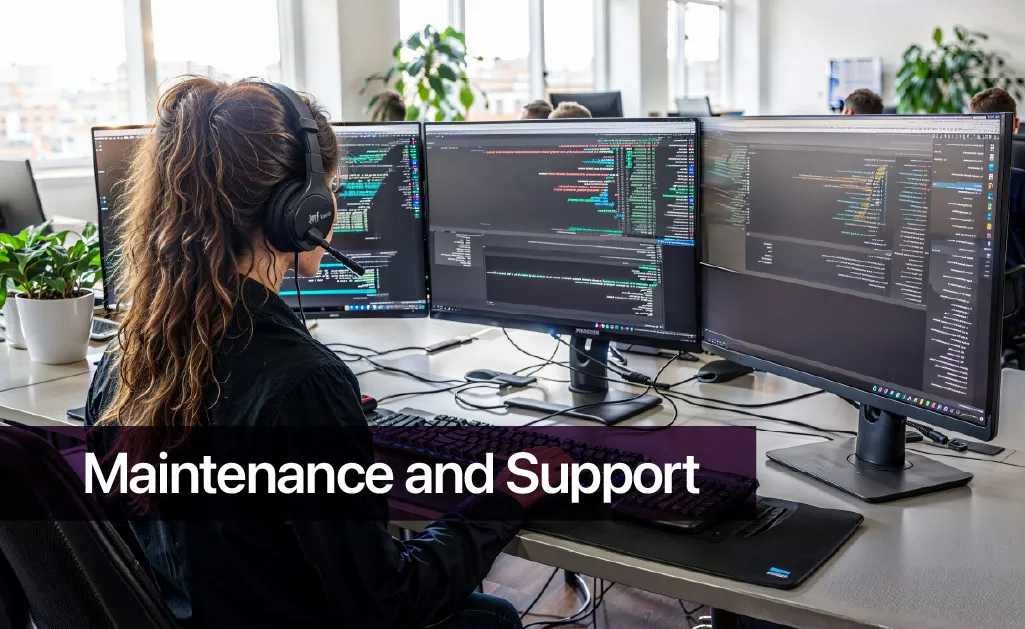
Application maintenance and support is that expert mechanic for your digital engine. It’s a continuous process built not just to fix things when they break but to stop them from breaking in the first place. This isn’t just about reactive troubleshooting; it’s a strategic function that makes sure your tech investments keep delivering value for years. For example, a retail company might rely on an e-commerce platform. Proactive maintenance ensures that platform can handle a sudden surge in traffic during a holiday sale without crashing, protecting thousands in potential revenue.
Why Application Maintenance & Support is More Than a Fix-It Service
Done right, application maintenance is a proactive strategy that directly beefs up your bottom line. It’s about future-proofing your operations and staying sharp in a market that never sits still. Without it, even the most brilliant software will eventually turn into a liability.
This comprehensive approach covers several key areas that protect and grow your business:
- Protecting Revenue Streams with Application Maintenance: Every minute your application is down, you’re likely losing sales and frustrating customers. Proactive maintenance slashes downtime, keeping your money-making platforms online and available.
- Maintaining Customer Trust: A buggy or slow app kills user confidence. Solid performance and quick fixes are non-negotiable for building and keeping customer loyalty.
- Securing a Competitive Edge: As markets and tech evolve, your applications have to keep up. Maintenance ensures your software can handle new features, comply with updated regulations, and scale right alongside your business.
“Neglecting application maintenance is like buying a new car and never changing the oil. It will run for a while, but a catastrophic failure is inevitable.”
Ultimately, investing in robust application maintenance & support isn’t optional—it’s a core business strategy. It’s the difference between a technology asset that pushes your company forward and a ticking time bomb of technical debt. This commitment ensures your systems aren’t just running, but are truly optimized for performance, security, and growth. For a deeper look at structuring these services, our guide on SaaS help desk solutions offers practical insights for building smarter support frameworks. This proactive mindset transforms a reactive cost center into a powerful engine for sustainable growth.
Understanding the Four Types of Application Maintenance
Not all application maintenance & support is the same. To build a software strategy that lasts, you have to realize that different problems demand different solutions. It helps to think of your business-critical software like a high-performance car; you wouldn’t use the same tools to fix a flat tire as you would to upgrade the engine for better fuel economy.
The same logic applies to your applications. A truly effective maintenance plan doesn’t just put out fires—it also invests in future performance. This forward-thinking approach is what separates a world-class support strategy from a basic break-fix service. The market certainly sees the value, with global spending on application support services hitting around USD 40.3 billion in 2023 and on track to more than double by 2033. Discover more market growth insights from DataHorizzon Research.
This chart shows how robust application support acts as the central engine driving critical business outcomes like revenue, customer trust, and a real competitive edge.
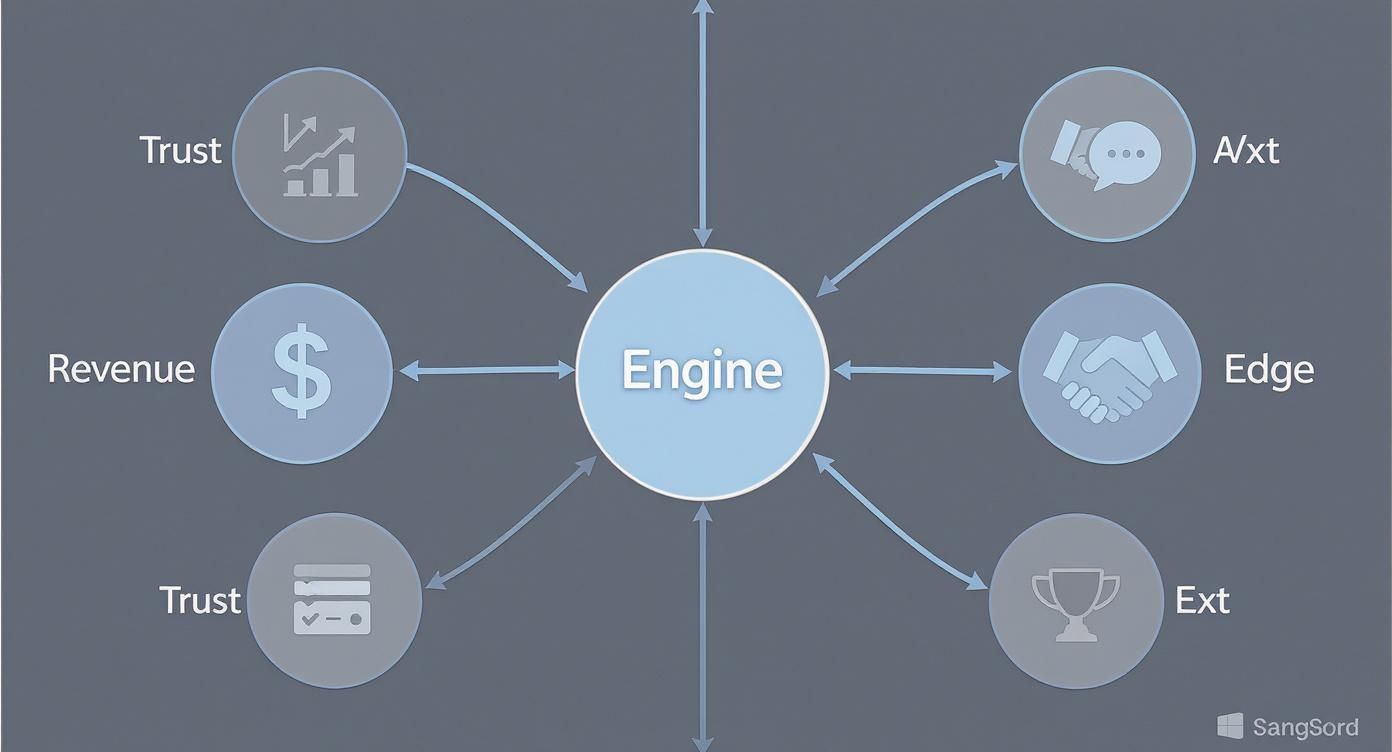
As you can see, a well-maintained application isn’t just a technical asset. It’s the core of your business, directly fueling everything from customer loyalty to your bottom line.
To get there, you need a strategy that covers all four key types of maintenance.
A Practical Guide to the Four Types of Application Maintenance
Each maintenance type plays a unique role in keeping your software healthy, relevant, and powerful. Let’s break down what they are, what they do, and why each one matters for your business.
| Maintenance Type | Core Purpose | Example Activities | Business Impact |
|---|---|---|---|
| Corrective | Fixing what’s broken—now. | Debugging code, patching security vulnerabilities, resolving system crashes, fixing broken integrations. | Minimizes Downtime: Keeps core operations running and prevents immediate revenue loss. Restores user trust quickly. |
| Adaptive | Keeping up with a changing world. | Updating for new OS versions, modifying for new regulations (like GDPR), integrating with new third-party APIs. | Ensures Compliance & Compatibility: Avoids legal penalties and ensures the app works with the modern tech stack users expect. |
| Perfective | Making a good thing even better. | Improving UI/UX based on feedback, optimizing code for speed, enhancing existing features, refactoring legacy code. | Boosts User Satisfaction: Leads to higher adoption, better reviews, and increased loyalty by making the app more efficient and enjoyable. |
| Preventive | Stopping problems before they start. | Code refactoring to reduce complexity, database optimization, updating documentation, stress testing systems. | Reduces Future Costs: Lowers the number of future corrective issues and extends the application’s lifespan, delivering higher long-term ROI. |
By understanding these distinctions, you can build a balanced support plan that addresses both immediate needs and long-term goals, ensuring your software investment pays dividends for years to come.
Corrective Maintenance: The Emergency Fix
Let’s start with the most urgent one. Corrective maintenance is purely reactive. It’s the digital equivalent of calling a tow truck when your car breaks down on the highway. This is all about fixing bugs, errors, and defects that are actively messing with your users and business operations.
For instance, imagine your e-commerce site’s checkout button suddenly dies during a Black Friday sale. The corrective maintenance team is the emergency crew that swoops in, finds the bad code, deploys a hotfix, and gets the payment system back online ASAP to stop the bleeding. This type of rapid-response support is absolutely critical, and it’s why our teams often become the backbone of a company’s IT help desk solutions.
Adaptive Maintenance: Adjusting to a Changing World
The digital world never sits still, and your application can’t afford to, either. Adaptive maintenance is about modifying your software so it stays compatible with new operating systems, updated hardware, or different third-party services. It’s like retrofitting your classic car to meet new emissions standards or installing a new stereo that connects to the latest smartphones.
A perfect real-world example is what happens when a new data privacy law like GDPR or CCPA comes into effect. An adaptive maintenance team would go in and update a retail app’s data collection processes and user consent forms to ensure it’s fully compliant, steering the business clear of huge fines and protecting customer trust.
Perfective Maintenance: Fine-Tuning for Peak Performance
This is where you go from good to great. Perfective maintenance is proactive work focused on making your application better based on user feedback and evolving business goals. It’s about refining features, improving the user experience (UX), and boosting overall performance. Think of it as tuning your car’s engine for more horsepower or upgrading the suspension for a much smoother ride.
Say a logistics company gets feedback that its inventory tracking dashboard is slow and clunky. A perfective maintenance team would analyze the system, optimize the database queries, and redesign the user interface to make it faster and more intuitive for the warehouse managers who use it every day.
Preventive Maintenance: The Routine Check-Up
Finally, we have the most proactive type of all. Preventive maintenance involves all the routine activities you do to stop problems from ever happening. This is your scheduled oil change, tire rotation, and system inspection—small, regular efforts that prevent a catastrophic failure down the road. In software, this looks like code optimization, database cleanup, or updating documentation.
The greatest ROI in application maintenance doesn’t come from fixing what’s broken, but from preventing it from breaking in the first place. A strategy that prioritizes preventive and perfective work is an investment in long-term stability and growth.
By weaving all four types together, you create a complete application maintenance & support strategy. This balanced approach ensures your software is not just stable and reliable today, but also agile and powerful enough to crush the demands of tomorrow.
The Blueprint for World-Class Application Support
Great application maintenance & support doesn’t just happen. It’s a well-oiled machine, a structured process that transforms chaos into order and problems into solutions. While average support teams are stuck chasing tickets, top-tier partners follow a proven blueprint. This ensures every issue is handled with precision, speed, and total transparency.

This blueprint is about more than just fixing bugs; it’s about building trust and protecting your operations. Let’s walk through the journey of an issue, from the moment it’s flagged to its final resolution. You’ll see how a structured process stops minor glitches from snowballing into major business disasters.
The Support Journey From Ticket to Resolution
Picture this: your e-commerce site’s payment gateway suddenly fails. Panic sets in as sales grind to a halt. In a disorganized environment, this scenario triggers a storm of frantic emails and utter confusion. But with a professional support process, here’s how it should unfold:
- Ticket Logging and Triage: The instant the issue is reported, a ticket is created in a central system. It’s immediately triaged—sorted by severity (a critical payment failure versus a minor UI typo) and assigned to the right expert. No guesswork.
- Investigation and Diagnosis: The assigned technician gets to work, replicating the error to understand exactly what’s happening. They dig into logs, check recent code changes, and test system integrations to pinpoint the source of the problem.
- Root Cause Analysis (RCA): This is where true expertise makes all the difference. Instead of just slapping on a quick patch, a great support team performs a root cause analysis (RCA). Was it a recent update? A change in a third-party API? Getting to the why prevents the same issue from popping up again next week.
- Resolution and Deployment: With the cause identified, a fix is developed, thoroughly tested in a safe environment, and only then deployed to the live application.
- User Confirmation and Closure: The support team follows up with the person who first reported the issue to confirm it’s fully resolved. The ticket is only closed once they get the all-clear.
This structured workflow turns a potential crisis into a controlled, predictable process.
The Power of Service Level Agreements (SLAs)
How can you be sure your support partner will respond with the right level of urgency? The answer is a Service Level Agreement (SLA). An SLA is more than just a document; it’s a formal contract that lays out the expected level of service with specific, measurable targets.
“An SLA isn’t just a document; it’s a promise. It defines expectations for response times, resolution times, and system uptime, holding your support partner accountable for delivering results that matter to your business.”
For that e-commerce site with the broken payment gateway, a strong SLA would be a lifesaver. It might guarantee that a “critical” issue like this gets a first response within 15 minutes and a full resolution within one hour. This contractual obligation is what prevents lost sales and protects your reputation. You can dig deeper into how these agreements work by exploring these Service Level Agreement best practices.
Building a Shared Knowledge Base
Excellent support teams don’t just solve problems—they learn from them. Every resolved ticket becomes a new entry in a shared knowledge base. Think of it as an internal library of solutions, workarounds, and best practices, and it’s incredibly valuable.
- Faster Resolutions: When a similar problem comes up later, technicians can quickly find a proven fix, slashing downtime.
- Consistent Service: It ensures every team member provides the same high-quality answers and solutions.
- Empowers Users: A public-facing version can help users solve common issues on their own, cutting down on the number of new support tickets.
The demand for these structured services is exploding. The global application maintenance services market was valued at around USD 15 billion in the early 2020s and is on track to hit USD 22 billion within five years. This growth is fueled by businesses realizing that professional, ongoing support is non-negotiable for their digital systems.
Ultimately, this blueprint—a clear process, binding SLAs, and a shared knowledge base—is what separates a truly competent application maintenance & support partner from the rest. It provides the structure needed to keep your technology running flawlessly, so you can focus on what you do best: growing your business.
The Future of Maintenance with AI and Predictive Support
The old ‘break-fix’ model of IT support is officially on its way out. Why wait for a critical system to crash during your busiest hours when you can see the failure coming and stop it before it ever happens? That’s the real power of bringing artificial intelligence and automation into modern application maintenance & support.
Instead of just reacting to problems after the fact, smart strategies now use AI-powered tools to get ahead of them. Think of these systems as a 24/7 watchtower, constantly scanning performance data for the tiny warning signs that pop up long before a catastrophic outage.
This proactive stance is a total game-changer for business continuity.
Shifting from Reactive to Predictive Maintenance
Predictive maintenance is all about using AI and machine learning to sift through mountains of historical data, system logs, and real-time performance metrics. By spotting patterns a human would never catch, these systems can forecast potential issues with shocking accuracy.
Let’s say your company relies on a critical financial reporting application. An AI monitoring tool might notice that a specific database query has been getting slower and slower over several weeks. It’s not causing a problem yet, but the AI flags it, predicting it will likely crash the whole system during the high-stress, month-end closing process.
“AI doesn’t just make support faster; it makes it smarter. By predicting failures before they impact users, businesses can transform maintenance from a reactive cost center into a strategic tool for ensuring uptime and protecting revenue.”
This shift from putting out fires to preventing them is a core trend sweeping the industry. The latest developments in application maintenance show a clear move toward predictive analytics and automation to make IT operations more productive. This approach lets IT teams solve problems before users are even aware of them, which drastically cuts downtime and keeps everyone happy. You can read more about these trends on IT-Robes.com.
The Role of Automation in Modern Support
While predictive analytics helps you dodge the big disasters, automation is what tames the endless flood of routine tasks. When you automate the repetitive-but-necessary jobs, you free up your most valuable asset: your people.
Your skilled technicians can finally stop chasing down low-level tickets and start focusing on the complex, high-impact challenges that actually move your business forward. Here’s a quick look at how automation gets it done:
- Automated Issue Detection and Resolution: AI can keep an eye on system logs and user feedback around the clock. The moment it spots an anomaly, like a weird spike in server errors, it can automatically trigger a fix—like restarting a service or rerouting traffic—all without a human lifting a finger.
- Automated Patch Management: Forget manually tracking and deploying security patches. Automation can spot vulnerabilities, test the updates in a safe environment, and then roll them out systematically. Your applications stay secure with almost zero manual effort.
- Intelligent Ticket Routing: When a new support ticket comes in, AI can analyze its content and instantly send it to the technician with the perfect skill set to solve it, slashing initial response times.
By bringing these intelligent systems into the fold, businesses can hit a whole new level of reliability and efficiency. This is a huge reason why understanding the role of predictive analytics in customer retention is so vital for modern BPO strategies. Here at CallZent, we see this tech evolution as a massive opportunity to deliver better outcomes, using smart tools to ensure our partners’ applications aren’t just running—they’re running at their absolute best.
Why Nearshore Outsourcing Is Your Strategic Advantage
Choosing the right partner for application maintenance & support isn’t just about crunching numbers; it’s a strategic move that can define your company’s trajectory. While keeping things in-house has its merits, outsourcing often unlocks a level of efficiency, talent, and scale that’s tough to achieve on your own.
But here’s the thing: not all outsourcing is created equal. The real game-changer isn’t just outsourcing—it’s where you outsource. And that’s where a nearshore partner makes all the difference.
Nearshore outsourcing—working with a provider in a nearby country, like our teams at CallZent in Tijuana, Mexico—delivers a potent mix of benefits that traditional offshore models just can’t replicate. It’s less about offloading tasks and more about gaining a true extension of your team.
Access Specialized Talent Without the Headaches
Let’s be honest, finding, hiring, and keeping top-tier tech talent is a nightmare. It’s an expensive, time-consuming grind. The competition is relentless, and the best engineers come with price tags that can make a CFO sweat.
Nearshore outsourcing is your shortcut. You get immediate access to a deep pool of skilled, vetted professionals without the endless recruitment cycle.
Instead of burning months trying to find a single developer, you can tap into a ready-made team that already knows your tech stack. This frees up your core team to stop fighting fires and get back to what they do best: driving innovation and building what’s next.
Real-Time Collaboration Thanks to Time-Zone Alignment
One of the biggest killers of productivity with traditional offshore outsourcing is the time-zone gap. When there’s a 12-hour difference, your teams are like ships passing in the night. An urgent bug reported at 9 AM your time might not even get a first look until you’re heading home for the day. Those delays are crippling.
Nearshore partners, on the other hand, work when you work. They’re in the same or a very similar time zone, and that alignment is everything.
- Instant Communication: Questions get answered in minutes, not after an overnight wait.
- Seamless Meetings: You can actually schedule a 10 AM meeting and have everyone show up, fresh and ready to go.
- Agile Development: Real-time collaboration is the bedrock of agile workflows. Daily stand-ups and quick pivots become effortless.
This kind of immediate connection removes all the friction and fosters a genuine sense of one unified team, all pulling in the same direction.
“The greatest benefit of nearshore is shared daylight. When your support team works when you work, problems are solved faster, projects move forward without delay, and a true partnership can flourish.”
The Unmatched Value of Cultural Affinity
Great application maintenance & support is built on clear communication. It’s about more than just understanding the words; it’s about understanding the context. Nearshore partners, especially those in places like Tijuana, share a close cultural affinity with the U.S. market.
This translates to smoother conversations, fewer “lost in translation” moments, and a team that just gets your business and what your customers expect. For a deeper look at these strategic differences, comparing nearshore and offshore outsourcing can really clarify which model is the right operational fit. At the end of the day, cultural and geographic proximity help build stronger, more intuitive working relationships.
Real-World Example: A Healthcare Provider’s Success with Nearshore Support
Picture a U.S.-based healthcare company launching a new patient portal. It’s a complex app, and users are going to need solid support. By partnering with a nearshore team in Tijuana, they get instant access to bilingual (English and Spanish) support specialists who already understand the cultural nuances of their diverse patient base.
The result? Patients get clear, empathetic help in the language they’re most comfortable with. This drives up adoption rates for the new portal and gives patient satisfaction scores a massive boost. Trying to replicate that level of service with a distant offshore team or a purely in-house model would be incredibly difficult and far more expensive.
When you look past the simple cost-per-hour, it’s obvious that nearshore outsourcing is a powerful strategic play. It hits the sweet spot between cost-effectiveness, elite talent, and seamless collaboration. For any business ready to level up its operations, exploring the benefits of nearshore outsourcing is the first step toward smarter, more effective application support.
How to Choose the Right Application Support Partner
Picking the right partner for your application maintenance & support is one of the most critical strategic moves you’ll make. This isn’t just about outsourcing a task; it’s about finding an extension of your team. The right choice can supercharge your daily operations, boost customer satisfaction, and clear the path for long-term growth. Get it wrong, and you’re looking at constant friction, risk, and headaches.
To find that perfect fit, you have to look past the sales pitch. It’s about asking the hard, insightful questions that cut to the chase and reveal a provider’s true capabilities and commitment.
Evaluating Technical Expertise and Industry Experience
Technical skill is table stakes, but generic expertise just won’t cut it. Your partner needs deep, battle-tested experience with your specific tech stack and in your industry. A team that’s a rockstar at supporting retail e-commerce apps might be completely lost when it comes to the unique compliance and security demands of a healthcare platform.
Start digging with pointed questions to see how deep their knowledge really goes:
- Technology Stack Proficiency: “Walk me through your team’s experience with [name your specific technologies, e.g., AWS, Salesforce, specific programming languages]. Where have you seen it go wrong for others?”
- Industry-Specific Challenges: “What are the most common support nightmares you’ve solved for other companies in the [your industry] space?”
- Scalability and Future-Proofing: “How do you make sure the fixes you put in place today won’t break as we grow over the next three to five years?”
You’re listening for confident, specific answers backed by real-world stories. Vague, hand-wavy responses are a massive red flag.
Assessing Security and Communication Protocols
In today’s world, top-notch security isn’t a feature—it’s the absolute baseline. This partner will have the keys to your kingdom, so their security posture needs to be flawless. Look for formal commitments like an ISO 27001 certification, which shows they take information security management seriously.
Just as important is how they communicate. When something inevitably breaks, you need clear, consistent, and brutally honest updates.
“A great support partner doesn’t just fix problems; they communicate proactively. Their ability to document knowledge, escalate incidents logically, and provide clear updates is as critical as their technical skill.”
Here are the non-negotiable questions to ask:
- Incident Escalation Process: “Talk me through your exact process for escalating a critical incident. Who gets called at 3 a.m., and how do we know what’s happening from start to finish?”
- Knowledge Management: “How do you document solutions and share that tribal knowledge across your team? We need consistent service, not one hero who knows everything.”
- Reporting and Transparency: “What kind of performance dashboards will we see? How often are we sitting down to review metrics and talk about what’s working and what’s not?”
A solid partner will have well-defined, documented processes for all of this. If you’re considering bringing in outside help, this complete guide to choosing an IT outsourcing company offers more great insights on vetting potential partners.
Ultimately, choosing a partner for application maintenance & support comes down to finding a team that gets your operational rhythm and plugs into your strategic goals. At CallZent, we build our partnerships on a bedrock of technical excellence, transparent communication, and a genuine understanding of the industries we serve. If you’re ready to find a support partner that truly feels like part of your team, we’re here to help. Contact us today to discuss how we can keep your applications running flawlessly.
Common Questions About Application Maintenance and Support
Even with the best strategy in place, a few questions always pop up around the nitty-gritty of application maintenance & support. Getting these cleared up from the start helps everyone see the real value of bringing in a professional team. Here are the straight answers to the questions we hear most often.
What Is the Difference Between Application Maintenance and Support?
It’s pretty simple when you boil it down: maintenance is proactive, and support is reactive.
Think of application maintenance as the scheduled tune-ups for your car—oil changes, tire rotations, and system checks. It’s all the planned work like updates, performance tuning, and security patches designed to stop problems before they start. It keeps the software healthy and improving.
Application support, on the other hand, is your roadside assistance. It’s the on-demand help desk that gets your users back on track when they hit a bump in the road, answering their questions and fixing issues so they can stay productive. A solid strategy needs both working together.
How Do You Calculate the True Cost of In-House Versus Outsourced Support?
Figuring out the true cost of an in-house team means looking way beyond salaries. To get the full picture, you have to add up all the extras: the cost of recruiting, constant training, benefits, software licenses, new hardware, and the management time it takes to oversee everything. Outsourcing gives you a clear, predictable monthly fee that’s spelled out in a service level agreement (SLA).
When you’re comparing the two, don’t forget the “hidden costs” of keeping it all in-house. Things like staff turnover, the headache of trying to provide 24/7 coverage, and—this is a big one—the opportunity cost of pulling your top developers off innovative projects to fix routine bugs. More often than not, outsourcing reveals a much lower Total Cost of Ownership (TCO).
What Key Metrics Should I Track for Application Support Services?
You can’t improve what you don’t measure. To really know if your application maintenance & support services are hitting the mark, you only need to focus on a handful of key performance indicators (KPIs). Tracking the right metrics gives you a clear, data-driven view of how your partner is performing and how healthy your applications are.
Here are the essential metrics to watch:
- For Support: First Response Time, Average Resolution Time, Ticket Volume, and Customer Satisfaction (CSAT) scores. These tell you how fast and effective your team is.
- For Maintenance: Application Uptime, Mean Time Between Failures (MTBF), and the number of critical bugs that slip through after a release. These show you how stable and reliable your systems are.
This data is your window into efficiency, user happiness, and system stability. It’s how you make sure you’re getting the value you paid for.
🚀 Future-Proof Your Software with CallZent
Keep your applications secure, stable, and ready for what’s next. Partner with CallZent’s nearshore experts for world-class application maintenance & support.
Ready to build a support strategy that drives growth and eliminates technical headaches? CallZent provides expert, nearshore application maintenance and support services designed to keep your critical systems running at peak performance. Discover our solutions today.