Skip to content

BPO Call Centers: Smart Outsourcing for Growth
Learn how a BPO call center saves costs, scales fast, and delivers exceptional customer service while freeing your team to focus on growth.
TL;DR: Your Quick Guide to BPO Call Centers
- What is a BPO Call Center? A BPO call center manages all your customer interactions, inbound and outbound.
- Why use one? Cost savings, access to experts, scalability, and focus on growth.
- How it works: Discovery → choosing model (onshore, offshore, nearshore) → seamless onboarding.
- The future is tech: AI, automation, and analytics make agents faster and smarter.
- Choosing a partner: Prioritize expertise, tech stack, and compliance (SOC 2, PCI).
👉 Discover how CallZent builds custom-fit BPO service solutions that help your business scale with confidence.Ever wondered how fast-growing companies manage to provide stellar, around-the-clock customer service without blowing their budget? The secret often lies in a strategic partnership with a BPO call center.Think of it as a dedicated extension of your team, built specifically to manage customer communications. It’s a powerful engine for business growth, handling everything from phone calls and emails to live chat. Partnering with the right BPO isn’t just about cutting costs; it’s about gaining a competitive edge by delivering an exceptional customer experience.
What Is a BPO Call Center, Really?
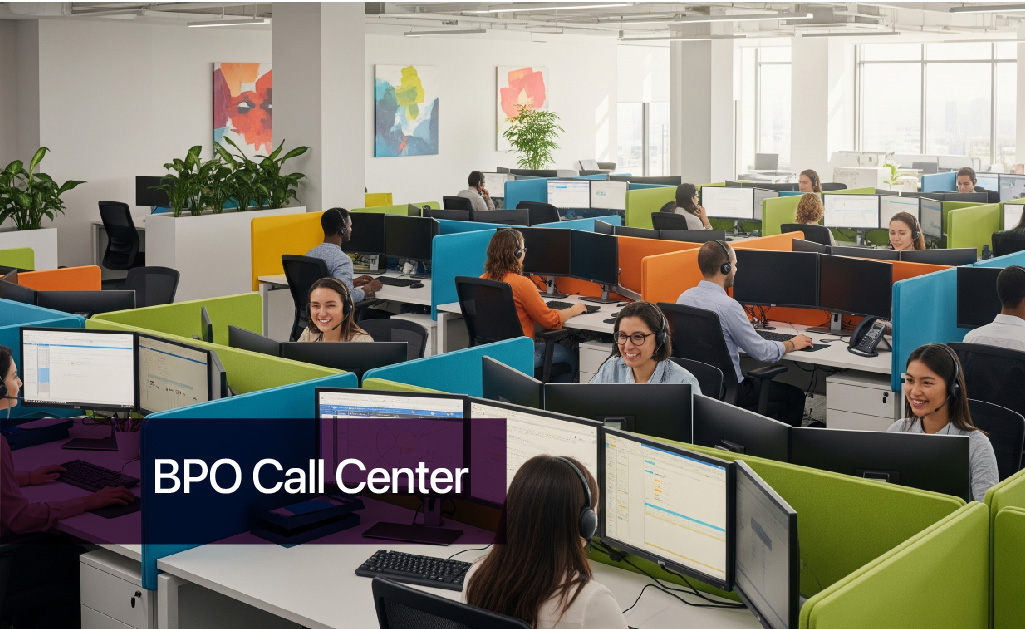
A Business Process Outsourcing (BPO) call center is a specialized company you hire to manage all your customer interactions. Instead of building an entire customer service department from scratch—which is incredibly expensive and time-consuming—you partner with an expert team. They already have the infrastructure, trained agents, and proven strategies ready to go.It’s like plugging a world-class customer experience team directly into your operations.This isn’t just about answering phones anymore. The global call center industry is booming, hitting a value of roughly US$340 billion in 2020 and projected to climb to nearly US$496 billion by 2027. This growth is driven by one thing: the increasing need for efficient, expert support. A modern BPO call center is a true multi-channel communications hub.
Core Functions: What a BPO Call Center Handles
So, what exactly can a BPO call center do for your business? Their services are typically broken down into two main categories that cover the entire customer lifecycle.
- Inbound Services: This is all about responding to customer needs. When a customer reaches out, your BPO partner is there to help. This includes technical support, handling billing questions, processing orders, and general customer service. For example, when a customer calls your support line with a product issue, an inbound agent from your BPO partner is the one who calmly resolves it.
- Outbound Services: This is the proactive side. Here, agents initiate contact with customers or prospects to drive business goals. Think lead generation, telemarketing, setting appointments, and conducting customer satisfaction surveys. An e-commerce brand might use an outbound team to follow up on abandoned shopping carts, turning a potential lost sale into a completed purchase.
Ultimately, the goal is to manage every one of these interactions seamlessly, making sure every customer feels heard, valued, and supported.
“Your BPO partner becomes the voice of your brand. Choosing one that represents you with excellence isn’t just an operational decision—it’s a strategic one.”
Fostering a Customer-Centric Culture in Your BPO Call Center
At its core, building a customer-centric culture means putting your customers’ needs and satisfaction at the heart of every interaction. In a BPO call center environment, this goes far beyond reading from scripts or following checklists. It’s about empowering agents to actively listen, empathize, and resolve issues with genuine care—every single time.
A truly customer-focused team is motivated to go the extra mile, whether that’s patiently walking a frustrated caller through a tech fix or picking up on subtle cues that reveal what a customer really needs. Training programs from global leaders like Zendesk and Genesys offer tools to help agents sharpen their communication and problem-solving skills, but it’s the daily encouragement from leadership that makes empathy and initiative the new normal.
When your call center culture champions excellent service, customers feel valued and heard. The result? Stronger loyalty, positive reviews, and a reputation for service that sets your brand apart.”
For U.S. businesses, nearshoring to bilingual teams in places like Mexico offers a massive advantage. You get the cost-efficiency of outsourcing combined with the benefits of cultural alignment and time zone compatibility. This strategic move ensures your customers receive top-tier support from agents who genuinely understand their needs.By handing off these tasks, you free up your internal teams to focus on what they do best: core business activities like product development and market expansion. Learn more about our approach to customized service solutions designed for growth.
How a BPO Call Center Partnership Works
Think about setting up a top-tier customer support department from scratch. You could find the space, buy the equipment, hire every single person, and manage the whole project yourself. Or, you could bring in a specialized firm that already has the blueprints, the pro-grade tools, and a team of seasoned experts ready to go. That’s exactly what a BPO call center partnership feels like.It’s a structured journey, moving from an initial chat to a fully humming, integrated support team that acts like it’s been part of your company all along. The whole process is built on collaboration to make sure the final setup doesn’t just work, but works perfectly for your business goals.

Step 1: The Initial Discovery and Needs Analysis
It all starts with a deep dive into your business. A good BPO partner won’t just ask about call volume; they’ll want to understand your challenges, your big-picture goals, and who your customers really are. The goal is to figure out what a “win” looks like for every single customer interaction.During this phase, you’ll tackle key questions together:
- What are your primary goals? Are you trying to slash wait times, boost first-call resolution rates, or finally offer true 24/7 support?
- Who is your ideal customer? Understanding their expectations and communication preferences is everything.
- What’s your current tech stack? The BPO needs to know about your CRM, ticketing platforms, and other software to ensure a perfectly smooth integration.
But don’t just stop there. Take a close look at your current customer support operation—identify pain points like high costs, limited hours, long wait times, or lack of multilingual support. Be specific about what you want to solve, and clearly define your business objectives. This clarity will guide whether outsourcing is the right fit and what kind of solution will actually move the needle.
For example, a fast-growing SaaS company might need agents who can walk users through tricky software bugs. An e-commerce brand, on the other hand, would need a team that excels at managing orders and handling returns with a friendly, human touch. This analysis ensures the solution is built for you, not for some generic company.
Step 2: Evaluating What to Outsource and Choosing the Right BPO Operational Model
With a clear picture of your needs, it’s time to decide not only what you want to outsource, but how you want to do it. Not every support function needs to be handed off on day one. Maybe you start with tier-1 support, after-hours calls, or seasonal overflow. Consider which channels you need help with—phone, email, chat, or social media—and which are best kept in-house for now.
Once you’ve mapped out what to delegate, the next move is picking an operational model. Where your team is physically located makes a huge difference in cost, communication flow, and cultural connection. There are three main models to consider for your BPO call center:
- Onshore: The call center is in the same country as your business. This provides perfect cultural and language alignment but almost always comes with the highest price tag.
- Offshore: The team is in a distant country, often halfway around the world in places like India or the Philippines. This model delivers the biggest cost savings but can create headaches with time zones and cultural disconnects.
- Nearshore: The call center is in a neighboring country—for U.S. businesses, this usually means Mexico. This model hits the sweet spot, offering major cost reductions while keeping teams in the same time zone and ensuring strong cultural affinity.
For a growing number of U.S. companies, nearshoring is the clear winner. You get the financial perks of outsourcing combined with the practical upside of a team that works when you work and genuinely gets your customers.
A well-executed BPO partnership isn’t about offloading tasks; it’s about gaining a strategic ally dedicated to enhancing your customer experience and driving business growth.
Step 3: Calculating Costs, Defining KPIs, and Onboarding for Seamless Integration
Before you sign on the dotted line, don’t just look at the sticker price. Compare the total cost of running your call center in-house—including staffing, training, equipment, and management—with the cost of outsourcing. Factor in hidden expenses like onboarding, tech integration, and ongoing quality assurance. Estimate the potential return on investment: What will outsourcing do for your efficiency, customer satisfaction, and ability to scale?
Once you’ve chosen a model, your BPO partner kicks off the most important phase: onboarding. This is where they build your dedicated team from the ground up and plug it directly into your existing operations. A premier BPO handles it all—from recruiting the right talent to putting them through intensive, brand-specific training.
Agents aren’t just handed a script. They go through deep-dive training on your products, your brand voice, and your company’s core values. They become experts in your CRM and other systems, so from day one, they can pull up customer histories and provide support that feels personal and informed.
At this stage, it’s also crucial to set up clear lines of communication and define Key Performance Indicators (KPIs) that matter most to your business—think Average Handle Time (AHT), First-Call Resolution, and Customer Satisfaction (CSAT) scores. These should be baked right into your service level agreement (SLA), ensuring everyone is accountable and expectations are clear.
Step 4: Integration, Security, and Continuous Optimization
Successful outsourcing depends on smooth onboarding and seamless system integration. Make sure your BPO partner’s tools and platforms play nicely with your CRM, help desk, or ticketing systems. Provide clear documentation, training materials, escalation workflows, and sample interactions so the outsourced team can mirror your tone, policies, and brand experience.
And don’t skip the topic of data security. Customer data protection should be front and center. Ensure your BPO provider has strong protocols—like encryption, secure storage, and limited access—to keep information safe and compliant with regulations like GDPR, HIPAA, or PCI-DSS. Ask about their incident response plans and certifications for extra peace of mind.
Finally, remember: outsourcing isn’t a “set it and forget it” move. Start with a pilot program if possible, then monitor performance, track KPIs, and keep an open feedback loop with your provider. Be ready to adjust training, workflows, or scripts as needed—continuous monitoring and optimization are what turn an outsourced team into a true extension of your brand.
Core Services Your Business Can Outsource to a BPO Call Center
Forget the old image of a room full of people just answering phones. A modern BPO call center is more like a central command for all your customer communications, built to manage every touchpoint, no matter the channel. The best part? The services aren’t one-size-fits-all; they’re designed to plug directly into your business needs, creating a smooth, consistent experience for your customers.Most of these services boil down to two core functions: inbound and outbound. Each one serves a totally different purpose, from putting out...
Monitoring Performance and Keeping Quality High
How do you know your outsourced team is actually delivering? A top BPO call center doesn’t just set things on autopilot—they live and breathe by the numbers. Performance isn’t left to chance; it’s measured and refined every step of the way.
Expect your BPO partner to track the metrics that matter most, from first-call resolution to customer satisfaction (think CSAT and NPS scores). But it goes further than just dashboards and spreadsheets. Quality assurance teams dive deep, reviewing recorded calls, analyzing feedback, and pinpointing exactly where things are clicking—and where they’re not.
There’s a rhythm to it: regular check-ins, robust reporting, and ongoing tweaks based on what the data says. You and your BPO stay in sync, using these insights to keep the customer experience sharp and ensure your KPIs aren’t just met—they’re consistently beaten. With this proactive approach, your team remains agile, your customers stay happy, and your business keeps moving forward.
Why Agent Training Matters for Outsourced Call Centers
Great customer experiences don’t happen by accident—they’re engineered through rigorous, brand-specific agent training. When your BPO team is well-trained, every customer interaction becomes an extension of your brand, not just a generic help desk response.
Here’s why it’s non-negotiable:
- Brand Representation: Outsourced agents become the face (or voice) of your business. They need to sound and act like your in-house team, speaking with your tone, empathy, and expertise.
- Product Mastery: Whether you’re selling software or sneakers, agents must know your offerings inside out. Ongoing product education keeps them sharp, even as your catalog or services evolve.
- Consistency and Trust: Providing detailed playbooks, robust customer personas, and clear escalation paths ensures that agents handle every call with consistency. This builds trust with your customers—and keeps those CSAT scores climbing.
- Staying Agile: As your business grows or pivots, training must be a living, breathing part of the process. Rolling out updates when launches happen or policies shift ensures your support stays current and competitive.
Ultimately, the better your outsourced team knows your brand, the more they act like true members of your company—delivering excellence and delight, not just answers at the end of the line.
Fostering Continuous Improvement in Your BPO Partnership
The magic of a high-performing BPO call center doesn’t stop at launch—it’s all about ongoing evolution. Think of it as a never-ending cycle of sharpening your operations, always one step ahead of customer expectations.
Here’s how you can keep raising the bar together:
Gather Feedback from All Angles: Regularly collect insights from customers and frontline agents. Customer surveys (think post-interaction NPS or CSAT) offer a direct line to what’s working and what isn’t. At the same time, agents can surface process bottlenecks and customer pain points you might not spot from HQ.
Review and Refine Processes: Schedule routine check-ins—quarterly business reviews are the gold standard for most BPO partnerships. During these sessions, dig into call recordings, ticket trends, and performance dashboards. Are you crushing your AHT or missing the mark on first-call resolution? Use real numbers to guide your strategy.
Act on What You Learn: Don’t just report metrics—translate them into action. Maybe that means tweaking call scripts, updating training modules, or integrating a new helpdesk platform like Zendesk or Freshdesk. Treat every improvement as a chance to elevate the customer experience, not just a box to check.
Make Optimization a Habit: The best BPO relationships run on curiosity and accountability. Track incremental changes, celebrate wins, and be honest about areas still under construction. With a mindset focused on progress, not perfection, your outsourced team becomes an engine for long-term growth.
Why a Pilot Program Makes All the Difference
Jumping straight into full-scale outsourcing can feel a bit like jumping out of an airplane without checking your parachute. That’s where a pilot program comes in—it’s your safety net. By starting small, you get a real-world look at how your new BPO partner operates with your processes, your data, and your customers before making a long-term commitment.
During this test run, you’ll see:
- How quickly agents pick up your brand voice and technical tools.
- Whether the quality of customer interactions meets your expectations.
- How well communication flows on both sides.
- Where the kinks are in training or workflows—so you can smooth them out early.
A pilot also gives everyone—your team and the provider—a low-pressure environment to adapt, sync up, and perfect the details. If something isn’t hitting the mark, there’s room to recalibrate without massive disruption. By the time you’re ready to scale up, you have data to back it, not just gut feeling. That’s peace of mind you can’t put a price on.
Core Services Your Business Can Outsource to a BPO Call Center
Forget the old image of a room full of people just answering phones. A modern BPO call center is more like a central command for all your customer communications, built to manage every touchpoint, no matter the channel. The best part? The services aren’t one-size-fits-all; they’re designed to plug directly into your business needs, creating a smooth, consistent experience for your customers.Most of these services boil down to two core functions: inbound and outbound. Each one serves a totally different purpose, from putting out customer fires to actively fanning the flames of business growth.
Inbound BPO Call Center Services
Inbound is all about being there when your customers need you. Think of it as the defensive line of your business. When a customer calls, emails, or starts a live chat, inbound agents are the first to respond. Their entire job is to be the friendly, capable, and reassuring voice of your brand.Some of the key inbound jobs you can hand off include:
- Customer Service: This is the bread and butter. Agents handle the day-to-day questions, give product info, and solve common problems. It’s all about making sure every single customer feels like they’ve been heard.
- Technical Support: If you’re a tech company, a SaaS provider, or sell anything with a learning curve, this is non-negotiable. Trained agents can walk frustrated customers through troubleshooting, turning a moment of panic into a sigh of relief.
- Order Processing: For any e-commerce or retail business, having agents ready to take orders, handle payments, or manage returns is a game-changer. It frees up your team from tedious admin work and gives customers an easy path to purchase.
Ultimately, the goal with inbound is to solve problems, ideally on the first try. Get that right, and you’ll see customer satisfaction and loyalty climb.
Outbound BPO Call Center Services
If inbound is your defense, outbound is your offense. These services are all about being proactive. Instead of waiting for the phone to ring, outbound agents are the ones making the calls to customers and prospects to hit specific business goals. This is where a BPO partner goes from being a support function to a real engine for growth.Common outbound services include:
- Lead Generation: Why wait for leads to trickle in? Outbound agents can call potential customers, see if they’re a good fit, and book qualified appointments for your sales team. This keeps your pipeline full, letting your closers do what they do best: close.
- Telemarketing and Sales: Need to run a dedicated sales campaign? A skilled team can do everything from upselling existing customers to closing new deals right over the phone.
- Customer Satisfaction Surveys: Calling a customer after they’ve made a purchase or had a service interaction shows you actually care about their experience. It’s also an incredible way to get honest, direct feedback you can use to make your business better.
Outbound services are how you go out and find new business while making your current customers feel valued.
Inbound vs Outbound BPO Call Center Services
To make it even clearer, here’s a simple breakdown of how inbound and outbound services differ in their goals and real-world applications. This can help you pinpoint exactly which functions make the most sense to outsource for your business.
| Service Type | Primary Goal | Example Scenarios |
|---|---|---|
| Inbound | React to and resolve customer needs | A customer calls to check their order status. A user needs help troubleshooting a software bug. A potential buyer has questions about product features before purchasing. |
| Outbound | Proactively engage customers and prospects | An agent calls a list of warm leads to schedule a product demo. A team follows up with recent customers to gather satisfaction feedback. Agents contact existing clients to inform them of a new service upgrade. |
Whether you need a team to handle incoming queries or drive new sales, a BPO call center has a service designed for the job.
Specialized and Multichannel Support
But it’s not just about phone calls anymore. A truly capable BPO call center operates across every channel your customers use. Agents are just as skilled at handling emails, live chat, and social media messages as they are at taking calls. It’s about meeting customers on their terms.
One of the biggest wins of a BPO partnership is gaining access to specialized skills, like bilingual support. For U.S. businesses, this is crucial for connecting with diverse markets and building a more inclusive brand.
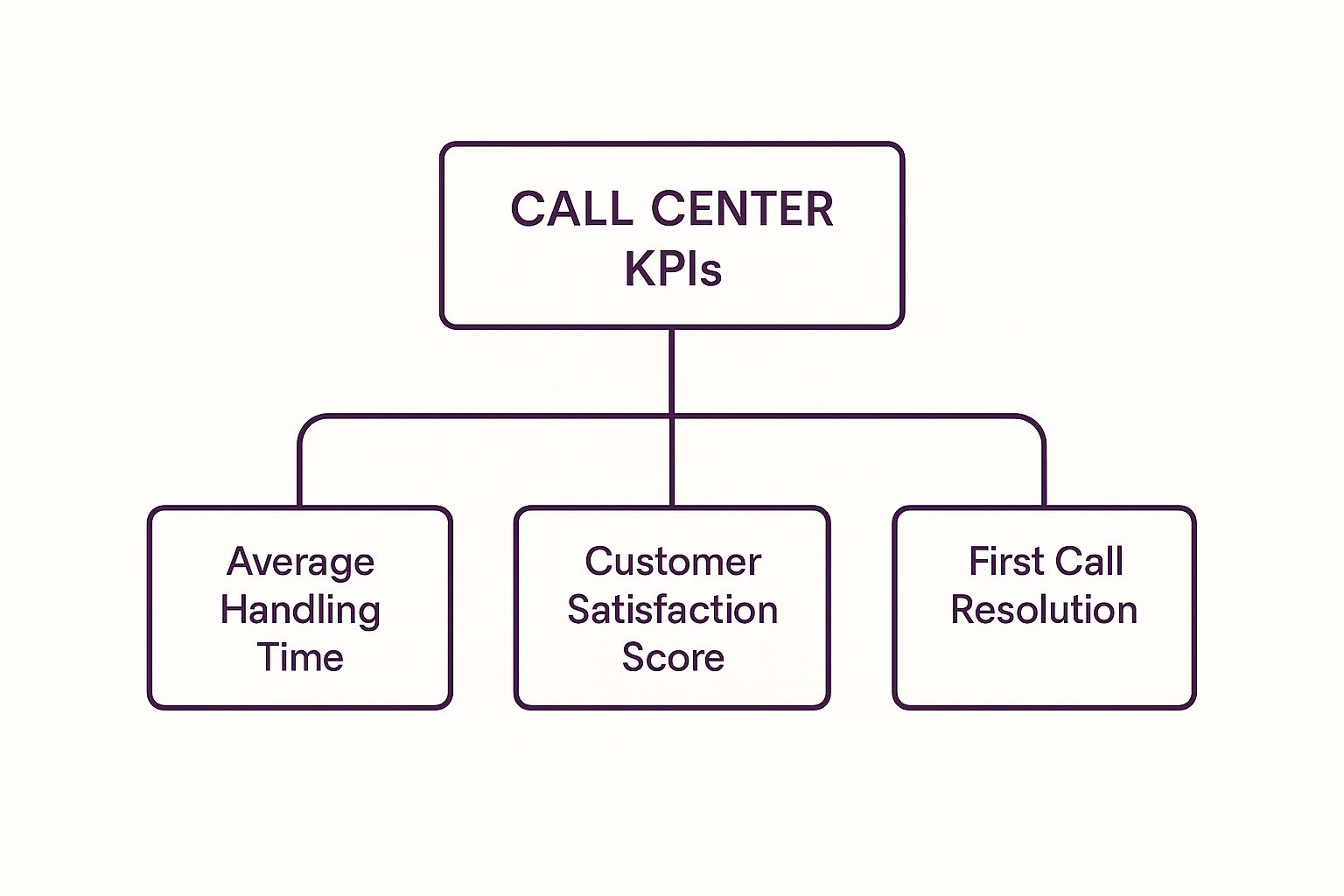
Of course, none of this matters if you can’t measure success. Keeping a close eye on the right Key Performance Indicators (KPIs) is what separates a good BPO from a great one. The image below breaks down the metrics that truly matter. As you can see, efficiency (like Average Handling Time) and customer happiness (Satisfaction Score and First Call Resolution) are completely linked. They are the twin pillars of any successful BPO partnership.
But measurement isn’t a one-and-done event—it’s an ongoing process. Outsourcing isn’t a “set it and forget it” solution. The best partnerships include regular performance reviews, consistent tracking of KPIs, and an open feedback loop with your provider. This means you’ll want to be ready to tweak training programs, adjust workflows, or update scripts as needed. Continuous monitoring and optimization are the keys to long-term success and ensuring your customers always get top-tier service.
To see how CallZent’s approach to back-office solutions can help you hit your business goals, reach out to our team.
Maintaining Quality: Call Recording and QA Reviews
A great BPO call center isn’t just about quick response times or cheerful agents—it’s about consistency. This is where call recording and quality assurance (QA) reviews come into play. By capturing every customer interaction, a BPO gains a goldmine of real-world examples to fine-tune its approach.
Here’s how the best in the business leverage these tools:
- Continuous Improvement: Regularly reviewing recorded calls lets team leaders spot exactly where conversations shine and where there’s room to upgrade. This means feedback isn’t based on guesswork but grounded in real customer experiences.
- Identifying Training Needs: QA reviews make it easy to detect common stumbling blocks, whether it’s a tricky product detail or a tone that doesn’t quite hit the mark. Targeted coaching and script tweaks keep the whole team up to speed, not just a lucky few.
- Proactive Problem-Solving: Nipping potential issues in the bud saves time, money, and reputation. Structured QA isn’t about finding fault—it’s a collaborative process where agents and supervisors partner to elevate service and catch small problems before they grow.
It’s this ongoing loop—listen, learn, adjust—that helps a BPO call center set a higher bar for excellence, day after day.
The Tangible Benefits of a BPO Call Center Partnership
So, why do so many smart companies choose to outsource their call center operations? The answer isn’t just about trimming the budget. Partnering with a BPO call center is a serious strategic move that delivers real, measurable results. It can turn what many see as a necessary expense into a powerful tool for getting ahead of the competition.The benefits run deep, impacting everything from your daily operations to your bottom line. It’s all about becoming more efficient, tapping into world-class talent on day one, and freeing up your in-house team to focus on the big-picture goals that truly move the needle.

Unlocking Significant Cost Savings
Let’s be real: cost is a huge factor. But the savings go way beyond just lower salaries. Building and running your own call center is a massive financial undertaking. When you team up with a BPO, you wipe a long list of overhead costs right off your plate.Think about what it really costs to have an in-house team:
- Recruitment and Hiring: The time and money poured into finding, interviewing, and onboarding agents adds up incredibly fast.
- Training and Development: Agents need constant training on products, systems, and people skills, which means paying for dedicated trainers and materials.
- Technology and Infrastructure: This is a big one. We’re talking expensive software licenses, phone systems, CRMs, and the IT crew needed to keep it all running.
- Facilities: Don’t forget the rent, utilities, and equipment needed for every single agent’s desk.
A BPO partner handles all of this. You pay a predictable fee for the service, not for the massive, expensive machine running behind the scenes. It flips a huge capital investment into a manageable operational expense.
Weighing the True Cost vs. ROI
Savvy leaders know there’s more to a smart BPO partnership than just snagging a lower hourly rate. When you’re sizing up the real cost versus ROI of outsourcing your call center, it pays to dig deeper.
Begin by tallying every dollar it takes to run an in-house operation—not just base salaries, but also recruiting expenses, ongoing training sessions, pricey software, IT support, and everything from office chairs to phone lines. Hidden costs can sneak up too—think onboarding, integrating new tech, constant system upgrades, and keeping your internal teams laser-focused on performance.
Next, compare those numbers to what a BPO offers: typically a clear, all-in service fee that’s easy to budget. What’s more, you can factor in the value beyond the balance sheet. Outsourcing lets you scale up (or down) on demand, sharpen efficiency with tried-and-true workflows, and deliver a consistent customer experience that moves the satisfaction needle up.
Ultimately, real ROI is about more than just dollars saved—it’s about unlocking time, expertise, and agility so your business grows while someone else sweats the details.
Watch Out for Hidden Costs
While BPO partnerships are a fantastic way to control costs, it’s smart to keep your eyes peeled for some expenses that don’t always make the first draft of the proposal. Certain BPO providers love to advertise bargain-basement rates, but the fine print tells another story.
Here’s where businesses can get tripped up:
- Integration Fees: Setting up your systems to sync with an outsourced team—think CRMs, ticketing tools, even payment platforms—sometimes comes with unexpected setup charges.
- Customization Costs: Want scripts tailored for your unique brand or services? That little piece of TLC is often an added line item.
- Training Extras: While baseline agent training is usually included, ongoing education about your new products, services, or changes to your process may come with a separate bill.
- Premium Support: Need advanced reporting, dedicated account managers, or after-hours coverage? Those bells and whistles aren’t always covered by a standard rate.
The bottom line: Be sure to ask your BPO partner for a detailed breakdown of all possible fees—upfront and along the way—so you’re not surprised later. It’s all about budgeting smarter and making sure those “great savings” actually end up on your bottom line.
Gaining Immediate Access to Expertise
When you hire a solid BPO, you aren’t just getting a few agents on the phone. You’re plugging into a team that has spent years honing its craft. These organizations live and breathe customer service. They’ve already built the proven processes, fine-tuned the training programs, and mastered quality control.That means you get a highly skilled team ready to represent your brand professionally from the get-go. They bring industry best practices for everything, from de-escalating tough customer calls to designing call flows that get results. This instant injection of expertise means you skip the painful learning curve and see better performance, faster.
“A strategic BPO partnership frees your core team from managing customer service logistics, allowing them to dedicate their full energy to innovation, product development, and market expansion.”
However, not all BPO partnerships are created equal. Quality can swing based on factors like agent turnover, training programs, and the strength of onsite management. If a BPO provider lacks rigorous Service Level Agreements (SLAs) or a solid quality assurance process—think weekly call reviews, mystery shopping, or real-time dashboard monitoring—the customer experience can take a major hit.
Picture a customer who speaks to a well-trained, friendly agent one week, only to encounter an unprepared or disengaged representative the next. This kind of inconsistency chips away at trust and loyalty. Repeat issues, miscommunications, and unresolved problems quickly overshadow the cost-saving perks. That’s why the best BPO providers—whether in bustling hubs like Manila or tech-forward cities like Dublin—put a premium on measurable, consistent quality and ongoing agent development.”
Achieving Unmatched Scalability and Flexibility
Business is never a flat line. Demand goes up and down, new products launch, and seasonal rushes can completely swamp an in-house team. A BPO call center gives you the agility to scale your support up or down whenever you need to.Picture an e-commerce brand getting ready for the holiday shopping frenzy. Trying to hire, train, and then lay off dozens of temporary agents would be a logistical nightmare. With a BPO partner, you just tell them you need more coverage for the peak season. When things quiet down, you can scale back just as easily.This flexibility ensures you always have the right number of people on hand without being stuck paying for a bloated team year-round. You can see how CallZent’s approach offers scalable and custom-fit service packages that are built to adapt to your specific business needs.
Keeping Agility Top of Mind
That said, it’s important to acknowledge a potential trade-off: reduced agility on certain quick-turn changes. When your processes are handled in-house, updating a script or responding to customer feedback can sometimes be as fast as walking across the office. With an outsourced team, those same changes might involve a bit more back-and-forth—especially if you need to tweak call flows, messaging, or escalation procedures on the fly. It’s not a dealbreaker, but it’s something to plan for as you think through how much control and speed you need.
The bottom line? With a strong BPO partner, you gain game-changing scalability and cost control, but you’ll want to build in clear communication channels and expectations for how fast adjustments can happen. That way, you’re not just flexible—you’re smart about it.
Focusing on Your Core Business
This might just be the biggest win of all: freedom. Every hour your leaders spend wrestling with call center staffing, tech problems, or performance reviews is an hour they aren’t spending on growing the business. Outsourcing this entire function removes a massive operational headache.It allows your internal teams to focus on what they do best—the activities that actually generate revenue and give you an edge in the market. This isn’t just about handing off tasks; it’s about strategically reallocating your most precious resource: your team’s time and brainpower.This is especially critical in the booming North American market, which accounts for over 40% of global call center revenue and was valued at roughly USD 126 billion in 2024. With a projected annual growth of 10.7% through 2031, having a focused, expert partner isn’t a luxury—it’s essential. You can discover more insights about the call center market in North America.
How Technology Is Shaping the Future of BPO Call Centers
The call center of today looks nothing like it did even a decade ago. Technology is the engine behind this massive shift. A modern BPO call center isn’t just a room full of agents anymore; it’s a high-tech command center where things like artificial intelligence (AI), machine learning, and data analytics work in concert to deliver smarter, faster, and more human customer experiences.This isn’t about replacing people with robots. Far from it. It’s about taking skilled agents and amplifying their abilities, freeing them from the repetitive tasks that burn them out. The best BPOs use technology to empower their teams, turning them into ‘super-agents’ who can tackle complex problems with incredible speed and accuracy.
The Rise of AI and Automation in BPO Call Centers
Artificial intelligence is at the very heart of this change. AI-powered tools are now handling routine questions, analyzing customer calls as they happen, and arming agents with the exact insights they need to succeed. The impact is already huge, and it’s only growing.Take AI chatbots, for example. These bots can instantly answer common questions like “Where’s my package?” or “When are you open?” This clears the runway for human agents to focus on the high-stakes conversations that require real empathy and critical thinking—like walking a frustrated customer through a tricky technical problem.
“The goal of technology in a BPO call center isn’t to remove the human element—it’s to enhance it. By automating the mundane, we empower agents to handle the moments that truly matter.”
Creating Super-Agents with Real-Time Data
Picture this: an agent is on a call with a customer who is clearly upset. As they talk, an AI tool is analyzing the customer’s tone and word choices, instantly detecting their frustration. A quiet alert pops up on the agent’s screen with a practical tip: “Customer sentiment is negative. Offer a 10% discount to de-escalate.”This is how a modern BPO call center puts data analytics to work. Technology gives agents live coaching, pulls the right answers from a knowledge base, and suggests the next best action. It can turn a potentially disastrous call into a positive experience, boosting first-call resolution and leaving the customer happy. This approach makes your BPO partner more than just a vendor; they become an innovation ally dedicated to your success.
The Impact of Predictive Analytics
Beyond in-the-moment support, technology is helping BPOs get ahead of customer problems before they even happen. Predictive analytics tools can spot patterns in customer behavior that signal trouble on the horizon.For instance, a system might flag a customer who keeps visiting the FAQ page for a specific product but never buys. A proactive BPO can use that signal to trigger an outbound call or a personalized email from an agent, asking, “We noticed you might have some questions about Product X. Can we help?” This flips the script from reactive to proactive service, building serious loyalty and preventing customers from walking away.The move toward these technologies is happening fast. Artificial intelligence is changing the game, with projections showing that by 2025, around 80% of companies worldwide will have or plan to have AI-powered chatbots helping their customer service teams. You can read more about the impact of AI on customer service statistics. When you partner with a tech-forward BPO, you’re making sure your business stays ahead of the curve.
How to Choose the Right BPO Call Center Partner
Picking a BPO partner is one of the biggest calls you’ll make for your brand. This isn’t just about hiring a vendor; it’s about choosing the team that will become the very voice of your company.A great partner feels like an extension of your own team, championing your brand’s values and actively helping you grow. The wrong fit? It can lead to frustrated customers and a damaged reputation.To make a confident choice, you need a solid game plan. The best BPO call center isn’t just the one with the lowest price tag—it’s the one that truly clicks with your business goals and company culture.
What to Look for in a BPO Call Center Partner
You need to look past the sales pitch and get into the nuts and bolts of how they operate. A genuinely great partner will shine in three core areas: their industry smarts, their tech stack, and their commitment to security. Think of these as the non-negotiables.
- Industry Expertise: Do they actually get your market? An agent helping a patient for a healthcare company needs a completely different set of skills than one helping an online shopper. The right partner will “speak your customer’s language” from day one.
- Technological Infrastructure: Can their tech keep up as you scale? Ask them about CRM integrations, reporting dashboards, and the communication platforms they use. A partner who’s thinking ahead will have the tools to deliver seamless service and give you killer data insights.
- Security and Compliance: Bottom line: is your customer data safe? Your partner absolutely must have rock-solid security protocols and certifications (like SOC 2 or PCI) to protect sensitive information and keep you compliant.
Don’t Overlook Brand Control
One more critical detail that’s easy to miss: brand control. Because outsourced agents aren’t sitting in your office, there’s an inherent risk they may not fully capture your brand’s unique voice or uphold your values—unless you put tight training and management in place. Your BPO partner is essentially the face (and voice) of your business. If their agents can’t represent you with integrity and consistency, customers will notice, and your brand reputation could take a hit. Make sure any BPO you consider has a proven process for immersing agents in your brand, not just your scripts.
Key Questions to Ask Potential BPO Call Center Partners
Once you have a shortlist, it’s time to ask some direct questions to see what they’re really about. How they answer will tell you everything you need to know about their process, their transparency, and how much they care about quality.
“Your BPO partner is the voice of your brand; choose one that will represent you with excellence and integrity in every single interaction.”
Walk into that conversation ready with questions that cut to the chase. This isn’t about grilling them; it’s about seeing who is truly prepared to be the partner you need. Here are a few must-asks to get the ball rolling:
- How exactly will you train your agents on our specific products and brand voice?
- What does your quality assurance process look like, and how often do agents get feedback?
- Can you share a few case studies or put us in touch with clients in our industry?
- How do you make sure your team’s culture aligns with our company values?
Finding a partner who can nail the answers to these questions is a huge green flag. You can see the CallZent approach in action by checking out what our clients have to say.
Common Questions About BPO Call Centers
Let’s tackle some of the big questions business leaders have when they start exploring the world of BPO call centers. These are the things that often come up, and getting clear answers can make all the difference.
What’s the Difference Between a BPO and a Call Center?
It’s a great question, and the answer is simpler than you might think. Imagine a call center as a specific tool, like a hammer. Business Process Outsourcing (BPO) is the decision to hire a master carpenter who not only knows how to use the hammer but also brings the entire workshop, the blueprints, and the expertise to build you a house.A BPO call center is that expert partner. You aren’t just renting agents and phones; you’re bringing on a complete, managed solution—the team, the proven processes, and the strategy to make your customer service hum.
To break it down further, a BPO company is a firm that offers outsourcing solutions across a wide variety of business processes—not just phone calls. They employ trained staff in roles ranging from customer service reps and technical support agents to IT specialists and beyond. With a BPO, you get the technology platforms, the people, and the systems to manage tasks on your behalf, all under one roof. This isn’t just about offloading a few calls; it’s about tapping into a full-service extension of your business that’s built for efficiency, scalability, and expertise at every level.
Is Outsourcing to a BPO Call Center Really Cheaper?
When you pencil out the true cost of an in-house team, the numbers can be surprising. You have to factor in everything: salaries, benefits, the endless cycle of recruiting and training, software licenses, and the physical space itself. It adds up fast.Partnering with a BPO often turns out to be significantly more cost-effective, especially for businesses that need to scale their support up or down with the seasons. The BPO model transforms what would be a huge fixed cost into a flexible, predictable operational expense.
“A smart BPO partnership doesn’t just trim your budget. It converts a rigid operational cost into a flexible investment that scales with your business, so you’re only ever paying for what you actually use.”
What Are the Potential Risks or Challenges With BPO Call Centers?
Outsourcing your customer support can be a game-changer, but it’s not without its bumps in the road. Here are a few challenges you’ll want to have on your radar before you sign on the dotted line:
Loss of Direct Control: When you hand off operations to an external partner, you aren’t in the day-to-day trenches with the team. That can make it harder to spot issues early or to pivot quickly if your customer needs shift.
Cultural and Communication Gaps: Even the best BPOs may not nail your brand’s unique vibe or communication style right off the bat—especially if teams are working from different countries or time zones.
Data Security Concerns: You’re trusting another organization with sensitive customer data. If proper security isn’t in place (think GDPR in Europe, or HIPAA if you’re in healthcare), you’re leaving yourself open to potentially major headaches.
Quality Consistency: Not all BPOs are created equal. If their quality assurance processes are spotty or they’re churning through agents, your customer experience could take a hit.
Hidden Costs: While outsourcing is typically cost-effective, unclear pricing models or extra fees (like for after-hours support or tech integrations) can sneak up on you if you’re not careful.
The good news? The right partner will be upfront about these risks and have solid plans for minimizing them. Asking tough questions—in the style we outlined above—makes all the difference in finding a BPO that treats your business as their own.”
How Can I Trust an Outsourced Partner With Our Customer Data?
This is, without a doubt, one of the most important questions you can ask. Any BPO worth its salt takes data security as seriously as you do. The top-tier BPO call centers are built on a foundation of strict security protocols and compliance standards designed to keep your information locked down.Before signing anything, look for partners who live and breathe established security frameworks:
- SOC 2: This confirms they have solid controls for security, availability, and data integrity.
- PCI: A must-have for protecting credit card and payment details.
- HIPAA: Non-negotiable for safeguarding sensitive patient health information in the medical field.
A reputable provider will use secure-by-design technology, undergo regular third-party audits, and operate under ironclad non-disclosure agreements (NDAs). Your customer data should be just as safe with them as it is under your own roof. This level of security isn’t a feature; it’s the price of entry.Ready to see how a dedicated BPO partner can transform your customer experience? CallZent builds custom-fit solutions designed to help your business grow and thrive. Explore our BPO services to learn more.
About the Author
This article was written by the team at CallZent, a U.S.-based nearshore call center in Tijuana and Hermosillo, Mexico.
We specialize in bilingual customer support, outbound B2B sales, and customized outsourcing solutions for industries including
e-commerce, SaaS, healthcare, and legal intake. Our operations are built on strict compliance frameworks (SOC 2 readiness, HIPAA, PCI)
and a passion for delivering world-class customer experiences.Learn more about CallZent