Skip to content
Call Center Quality • Nearshore BPO • Quality Assurance
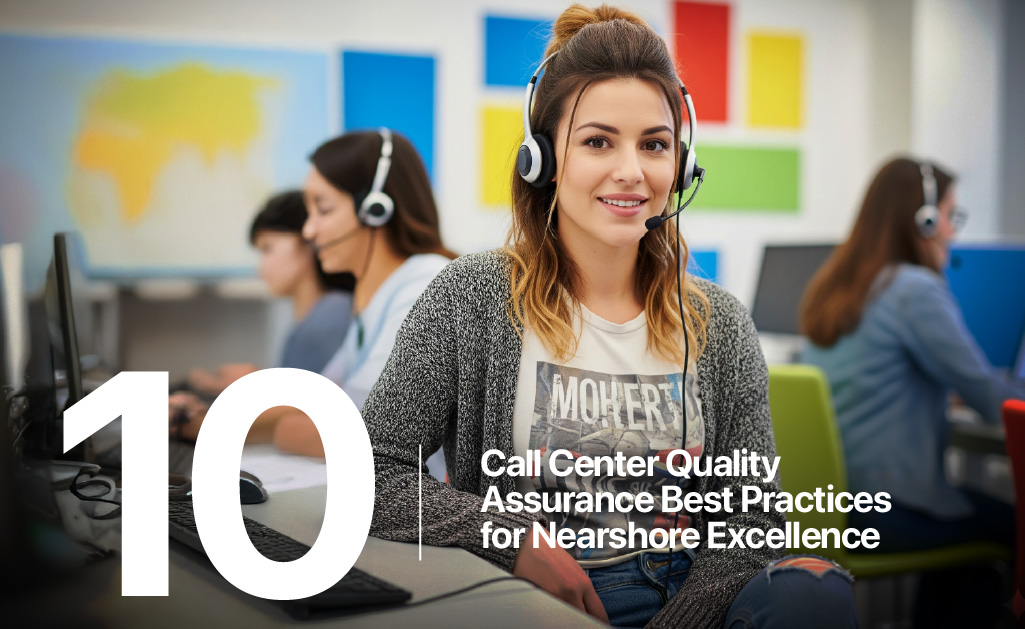
Call Center Quality Assurance Best Practices: A 10-Point Framework for Nearshore Excellence
Learn how modern QA programs move beyond box-checking to drive customer loyalty, compliance, and performance—especially in bilingual nearshore environments.
Is your call center’s quality assurance program just a box-ticking exercise, or is it a powerful engine for driving customer loyalty and growth? Many businesses find their QA efforts stall, becoming a source of agent anxiety rather than a tool for empowerment.
This shift means moving beyond basic call scoring to create a holistic system where every piece of feedback fuels continuous improvement. When done right, QA doesn’t just measure performance—it actively enhances it, ensuring every interaction meets the highest standards, especially in bilingual nearshore operations.
TL;DR — Key Call Center QA Best Practices
- Define Quality: Objective scorecards for every channel
- Be Consistent: Regular calibration sessions
- Leverage Technology: AI analytics + 100% recording
- Close the Loop: QA-driven coaching and training
- Use Customer Feedback: CSAT, CES, and NPS integration
- Ensure Compliance: HIPAA, PCI-DSS, TCPA monitoring
Is your call center’s quality assurance program just a box-ticking exercise, or is it a powerful engine for driving customer loyalty and growth? Many businesses find their QA efforts stall, becoming a source of agent anxiety rather than a tool for empowerment. The difference between a thriving nearshore partner and a stagnant one often lies in a forward-thinking, proactive approach to quality. A reactive process that only catches mistakes after the fact is no longer enough; a modern strategy must prevent issues and build a consistently exceptional customer experience.
This shift means moving beyond basic call scoring to create a holistic system where every piece of feedback fuels continuous improvement. When done right, a robust QA framework doesn’t just measure performance—it actively enhances it, ensuring every interaction meets the highest standards. This is especially critical in a nearshore, bilingual environment where cultural nuance and language proficiency add layers of complexity.
In this guide, we’ll break down 10 essential call center quality assurance best practices that will transform your QA program from a simple necessity into a strategic advantage, helping you solve problems, make better decisions, and exceed client expectations.
1. Establish Comprehensive Call Recording and Analysis
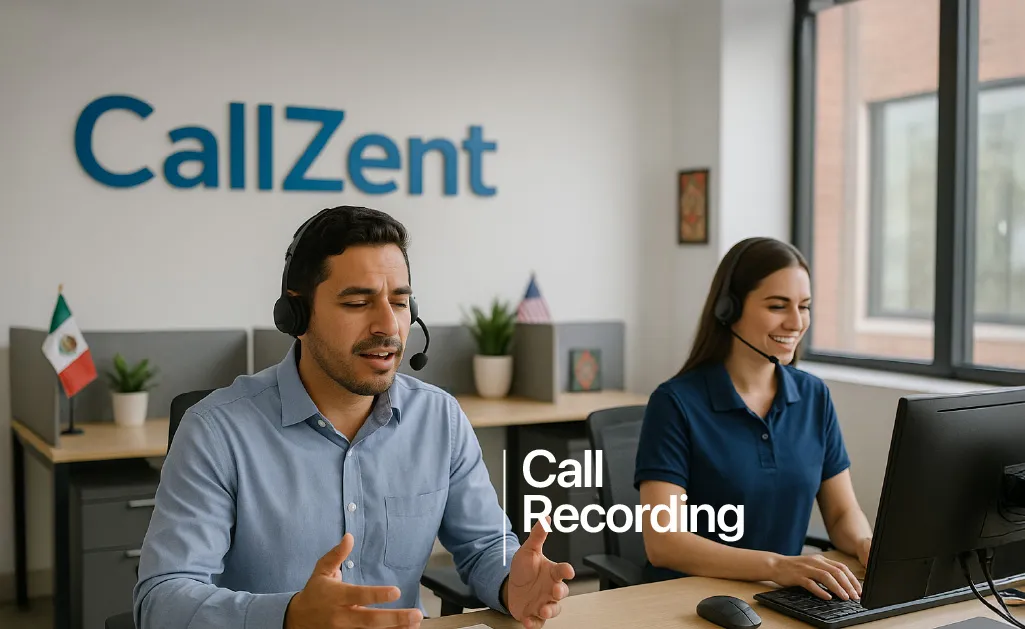
The foundation of any modern call center quality assurance best practices framework is recording and analyzing 100% of customer interactions. This is more than just a compliance checkbox; it’s about creating a complete, unbiased data set of every inbound and outbound call. For a nearshore operation in Tijuana serving North American clients, this practice is non-negotiable for ensuring consistent, high-quality service across bilingual teams.
By capturing every conversation, you build an invaluable library of real-world scenarios. This data becomes your single source of truth for identifying agent coaching opportunities, pinpointing process gaps, and verifying adherence to critical regulations like HIPAA or PCI-DSS.
Actionable Tip: Move from Random Sampling to Strategic Analysis
Instead of just pulling a few random calls per agent, use technology to analyze all of them. For instance, an e-commerce client can use recordings of Spanish-language calls to identify common questions about shipping to Mexico, leading to a script update that improves first-call resolution. To truly leverage this vast amount of audio data, integrating tools like AI speech to text solutions can transform raw conversations into searchable, analyzable text, unlocking deeper insights.
How to Implement This QA Best Practice:
- Implement a Transparent Policy: Inform both agents and customers that calls are recorded for quality and training purposes, as required by law.
- Use a Hybrid Sampling Approach: While you record 100% of calls, your QA team should analyze a strategic sample. Focus on a mix of high-value transactions, interactions flagged for negative sentiment by AI, and calls from new agents.
- Secure Your Data: Store all recordings in a secure, encrypted environment with role-based access to protect customer information and maintain compliance.
- Create Language-Specific Rubrics: For bilingual teams, develop distinct quality scorecards for English and Spanish calls that account for cultural and linguistic nuances.
Understanding the potential locked within your call recordings is a critical first step. Explore the top benefits of contact center analytics to see how this data can drive strategic decisions.
2. Develop and Apply a Clear Quality Scorecard
A well-defined quality scorecard is the backbone of objective agent evaluation and a cornerstone of effective call center quality assurance best practices. This tool moves performance assessment beyond subjective opinion by breaking down every interaction into specific, measurable criteria. For a nearshore BPO managing diverse, bilingual teams, a standardized scorecard ensures every agent is evaluated against the same high standards.
Using a scorecard, a manager can pinpoint exact areas for improvement—from greeting standards and problem resolution to product knowledge and empathy. This transforms coaching sessions from vague feedback into targeted, data-driven conversations that drive real performance gains. It provides a clear, consistent definition of what a “good” interaction looks like.
Actionable Tip: Score What Matters to the Customer
Don’t just score for internal processes. A retail client might find that agents who express genuine empathy during a return process receive higher customer satisfaction scores, even if the call is longer. Your scorecard should reflect that by weighting “Empathy” or “Tone” higher than “Average Handle Time.”
How to Implement This QA Best Practice:
- Involve Agents in Development: Collaborate with your frontline agents and supervisors when creating the scorecard. Their input ensures the criteria are realistic and relevant, fostering greater buy-in.
- Create Tailored Scorecards: Develop distinct scorecards for different channels (e.g., inbound sales, outbound support, chat) and languages. Bilingual scorecards should include specifics like accent clarity and correct use of industry terminology.
- Establish Regular Calibration Sessions: Host bi-weekly meetings where QA specialists and team leads score the same call and discuss their reasoning. This practice is vital for maintaining consistent and fair evaluations.
- Review and Iterate Quarterly: Business needs change. Review and update your scorecards quarterly based on customer feedback, changing business goals, and agent input.
A well-designed scorecard is a powerful tool for elevating service; learn more about call center quality assurance and how it fits into a broader strategy.
3. Integrate Real-Time QA Technology and Dashboards
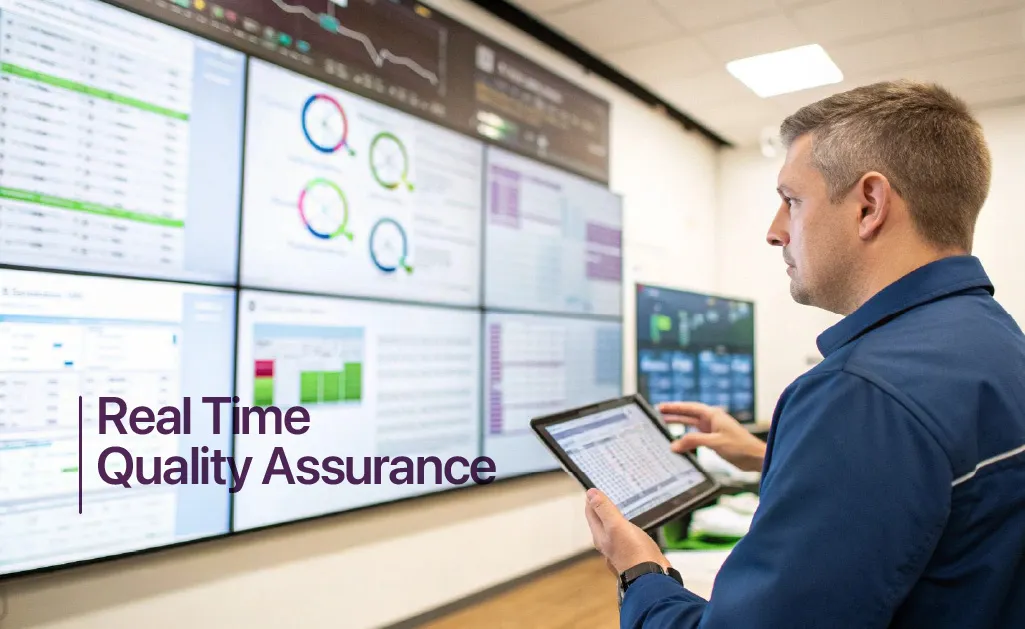
A proactive quality assurance framework moves beyond reviewing past calls and incorporates a live system for tracking performance. This involves using real-time dashboards to monitor key metrics and integrating AI-powered analytics to automate routine evaluation tasks. For high-volume nearshore operations, this approach provides the agility needed to identify and address issues as they happen, ensuring immediate intervention and consistent service quality.
By integrating QA technology, you can automate parts of the monitoring process, such as flagging calls with specific keywords (“cancel,” “manager”), analyzing customer sentiment, or checking for compliance disclosures. This frees up human evaluators to focus on more complex, nuanced interactions that require critical thinking.
Actionable Tip: Use Real-Time Alerts for Immediate Coaching
Instead of waiting for a weekly review, set up alerts for supervisors. For example, a financial services client can get a real-time notification if an agent fails to provide a required disclosure on a loan application call. The supervisor can then discreetly message the agent a reminder or even join the call to assist, preventing a compliance breach before it happens.
How to Implement This QA Best Practice:
- Define Clear Automation Goals: Start small. Identify specific, high-value processes to automate first, such as compliance script adherence or negative sentiment detection.
- Configure Role-Based Dashboards: Create customized dashboards for agents, supervisors, and managers that display only the most relevant real-time metrics for their roles, preventing information overload.
- Train for Constructive Intervention: Coach supervisors on how to use real-time alerts to provide supportive, on-the-spot guidance instead of punitive feedback.
- Ensure Bilingual AI Competency: If you have a multilingual operation, verify that your AI and speech analytics tools are effectively trained on both English and Spanish to ensure accurate analysis across your entire agent pool.
4. Run Consistent Agent Calibration Sessions
Maintaining consistency across a team of QA evaluators is essential for any fair call center quality assurance best practices. Agent calibration sessions are structured meetings where QA specialists, supervisors, and even agents collectively score the same interaction. This process ensures everyone interprets quality standards uniformly, minimizing the “evaluation drift” that leads to inconsistent agent assessments. For nearshore operations, this alignment is critical for maintaining a single standard of excellence across bilingual teams.
These sessions create a forum to discuss gray areas in scoring, resolve disagreements, and refine the quality framework. By benchmarking evaluations, you ensure that an agent’s score is a true reflection of their skills, not just the subjective opinion of one evaluator. This builds trust in the entire QA process.
Actionable Tip: Focus on the “Why” Behind the Score
During calibration, don’t just agree on a final number. Discuss why a particular phrase demonstrated empathy or why a troubleshooting step was missed. For instance, two evaluators might disagree on a “Problem Resolution” score. The discussion could reveal that one evaluator values speed while the other values thoroughness, leading to a clarification in the scoring guidelines that benefits everyone.
How to Implement This QA Best practice:
- Schedule Regular Sessions: Hold calibration meetings at least monthly to prevent evaluation standards from drifting.
- Use Blind Scoring First: Have all participants score the selected interactions independently before the group discussion. This minimizes bias and encourages honest initial assessments.
- Select Diverse Interaction Samples: Choose a mix of calls representing different agents (top, middle, and low performers), interaction types (sales, support, complaint), and languages.
- Document and Share Outcomes: Record all scoring decisions and create a reference guide for ambiguous situations. Share these findings with the entire QA and leadership team to reinforce standards.
By investing in regular calibration, you create a fair, transparent, and highly effective quality program. Discover more about how to improve call center agent performance through a well-aligned QA process.
5. Integrate Customer Effort and Satisfaction Metrics
An effective quality assurance program must incorporate the customer’s actual voice. This is achieved by integrating feedback data like Customer Effort Score (CES), Customer Satisfaction (CSAT), and Net Promoter Score (NPS) directly into the QA process. Instead of judging an interaction solely on script adherence, this approach ties agent performance to what the customer actually experienced.
By linking QA scores to customer satisfaction, you create a direct line of sight between agent behaviors and business results. This is a core component of modern call center quality assurance best practices because it proves which skills truly improve the customer journey. For bilingual nearshore teams, this helps identify whether agents are not just fluent but also culturally effective in reducing customer effort.
Actionable Tip: Analyze the Mismatches
The most valuable insights come from interactions where the internal QA score is high, but the CSAT score is low (or vice versa). A high QA/low CSAT score might mean an agent followed the script perfectly but lacked empathy, revealing a gap in your scorecard. A low QA/high CSAT score could show an agent broke a minor rule to solve a customer’s problem creatively—an opportunity to revise your processes.
How to Implement This QA Best practice:
- Deploy Post-Interaction Surveys: Send short, targeted surveys via SMS or email immediately after a call to capture fresh, accurate feedback. Keep them brief (2-3 questions) to maximize response rates.
- Link Feedback to Interactions: Ensure your systems can tie specific survey responses back to the individual call recording and the agent who handled it.
- Segment and Analyze Feedback: Analyze customer feedback by agent, team, and interaction type. For bilingual operations, create and analyze surveys in both English and Spanish to capture nuanced feedback.
- Incorporate into Scorecards: Add a section to your QA scorecard that includes the customer’s CSAT or CES score, giving it weight in the agent’s overall quality score.
Understanding and leveraging these metrics is vital; get a deeper insight into how to measure Customer Effort Score to refine your customer-centric QA approach.
6. Build a Coaching Loop Based on QA Findings
One of the most critical call center quality assurance best practices is creating a direct feedback loop between QA findings and agent development. This means transforming quality monitoring from a simple scoring exercise into an engine for continuous improvement. Instead of letting QA reports sit in a folder, use the data to identify specific skill gaps and inform targeted, one-on-one coaching and group training.
By connecting QA directly to coaching, you ensure that feedback is timely, relevant, and actionable. An abstract score becomes a tangible learning opportunity, empowering agents to understand their performance and make concrete improvements. This systematic approach turns quality assurance into a proactive development tool, not just a reactive metric.
Actionable Tip: Coach Behaviors, Not Scores
Focus feedback on specific, changeable behaviors. Instead of saying, “Your empathy score was low,” say, “On that last call, when the customer said they were frustrated, let’s try using a phrase like, ‘I can certainly understand why that’s frustrating.’ Let’s role-play it.” This provides a concrete action the agent can implement immediately.
How to Implement This QA Best Practice:
- Schedule Timely Sessions: Conduct coaching sessions within 24-48 hours of a QA evaluation. This ensures the details of the call are still fresh in the agent’s mind.
- Use a Positive, Constructive Framework: Frame feedback around opportunities for growth. The goal is to build skills, not just point out errors.
- Leverage Call Recordings: Play back specific segments of call recordings during coaching. Hearing their own tone and language provides powerful context for agents.
- Set Specific, Measurable Goals: Conclude each session with a clear, actionable goal, such as “This week, I will use the new empathy statement when a customer expresses frustration.”
- Provide Bilingual Support: For nearshore teams, ensure coaching materials and sessions are available in both English and Spanish. For instance, if QA identifies opportunities for improved verbal clarity, targeted programs like accent coaching for call center agents can be highly effective.
7. Establish a Dedicated Compliance Monitoring Framework
A crucial pillar of modern call center quality assurance best practices is a dedicated framework for monitoring regulatory compliance. This goes beyond general service quality and focuses specifically on adherence to laws like HIPAA for healthcare, PCI-DSS for payment processing, and the TCPA for telemarketing. For nearshore centers serving U.S. clients, this function is non-negotiable, as it protects both the client and the BPO from severe legal and financial penalties.
This framework involves a specialized QA function that proactively identifies and mitigates compliance risks in every interaction. It ensures sensitive data is handled correctly, required disclosures are made, and customer rights are respected. This systematic approach transforms compliance from a reactive, audit-driven task into a proactive, operational discipline.
Actionable Tip: Automate 100% of Compliance Checks
Use speech analytics to automatically scan every single call for required phrases (e.g., “This call is recorded”) and restricted phrases (e.g., promising a “guaranteed” outcome). This automates the most tedious part of compliance monitoring and flags the 1-2% of calls that need human review, making your process incredibly efficient and effective.
How to Implement This QA Best Practice:
- Create a Compliance Baseline: Work with client legal teams to map all applicable federal, state, and industry-specific regulations that govern their operations.
- Develop Specific Training Modules: Build compliance training directly into agent onboarding and ongoing education, with specific modules for each client’s industry.
- Flag and Review High-Risk Calls: Implement a policy to review 100% of interactions that are flagged as high-risk, such as those involving new account sign-ups or payment processing.
- Automate Keyword Monitoring: Use speech analytics to automatically flag calls containing keywords or phrases related to potential compliance violations for immediate review.
- Conduct Regular Audits: Perform quarterly internal compliance audits to identify systemic issues and document all findings and corrective actions.
8. Implement a Strategic QA Scheduling and Sampling Plan
An effective approach to call center quality assurance best practices moves beyond random checks and embraces a systematic scheduling and sampling strategy. This involves a deliberate plan for determining which interactions are evaluated, when they are reviewed, and by whom. Instead of arbitrary selection, a strategic approach ensures representative coverage across all agents, shifts, and interaction types, balancing thorough evaluation with operational efficiency.
This methodology guarantees your QA insights are not skewed by focusing only on specific times or agents. It provides a holistic view of performance, ensuring that an agent working the weekend shift receives the same level of attention as one working a weekday morning. It’s about making QA fair, representative, and statistically significant.
Actionable Tip: Adopt a Risk-Based Sampling Model
Don’t treat all interactions equally. A simple address change call carries less risk than a call to process a $10,000 wire transfer. Sample the high-risk interactions at a much higher rate. For new agents, you might review 25% of their calls in the first month, while a tenured, high-performing agent might only need 3-5% of their calls reviewed.
How to Implement This QA Best Practice:
- Determine Statistical Significance: Use statistical calculators to determine the appropriate sample size needed to achieve a desired confidence level in your quality scores.
- Automate and Diversify Selection: Implement automated sampling within your QA software to eliminate bias. Create different sampling rules for various goals, such as compliance, new hire onboarding, or performance coaching.
- Ensure Proportional Representation: For bilingual teams, ensure that Spanish-language interactions are sampled in direct proportion to their overall volume. Likewise, cover all shifts—including evenings and weekends—to get a complete performance picture.
- Prioritize High-Impact Interactions: Sample calls involving new customers, cancellations, escalations, or complex financial transactions at a higher rate.
9. Extend QA to All Channels (Phone, Chat, Email, Social Media)
Today’s customer journey spans multiple channels. An effective quality assurance framework must evolve beyond voice-only evaluations to encompass every touchpoint, including live chat, email, and social media. This multi-channel approach ensures your brand voice, service quality, and compliance standards remain consistent, whether an agent is speaking on the phone or typing a reply on Facebook. For nearshore providers, this is critical for delivering a seamless omnichannel experience.
By extending QA to all channels, you acknowledge that each medium has unique demands. A great phone agent may not excel at the rapid, concise communication required for live chat. Multi-channel QA identifies these specific skill sets and provides a holistic view of agent performance.
Actionable Tip: Score for Channel-Specific Skills
Don’t use a phone scorecard for a chat interaction. For chat, your scorecard should heavily weight things like typing speed, grammar, use of canned responses, and the ability to handle multiple conversations at once. For email, focus on the clarity of the writing, thoroughness of the answer, and professional formatting.
How to Implement This QA Best Practice:
- Develop Channel-Specific Scorecards: Create distinct rubrics for chat, email, and social media. For instance, weight response time and multitasking efficiency higher for chat, and grammar and thoroughness higher for email.
- Establish Channel-Specific SLAs: Define and monitor separate service level agreements (SLAs) for response times on each channel. QA evaluations should confirm if agents are meeting these benchmarks.
- Train Evaluators on Context: Ensure your QA specialists understand the nuances of each channel, such as reading threaded email conversations or understanding context in a social media exchange.
- Analyze Trends by Channel: Use your QA data to create dashboards that show quality scores for each channel individually. This helps pinpoint systemic issues, like a need for better written communication training for your chat team.
Platforms like Calabrio and Verint are designed to handle this complexity, offering unified dashboards for evaluating interactions across different media.
10. Implement Specialized Bilingual Quality Assurance
For nearshore operations serving diverse markets, a one-size-fits-all QA approach is insufficient. One of the most critical call center quality assurance best practices is establishing a specialized framework for bilingual service. This involves creating distinct quality standards for each language, ensuring evaluators are natively fluent, and assessing interactions not just for accuracy but for grammatical precision and cultural appropriateness. This validates the nearshore value proposition by proving that Spanish-language service consistently meets or exceeds English-language quality benchmarks.
This specialized focus ensures that communication is not only understood but also resonates culturally, building stronger customer relationships. For example, a healthcare provider can use bilingual QA to confirm that complex medical terminology is accurately translated and explained in Spanish, avoiding potentially dangerous misunderstandings.

Actionable Tip: Evaluate for Cultural Nuance, Not Just Translation
A direct, word-for-word translation can sometimes sound blunt or rude in another language. Your bilingual QA evaluators should be trained to listen for cultural appropriateness. For instance, the level of formality used with an older customer in Spanish might be different than in English. Scoring for these nuances is what separates adequate bilingual support from truly great service.
How to Implement This QA Best Practice:
- Hire Native-Speaking Evaluators: Your QA team must include members with native or near-native fluency in Spanish to accurately assess grammar, tone, and cultural nuance.
- Develop Language-Specific Scorecards: Create separate quality scorecards for English and Spanish interactions. The Spanish scorecard should include criteria for clarity, correct terminology, and cultural appropriateness.
- Create a Terminology Glossary: Build and maintain a Spanish-language glossary for your industry (e.g., financial, medical, technical terms) to ensure agents use consistent, professional language.
- Compare Language Performance Data: Regularly compare customer satisfaction (CSAT) scores and first-call resolution (FCR) rates between English and Spanish interactions to identify language-specific coaching needs.
Implementing a robust training program is the first step. See how CallZent trains bilingual agents to meet these exacting standards from day one.
10-Point Call Center QA Best Practices Comparison
| Item | Implementation Complexity 🔄 | Resource Requirements ⚡ | Expected Outcomes 📊 | Ideal Use Cases 💡 | Key Advantages ⭐ |
|---|---|---|---|---|---|
| Comprehensive Call Recording and Analysis | High 🔄 — 100% capture, integrations, storage | High ⚡ — large storage, AI transcription, dedicated QA staff | High 📊 (⭐⭐⭐⭐) — compliance evidence, coaching insights, dispute resolution | Regulated industries; bilingual nearshore; large call volumes | Ensures compliance, objective metrics, rich coaching material |
| Quality Scorecard Development and Application | Medium 🔄 — design, weighting, periodic updates | Medium ⚡ — SMEs, calibration time, QA tooling | Medium–High 📊 (⭐⭐⭐) — standardized evaluations, fair comparisons | Large agent pools; vertical-specific QA; bilingual teams | Standardizes scoring, clarifies expectations, supports targeted coaching |
| Real-Time Monitoring, Dashboarding, and QA Integration | Very high 🔄 — live data, ML models, many integrations | Very high ⚡ — platform licenses, AI models, integration effort | Very high 📊 (⭐⭐⭐⭐) — immediate intervention, scalable QA coverage | 24/7 operations, peak-volume periods, predictive use cases | Enables proactive coaching, SLA compliance, automation at scale |
| Agent Calibration Sessions & Quality Benchmarking | Medium 🔄 — coordination, facilitator-led discussions | Low–Medium ⚡ — evaluator time, facilitation resources | Medium 📊 (⭐⭐⭐) — consistent scoring, reduced evaluator bias | Multi-evaluator setups; bilingual QA teams; audit preparation | Improves inter-rater reliability, documents scoring decisions |
| Customer Effort Score & Satisfaction Metrics Integration | Medium 🔄 — survey design, data correlation | Medium ⚡ — survey tools, analytics, data linkage | Medium 📊 (⭐⭐⭐) — ties QA to customer outcomes, validates priorities | CX-focused programs; proving QA impact to clients | Aligns QA with customer perception; identifies high-impact behaviors |
| Regular Training & Coaching Based on QA Findings | Medium 🔄 — closed-loop program design | Medium ⚡ — trainers, LMS, coaching time | High 📊 (⭐⭐⭐⭐) — measurable agent improvement, higher retention | Continuous improvement cultures; development-oriented BPOs | Directly addresses gaps, builds capability, improves engagement |
| Compliance Monitoring & Regulatory Adherence Framework | High 🔄 — regulatory mapping, continual updates | High ⚡ — legal expertise, audits, compliance tooling | High 📊 (⭐⭐⭐⭐) — reduced legal risk, audit readiness | Healthcare, finance, payment processing, regulated clients | Protects from fines, builds client trust, enables regulated work |
| QA Scheduling and Sampling Strategy | Medium 🔄 — statistical design, rule enforcement | Low–Medium ⚡ — sampling automation, analyst oversight | Medium 📊 (⭐⭐⭐) — representative coverage, efficient QA use | High-volume centers; statistically driven QA; auditors | Balances thoroughness and cost, ensures representative monitoring |
| Multi-Channel Quality Assurance (Phone/Chat/Email/Social) | High 🔄 — channel-specific standards and capture | High ⚡ — multi-channel capture, varied evaluator skills | High 📊 (⭐⭐⭐) — consistent omnichannel CX, broader insights | Omnichannel service providers; retail/e‑commerce; social support | Ensures consistent customer experience across channels |
| Bilingual Quality Assurance & Language-Specific Evaluation | High 🔄 — dual scorecards, regional language nuance | High ⚡ — bilingual evaluators, specialized training | High 📊 (⭐⭐⭐⭐) — language parity, cultural appropriateness | Nearshore bilingual operations serving English/Spanish markets | Validates Spanish-quality service, competitive differentiation |
Turn Your Quality Program into a Competitive Advantage
Implementing these call center quality assurance best practices transforms QA from a cost center into a powerful engine for growth. The ten practices explored—from developing nuanced bilingual scorecards to integrating multi-channel analysis—are interconnected pillars that support a culture of continuous improvement, agent empowerment, and exceptional customer experience.
A comprehensive QA framework isn’t just about correcting errors. It’s a proactive strategy for refining agent performance, enhancing operational efficiency, and strengthening your brand’s reputation with every customer interaction.
“The ultimate goal of any call center quality assurance best practice is to create a predictable, positive, and brand-aligned experience for every customer, regardless of the agent, channel, or language.”
Your Actionable Next Steps
Mastering these concepts moves your customer service from a reactive function to a strategic asset. Your next steps should focus on auditing your current processes against these best practices.
- Review Your Scorecards: Are they aligned with your business goals and customer expectations? Do they account for the nuances of different channels and languages?
- Evaluate Your Coaching Loop: Is feedback timely, specific, and constructive? Are you using QA data to create targeted training that addresses common challenges?
- Assess Your Technology Stack: Do your current tools provide the visibility you need across all channels? Are you using real-time data to support agents when it matters most?
Ultimately, investing in a robust quality assurance program is an investment in your customers and your brand. It’s the framework that ensures your commitment to excellence is not just a promise but a demonstrated reality in every call, email, and chat. By embracing these call center quality assurance best practices, you build more than just an efficient operation; you build a lasting competitive advantage.
Frequently Asked Questions
1. What is call center quality assurance?
Call center QA is the structured process of evaluating customer interactions to ensure service quality, compliance, and brand alignment.
2. How many calls should be monitored?
Best practice is 100% recording with strategic sampling—higher volumes for new or high-risk agents.
3. How does QA improve customer satisfaction?
By reinforcing behaviors that reduce customer effort and improve resolution consistency.
4. What tools are used for modern QA?
Speech analytics, sentiment analysis, QA dashboards, and real-time monitoring platforms.
5. How often should calibration sessions happen?
At least monthly—bi-weekly for regulated or bilingual environments.
6. Is QA different for nearshore call centers?
Yes. Nearshore QA must account for language proficiency, cultural nuance, and bilingual scorecards.
7. How does QA support compliance?
It ensures mandatory disclosures, data handling standards, and audit readiness.
8. Should QA include chat and email?
Absolutely. Omnichannel QA ensures brand consistency across every customer touchpoint.
9. Can QA improve agent retention?
Yes. Coaching-focused QA reduces anxiety and increases engagement.
10. What’s the biggest QA mistake companies make?
Treating QA as punishment instead of a development system.
Ready to Build a World-Class QA Program?
CallZent delivers nearshore call center solutions built on advanced QA frameworks, bilingual excellence, and compliance-first operations.
Schedule a Strategy Call →Ready to transform your quality assurance program from a line item into a strategic advantage? At CallZent, we build our nearshore solutions on a foundation of world-class QA, combining advanced technology with expert bilingual teams. Discover how our commitment to quality can elevate your customer experience and drive tangible business results.