Skip to content
Call Center Operations
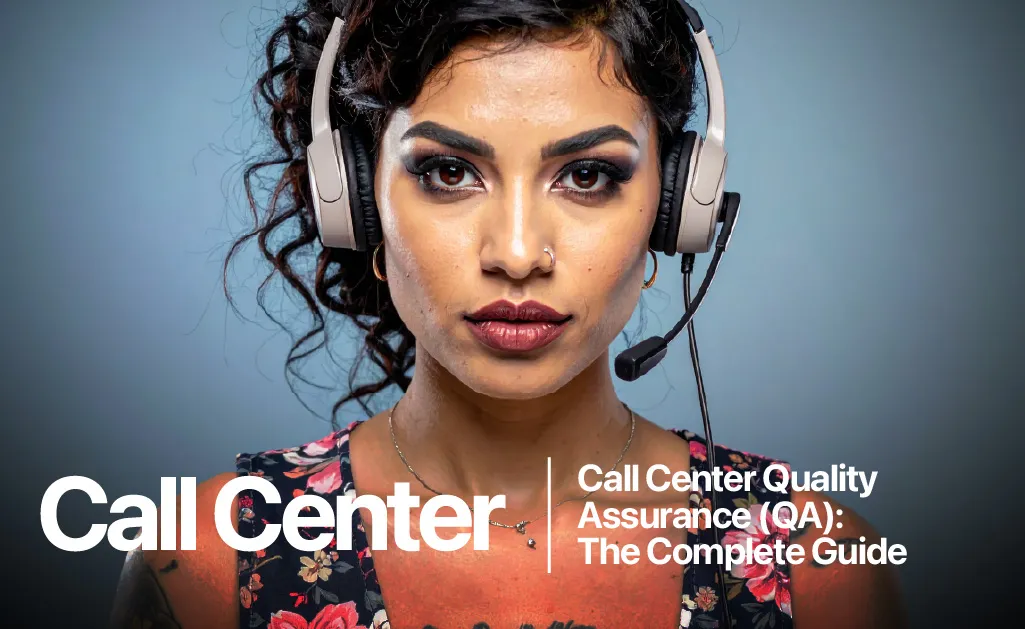
Call Center Quality Assurance (QA): The Complete Guide
Call center quality assurance (QA) ensures every customer interaction meets brand standards. Learn frameworks, metrics, AI tools, and best practices.
TL;DR — Quick Takeaways
- Call center quality assurance (QA) is the structured process of monitoring and improving agent interactions.
- Modern QA combines scorecards, calibration, and coaching to improve CSAT, FCR, and efficiency.
- AI-powered QA now analyzes 100% of interactions for deeper insight and compliance protection.
- A nearshore partner like CallZent delivers scalable QA expertise without heavy in-house overhead.
Is your customer service team consistently delighting customers, or is their performance a roll of the dice? Excellent customer service isn’t something that just happens—it’s engineered. At its heart, call center quality assurance (QA) is the systematic process of monitoring, evaluating, and fine-tuning agent interactions to make sure they meet (and hopefully, exceed) your brand’s standards. It’s the structured system of listening and coaching that directly strengthens customer loyalty and, ultimately, your bottom line.
So, What Is Call Center Quality Assurance, Really?
Think of a good QA program as a regular health check for your customer service team. Its purpose isn’t to catch people making mistakes. Instead, a strong QA program is all about diagnosing issues, celebrating what’s working well, and prescribing targeted improvements that lift everyone’s performance. It’s about building a consistently great customer experience, one interaction at a time.
The real goal here is to shift your customer support from a purely reactive function into a proactive, data-driven operation. A huge piece of modern call center quality assurance is using specialized call monitoring software to get an objective look at agent performance and the actual customer experience. This methodical approach ensures every single touchpoint reinforces your brand’s promise and values.
The Evolution of Call Center Quality Assurance: From Manual Checks To Full Coverage
Call center QA has come a long way. In the past, it was standard practice for a manager to manually sample just 2-5% of an agent’s calls. This left massive blind spots and often led to inconsistent service and hidden performance gaps.
Today, the game has completely changed. Forward-thinking call centers are now using AI to analyze 100% of interactions, which uncovers subtle but critical details—like shifts in customer sentiment—that a human listener might easily miss. This full-coverage approach is a game-changer for boosting compliance and enabling real-time coaching that moves the needle on key metrics.
This structured process drives significant business outcomes by focusing on several key objectives. Let’s break down the core goals and the impact they have on the business.
Core Goals Of A Call Center QA Program
| QA Goal | Primary Business Impact |
|---|---|
| Drive Consistency | Every customer receives the same high level of service, reinforcing brand reliability and trust. |
| Elevate Customer Satisfaction (CSAT) | Identify what makes customers happy and train agents to replicate those positive behaviors, leading to higher CSAT and NPS scores. |
| Boost Operational Efficiency | Pinpoint process gaps or agent knowledge deficits that cause long call times or repeat inquiries, reducing operational costs. |
| Improve Agent Performance & Retention | Provide objective, data-backed feedback that helps agents grow their skills and confidence, leading to lower agent turnover. |
These goals show that QA is much more than just “checking boxes.” It’s about systematically engineering excellence into every corner of your support operation.
Ultimately, QA is about building a better business from the inside out. As a leading provider of nearshore call center solutions, we’ve seen firsthand how a well-run QA program can completely reshape customer perceptions and pave the way for sustainable growth.
Effective Quality Assurance transforms your call center from a cost center into a powerful engine for customer retention and brand growth.
By systematically reviewing calls, chats, and emails, you create a continuous feedback loop. This loop doesn’t just resolve today’s customer issues—it prevents tomorrow’s problems from ever happening in the first place. It’s a strategic investment in your brand’s reputation and your company’s future.
The Four Pillars Of An Effective Call Center QA Framework
A truly effective quality assurance program isn’t something you can just switch on. It’s a living system built on four interconnected pillars. Think of them as the legs of a table—if one is weak, the whole thing wobbles. When these pillars work together, your QA framework becomes a powerful engine for agent growth and happier customers.
This framework is the engine connecting your agents’ daily actions to high-level business goals, making sure every single interaction counts.

Pillar 1: Interaction Monitoring
The first pillar is interaction monitoring, which is just a formal way of saying you’re reviewing agent-customer conversations. It’s exactly like a coach reviewing game film—you’re looking for what went right, what went wrong, and where the real opportunities for improvement are hiding.
Monitoring isn’t a one-size-fits-all deal. It usually comes in two flavors:
- Manual Monitoring: This is the classic side-by-side, where a manager or QA specialist listens in on live calls or reviews recordings later. It’s great for getting deep, contextual feedback, but you’re only ever catching a tiny fraction of the total conversations.
- Automated Monitoring: This is where modern QA shines. AI-powered tools can analyze 100% of your interactions—calls, chats, emails, you name it. This tech can spot keywords, measure customer sentiment, and even score conversations on its own, giving you a complete, unbiased picture of performance.
Pillar 2: QA Scorecards And Evaluation
Once you’re monitoring interactions, you need a consistent way to measure them. That’s where QA scorecards come in. A well-designed scorecard is your company’s definition of a “great interaction” turned into a concrete, measurable checklist. It’s the rubric that keeps every evaluation fair and objective.
Instead of vague feedback like “be friendlier,” a scorecard measures specific, observable behaviors:
- Did the agent use the customer’s name?
- Was the mandatory compliance script read correctly?
- Did the agent acknowledge the customer’s frustration?
- Was the issue solved on the first try?
When you build scorecards around your key business goals—like improving First Call Resolution (FCR) or bumping up CSAT scores—your QA efforts start contributing directly to the bottom line. You can dive deeper into a variety of call center quality assurance best practices to really sharpen your evaluation game.
Pillar 3: Calibration Sessions
To make sure everyone is using those scorecards the same way, you need the third pillar: calibration sessions. Think of it as a team huddle to get everyone on the same page. In these meetings, QA analysts, team leads, and sometimes even agents all listen to the same call and score it on their own.
Then, the magic happens. The team gets together and discusses why their scores differ. This process is absolutely essential for ironing out personal biases and making sure an 85% from one analyst means the exact same thing as an 85% from another. That consistency is what builds an agent’s trust in the entire QA process.
Without calibration, your QA program is just a collection of opinions. With it, you create a single, unified standard of excellence that everyone understands and can work toward.
Pillar 4: Agent Coaching And Feedback
Finally, we have the most important pillar of all: agent coaching and feedback. All the monitoring, scoring, and calibrating in the world means nothing if it doesn’t actually help your agents get better. This is where you turn raw data into real, actionable growth opportunities.
Great coaching isn’t about pointing out mistakes in an annual review. It’s about giving timely, specific, and constructive feedback that helps agents understand why certain behaviors matter and how they can improve. It transforms an evaluation from a grade into a lesson, empowering your team to own their development and fostering a positive culture where everyone is always improving.
Key Metrics To Measure Your Call Center Quality Assurance Success
Setting up a quality assurance program is one thing, but knowing if it’s actually working is another story entirely. The real proof is in the numbers. A strong QA program doesn’t just make conversations sound better; it tangibly moves the needle on crucial Key Performance Indicators (KPIs) that tell a clear business story. These metrics are the hard evidence that your investment in quality is paying off.
To get a real handle on performance, a solid QA program leans on powerful call analytics to track everything from agent behaviors to subtle shifts in customer sentiment. Let’s skip the jargon and look at the core metrics a great QA program directly impacts.
Customer Satisfaction (CSAT)
Customer Satisfaction (CSAT) is the most straightforward way to find out how customers feel after an interaction. You’ve probably seen it before—a simple post-call survey asking you to rate your experience on a scale. QA improves CSAT by zeroing in on the specific agent behaviors—like active listening, empathy, and clear instructions—that create happy customers, then reinforcing those skills through coaching.
First Call Resolution (FCR)
First Call Resolution (FCR) is arguably the holy grail of call center efficiency and agent expertise. It measures the percentage of customer problems solved on the very first try, with no need for a callback or escalation. A high FCR means your customers get what they need quickly, and your agents are on top of their game.
QA gives a massive boost to FCR by pinpointing exactly why calls aren’t getting resolved. Are agents getting tripped up by a new software update? Do they need more training on a specific product? By digging into these interactions, you can give agents the targeted coaching they need to handle tough issues on their own.
A high FCR rate is a win-win: customers are happier because their time isn’t wasted, and your operational costs decrease because you’re handling fewer repeat calls for the same issue.
Average Handle Time (AHT)
Average Handle Time (AHT) is often misunderstood. The goal isn’t just to get agents off the phone faster. It’s about being efficient without sacrificing quality. AHT tracks the entire interaction, from the moment an agent answers the call until all the post-call work is wrapped up.
A good QA program doesn’t just aim to lower AHT; it works to optimize it. For instance, a QA analyst might notice an agent is spending way too much time hunting for information. That’s not a speed problem—it’s a knowledge or systems problem. By fixing the root cause, handle time comes down naturally, and the quality of service goes up.
Call Center Quality Assurance Metrics And Industry Benchmarks
To put these numbers into context, it helps to know what “good” looks like. Here’s a quick look at some key metrics influenced by QA and what typical industry benchmarks are. Use this table to see how your own performance stacks up.
| Metric | What It Measures | Industry Benchmark |
|---|---|---|
| Customer Satisfaction (CSAT) | The percentage of customers who report a “satisfied” experience. | 75-85% |
| First Call Resolution (FCR) | The percentage of issues resolved in a single interaction. | 70-75% |
| Net Promoter Score (NPS) | Customer loyalty and willingness to recommend your brand. | Varies by industry, but +30 is a good target. |
| Average Handle Time (AHT) | The average duration of a customer interaction, including hold and wrap-up time. | ~6 minutes (highly variable by industry) |
| Agent Quality Score | Internal score based on QA scorecard evaluations. | 90-95% |
| Customer Effort Score (CES) | How easy it was for a customer to get their issue resolved. | “Easy” or “Very Easy” from a majority of customers. |
Remember, these are just benchmarks. The most important thing is consistent improvement and aligning your QA efforts with the metrics that matter most to your business and your customers. For a deeper look at these KPIs, check out our guide on call center reporting and dashboards.
Example In Action
Imagine a healthcare provider is struggling with patient appointment scheduling. Callers are getting frustrated, agents are making mistakes, and the administrative team is buried in rework.
They roll out a QA program and quickly discover that agents are confused by a new scheduling software. QA scorecards are designed to focus on process adherence and accuracy. With targeted coaching based on these findings, FCR for appointment calls jumps by 30% in just one quarter. This simple change dramatically reduces patient frustration and frees up valuable administrative resources.
Building A Quality Assurance Program From The Ground Up
Trying to build a quality assurance program that actually moves the needle can feel like a huge undertaking. But when you break it down, it’s far more manageable than you’d think. A truly great QA program isn’t slapped together overnight; it’s a framework you carefully construct to elevate every single customer interaction.
Think of this as your blueprint for customer service excellence. It’s a roadmap that takes you from defining what “great” looks like to putting it into practice every day.
Step 1: Define Your Quality Standards
Before you can measure anything, you have to decide what “good” actually looks like for your brand. What are the absolute non-negotiables in a perfect customer interaction? This is the bedrock of your entire program.
- Is it resolving the issue on the first try?
- Is it showing genuine empathy?
- Is it nailing a specific compliance script?
Your quality standards should be a direct mirror of your company’s core values. For instance, a high-end e-commerce brand will likely obsess over a warm, personalized tone. A financial services firm, on the other hand, will put its highest premium on accuracy and sticking to regulatory scripts.
Step 2: Build Your QA Scorecard
Once you’ve locked in your standards, it’s time to turn those abstract ideas into a tangible, measurable QA scorecard. This tool is the heart of your evaluation process. It’s how you convert your definition of quality into objective criteria that can be scored consistently from agent to agent.
A solid scorecard usually breaks things down into a few key areas:
- Procedural Adherence: Did the agent follow the script? Did they handle verification correctly and use the proper opening and closing?
- Soft Skills: Was the agent empathetic and professional? Were they actively listening, or just waiting for their turn to talk?
- Problem Resolution: Did the agent correctly identify the customer’s issue and deliver the right solution?
- Compliance: Were all the mandatory disclosures and legal statements delivered flawlessly?
Pro-Tip: Get your top-performing agents in the room when you create the scorecard. Their on-the-ground insights are pure gold, and having them involved from the start builds massive buy-in from the rest of the team.
Step 3: Choose Your Monitoring Tools
With your scorecard ready to go, you need a way to actually review the interactions. Your tools can be as simple or as sophisticated as your budget allows. You can find more detail in our complete guide to how you can implement call monitoring.
If you’re a small team just getting started, a shared spreadsheet and manually pulling a few call recordings might be all you need. But as you grow, dedicated QA software or AI-powered platforms become a must-have for analyzing more interactions without drowning in the process.
Step 4: Establish Coaching Cadences
A scorecard full of numbers is completely useless if it doesn’t lead to improvement. The next critical step is setting up a regular, predictable rhythm for feedback and coaching. This is what ensures your QA insights are used to develop your agents, not just grade them.
Set up a consistent schedule for one-on-one meetings. This is where managers review scores, listen to specific calls together, and set clear, achievable goals. This simple act transforms QA from a periodic audit into an ongoing conversation about growth.
Quality assurance without consistent coaching is just data collection. It’s the feedback loop that turns insights into meaningful, long-term performance growth.
Step 5: Launch, Measure, And Iterate
Alright, it’s time to go live. But remember, a QA program is never really “done.” It’s a living system that needs to evolve right alongside your business, your customers, and your team.
Start monitoring, scoring, and coaching based on your new framework. Give it a month or two, then dive into the data. Are scores heading in the right direction? Are your big-picture metrics like CSAT and First Call Resolution improving? Use what you learn to tweak the scorecard, adjust your coaching style, and constantly fine-tune the program.
The Role Of AI In Modern Call Center Quality Assurance
For a long time, call center quality assurance was like trying to understand a movie by watching a few random scenes. Supervisors would listen to a small handful of calls and hope they got a decent sense of the big picture. You see glimpses, but you miss the complete story.
Technology, and Artificial Intelligence (AI) in particular, is completely rewriting that script. It’s turning QA from a process of guesswork into a science of precision.
AI makes it possible for call centers to leap from reviewing a tiny 2-3% of interactions to analyzing 100% of them. This shift delivers a complete, unbiased view of performance across every single call, chat, and email. It’s the difference between a random spot-check and having a dedicated analyst for every single conversation.
From Manual Sampling To Complete Analysis
The biggest game-changer with AI is its ability to automatically process staggering amounts of interaction data. Instead of banking on a small, potentially misleading sample, AI tools give you the full story.
This is all possible thanks to a few key technologies working together:
- Speech Analytics: This tech transcribes every call into searchable text. Let’s say you need to find every single call where a customer mentioned the word “cancel.” Speech analytics flags those high-risk interactions instantly, letting your QA team focus their energy where it truly matters.
- Sentiment Analysis: AI can actually detect the emotional tone of a conversation. It identifies customer frustration, happiness, or confusion based on word choice and vocal inflection, helping pinpoint interactions that went south even if the agent technically followed the script.
- Automated Scoring: Instead of a human manually ticking boxes, AI can evaluate interactions against your QA scorecard. It checks for compliance phrases, measures dead air, and verifies if procedures were followed, freeing up analysts to focus on nuanced coaching instead of tedious checklist work.
Proactive Coaching And Real-Time Assistance
Perhaps the most exciting application of AI in QA is how it flips the script from a reactive review process to a proactive performance engine. The data from monitoring 100% of calls doesn’t just sit in a report; it powers immediate, tangible improvements. If you’re curious about the broader impact, you should check out our deep dive into automation and artificial intelligence in call centers.
AI transforms QA from a rearview mirror that only looks at past performance into a GPS that provides real-time guidance to help agents navigate conversations successfully.
This proactive support comes to life in a couple of powerful ways:
- Real-Time Agent Assists: During a live call, AI can listen for keywords and automatically push relevant information to the agent from a knowledge base. If a customer asks a complicated question, the answer can pop up on the agent’s screen in a heartbeat, slashing hold times and boosting First Call Resolution.
- Automated Coaching: By analyzing performance data, AI can identify specific skill gaps for each agent and automatically assign targeted micro-learning modules. An agent struggling with empathy might get a short video on active listening, creating a personalized and continuous development cycle that really sticks.
How a Nearshore Partner Delivers a Real QA Advantage
Let’s be honest: building a truly effective quality assurance program from scratch is a heavy lift. It demands specialized talent, a big investment in technology, and a steep learning curve. This is where a nearshore partner like CallZent changes the game, letting you plug into a world-class QA operation from day one.
A nearshore partnership gives you a powerful mix of cost-effectiveness and high-quality execution. By setting up shop in strategic locations like Tijuana, we tap into a deep pool of highly skilled, bilingual professionals at a much more sustainable cost than you’d find stateside. This isn’t about cutting corners; it’s about smart resource allocation that lets you pour more into quality without blowing up your budget.
The Power Of Cultural and Time Zone Alignment
One of the biggest things that sets the nearshore model apart is cultural alignment. Our teams have a deep, intuitive grasp of the North American market, from subtle communication styles to baseline customer expectations. This shared context means our QA evaluations are nuanced and relevant, leading to feedback that actually improves the customer experience.
On top of that, operating in the same time zones as our clients completely removes the friction you often get with offshore models. Collaboration is seamless. Feedback loops are immediate. Your QA team feels less like a vendor and more like a natural extension of your own crew.
A nearshore QA team isn’t just an outsourced service; it’s a strategic partner that operates on your clock and speaks your customer’s language, both literally and figuratively.
This alignment is a game-changer for businesses that need to serve a diverse customer base and can’t afford missteps.
Here’s how that plays out in the real world:
Imagine a US-based e-commerce company struggling to support its growing Spanish-speaking customer base. Their in-house team just doesn’t have the linguistic or cultural fluency to evaluate these interactions properly. The result? Poor service and tanking CSAT scores.
By partnering with CallZent, they instantly get a dedicated, fully bilingual QA team. This team isn’t just checking boxes for procedural accuracy; they’re listening for cultural nuances and the right tone. Within a few months, CSAT scores for their Spanish-speaking customers jump by over 20%, turning a major weak point into a competitive advantage.
Accessing Expertise Without the Overhead
Ultimately, a nearshore partner gives you immediate access to a mature, road-tested QA framework. You get the benefit of our established best practices, carefully calibrated scoring systems, and seasoned analysts—all without the immense overhead of building it yourself. You can learn more about how our model enhances quality by exploring our approach to nearshore call center operations. This frees you up to focus on your core business, while we make sure your customer interactions are consistently excellent.
Got Questions About Call Center QA? We’ve Got Answers.
As you start digging into quality assurance, a few practical questions always bubble up. We hear them all the time from businesses trying to build or sharpen their QA programs. Here are some straight-shooting answers to the most common ones.
How Often Should We Be Monitoring Agent Calls?
There’s no magic number here. The right monitoring frequency really depends on an agent’s experience and current performance—a balanced, targeted approach always beats a one-size-fits-all rule.
Think of it this way: for a new agent in their first 90 days, you’ll want to be more hands-on. Monitoring 8-10 evaluations a month is a good rhythm to reinforce training and nip bad habits in the bud.
For your seasoned agents, a tiered system works wonders:
- Top Performers: These folks are your rockstars. They probably only need 2-4 evaluations per month just to make sure they’re staying sharp.
- Consistent Performers: For the steady agents who consistently meet their goals, 4-6 evaluations per month is perfect for identifying new coaching opportunities and keeping them engaged.
- Agents Needing a Boost: If someone is struggling, temporarily bumping them up to 8-10 evaluations a month gives them the focused support they need to get back on track.
This strategy puts your QA resources right where they’ll make the biggest difference.
What’s The Biggest Mistake Companies Make With QA?
Hands down, the most damaging mistake is using quality assurance as a weapon instead of a development tool. The moment agents see QA as a “gotcha” system designed to catch them messing up, you’ve lost. It just breeds fear and defensiveness, which kills any hope of genuine improvement.
Effective QA is a coaching tool, not a disciplinary hammer. Its real purpose is to spot skill gaps and offer supportive, constructive feedback that helps people grow. When you use QA to celebrate wins and solve problems together, you build trust. That’s when agents start to own their performance.
The second an agent sees a QA score as a judgment instead of a guidepost for growth, the entire program loses its power to create positive change.
Can A Small Business Even Afford A Robust QA Program?
Absolutely. “Robust” doesn’t have to mean “expensive.” The core principles of QA are completely scalable and can be tailored to fit any budget. A small business can kick things off with a simple, yet highly effective, internal process.
It could be as straightforward as a team lead dedicating a few hours each week to review call recordings using a standardized scorecard in Google Sheets. Consistency is the name of the game, along with making sure the feedback actually leads to coaching.
When you’re ready to take the next step, partnering with a cost-effective nearshore provider gives you access to a dedicated QA team without the hefty price tag of hiring in-house specialists.
How Long Until We Actually See Results From A New QA Program?
While QA is definitely a long game, you won’t be waiting forever to see the payoff. With consistent monitoring and coaching, you can expect to spot initial improvements in agent behaviors and metrics within the first 4-6 weeks. You’ll notice agents starting to apply feedback, leading to small but important upticks in things like script adherence and call etiquette.
The bigger, bottom-line results? Those usually start showing up within one business quarter. By the 90-day mark, you should be able to measure real, tangible improvements in your major KPIs like Customer Satisfaction (CSAT) and First Call Resolution (FCR). That’s when you’ll see a clear return on your investment in quality.
🚀 Ready to Elevate Your QA Program?
CallZent provides expert nearshore call center quality assurance solutions that improve CSAT, FCR, and compliance from day one.
Schedule a CallReady to implement a world-class QA program without the guesswork and overhead? At CallZent, we provide expert nearshore quality assurance solutions that deliver measurable results. Let us show you how our dedicated teams can elevate your customer experience and drive growth. Learn more about our approach at https://callzent.com.