Skip to content

Customer Experience
Contact Center vs Call Center: What’s the Real Difference?
Learn the true difference between a call center and a contact center, how each model works, and which one your business needs for a modern customer experience.
TL;DR — Quick Takeaways
- A call center specializes in voice calls and focuses on efficiency and call resolution.
- A contact center manages customer interactions across email, chat, social media, SMS, and phone.
- Call centers handle transactions; contact centers manage the full customer journey.
- If customers use multiple digital channels, a modern contact center is essential.
Is there really a difference between a contact center and a call center? It all boils down to one simple thing: how you talk to customers. A traditional call center is built around the telephone, mastering inbound and outbound calls. A modern contact center, on the other hand, is the evolved, omnichannel version that meets customers wherever they are—email, live chat, social media, SMS, and yes, still the phone.

Understanding The Core Differences: More Than Just Channels
Deciding between a call center and a contact center is more than a tech choice; it’s a foundational decision that will shape your entire customer experience. It’s not about just bolting on more channels. It’s about building a cohesive, intelligent support system that reflects how people actually communicate today.
A traditional call center is a master of one trade: managing high volumes of phone calls. Think of it as a specialized command post, fine-tuned for efficiency and clarity in voice interactions. Many BPOs get their start with this tried-and-true model. We dive deeper into this in our guide, is a BPO a call center?
The contact center is what happens when that model grows up. It weaves every customer touchpoint into a single, unified platform. The industry’s massive scale, with a global workforce of roughly 17 million contact center agents projected for 2025, shows just how critical this omnichannel approach has become. You can see more contact center benchmarks to get a sense of where things are headed.
A call center is built to handle transactions over the phone. A contact center is designed to manage and nurture the entire customer relationship across any channel.
This isn’t just a trend; it’s a direct response to how we live. Customers now expect to fire off a DM on Instagram, jump over to a live chat on your site, and then follow up via email—all without having to repeat themselves. A contact center is the engine that makes that seamless experience possible.
Core Differences: Contact Center vs Call Center at a Glance
To cut through the noise, it helps to see the two models side-by-side. This table breaks down the fundamental distinctions.
| Attribute | Call Center | Contact Center |
|---|---|---|
| Communication Channels | Primarily voice calls (inbound/outbound) | Omnichannel: voice, email, chat, SMS, social media, video |
| Customer Experience | Transactional and focused on call resolution | Relational and focused on a seamless journey |
| Core Technology | ACD, IVR, Predictive Dialers | CCaaS, CRM integrations, AI analytics, Chatbots |
| Agent Skillset | Strong verbal communication, phone etiquette | Multitasking, strong writing skills, channel-specific expertise |
| Strategic Focus | Call volume efficiency, cost per call | Customer lifetime value, satisfaction (CSAT), first contact resolution |
Ultimately, the choice depends entirely on your customers’ behavior and your business goals. A call center provides focused, efficient voice support, while a contact center offers a holistic, future-proof strategy for building lasting customer relationships.
The Strategic Shift To Omnichannel Engagement
The move from old-school call centers to modern contact centers isn’t just about a tech upgrade; it’s a direct response to how customer behavior has completely changed. We don’t live in a phone-first world anymore. Today’s customers expect to connect with brands on their own terms, using whatever channel is easiest for them in that moment.
This is the very heart of the omnichannel model.
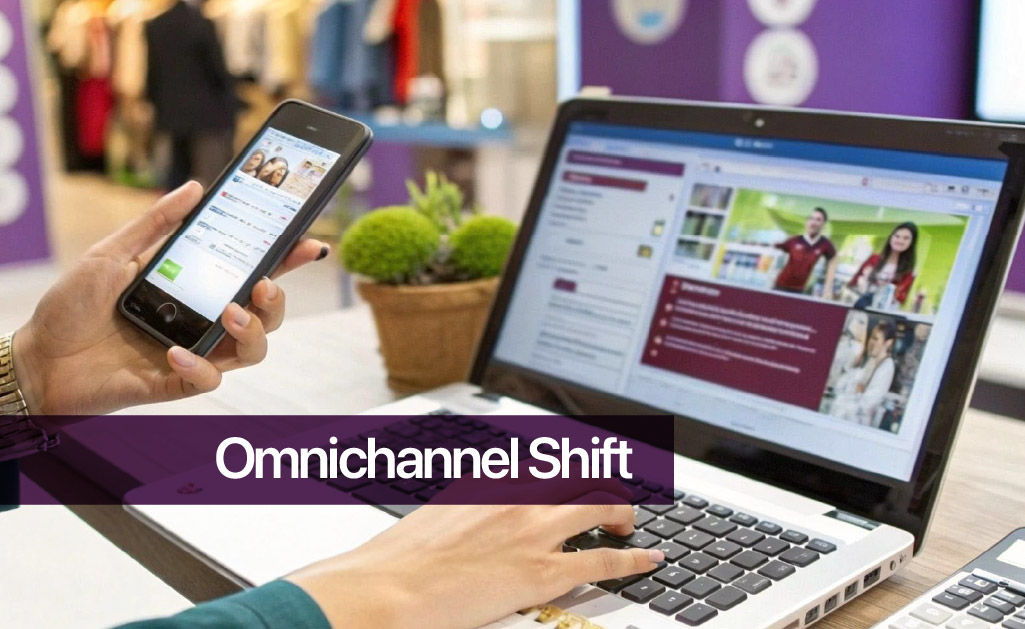
The difference really clicks when you follow a typical customer journey. A call center is linear, built to handle one call at a time, efficiently. A contact center, on the other hand, is built to manage a dynamic conversation that might unfold over several days and across multiple platforms.
This shift is all about the expectation of a seamless experience. Research shows that 59% of customers will ditch a brand after just one bad experience, which makes a unified support strategy non-negotiable. Nothing is more frustrating for a customer than having to repeat their story every time they switch from chat to email to phone.
From A Single Call To A Unified Conversation
Let’s look at a real-world example with an e-commerce brand to see the difference in action.
- The Old Way (Call Center): A customer, Sarah, buys shoes online, but they arrive in the wrong size. She finds the company’s 800 number, gets stuck in an IVR menu, and waits on hold. Finally, an agent answers, processes her return, and gives her a reference number. The call was handled, but it exists in a silo.
- The New Way (Contact Center): Sarah gets the wrong size shoes. She snaps a photo and sends a DM to the brand on Instagram. An agent replies, confirms her order, and starts the exchange right there in the chat. A few minutes later, an automated confirmation email hits her inbox. The next day, she uses the website’s live chat to check on the shipping date. The new agent sees her entire history—from Instagram to email—and gives her an instant update without making her repeat a single detail.
This second scenario is where omnichannel shines. The conversation flows naturally between touchpoints, all feeding into a single, continuous customer record. It completely eliminates that all-too-common frustration of re-explaining a problem, which is a huge killer of customer satisfaction.
A call center answers the phone; a contact center manages the entire customer conversation, wherever it happens.
This unified magic is powered by sophisticated platforms that pull every channel into one dashboard. Technologies like Contact Center as a Service (CCaaS) are central to this, providing the cloud-based backbone needed to connect everything. You can learn more about how these platforms work in our guide on how CCaaS is revolutionizing customer service.
Meeting Customers Where They Are
Ultimately, this strategic shift is about a simple realization: customer service is no longer a destination you force customers to dial into. It’s a fluid capability that needs to be present wherever your customers already are.
This means businesses have to adapt and build out their support to include channels like:
- Social Media: For quick questions and brand engagement.
- Live Chat: For instant help right on your website, especially during a purchase.
- Email: For detailed, less urgent issues and follow-ups.
- SMS: For timely updates like shipping notifications or appointment reminders.
By embracing this model, companies stop just closing tickets. They start building stronger, more resilient relationships with their customers. The focus moves from transactional metrics like Average Handle Time to relational outcomes like Customer Effort Score and lifetime value. It’s a forward-thinking approach that’s absolutely essential for any competitive business today.
Comparing Technology Stacks in Contact Centers vs Call Centers
The engine running any customer support operation is its technology. When you compare a contact center vs. a call center, the difference in their tech isn’t just about having more gadgets—it’s a fundamental split in capability, strategy, and the customer experience you can deliver.
A call center’s technology is built for one thing: handling voice calls as efficiently as possible. A contact center’s infrastructure, on the other hand, is a fully connected ecosystem designed to manage the entire customer journey, no matter where it happens.
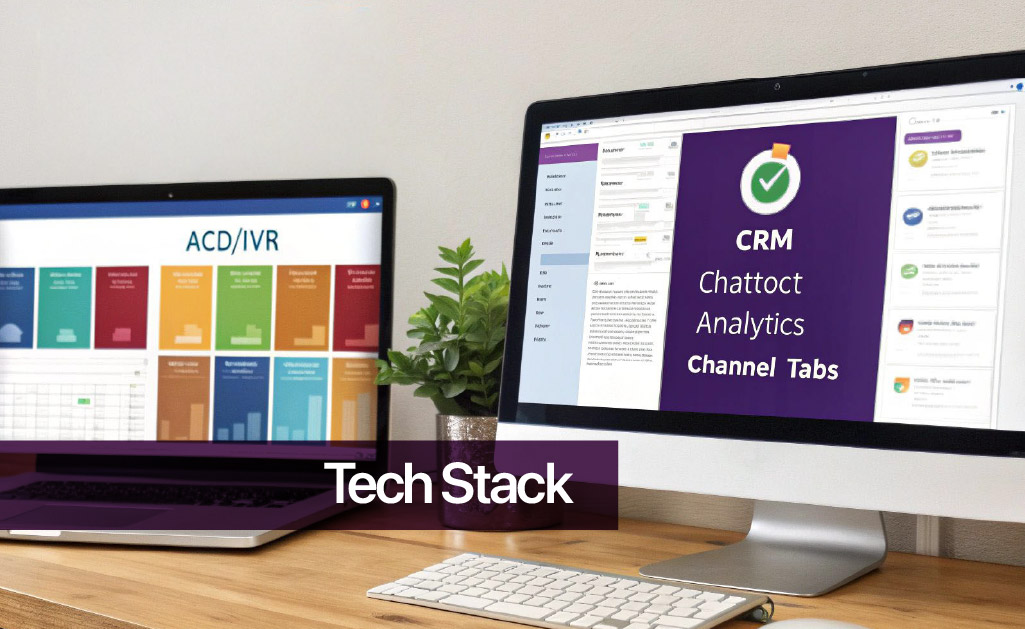
This technological divide is a huge reason the global contact center outsourcing market is set to explode, with a forecasted CAGR of around 9.8% from 2025 to 2030. Businesses are actively looking for partners who can deliver these advanced, multi-channel capabilities without the massive upfront investment.
The Call Center Technology Foundation
A traditional call center runs on a core set of tools that have been refined over decades to perfect voice communication. These systems are rock-solid for what they do, but they’re very much limited to the world of phone calls.
The main components usually include:
- Automatic Call Distributor (ACD): This is the air traffic controller of the call center. An ACD takes all incoming calls and routes them to the right agent based on pre-set rules, like who has the right skills or who’s been waiting for a call the longest.
- Interactive Voice Response (IVR): You know these as the automated menus that greet you (“Press 1 for sales…”). They’re great for sorting callers, answering basic questions without an agent, and making sure calls get to the right department, which helps with first-call resolution.
- Predictive Dialers: For any outbound team, predictive dialers are non-negotiable. They automatically dial numbers from a list and only connect an agent when a real person picks up, which massively boosts productivity for sales or collections campaigns.
While these tools are masters of voice-centric work, they tend to create data silos. An agent might wrap up a call perfectly, but the history of that conversation often stays locked inside the phone system, completely invisible to other teams or any future chats on different channels.
The Contact Center’s Integrated Ecosystem
A contact center’s tech stack is all about integration and shared data. It takes the foundational tools of a call center and weaves them together with a suite of digital tools to create a single, unified view of the customer.
While a call center’s tech manages calls, a contact center’s tech manages customer relationships.
This integrated approach often runs on flexible, subscription-based platforms known as Contact Center as a Service (CCaaS). These platforms are the backbone of any modern customer experience, offering a whole menu of powerful features. Exploring a provider’s cloud call center solutions is a smart way to see how this tech can be rolled out without a huge capital expense.
The following table breaks down how specific technologies are applied differently in each environment, highlighting the leap from simple call handling to comprehensive customer journey management.
Technology Stack Comparison: Contact Center vs Call Center
| Technology | Call Center Application | Contact Center Application |
|---|---|---|
| ACD | Routes incoming phone calls to available agents. | Routes interactions from all channels (voice, chat, email, social) to the best-skilled agent. |
| IVR | A voice-only menu for call segmentation and basic self-service. | An Intelligent Virtual Assistant (IVA) that handles complex queries via voice or text. |
| CRM | Often a separate, standalone system with manual data entry after calls. | Deeply integrated to provide a 360-degree view of the customer across all touchpoints. |
| Dialers | Predictive and auto-dialers for outbound phone campaigns. | Omnichannel campaign tools for coordinated outreach via phone, email, and SMS. |
| Analytics | Basic call metrics: call volume, handle time, abandon rate. | Advanced analytics: customer sentiment, trend analysis, and agent performance across channels. |
| AI | Limited to basic call routing or speech-to-text transcription. | Powers chatbots, predictive engagement, and real-time agent assistance. |
This comparison makes it clear: contact centers don’t just add more tools; they use technology to create a cohesive, data-rich environment that puts the customer at the center of every interaction.
When comparing technology, the role of a Customer Relationship Management (CRM) system is what truly sets the two apart. Deep CRM integration is the glue that turns a collection of separate channels into a true omnichannel strategy. For a closer look, understanding essential CRM features can really drive home their importance.
Let’s look at a real-world example:
- Without CRM Integration (Call Center): A customer calls about a billing mistake. The agent can’t see their previous emails with the support team and has to ask the customer to start from scratch. Frustrating, right?
- With CRM Integration (Contact Center): The same customer calls. The agent’s screen instantly shows the customer’s entire history—every purchase, support ticket, email, and chat transcript. The agent can immediately say, “I see you were just emailing with my colleague about this. Let’s get it sorted,” creating a smooth, informed experience.
Other game-changing technologies in a contact center include:
- AI-Driven Analytics: These tools dig into conversations across every channel to spot customer sentiment, identify emerging issues, and monitor agent performance for quality.
- Chatbots and Virtual Assistants: These handy automated tools can tackle routine questions on digital channels 24/7, freeing up your human agents to handle the more complex, high-value conversations.
Working with a nearshore partner like CallZent gives businesses instant access to this entire advanced technology stack. This lets you launch a world-class contact center operation fast, knowing the infrastructure is managed, updated, and optimized by experts who live and breathe this stuff.
Agent Skills and Performance in Contact Centers vs Call Centers
Beyond the tech stack, it’s the people on the front lines who make or break the customer experience. The skillset required for a traditional call center agent is fundamentally different from what a modern contact center agent needs—it’s a classic case of specialization versus versatility.
A call center agent is a master of the spoken word. Their success is built on exceptional verbal communication, active listening, and the ability to project empathy and confidence through their tone alone. They are trained for efficiency, aiming to resolve issues on the first try and move on to the next call.
A contact center agent, on the other hand, has to be a communications chameleon. They need all the verbal chops of their call center peers, plus the ability to write sharp, concise, and on-brand responses for chat and email. Multitasking is in their DNA—they often juggle several live conversations at once without letting the quality of service dip for a second.
Training for a Multidimensional World
The training for these two roles couldn’t be more different. Call center training is laser-focused on phone etiquette, script adherence, and mastering the tools of the trade like the IVR and ACD systems. It’s a deep dive into a single, critical channel.
Contact center training is a much broader endeavor. Agents learn to navigate multiple platforms and adapt their communication style on the fly—shifting from a formal email to a casual social media reply in an instant. This is where having a bilingual, culturally aligned agent pool becomes a massive advantage for businesses.
A call center agent is trained to be an expert in conversations. A contact center agent is trained to be an expert in communication, no matter the medium.
At CallZent, we cultivate agents who are not just fluent in English and Spanish but are also deeply attuned to the nuances of the North American market. This ensures that whether they’re on a call, in a chat, or responding to a social media comment, the interaction feels natural and effective.
Measuring What Truly Matters
This split in skills leads directly to a split in how you measure success. The KPIs for a voice-only environment are far more straightforward than those in an omnichannel world. Understanding and tracking performance is critical; you can see how these metrics fit into a broader operational strategy by reviewing the essential Human Resource KPIs.
Call centers live and breathe efficiency-based KPIs. The industry standard is to answer 80% of calls within 20 seconds. Metrics like First Call Resolution (FCR) are king, because fixing a problem on the first try is the ultimate goal. The whole point is to reduce repeat calls and keep agent productivity high.
Contact centers, however, use a much wider array of metrics to get a full 360-degree view of the customer experience. While speed still matters, the focus shifts to the overall quality of the customer’s journey. For a deeper look at these, check out our guide on key customer service performance indicators.
Here are a few metrics that take center stage in a contact center:
- Customer Satisfaction (CSAT): This is tracked on a per-channel basis. A customer might love your chat support but be frustrated by your email response times. Tracking CSAT this way pinpoints exactly where you’re winning and where you need to improve.
- Customer Effort Score (CES): This KPI asks a simple question: How easy was it for the customer to get help? A low-effort experience is a huge predictor of customer loyalty, making CES a vital metric for any business that cares about retention.
- Channel-Specific Metrics: This bucket includes things like Average Response Time for emails and chats or resolution rates within a single social media thread. These numbers provide granular insights into how each touchpoint is performing.
At the end of the day, call center metrics focus on the efficiency of a single transaction. Contact center metrics evaluate the effectiveness of the entire customer relationship.
Choosing The Right Model For Your Business
Figuring out the contact center vs. call center debate isn’t about picking a “best” option—it’s about matching the right strategy to your specific business needs, customer habits, and future goals. This decision requires a clear-eyed look at where your business is today and where you’re headed.
For some operations, a streamlined, voice-focused call center is the perfect, most cost-effective tool. But for any brand aiming to build deep, lasting customer relationships across multiple digital touchpoints, a modern contact center is essential.
When A Call Center Is The Smart Choice
Despite all the buzz around omnichannel engagement, the traditional call center model is still a powerful and highly efficient solution for certain situations. Don’t mistake “traditional” for “outdated.”
A call center really shines when your core business function revolves around high-volume, direct voice conversations.
Think about these scenarios where a call center is the ideal choice:
- High-Volume Outbound Sales: For a telemarketing or lead generation team, the objective is straightforward: connect with as many prospects as possible. A call center armed with powerful predictive dialers and fine-tuned scripts is built for this exact purpose, maximizing agent talk time and closing opportunities.
- Focused Appointment Setting: Medical offices, B2B service providers, and home services companies often depend on a dedicated team to fill the calendar. A voice-only approach keeps this process simple and efficient without the added complexity of managing other channels.
- Emergency Response or Dispatch: When speed and clarity are everything, voice is unbeatable. Emergency services or roadside assistance providers need a robust call center to handle urgent inbound calls without the distraction of texts or emails.
- Surveys and Market Research: For organizations conducting phone-based surveys, a call center provides the structure and tools needed to execute campaigns at scale and ensure consistent data collection.
In these cases, layering on digital channels would just introduce unnecessary complexity and cost without adding real value. The bottom line is that the customer journey is primarily—and effectively—handled over the phone.
When You Absolutely Need A Contact Center
The need for a contact center becomes crystal clear when your customers are already trying to talk to you across multiple platforms. If you’re ignoring those digital conversations, you’re not just missing service opportunities—you’re actively damaging customer relationships.
A contact center is simply non-negotiable for businesses that care about providing a seamless, consistent customer journey.
Here are the tell-tale signs it’s time to move to a contact center model:
- E-commerce and Retail Brands: Your customers are asking about orders on Instagram, starting returns via website chat, and emailing for support. A contact center unifies these threads, so customers don’t have to repeat themselves every time they switch channels.
- SaaS and Technology Companies: Technical support is rarely a one-call fix. It often involves sharing screenshots over email, walking through steps in a live chat, and maybe escalating to a phone call. An integrated contact center makes this potentially messy process feel smooth.
- Travel and Hospitality: People book flights online, confirm details via SMS, ask questions on Facebook, and call when something goes wrong. A contact center ensures a consistent service experience from the moment they book to their post-trip feedback.
- Financial Services and Insurance: While phone support is vital for sensitive issues, customers also expect to handle routine things like balance checks or policy questions through a secure web chat or mobile app.
If your customer’s journey starts on one channel and finishes on another, you need a contact center. It’s that simple.
This omnichannel capability is what allows a business to build a truly modern customer experience—one where the brand feels present and helpful wherever the customer chooses to show up.
A Practical Checklist To Guide Your Decision
To make a strategic choice, you need to move beyond generic pros and cons and ask yourself some practical questions. Your answers will point you down the right path.
- Where are our customers already trying to reach us? Be honest. Are they just calling, or are you already getting DMs, emails, and chat messages? Map out every single touchpoint.
- What does our ideal customer journey look like in two years? Think about your growth. Are you launching a mobile app? Ramping up your social media presence? Your support model has to align with where you’re going.
- Are our support issues transactional or relational? If you’re mostly resetting passwords (transactional), a call center might be enough. If you’re providing ongoing technical support or building brand loyalty (relational), a contact center is essential.
- Are we optimizing for pure efficiency or the total experience? Call centers are built for efficiency. Contact centers are designed to elevate the overall experience, which is what drives long-term loyalty and customer value.
- What’s our budget and sourcing model? Cost is obviously a huge factor, and this is where smart sourcing becomes critical. It’s a key part of the process to explore different models, and you can learn more by comparing nearshore vs offshore call centers to see how location impacts both cost and quality.
Answering these questions gives you a clear, data-driven foundation for your decision. Whether you need the focused power of a call center or the holistic capabilities of a contact center, a flexible partner like CallZent can design and deliver a solution built specifically for your business and your customers.
Common Questions in the Contact Center vs Call Center Debate
As you weigh the differences between a call center and a contact center, a few practical questions always seem to pop up. Making the right call means looking beyond the definitions and thinking about the real-world impact on your operations, budget, and customer relationships. Here are some straight, actionable answers to what business leaders ask most.
Can A Call Center Become A Contact Center?
Absolutely. Think of it less as a complete teardown and more as a strategic evolution. Moving from a call center to a contact center is all about carefully adding new omnichannel technology, training agents to handle digital channels like chat and social media, and pulling all your customer data into a single, unified view.
The process usually starts by mapping your customer’s journey. Where are they already interacting with you? Which digital channels do they lean on? Once you know that, you can phase in new platforms and skills methodically. A nearshore partner can make this migration feel seamless, bringing both the tech and the trained agents to get you there without disrupting your current support.
Is A Contact Center More Expensive Than A Call Center?
It’s true that the initial tech investment for a contact center can look higher on paper, but it’s crucial to look at the long-term return on investment (ROI). Contact centers often deliver huge value by improving customer retention and making your operations more efficient, which frequently leads to a lower total cost of ownership over time.
For instance, one contact center agent can often juggle multiple chat conversations at once, handling a much higher volume of inquiries than a voice-only agent. When you pair that efficiency with the higher customer satisfaction that comes from giving people options, the value becomes obvious. Using a nearshore outsourcing model is also a smart way to manage these costs, giving you access to advanced tech without the steep upfront investment.
The key isn’t just comparing the sticker price of the technology; it’s about measuring the total cost of delivering a modern, competitive customer experience.
Which Industries Benefit Most From A Contact Center?
Some industries, especially those with diverse, high-volume customer interactions, see the biggest and most immediate wins from a contact center model.
- E-commerce and Retail: It’s standard practice to manage order inquiries, return requests, and product questions across website chat, social media DMs, and email.
- Travel and Hospitality: Customers expect to manage bookings, get trip updates, and sort out issues on multiple platforms, from SMS alerts to in-app chat.
- SaaS and Technology: Tech support almost always requires a mix of channels, like sharing help docs via email, walking a user through steps on a live chat, and jumping on a call when things get tricky.
At the end of the day, any business that wants to build strong, lasting customer relationships will find a contact center is essential for meeting modern expectations. This decision tree helps simplify the choice based on where your customers are.
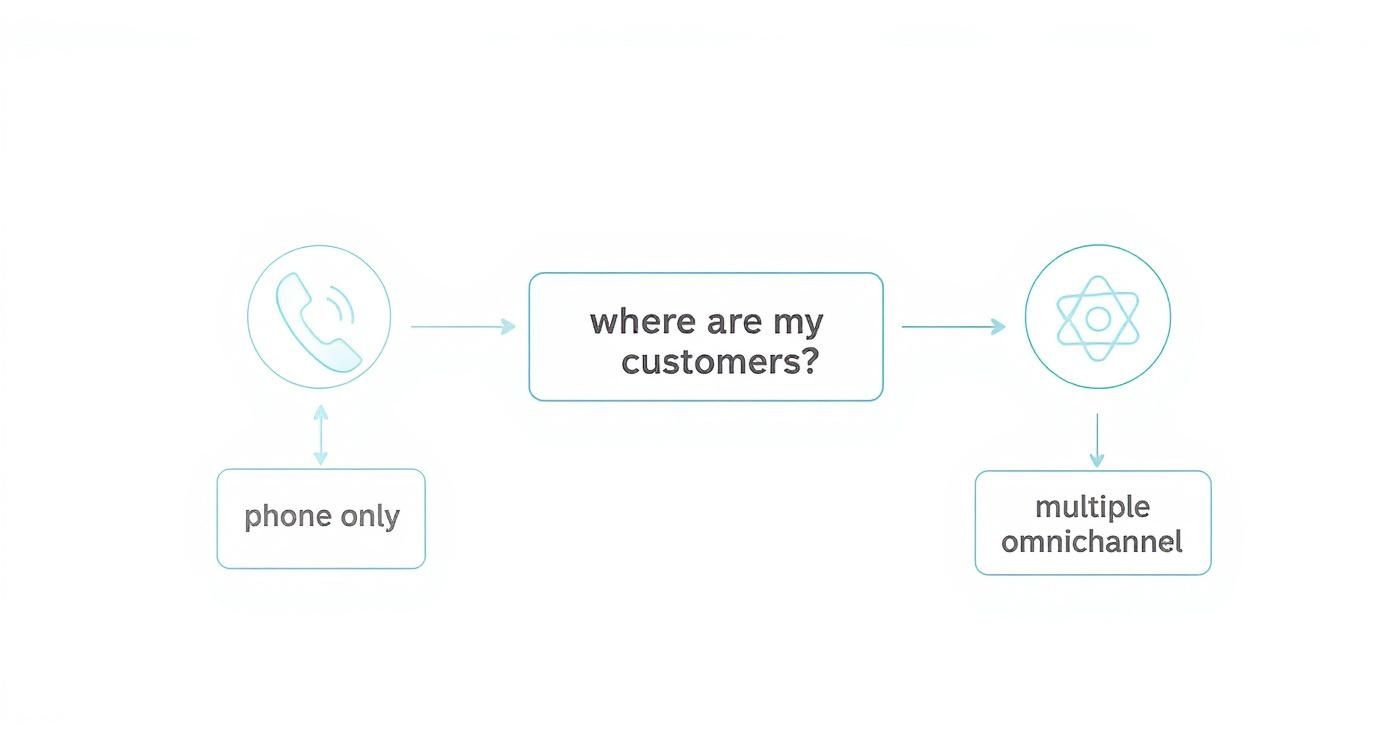
The flowchart makes it simple: if your customer conversations are happening across multiple channels, an omnichannel contact center is the way to go.
How Does A Nearshore Partner Support These Models?
A nearshore partner gives you a strategic edge for both models by delivering a powerful combination of flexibility and expertise.
- For a call center, a nearshore provider brings a cost-effective, bilingual, and highly skilled workforce that operates in a compatible time zone.
- For a contact center, they provide immediate access to advanced omnichannel technology and multi-skilled agents, so you don’t have to make a massive capital investment yourself.
This kind of partnership lets you scale your customer experience capabilities quickly and efficiently. By tapping into specialized talent and proven infrastructure, you can stay focused on your core business while an expert team handles the operational side of things.
🚀 Transform Your Customer Experience with CallZent
Whether you need a specialized call center or a fully omnichannel contact center, CallZent builds the right solution for your business.