Skip to content

Customer Experience Strategy
Top 10 Customer Service Best Practices for 2026
Discover the top customer service best practices for 2026, including omnichannel support, personalization, and FCR strategies to elevate CX.
TL;DR — Quick Takeaways
- Customer service best practices transform support into a growth engine.
- Omnichannel support and First Contact Resolution (FCR) are critical for success.
- Personalization, proactive service, and agent empowerment drive loyalty.
- CallZent helps scale these strategies with nearshore, bilingual teams.
In today’s competitive market, is your customer service a cost center or a growth engine? The line between a thriving business and a forgotten one is often drawn by the quality of its customer interactions. For many organizations, the challenge is turning a support department from a necessary expense into a powerful engine for growth. This is where moving beyond basic support to implement proven customer service best practices makes all the difference.
This guide provides a definitive roundup of the top 10 strategies that leading North American companies use to gain a competitive edge. These are not abstract theories; they are actionable frameworks designed for immediate impact. From mastering omnichannel communication and prioritizing first contact resolution to building a culture of empathy, these practices are your roadmap to not just meeting customer expectations, but consistently exceeding them.
Our goal is to give you the practical tools needed to transform every customer touchpoint into a lasting, positive relationship. We will explore how to implement each of these best practices effectively, with real-world examples and clear steps tailored for today’s BPO and call center environments.
1. Create a Seamless Omnichannel Customer Support Experience
Omnichannel support isn’t just about being available on multiple channels; it’s about integrating those channels into a single, unified conversation. This approach allows a customer to start a query via a website chatbot, continue it over the phone, and receive a follow-up summary by email without ever having to repeat themselves. Each agent has the full context of the customer’s journey, regardless of the touchpoint.
This seamless experience is a core component of modern customer service best practices. For a Tijuana-based BPO serving North American clients, implementing a true omnichannel strategy means moving beyond siloed departments. It requires a central system where all interactions, history, and customer data live. For example, a customer inquiring about a retail order should be able to switch from live chat on a mobile app to a phone call with an agent who can already see their order history and the chat transcript.
How to Implement Omnichannel Support
Success depends on unifying technology and training. Start by mapping your customer’s journey to identify the channels they actually use and prefer.
- Centralize Your Data: Use a Customer Relationship Management (CRM) or a dedicated customer data platform (CDP) to create a 360-degree view of every customer. This ensures an agent on a call has access to a recent chat transcript.
- Integrate Your Knowledge Base: A single, accessible knowledge base that feeds information to agents, chatbots, and self-service portals guarantees consistent answers across all platforms.
- Train for Channel Fluidity: Agents must be proficient in more than just phone etiquette or email writing. Train them on the specific protocols and tone for chat, SMS, and social media to maintain a consistent brand voice.
A true omnichannel system puts the customer’s context at the center of every interaction, eliminating the frustration of starting over and demonstrating that you value their time.
By connecting every touchpoint, businesses have proven that this model boosts customer loyalty and satisfaction. To explore this strategy further, you can learn more about creating a seamless omnichannel customer experience and how it can be adapted for your specific industry needs.
2. Improve First Contact Resolution (FCR)
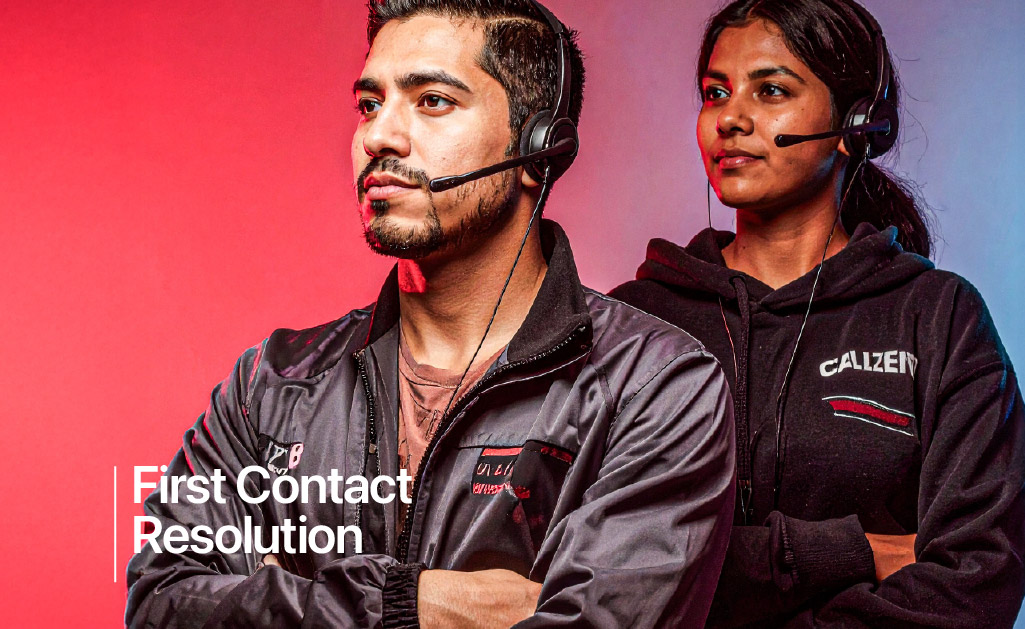
First Contact Resolution (FCR) is a powerful measure of efficiency and satisfaction, representing the percentage of customer issues resolved completely in a single interaction. When an inquiry is handled on the first try, it eliminates the need for follow-up calls or emails, directly improving the customer experience. A high FCR rate is a hallmark of excellent customer service best practices, showing that a company respects its customers’ time.
This metric isn’t just about making customers happy; it has a significant financial impact. Companies that prioritize FCR often see operational costs drop by preventing the expense of repeat contacts. For businesses considering a nearshore BPO partner, a provider’s ability to deliver high FCR rates is a clear indicator of operational excellence. For example, a telecommunications client’s customer calls about a billing error; an empowered agent resolves it on the first call by correcting the bill and applying a small credit, preventing a follow-up call.
A High-FCR Strategy: A Key Customer Service Best Practice
Achieving a high FCR rate depends on empowering agents with the right tools, knowledge, and authority. The goal is to remove internal barriers that force customers to call back.
- Build a Comprehensive Knowledge Base: A centralized, up-to-date knowledge management system is essential. When agents have immediate access to accurate product information, policies, and troubleshooting guides, they can solve problems faster and more confidently.
- Empower Your Agents: Give agents the authority to make decisions, such as issuing refunds or credits up to a predefined limit, without needing a manager’s approval. This autonomy is crucial for resolving issues on the spot.
- Track and Analyze FCR Data: Measure FCR by individual agent, team, and issue type. Analyzing this data reveals patterns, identifies common reasons for repeat contacts, and pinpoints specific training needs or process gaps.
Focusing on First Contact Resolution not only boosts customer loyalty but also directly reduces operational costs by making every interaction more efficient.
By analyzing call recordings and creating clear escalation paths for truly complex issues, businesses can systematically improve their FCR. To get started, you can explore proven tactics to improve first call resolution and see how these strategies can be applied to your team.
3. Use Personalization and Customer Data Intelligence
Personalization moves customer service beyond generic scripts by using data to tailor every interaction. This approach uses analytics to help agents understand a customer’s specific context, anticipate their needs, and deliver customized solutions. It transforms standard support into a meaningful, relationship-building conversation.

This strategy is one of the most effective customer service best practices for creating memorable experiences. For BPO clients, this means using data to show customers you know them. A practical example: a SaaS company’s support agent sees a customer has been using their software for three years but hasn’t adopted a new key feature. The agent can proactively say, “I see you’re a long-time user, thank you! Have you had a chance to try our new reporting dashboard? It could save you a lot of time.”
How to Implement Personalization and Data Intelligence
Effective personalization relies on collecting, analyzing, and acting on customer data ethically and efficiently.
- Unify Your Customer Data: Invest in a customer data platform (CDP) or a robust CRM to create a single, unified profile for each customer. This allows an agent to see past purchases, support history, and preferences in real time.
- Segment Your Audience: Group customers based on behaviors, lifetime value, or stated preferences. This enables more targeted communication and proactive support for high-value segments.
- Train for Data-Driven Empathy: Equip agents with the skills to use customer data not just for efficiency, but to build rapport. Training should cover how to reference past interactions naturally.
Personalization is the difference between saying “How can I help you?” and “I see you recently purchased our X-1 model; are you calling about setting it up?” It proves you’re paying attention.
By turning data into insight, companies can make customers feel seen and valued, a powerful driver of long-term loyalty. You can learn how to personalize customer interactions and apply these concepts to strengthen your own customer relationships.
4. Prioritize Agent Training and Empowerment
Agent training and empowerment is a foundational practice for building a customer service team that can resolve issues with confidence and authority. This approach focuses on giving agents the product knowledge, soft skills, and decision-making power needed to handle complex problems independently, without constant escalation.
Empowered agents are more motivated and deliver a superior customer experience. For businesses using a BPO partner, investing in this area is a direct investment in brand reputation. It shifts the agent’s role from a script-follower to a problem-solver, a key component of modern customer service best practices. For instance, a hotel guest calls the support line provided by a BPO to complain about a noisy room. An empowered agent, without needing manager approval, can offer to move the guest to a quieter room and provide a voucher for the hotel restaurant as a gesture of goodwill.
How to Implement Agent Training and Empowerment
Success is built on a dual foundation of continuous learning and genuine trust.
- Develop Role-Specific Training: Create programs with clear competency frameworks for different roles. A technical support agent needs different training than a billing specialist. Include product knowledge, system navigation, and soft skills.
- Establish Clear Boundaries for Authority: Empower agents by giving them the authority to make decisions, such as issuing credits or refunds up to a certain limit. This demonstrates trust and enables FCR.
- Foster a Culture of Continuous Learning: Implement peer mentoring for new hires and offer ongoing learning opportunities like certifications or advanced skill workshops. This keeps your team’s abilities sharp.
Empowering agents isn’t a risk; it’s a strategy. When you give your team the authority to solve problems, you show customers you trust your people to do the right thing.
Companies have built legendary service reputations by empowering their teams to resolve issues effectively. To build these capabilities within your own team, you can learn more about how to improve customer service skills with targeted coaching and development.
5. Offer Proactive Customer Service and Issue Prevention
Proactive service is the practice of anticipating customer needs and resolving potential issues before they become full-blown problems. Instead of waiting for a complaint, this approach uses data to identify at-risk customers, send preventative communications, and solve common friction points.
This forward-thinking model is a key element of modern customer service best practices. For North American businesses and their nearshore BPO partners, being proactive reduces inbound contact volume, which lowers operational costs. For example, an e-commerce platform that texts a customer about a potential delivery delay before the customer has to call and ask turns a moment of frustration into a moment of appreciation.
How to Implement Proactive Customer Service
Effective implementation relies on data analysis and targeted communication. The goal is to identify patterns that signal a future problem and intervene with a helpful solution.
- Analyze Historical Data: Dive into your support tickets, call logs, and CRM data to pinpoint recurring issues.
- Monitor the Customer Lifecycle: Track key stages in the customer journey, such as onboarding or renewal dates. Send relevant resources or check-ins at these critical moments.
- Develop Automated Monitoring: Set up alerts for issues that might indicate a problem, like a service degradation in a specific area for a telecom provider.
- Create Targeted Outreach: Build communication campaigns based on specific customer behaviors. An airline that proactively rebooks passengers during a flight disruption is an excellent example.
Proactive service transforms customer support from a reactive cost center into a value-driving engine that prevents problems and builds lasting loyalty.
Companies across industries, from healthcare providers sending appointment reminders to SaaS companies offering tutorials for underused features, demonstrate the power of this approach. By getting ahead of issues, you prove that you value your customers’ time and success.
6. Implement Strong Quality Assurance and Performance Monitoring
Quality Assurance (QA) is the systematic process of evaluating customer interactions against a set of predefined standards. More than just listening to calls, a robust QA program involves structured monitoring, objective analysis, and consistent coaching to ensure every agent delivers exceptional and compliant service.
For North American businesses and their BPO partners in Tijuana, a strong quality program is a cornerstone of effective customer service best practices. It turns subjective service goals into measurable outcomes. For example, a financial services client uses QA to confirm agents adhere to compliance scripts for every call, while an e-commerce platform ensures its brand voice is consistent. This process identifies training gaps and drives accountability.
Best Practices for Quality Assurance and Performance Monitoring
A successful QA program is built on clarity, consistency, and a commitment to agent development.
- Develop Objective Scorecards: Create clear, unbiased quality scorecards with specific, measurable criteria like accuracy of information, adherence to compliance scripts, empathy, and problem resolution.
- Use Analytics for Scale: Employ speech and text analytics tools to monitor 100% of interactions, not just a small sample. This technology can automatically flag keywords, sentiment, and compliance deviations.
- Conduct Regular Coaching: QA is not about punishment; it’s about improvement. Schedule regular one-on-one coaching sessions to review scorecards, listen to call examples, and create personalized action plans with agents.
- Balance Quality and Efficiency: While quality is paramount, it must be balanced with efficiency metrics like Average Handle Time (AHT). A great QA program helps agents become both effective and efficient.
A well-executed Quality Assurance program transforms customer service from a cost center into a value driver by creating a culture of continuous improvement and accountability.
By pairing nearshore teams with real-time quality collaboration, businesses gain direct insight and control over their service standards. To see how this can be applied, you can learn more about CallZent’s call center management expertise and our approach to building high-performance teams.
7. Build a Customer Feedback Loop (Voice of Customer)
A Voice of the Customer (VoC) program is a systematic process for gathering, analyzing, and acting on customer feedback. It moves beyond passive listening by creating a structured loop where insights from surveys, reviews, and direct agent interactions drive measurable improvements. For North American businesses, a strong VoC program is one of the most critical customer service best practices, as it directly connects service delivery to business outcomes.
Instead of guessing what customers want, this approach provides hard data. It pinpoints specific pain points in the customer journey and uncovers opportunities for innovation. A real-world example: A subscription box company noticed a spike in calls about damaged items. Their VoC program, which included agent feedback, revealed the issue was poor packaging. By changing the packaging, they reduced calls and improved customer satisfaction.
How to Implement a Voice of the Customer Program
Success is built on a commitment to not just collect feedback, but to act on it transparently.
- Establish Multiple Feedback Channels: Use a mix of channels like post-interaction surveys (NPS, CSAT, CES), online reviews, social media listening, and direct feedback from customer service agents to get a complete picture.
- Analyze and Identify Themes: Use analytics to move beyond individual complaints and identify recurring themes. Conduct root cause analysis on negative feedback to understand the core problem.
- Close the Feedback Loop: One of the most powerful steps is communicating back to customers. When you make a change based on feedback, announce it. This shows customers they are heard and their input leads to real improvements.
An effective Voice of the Customer program turns feedback from a simple metric into a strategic asset, guiding everything from agent training to product development.
By systematically listening and responding, companies demonstrate a genuine commitment to the customer experience. This builds trust and creates a cycle of continuous improvement. To see how this integrates with quality assurance, you can explore our guide to call center QA and learn how feedback fuels performance.
8. Empower Customers with Self-Service and Knowledge Management
Empowering customers to find answers on their own is a cornerstone of efficient, modern support. Self-service and knowledge management involve creating a rich ecosystem of resources like FAQs, how-to guides, and automated tools that allow customers to resolve issues independently. This approach not only meets the expectations of today’s users but also significantly reduces the strain on your support agents.
This strategy is one of the most impactful customer service best practices for BPO clients looking to scale operations intelligently. By building a robust knowledge base, you create a single source of truth that powers websites, chatbots, and even your human agents. For example, a software company can create a detailed video tutorial on setting up a new feature, reducing calls from new users by 30% and allowing agents to focus on more complex technical problems.
How to Implement Self-Service and Knowledge Management
A successful self-service strategy hinges on creating accessible, accurate, and easy-to-navigate content.
- Develop a Comprehensive Knowledge Base: Organize articles, guides, and tutorials into clear categories. Use the same language your customers use, not internal jargon.
- Optimize for Search: Implement a powerful search function within your help center. Monitor failed searches to identify content gaps and areas for improvement.
- Integrate Intelligent Tools: Use AI-powered chatbots to guide users to the right articles or handle routine tasks like order tracking.
- Create Visual and Multilingual Content: Use videos and infographics for complex topics. For businesses serving diverse markets, providing multilingual content is critical. This aligns with CallZent’s bilingual capabilities, ensuring you support your entire customer base.
Effective self-service isn’t about deflecting customers; it’s about empowering them with immediate, 24/7 access to answers, which builds trust and improves satisfaction.
By measuring the impact of self-service on contact volume reduction, you can directly see its value and continuously refine your strategy.
9. Define Response Times with Service Level Agreements (SLAs)
Defining and enforcing response time standards with Service Level Agreements (SLAs) is a cornerstone of professional customer service. SLAs are formal commitments that set clear, measurable expectations for how quickly a customer’s issue will be addressed. This practice moves service from a reactive “we’ll get to it when we can” model to a predictable, reliable system.
This commitment to timeliness is one of the most critical customer service best practices for North American businesses and their nearshore BPO partners. It directly impacts customer satisfaction. By establishing metrics like “90% of calls answered in 20 seconds,” companies manage expectations and build a reputation for reliability. For instance, an e-commerce company can promise a 24-hour response time on all email inquiries, a commitment its BPO partner in Tijuana is contractually obligated to meet.
Best Practices for Implementing Effective SLAs
Success with SLAs is about finding the right balance between speed and quality, not just hitting a number.
- Set Realistic, Data-Informed Targets: Analyze historical performance and industry benchmarks to establish achievable goals. An email SLA of four hours or a chat response target under two minutes should be based on your team’s actual capacity.
- Balance Speed with Quality: An exceptional response time is meaningless if it leads to low First Call Resolution (FCR). Coach agents to focus on complete, accurate answers.
- Monitor and Escalate Proactively: Use your contact center dashboard to track SLA compliance in real time. Implement automated alerts for potential breaches so supervisors can intervene.
- Align Incentives with Performance: Incorporate SLA attainment into agent performance metrics and client contracts. Including penalties for misses and bonuses for exceeding targets creates a shared commitment to excellence.
SLAs transform a vague promise of “good service” into a specific, measurable commitment that holds your team accountable and shows customers you value their time.
By setting and meeting these standards, you create a disciplined operational rhythm that improves both agent performance and customer loyalty. To learn how a strategic nearshore partnership can help you consistently meet aggressive SLAs, you can explore our customer service outsourcing solutions and see how we build high-performance teams.
10. Lead with Empathy-Driven Customer Service
Empathy-driven service is the practice of actively understanding, acknowledging, and validating a customer’s feelings to build a genuine connection. This approach moves beyond transactional problem-solving and recognizes that most service interactions have an emotional component. Agents trained in emotional intelligence can de-escalate frustration and turn negative experiences into opportunities for loyalty.

This human-centric model is a cornerstone of exceptional customer service best practices. For BPO clients, fostering an empathy-first culture means training agents to listen for the emotion behind the words. A customer calling about a mistaken charge isn’t just questioning a number; they may be feeling worried or untrusting. An empathetic agent acknowledges this: “I can certainly understand your concern, and I want to get this sorted out for you right away.” A deep understanding of what is emotional intelligence in leadership can significantly enhance this approach.
How to Implement Empathy-Driven Service
Success hinges on hiring for emotional aptitude and providing ongoing, focused training.
- Hire for Emotional Intelligence: Use behavioral questions (“Tell me about a time you dealt with a frustrated customer”) to identify candidates who naturally demonstrate empathy and composure.
- Train Active Listening and Validation: Coach agents on specific techniques like reflective listening (“So, what I’m hearing is you’re frustrated with the delay…”) and using empathy statements (“I can understand why that would be upsetting”).
- Empower Your Agents: Give agents the flexibility to deviate from scripts and the authority to make decisions that are in the customer’s best interest.
- Measure What Matters: Track metrics like Net Promoter Score (NPS) and Customer Satisfaction (CSAT) alongside efficiency KPIs to get a full picture of the interaction’s emotional outcome.
An empathetic interaction shows customers they are being heard as a person, not just processed as a ticket number, building a foundation of trust that efficiency alone cannot create.
To better equip your team, you can learn more about integrating emotional intelligence into customer service and how it strengthens customer relationships.
10-Point Customer Service Best Practices Comparison
| Solution | 🔄 Implementation complexity | 💡 Resource requirements | 📊 Expected outcomes (⭐) | Ideal use cases | ⚡ Key advantages |
|---|---|---|---|---|---|
| Omnichannel Customer Support | High — complex integrations and cross-channel workflows | High — unified platform, integrations, multi-channel training | Consistent CX, higher satisfaction and FCR — ⭐⭐⭐⭐ | Retail, large ecommerce, enterprises with multi-touch customers | Seamless channel switching; unified customer view |
| First Contact Resolution (FCR) | Medium — training, empowerment, and KM needed | Medium — knowledge systems, agent authority, coaching | Fewer repeat contacts, cost savings, higher loyalty — ⭐⭐⭐⭐ | Billing/account issues, technical support, high-volume contact centers | Reduces repeat contacts and operational cost |
| Personalization & Customer Data Intelligence | High — data pipelines, ML models, privacy controls | High — CDP, analytics, AI, data governance | Better retention, upsell, reduced churn — ⭐⭐⭐⭐ | Subscription services, ecommerce, financial services | Tailored experiences; predictive recommendations |
| Agent Training & Empowerment | Medium — program design and continuous coaching | Medium — LMS, mentors, coaching, career paths | Improved FCR, lower turnover, confident agents — ⭐⭐⭐ | High-touch brands, technical support, service-focused firms | Stronger agent performance and retention |
| Proactive Customer Service & Issue Prevention | Medium-High — predictive models and automation | Medium — analytics, monitoring, outbound channels | Lower contact volume, improved NPS, less churn — ⭐⭐⭐ | Telecom, banking, healthcare, SaaS operations | Prevents issues before escalation; reduces costs |
| Quality Assurance & Performance Monitoring | Medium — scorecards, analytics, QA processes | Medium — recording, speech/text analytics, QA staff | Compliance, consistent quality, targeted coaching — ⭐⭐⭐ | Regulated industries, large contact centers | Ensures standards, reduces risk, improves coaching |
| Customer Feedback & Continuous Improvement (VoC) | Low-Medium — collection and analysis processes | Low-Medium — survey tools, analytics, cross-team alignment | Actionable insights, prioritized improvements — ⭐⭐⭐ | Product teams, CX programs, orgs focused on iteration | Direct customer-driven priorities; validates changes |
| Self-Service & Knowledge Management | Medium — content strategy and search optimization | Medium — KB platform, content creators, chatbot tech | 24/7 answers, 20–40% contact reduction — ⭐⭐⭐ | High-volume FAQ scenarios, ecommerce, SaaS support | Reduces load on agents; faster customer answers |
| Response Time & SLAs | Medium — WFM, routing, and monitoring required | Medium — WFM tools, dashboards, staffing flexibility | Predictable service levels; lower wait times — ⭐⭐⭐ | SLA-driven contracts, high-volume inbound support | Predictability and capacity planning; customer trust |
| Empathy-Driven Customer Service & Emotional Intelligence | Medium — culture change and targeted training | Medium — EI training, hiring assessments, coaching | Stronger loyalty, better reviews, reduced churn — ⭐⭐⭐⭐ | Hospitality, healthcare, crisis support, high-emotion interactions | Builds emotional connection; improves retention and de-escalation |
From Best Practices to Best-in-Class Performance
We’ve explored a wide array of powerful customer service best practices, from building a seamless omnichannel experience to meticulously tracking performance. The true goal is not just to check boxes on a list, but to weave these principles into the very fabric of your company culture, creating a system where excellence becomes the standard.
This journey transforms your support center from a reactive cost center into a proactive engine for growth and loyalty. It’s about building a flywheel where empowered, well-trained agents deliver empathetic and efficient service, which in turn delights customers. These satisfied customers are more likely to remain loyal and advocate for your brand. This positive feedback loop is fueled by a commitment to continuous improvement, guided by the very voice of your customer.
Synthesizing Strategy into Action
Adopting these concepts requires a strategic, phased approach. The key is to start with a clear assessment of your current state and prioritize based on impact.
- Immediate Impact: Focus on areas that yield quick wins. Improving agent training on empathy and product knowledge often delivers immediate results in customer satisfaction.
- Systemic Improvement: Simultaneously, lay the groundwork for long-term success. This involves mapping your customer journey to identify friction points that can be addressed with proactive support or better self-service options.
- Cultural Integration: The most profound change comes from making customer-centricity a shared value. This happens when leadership consistently champions these best practices and when agents are empowered to make decisions.
Your customer service team is the voice of your brand; ensuring they’re equipped for excellence is the smartest investment you can make.
Ultimately, mastering these customer service best practices is about more than just solving problems; it’s about building relationships. It’s the difference between a customer who completes a transaction and a customer who feels seen, heard, and valued. This distinction is what separates fleeting market share from enduring brand loyalty.
🚀 Ready to Elevate Your Customer Service?
CallZent helps businesses implement customer service best practices at scale with nearshore, bilingual teams and proven CX strategies.
Talk to an ExpertReady to turn these best practices into your daily reality without the operational overhead? Partnering with CallZent, a nearshore call center in Tijuana, gives you immediate access to a highly trained, bilingual team and a top-tier technology stack, perfectly positioned to serve the North American market. We build our operations around these principles, allowing you to scale your customer service and achieve best-in-class performance faster.