Skip to content
Home ›
Blog › Customer Experience
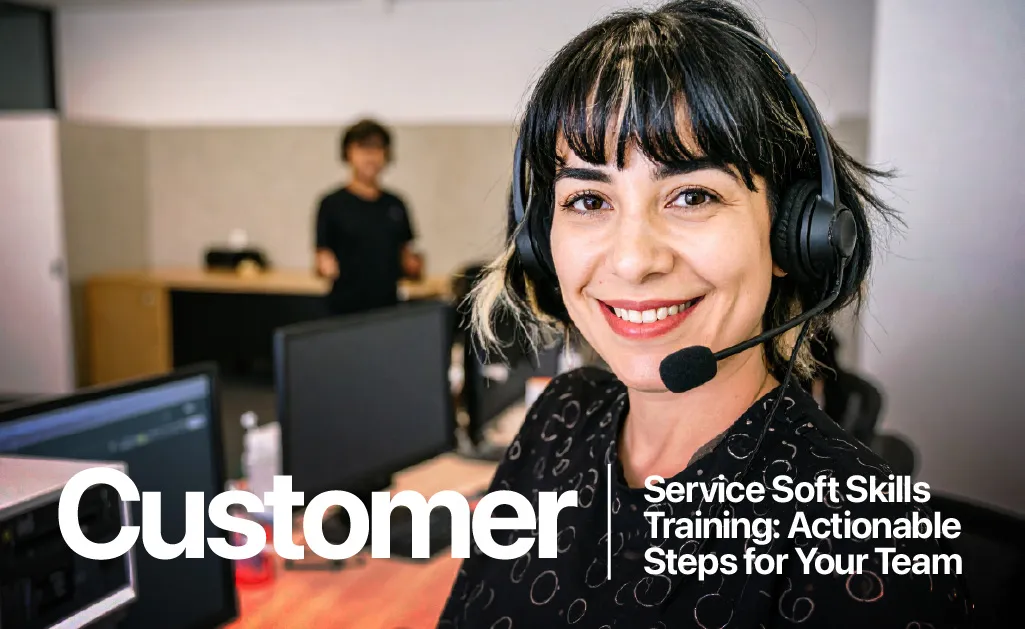
Customer Service Soft Skills Training: A Complete Guide
Elevate your team’s performance with our expert guide to customer service soft skills training. Learn key skills, curriculum design, and how to measure ROI.
TL;DR — The Bottom Line on Soft Skills Training
Effective customer service soft skills training is a strategic investment—not an expense. It equips agents with essential capabilities like empathy,
active listening, and de-escalation that directly impact Customer Satisfaction (CSAT), Net Promoter Score (NPS), and First Call Resolution (FCR).
- A strong program uses a structured curriculum grounded in real scenarios.
- Interactive methods (role-play, workshops, coaching) create muscle memory, not just knowledge.
- ROI is proven by tracking outcomes like CSAT, NPS, FCR, escalation rate, and repeat contacts.
- Long-term success requires continuous reinforcement through coaching and micro-learning.
Are your agents technically proficient yet still struggling to create meaningful customer connections? Technical knowledge can fix a broken product, but it’s soft skills that build loyalty.
Customer service soft skills training develops the interpersonal abilities that matter most—genuine empathy, clear communication, and calm, confident problem-solving. These are the skills that turn routine service interactions into positive, memorable experiences customers remember and recommend.
Why Soft Skills Are Your New Business Superpower
In customer service, technical expertise is the price of entry. An agent may know your product inside and out, but without the ability to connect with a frustrated customer, that knowledge rarely delivers value.
This is where customer service soft skills training stops being a “nice-to-have” and becomes a critical driver of business performance.
Soft skills represent the human side of your brand. They empower agents to navigate emotional, high-stakes situations—turning potential service failures into moments of trust and loyalty.
Core Soft Skills and Their Business Impact
Soft skills don’t just improve experiences; they drive measurable outcomes. The table below connects the most important skills to their real-world business impact.
| Soft Skill | Agent Action Example | Direct Business Impact |
|---|---|---|
| Active Listening | Paraphrasing the customer’s issue to confirm understanding before proposing a solution | Improves First Call Resolution (FCR) and reduces handle time |
| Empathy | Acknowledging frustration: “I understand why that would be upsetting” | Increases CSAT and NPS |
| De-escalation | Maintaining a calm tone and focusing on shared goals | Reduces escalations, burnout, and customer churn |
| Problem-Solving | Offering creative alternatives when standard solutions fall short | Boosts loyalty and reduces repeat contacts |
| Clarity | Explaining complex steps in simple language | Lowers customer effort and repeat inquiries |
Together, these skills create service experiences that feel human, supportive, and effective.
From Frustration to Fandom: A Real-World Scenario
Imagine Sarah, a customer who ordered a birthday gift for her son. The package is lost, tracking is stalled, and the party is tomorrow. She calls support stressed and frustrated.
An untrained agent might offer a scripted apology and a vague promise to “look into it.”
A CallZent-trained agent responds differently:
-
Empathy First: “Sarah, I can hear how stressful this is. I understand how important this is for you, and I’m going to help you resolve it right now.”
-
Active Listening: The agent lets her explain fully, without interruption.
-
Proactive Problem-Solving: The agent locates a nearby partner store, arranges a replacement, and applies a goodwill discount.
The issue wasn’t just logistical—it was emotional. Soft skills turned a near-failure into a loyalty-building moment.
Your agents’ technical knowledge fixes problems. Their soft skills build relationships.
The Business Case for Soft Skills Training
The demand for soft skills training is surging. The global market is projected to reach USD 71.36 billion by 2031, driven by measurable gains in profitability, customer loyalty, and employee retention.
Explore the data in this market research report.
At CallZent, our nearshore teams in Tijuana are not only bilingual—they’re culturally fluent. By mastering essential customer service communication skills, our agents build authentic rapport with North American customers on every interaction.
Building a High-Impact Customer Service Soft Skills Training Curriculum
An effective customer service soft skills training program is not generic or one-size-fits-all. It’s a modular, evolving curriculum designed around real customer scenarios and measurable outcomes.
Rather than relying on theory alone, successful programs ground learning in day-to-day challenges agents face. Building a thoughtful curriculum—often starting from scratch—ensures every module serves a clear purpose. Resources like this guide on how to create a curriculum from scratch provide a strong foundation.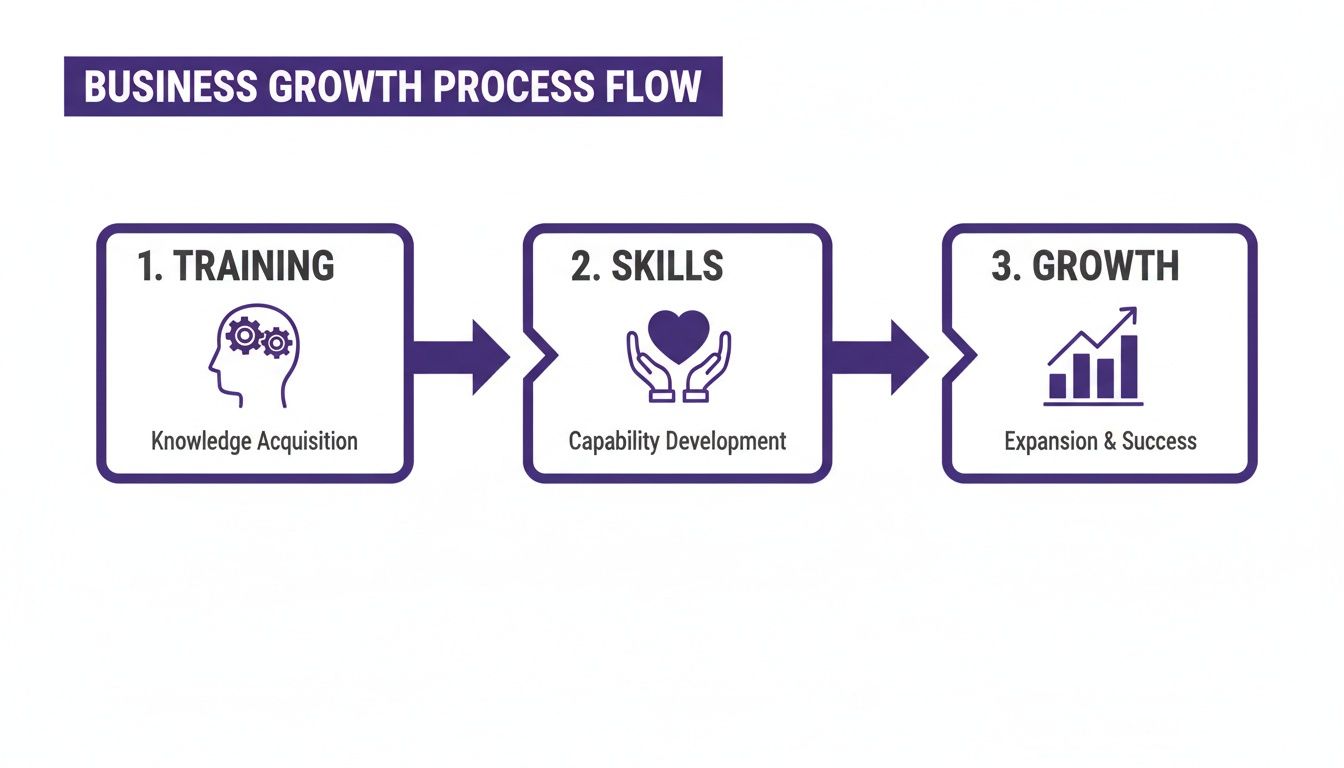
Module One: Active Listening and Empathy
This foundational module teaches agents to recognize emotion, intent, and context—not just words.
Healthcare example:
A patient calls, anxious about unclear test results.
-
Untrained: “Your results are within normal range.”
-
Trained: “I understand how confusing medical results can be. Let’s review them together—everything came back normal, which is good news.”
Empathy builds trust before facts are delivered.
Module Two: De-escalation Techniques
High-stress calls are inevitable. This module equips agents with a repeatable framework:
-
Acknowledge and validate frustration
-
Take ownership
-
Clarify details
-
Resolve and prevent recurrence
This approach transforms conflict into collaboration.
Module Three: Cultural Competency
For nearshore teams, cultural understanding is critical. This module focuses on:
-
Appropriate formality by industry
-
Regional expressions and idioms
-
Direct vs. rapport-driven communication styles
The result: interactions that feel natural, respectful, and aligned with customer expectations.
 Implementing Training with Interactive Methods
Training works best when it’s participatory—not passive.
Blended Learning Approaches
-
Self-paced e-learning for foundational knowledge
-
Live workshops for role-play and feedback
-
Webinars and hybrid sessions for engagement and retention
Offline workshops still represent 37.68% of the market due to their coaching effectiveness. Learn more from soft skills training market insights and interactive webinar strategies.
Practical Exercises That Drive Skill Retention
-
Emotional Tone Matching using real call recordings
-
Reframing “No” scenarios into solution-focused responses
For deeper listening techniques, explore the power of active listening in call centers.
Coaching and Feedback Loops
Interactive training introduces skills. Consistent coaching makes them stick.
-
Regular call reviews
-
Structured one-on-ones
-
Goal-driven feedback
This approach reinforces learning and builds confidence over time.
 Measuring the Impact of Soft Skills Training
To prove ROI, focus on outcomes—not just activity.
KPIs That Matter
-
CSAT – Immediate satisfaction
-
NPS – Long-term loyalty
-
FCR – Operational efficiency
For a broader view, explore key customer service KPIs.
Mapping Training to Business Results
| Training Module | Primary KPI | Secondary KPI | Measurement |
|---|---|---|---|
| Active Listening & Empathy | CSAT | CES | Surveys & sentiment analysis |
| De-escalation | Escalation Rate | Agent Retention | Call monitoring |
| Problem-Solving | FCR | Repeat Contacts | CRM data |
| Cultural Competency | NPS | Regional CSAT | Segmented surveys |
Sustaining Momentum with Continuous Improvement
Training succeeds when it becomes culture.
Daily Reinforcement Strategies
-
Peer coaching
-
Micro-learning refreshers
-
Pre-shift skill huddles
Coaching Culture
Managers should guide—not criticize. Strong leaders use proven call center coaching techniques to develop confidence and consistency.
Gamification for Engagement
-
Empathy Champion awards
-
De-escalation badges
-
Team-based FCR challenges
Recognition reinforces the behaviors that matter most.
FAQs: Customer Service Soft Skills Training
Ready to Build a Customer Service Team That Creates Loyalty?
At CallZent, advanced soft skills training is embedded into everything we do—from onboarding to coaching to QA calibration.
Partner with us to build a highly skilled, empathetic, and culturally aligned team that turns every interaction into a loyalty-building opportunity.
Discover Our Custom Call Center Solutions →
Prefer a quick conversation? You can also visit our site to connect with the team.