Skip to content

Wondering how much call center outsourcing actually costs?
Let’s cut to the chase: most businesses pay anywhere from $8 to over $45 per agent, per hour.
- 📍 Agent location (onshore, nearshore, offshore)
- 🧠 Service complexity
- 📊 Pricing model
Understanding these variables is the first step toward making a smart, cost-effective outsourcing decision that actually improves your bottom line.
TL;DR: Call Center Outsourcing Costs
- Typical cost: $8–$45+ per agent per hour
- Biggest cost driver: Location
- Best value option: Nearshore (Mexico)
- Key insight: The cheapest rate rarely delivers the best ROI
Wondering how much call center outsourcing actually costs? Let’s cut to the chase: you’re likely looking at a range anywhere from $8 to over $45 per agent, per hour.
That’s a huge spread, and for good reason. The final number on your invoice depends on three key factors: where your agents are located (onshore, nearshore, or offshore), the complexity of their tasks, and the pricing model you choose. Understanding these elements is the first step to making a smart, cost-effective decision for your business.
The Real Question: Value, Not Just Price
The first question on everyone’s mind is, “Can we afford this?” The truth is, outsourcing isn’t a one-size-fits-all expense. Think of it less like a fixed price tag and more like a spectrum of strategic options. Getting this straight from the beginning helps you avoid sticker shock and frames the decision around long-term value, not just a simple hourly rate.

Without a doubt, geography is the biggest cost driver. Where your agents are sitting has the single largest impact on your budget.
To give you a clear financial snapshot, let’s break down the typical hourly rates by region. This quick comparison will set the stage for a deeper dive into what really drives these numbers and help you find the sweet spot for your business.
Estimated Hourly Call Center Outsourcing Rates by Region
| Region | Average Hourly Rate (USD) | Key Characteristics |
|---|---|---|
| Onshore (U.S. & Canada) | $25 – $45+ | Perfect cultural alignment, no language barriers, but the highest operational costs. |
| Nearshore (Latin America) | $12 – $18 | The strategic middle ground. Offers major savings, U.S. time zone alignment, and a deep pool of bilingual talent. |
| Offshore (Philippines, India) | $8 – $14 | The most budget-friendly option. Can introduce challenges with time zones and cultural differences. |
This gives you a baseline, but the hourly rate is just one piece of the puzzle. The true value comes to light when you dig into the ROI of outsourcing call centers to save time and money, which factors in reduced overhead, better efficiency, and happier customers.
Understanding Common Pricing Models for Outsourcing
Diving into a call center proposal can feel like deciphering a secret code. But once you understand the basic pricing structures, it all starts to make sense. When you’re figuring out how much call center outsourcing is going to cost, you’ll almost always run into one of these three main models.
Each one is designed for different business needs, call volumes, and objectives. Choosing the right one isn’t just about grabbing the lowest price tag; it’s about aligning the payment structure with your actual business activity. The wrong fit could mean you’re overpaying during quiet periods or left without enough support during a customer surge.
The Per-Agent Model (Dedicated Team)
Often called the dedicated model, this is the most straightforward of the bunch. You pay a set rate—either hourly or monthly—for each agent who is 100% focused on your account. Think of it as hiring your own full-time employee who simply works at your partner’s facility.
This approach is perfect for businesses with a steady, predictable flow of customer interactions. Because the agents live and breathe your brand daily, they develop an incredible depth of product knowledge and become a seamless extension of your internal team.
- Best For: Companies needing specialized, expert support, running consistent inbound or outbound campaigns, or managing a stable, high volume of customer contacts.
- Real-World Example: An e-commerce brand that reliably receives around 10,000 support calls per month would gain immense value from a dedicated team that has mastered its product catalog, return policies, and brand voice.
The Per-Minute Model (Shared Team)
The per-minute (or shared) model is a true pay-as-you-go plan. Instead of having agents dedicated solely to you, you only pay for the exact number of minutes they spend actively handling your company’s calls. In this setup, agents typically support multiple clients.
This structure offers incredible flexibility and is a highly cost-effective choice for businesses with fluctuating or unpredictable call volumes. You aren’t paying for an agent’s downtime when the phones are quiet.
- Best For: Startups, businesses with intense seasonality (like a tax preparation service), or companies launching marketing campaigns that create temporary spikes in calls.
- Real-World Example: A flower delivery service experiences a massive flood of calls around Valentine’s Day and Mother’s Day but is much quieter the rest of the year. A per-minute model would save them a fortune compared to staffing a dedicated team year-round.
The Per-Resolution Model (Performance-Based)
This is a results-first model where you pay for a specific outcome. Forget paying for time; here, you pay for each successfully resolved ticket, sale closed, or appointment booked. This model directly ties your costs to performance, making it a compelling option for certain functions.
It creates a powerful incentive for the outsourcing partner to be efficient and deliver quality, since their revenue depends on hitting your targets. This is the core idea behind smart outsourcing, where the goal shifts from just completing tasks to driving tangible business results. You can learn more about this forward-thinking approach in our strategic guide to smart outsourcing.
Here’s the key takeaway: The best pricing model is the one that mirrors your business’s natural rhythm. A company with a steady pulse thrives with a dedicated team, while a business with peaks and valleys needs a flexible, usage-based plan.
To get a broader look at how professional services structure their fees, you might find some useful parallels in this guide on Understanding HR Consultant Costs in 2025: Fee Structures Explained. While it’s not about call centers, it dives into the same core principle of aligning what you pay with the value you get—a critical step in any outsourcing decision.
What Other Factors Drive Your Final Outsourcing Cost?
Beyond the pricing model, several other critical variables act like dials, turning your final outsourcing cost up or down. While geography is arguably the biggest lever, these other factors are just as crucial for building an accurate budget.
A “one-size-fits-all” quote simply doesn’t exist in this industry. Every business has a unique operational fingerprint, and a great partner will build a pricing structure that reflects your specific needs. Let’s break down the most important cost drivers to keep on your radar.
Service Complexity
First, what will your agents actually be doing? There’s a world of difference between resetting a password and troubleshooting a complex software bug. The level of skill, training, and critical thinking required directly shapes the price.
- Tier 1 Support: This is the frontline—basic tasks like answering FAQs, checking order status, or taking messages. These interactions are often straightforward and can be scripted, making them the most cost-effective.
- Tier 2 & 3 Support: This is where things get technical. Agents handle escalated issues, guide users through in-depth product features, or solve complex tech problems. This work demands more extensive training and seasoned agents, which naturally comes at a higher rate.
- Real-World Example: A retail brand that just needs help with returns and order statuses will pay less per hour than a SaaS company that needs agents to guide users through a multi-step software integration. The second scenario requires a higher caliber of agent, and the cost reflects that expertise.
Hours of Operation
Do your customers expect help around the clock, or just during standard business hours? The coverage window you need is a massive factor in your final cost.
Key Takeaway: Providing 24/7/365 support is a fantastic way to delight your customers, but it comes at a premium. Agents working overnight, weekend, and holiday shifts earn a higher wage, and that cost is passed on to you.
Conversely, if you only need coverage from 9 AM to 5 PM, Monday through Friday, your costs will be considerably lower. It’s a classic trade-off between total availability and your budget.
Language Requirements
In today’s global market, language skills are invaluable. If your customers are primarily English-speaking, your costs are straightforward. But as soon as you need to support multiple languages, you can expect your expenses to climb.
Bilingual and multilingual agents are skilled professionals who command higher pay. An agent fluent in both English and Spanish, for example, can serve a much broader customer base but represents a more significant investment. This is a primary reason why many U.S. companies partner with nearshore providers like us at CallZent in Tijuana, where a deep pool of bilingual talent is readily available and more cost-effective. Skilled agents are a valuable asset, and it’s crucial to understand agent retention and the value of stability in delivering consistent, high-quality service.
Technology and Compliance Needs
Finally, the specific tools and regulations your team must follow can add to the monthly bill. Do you need agents to work within a specific CRM like Salesforce or Zendesk? Does the call center need to integrate with your company’s proprietary software? These tech requirements often come with setup fees or ongoing licensing costs.
Even more important are the non-negotiable compliance standards in regulated industries.
- Healthcare: Requires HIPAA compliance to protect sensitive patient data.
- Finance: Requires PCI DSS compliance for secure credit card processing.
Adhering to these standards involves rigorous agent training, secure infrastructure, and continuous audits—all of which add to the operational cost. For any business in these fields, compliance isn’t just a line item; it’s an essential investment in protecting your customers and your brand.
How Location Affects Call Center Outsourcing Costs
When you’re trying to nail down how much does call center outsourcing cost, no single factor moves the needle more than geography. The physical location of your team doesn’t just set the hourly rate; it influences everything from cultural alignment and time zones to the raw talent you can tap into. Your choice between onshore, nearshore, or offshore is probably the biggest strategic decision you’ll make in this entire process.
Each model comes with its own distinct flavor of benefits and trade-offs. Onshore partners, located in your home country (like the U.S. or Canada), offer a perfect cultural and linguistic match but at the highest price point. On the other side, offshore solutions in places like the Philippines or India provide rock-bottom labor costs but can introduce challenges like significant time zone gaps and cultural nuances that might not resonate with your customers.
This is exactly where the nearshore model shines as a powerful, strategic middle ground.
The Nearshore Advantage: Your Strategic Sweet Spot
Nearshore call centers, like CallZent in Tijuana, Mexico, are perfectly positioned to give you the best of both worlds. They deliver the substantial cost savings businesses are looking for while sidestepping the major operational headaches that often come with going fully offshore.
For any U.S. business, a nearshore partner in Tijuana means your agents are working in the same time zones. This simple alignment makes real-time collaboration, training, and quality checks incredibly straightforward. You can pick up the phone and talk to a team supervisor without doing time zone gymnastics in your head.
Better yet, the close cultural affinity between the U.S. and Mexico ensures customer interactions feel natural and intuitive. Agents understand American cultural references and conversational styles, leading to higher customer satisfaction and stronger brand loyalty—a critical piece of the puzzle that gets lost when you only focus on the lowest price.
The smartest outsourcing decision isn’t just about finding the cheapest hourly rate; it’s about finding the greatest value. Nearshoring delivers this by blending significant cost reduction with the high-quality, culturally-aligned service that drives real business growth.
The chart below shows how key drivers like service complexity, operating hours, and language needs directly shape your final costs.
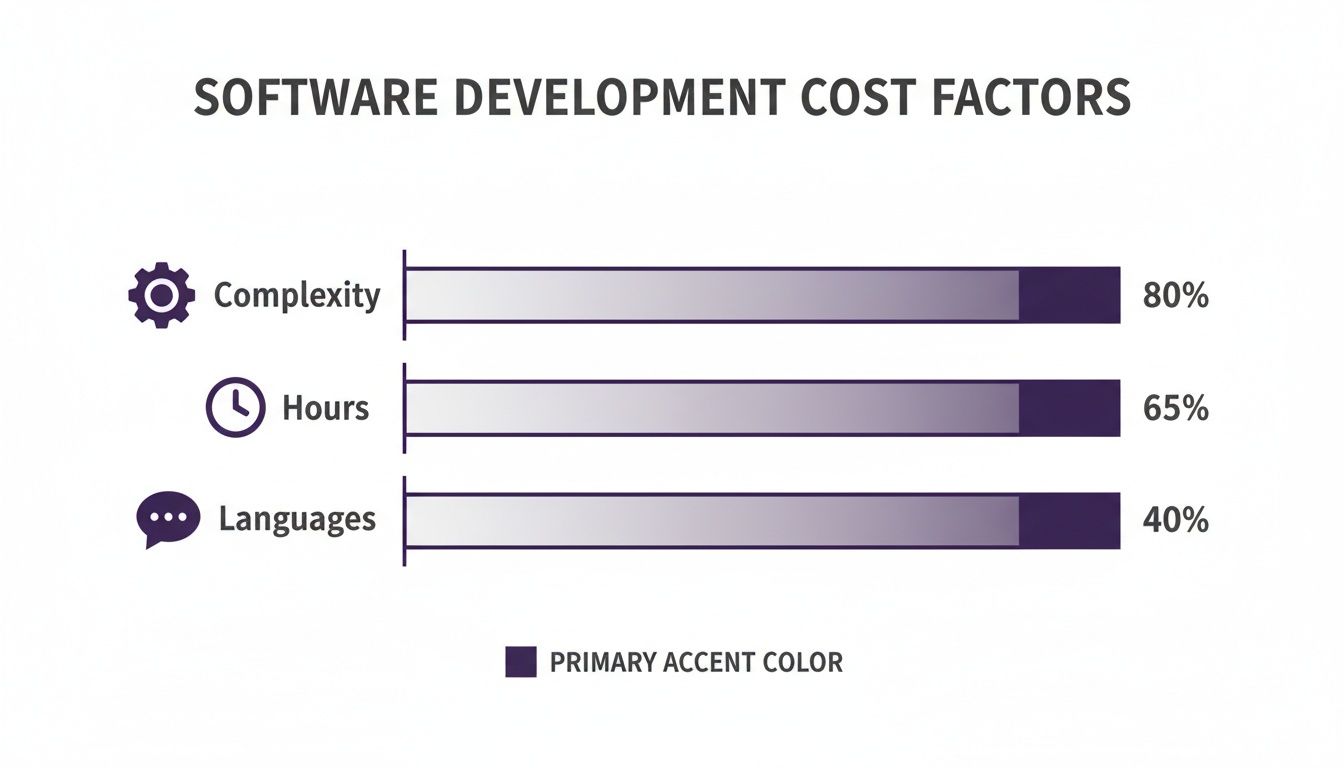
It’s clear: the more specialized your needs, the higher your costs will be. This makes your choice of location even more critical for keeping your budget in check.
Onshore vs. Nearshore vs. Offshore: A Head-to-Head Comparison
The financial difference between these models is striking. An agent’s wage is the largest component of your outsourcing bill, and geography dictates that wage.
Onshore rates in North America can easily run $25 to $45+ per hour. Meanwhile, nearshore locations like Mexico offer highly skilled agents for $12 to $18 per hour. That means shifting from an onshore to a nearshore model can slash your labor costs by 50% to 70%—without sacrificing quality.
To put it all into perspective, let’s break down how the three models stack up across the factors that matter most.
| Factor | Onshore (e.g., USA) | Nearshore (e.g., Mexico) | Offshore (e.g., Philippines) |
|---|---|---|---|
| Hourly Cost | Highest ($25 – $45+) | Moderate ($12 – $18) | Lowest ($8 – $14) |
| Time Zone | Perfectly Aligned | Perfectly Aligned (U.S.) | Significant Difference (8-12+ hrs) |
| Cultural Affinity | Excellent | Excellent | Varies; can be a challenge |
| Bilingual Talent | Available but costly | Abundant & Cost-Effective | Limited (focus on English) |
| Travel & Oversight | Easy but expensive | Easy & Affordable | Difficult & Time-Consuming |
In the end, the data paints a clear picture. While onshore offers maximum convenience for a premium price and offshore provides the lowest cost with potential operational hurdles, nearshoring hits that perfect balance of value, quality, and savings.
For a deeper dive, check out our guide on nearshore vs. offshore outsourcing costs and ROI to see exactly how the numbers can work for your business.
Calculating Your True ROI: Beyond the Hourly Rate
It’s one of the most common—and costly—mistakes businesses make: getting fixated on the hourly rate. When you’re comparing call center partners, that low number can be incredibly tempting, but it rarely tells the whole story.
Choosing a partner based only on the hourly rate is like buying a car based on its sticker price alone, ignoring the real-world costs of fuel, insurance, and maintenance. A cheap hourly rate can easily hide deeper problems that will tank your ROI, like poor customer satisfaction, high agent turnover, or inefficient operations.
The smart way to answer “how much does call center outsourcing cost?” is to stop thinking about price and start thinking about value. That means looking at the Total Cost of Ownership (TCO), a framework for seeing all the direct and indirect expenses that impact your bottom line.
Uncovering the Hidden Costs of In-House Teams
Before you can calculate the ROI of outsourcing, you have to be honest about what your in-house team is really costing you. An agent’s salary is just the tip of the iceberg. The fully loaded cost of an in-house employee is often 1.5x to 2.5x their base salary once you factor in all the necessary overhead.
Think about all the additional expenses you’re covering:
- Recruitment and Hiring: Job postings, resume screening, and hours spent on interviews.
- Training and Onboarding: Trainer salaries plus the lost productivity of new hires.
- Salaries and Benefits: Payroll taxes, health insurance, retirement plans, and paid time off.
- Infrastructure: Office space, utilities, computers, headsets, and software licenses.
- Management and Supervision: The salaries of team leads, QA specialists, and operations managers.
When you partner with a nearshore provider like CallZent, all of those costs are bundled into a single, predictable hourly rate. You aren’t just hiring an agent; you’re tapping into a fully managed operational machine without the massive capital investment.
Calculating Your Outsourcing ROI: A Practical Example
Let’s run the numbers. Imagine an e-commerce company that needs a team of five full-time customer service agents.
In-House Scenario:
- Average U.S. agent salary: $40,000/year
- Total base salary for 5 agents: $200,000
- Estimated overhead at 75%: $150,000
- Total Annual In-House Cost: $350,000
Nearshore Outsourcing Scenario:
- Let’s use an average nearshore rate of $15/hour.
- Total hours for 5 agents (40 hrs/wk, 52 wks/yr): 10,400 hours
- Total Annual Outsourcing Cost: $156,000
In this example, the direct savings are a staggering $194,000 per year—a cost reduction of over 55%. This is exactly why cost-cutting remains a major driver for outsourcing. According to outsourcing statistics and trends, cost reduction is the top reason companies choose to outsource.
Focusing solely on the hourly rate is like buying a car based only on the sticker price—it’s the total cost of ownership that truly matters.
But the true ROI goes even deeper than direct savings. You also have to calculate the value of reclaiming your time and focus. When your leadership team no longer has to manage the day-to-day grind of a call center, they can pour that energy into what really matters: innovation, marketing, and strategic growth. That strategic shift is often the most valuable—and most overlooked—benefit of a smart outsourcing partnership. With our collaborative approach, we handle the operations so you can get back to building your business.
Getting a Custom Quote From CallZent
You’ve seen the numbers and understand the factors that influence call center costs. So, how do we translate those general figures into a concrete plan built just for you? Getting a custom quote isn’t just about filling out a form—it’s the beginning of a strategic conversation. Our goal is to ensure our partnership aligns perfectly with your business objectives from day one.
To get the most accurate, transparent quote, it helps to come prepared. The more details you can share, the sharper our pencil can be in crafting a service package that fits your budget and achieves your goals. We don’t do guesswork; we build partnerships on clear, shared data.
How to Prepare for Your Consultation
Before our call, take a few minutes to gather some key details about your operations. This isn’t homework; it’s the foundation our strategy team uses to design a solution that actually works for you.
Think about the following:
- Expected Call Volume: Are you anticipating 100 calls a day or 1,000? Do you have data on your busiest times of day or peak seasons?
- Types of Services: Will our agents be handling customer support, technical troubleshooting, outbound sales, or appointment setting?
- Operational Hours: Do you need coverage during standard business hours, or are you looking for 24/7 support?
- Technology Needs: Do you use a specific CRM like Salesforce or Zendesk? Our team needs to know so we can ensure seamless integration.
Our Transparent and Collaborative Quoting Process
At CallZent, the quoting process is where our partnership truly begins. We’re not just another vendor sending an invoice; we are an extension of your team, and that starts with building the plan together. We aim to be far more than a service provider—we are your trusted Mexican call center partner.
Our process is simple and completely transparent:
- Discovery Call: First, we’ll talk. We listen to understand your challenges, your goals, and the specific metrics that define success for your business.
- Custom Proposal: Based on our conversation, we’ll build a detailed proposal tailored specifically for you. It will clearly outline the recommended services, team structure, and a transparent cost breakdown. No hidden fees, no surprises.
- Strategy Session: We’ll walk through the proposal together, answering every question and fine-tuning the plan until it’s a perfect fit.
Our goal is to give you a clear, actionable plan that shows you not just the cost, but the immense value and ROI our nearshore solutions can deliver.
Ready to see how a partnership with CallZent can elevate your customer experience while protecting your bottom line? Let’s connect. Reach out to our team for a personalized strategy session and a no-obligation quote today.
Answering Your Top Questions About Call Center Costs
You’ve got questions, and that’s a good thing. Diving into outsourcing means knowing exactly what you’re getting into. Here are some straight answers to the most common questions we hear from businesses just like yours.
Are There Hidden Fees I Should Watch Out For?
Yes, and you should absolutely be on the lookout. Some providers have a knack for hiding fees for things like initial setup, specialized agent training, or technology licenses. Others might charge penalties if you exceed your expected call volume.
Our Approach: At CallZent, we believe in total transparency. Our proposals lay out every single cost, line by line, so you know precisely what your investment covers. No surprises, no “gotchas.” Always demand a detailed cost breakdown before signing any agreement.
How Long Does It Take to Get an Outsourced Team Running?
The timeline can vary depending on complexity, but a typical onboarding process takes anywhere from 2 to 6 weeks.
This isn’t just about flipping a switch. That timeframe includes the initial discovery phase, recruiting agents who are a perfect fit for your brand, training them on your products and systems, and integrating all necessary technology.
We’ve refined our process to be both fast and meticulous. Our goal is to get your team ready to deliver stellar service from the very first call.
Can I Scale My Team Up or Down as My Business Changes?
Absolutely. In fact, this is one of the biggest advantages of outsourcing. A good partner can pivot with you, scaling your team up for busy seasons (like the holiday rush for an e-commerce store) and then back down during quieter months.
This flexibility means you’re only paying for the support you actually need, when you need it. It’s a huge cost advantage over maintaining a full-time, in-house team that might be underutilized for parts of the year. This agility is key to maximizing the value and ROI of outsourcing.
Get a Custom Call Center Cost Breakdown
Every business is different. Your quote should be too.
Frequently Asked Questions About Call Center Outsourcing Costs
Are there hidden fees?
Some providers charge for onboarding, training, or tech licenses. CallZent provides fully transparent pricing.
How fast can a team go live?
Typically 2–6 weeks depending on complexity.
Can I scale up or down?
Yes—scalability is one of outsourcing’s biggest advantages.
Is nearshore more expensive than offshore?
Slightly—but the ROI is significantly higher.
Does outsourcing reduce quality?
Not when done right. Quality depends on training, culture, and process.
What industries benefit most?
E-commerce, SaaS, healthcare, finance, and professional services.
Is outsourcing secure?
Yes—when your partner meets compliance standards like HIPAA and PCI DSS.
Do I lose control?
No. With proper KPIs and reporting, you gain visibility—not lose it.
What’s the minimum contract?
It varies. CallZent offers flexible engagement models.
How do I get started?
Book a discovery call and we’ll design a solution around your goals.
Ready to see what a clear, no-nonsense quote looks like? CallZent builds custom nearshore solutions that give you the perfect blend of quality and cost-efficiency. Let’s talk—get your free consultation today.