Skip to content
What if you could turn a first-time buyer into a lifelong fan? It’s not about discounts or gimmicks. Building real customer loyalty is about forging a genuine connection through consistently great experiences, earning trust, and showing you care. This is the secret to creating advocates who choose you every single time.
TL;DR: How to Build Customer Loyalty That Lasts
- Focus on Experience Over Price: Today’s customers value exceptional service as much as the product itself. Every interaction is a chance to build or break loyalty.
- Turn Problems into Opportunities: A well-handled complaint can create a more loyal customer than one who never had an issue. Empower your support team to solve problems with empathy.
- Embrace Proactive Communication: Get ahead of issues. Notifying a customer about a shipping delay before they ask shows you’re accountable and builds powerful trust.
- Design Smart Loyalty Programs: Create simple, personalized programs with attainable rewards. The goal is to make customers feel appreciated, not manipulated.
- Use Technology to Personalize: Leverage CRM data to make every conversation feel personal and relevant. A 360-degree customer view allows your team to build real rapport.
What Customer Loyalty Really Means in Today’s Market
Let’s toss out the old playbook. The era of simple punch cards and generic discounts is over. Today, true loyalty is an emotional investment a customer makes in your brand, built on a foundation of trust and memorable, positive interactions. It’s the key difference between a customer who buys from you because you’re convenient and one who sticks with you even when a competitor is a few bucks cheaper.
This means we have to look past short-term sales numbers. The real focus now is on Customer Lifetime Value (CLV)—a metric that projects the total revenue you can expect from a single customer over their entire relationship with you. It’s not just a buzzword; an incredible 60% of brands worldwide now consider CLV a top metric, signaling a massive shift in strategy. Businesses are moving away from chasing one-off sales and are now focused on building profitable, long-term relationships. You can dive deeper into loyalty program trends to see how top brands are making this work.
Why Customer Loyalty Requires Everyone On Board
So, why isn’t customer loyalty just another task on the marketing team’s plate? Because lasting loyalty can’t be faked—or siloed. Real customer loyalty shows up in every experience, touchpoint, and conversation. It’s woven into how your support agent answers a frantic call, the way your website remembers a returning shopper, or how your frontline staff handles a sticky situation.
When loyalty becomes a core value—championed by leadership, owned by all departments, and lived out every day—you create an environment where customers genuinely feel valued at every turn. From engineering to sales to operations, each part of your organization has a chance to either reinforce or unravel trust. Companies like Zappos and Nordstrom have shown that a culture-wide commitment to customer care transforms casual buyers into raving fans.
The truth? Loyalty isn’t a “set-it-and-forget-it” program. It’s an ongoing promise, kept by everyone, every day—because your customers notice the difference.
What Truly Drives Customer Loyalty?
So, what actually makes customers stick around for the long haul—whether you’re running a corner bakery or a global tech startup? The specifics may change, but a few core drivers remain universal across industries:
- Consistent, Positive Experiences: No matter your size, every customer interaction counts. People remember how you make them feel, whether you’re a solo Etsy seller or a national grocery chain. Consistency breeds trust (just ask fans of Trader Joe’s or Apple Genius Bars).
- Recognition and Reward: Customers want to know they matter. This could mean a barista remembering your name at the local coffee shop, or Sephora’s Beauty Insider points adding up to a birthday treat. Recognition doesn’t have to be flashy—just authentic.
- Personalization: Businesses that treat customers as individuals, not transactions, stand out. Using customer preferences—think Spotify playlists tailored to your vibe, or Amazon’s eerily spot-on recommendations—shows you understand them beyond just their wallet.
- Accountability and Transparency: Mistakes happen. What builds loyalty isn’t perfection, but how you respond. Whether it’s Southwest Airlines rebooking you with a smile after a delay, or Patagonia replacing your jacket no-questions-asked, customers notice effort and honesty.
- Company-Wide Buy-In: Loyalty isn’t just a marketing initiative or a shiny app. It requires buy-in from top leadership to frontline teams, woven into the entire organization’s culture. When everyone from the CEO to the customer service rep genuinely cares, the impact is exponential.
Ultimately, no matter your business model, real loyalty is about building relationships, not transactions. When customers feel heard, valued, and respected, they’re far more likely to become those priceless brand advocates you can’t buy with points alone.
The Power of Advocacy Over Transactions
A transactional customer is driven purely by price and convenience. They might buy from you today and jump to a competitor tomorrow without a second thought. A loyal advocate, on the other hand, is connected to your brand on a deeper level. They’re more likely to forgive an occasional slip-up, offer invaluable feedback, and—most importantly—rave about you to their friends and family. This kind of advocacy is one of the most powerful, cost-effective marketing tools you can have.
Why Loyalty Pays Off—Literally
Here’s the kicker: focusing on loyalty doesn’t just boost your reputation, it also saves you real money. While many companies still pour resources into acquiring new customers, the reality is it costs significantly more to bring in someone new than to keep a current customer happy. One-off customers rarely cover the cost of acquiring them, let alone turn a profit. That’s why investing in loyalty—turning buyers into true brand advocates—pays dividends again and again.
In short, loyal advocates not only stick around longer and spend more, but their word-of-mouth referrals and repeat business help you recoup your marketing investment and drive sustainable growth.
“True loyalty isn’t purchased with discounts; it’s earned with consistency, empathy, and an unwavering commitment to the customer experience.”
Harnessing the Benefits of Referral Incentives
When customers feel truly valued, many are already eager to tell others about your business. Sweetening the deal with incentives nudges even more people to sing your praises—and turns casual promoters into passionate ambassadors.
Referral incentives offer several tangible benefits:
- Extended Reach: Encouraging happy customers to spread the word introduces your brand to new audiences you may not reach on your own.
- Lower Acquisition Costs: Every referral from a customer is a potential new client that comes at a fraction of the price of traditional advertising.
- Stronger Trust: Prospective buyers are far more likely to try your business when someone they know and trust recommends it—especially when there’s a little bonus involved.
- Deeper Engagement: Offering rewards for referrals doesn’t just make advocates feel appreciated; it deepens their emotional investment in your brand journey.
By rewarding referrals, you’re not just adding transactions—you’re building a community of loyalists eager to celebrate, support, and grow with you.
Visualizing the Impact of Loyalty Initiatives
The data doesn’t lie: a focus on loyalty delivers serious returns. This visual breaks down the key metrics, comparing customer retention rates, the blend of new versus repeat customers, and the growth in customer lifetime value after a loyalty strategy is put in place.
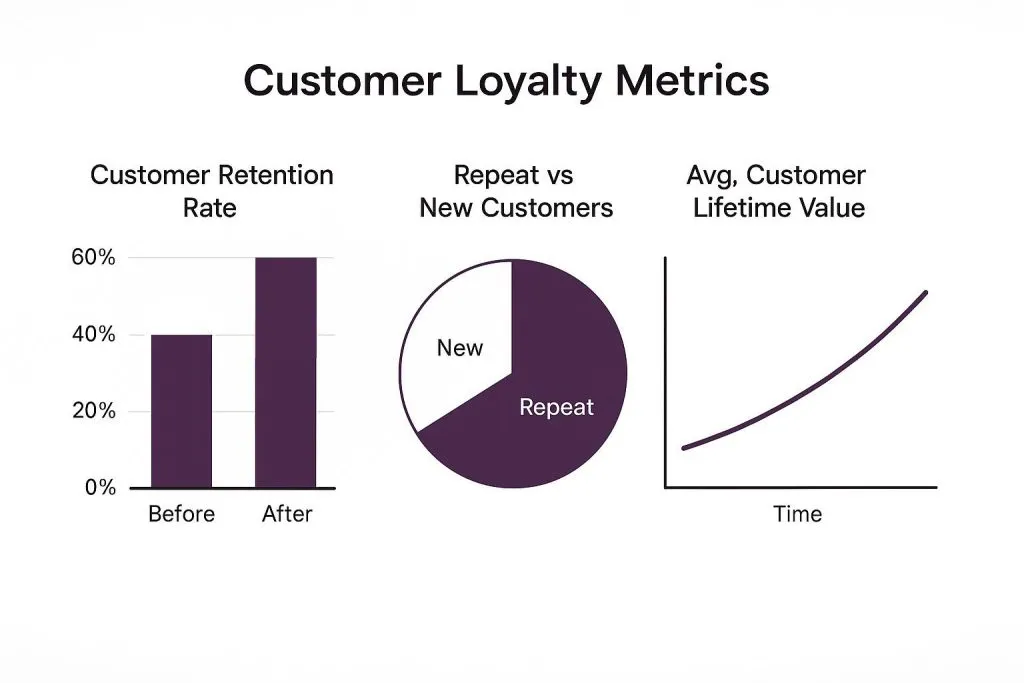
Strong loyalty programs are directly linked to higher retention and a steady climb in the long-term value of every customer you bring in. To hammer this home, let’s look at the difference between a casual buyer and a true brand fan.
Why Loyalty Makes Growth More Predictable
Here’s where things get exciting: customer loyalty acts like a crystal ball for your growth plans. When your business is powered by loyal customers, patterns emerge. Their repeat purchasing habits and engagement give you a reliable map—so you’re not just guessing when it comes to forecasting sales or capacity needs.
This clarity pays off in several ways:
- Smarter Planning: Loyalists create repeatable revenue cycles you can bank on, making it much easier to set accurate goals for hiring, inventory, and expansion.
- Better Product Insights: Because loyal customers tend to buy consistently, their feedback and buying behaviors shine a spotlight on what’s working (and what’s not). You’ll spot emerging trends and unmet needs far sooner.
- Refined Marketing Strategy: Marketing teams don’t have to shoot in the dark. They can track which promotions resonate with your best customers, double down on those tactics, and minimize wasted spend.
In short, loyalty makes your growth trajectory far less of a rollercoaster and much more of a steady climb—one you can actually plan for.
Transactional Customer vs. Loyal Advocate
| Characteristic | Transactional Customer | Loyal Advocate |
|---|---|---|
| Motivation | Price, convenience, promotions | Trust, brand connection, shared values |
| Purchasing Behavior | Infrequent, unpredictable | Consistent, repeat purchases |
| Price Sensitivity | High – easily lured by competitor discounts | Low – willing to pay a premium for value |
| Feedback | Unlikely to provide feedback unless negative | Offers constructive feedback to help you improve |
| Word-of-Mouth | Neutral or silent | Actively promotes the brand to others |
| Forgiveness | Low – one bad experience can end the relationship | High – understands mistakes happen |
| Long-Term Value | Low and finite | High and grows over time |
The table makes it clear: investing in advocates pays off in ways that chasing one-off sales never will.
Why Loyal Customers Are Prime for Upselling and Cross-Selling
Ever tried convincing a first-time visitor to add dessert to their order at a café? It’s an uphill battle. Now compare that to your favorite regular who barely needs a menu—suggest the new chocolate tart, and chances are it’s sold before you finish your sentence. The same logic applies in the world of customer loyalty.
When someone has already had a positive experience with your brand, they’re not just familiar with what you offer—they trust it. This trust lowers barriers for them to explore new products or try upgrades because they’ve seen your brand deliver before. The numbers back this up: existing customers are far more likely to say “yes” to additional products or services, and their average yearly spend reliably climbs as their confidence grows.
Here’s why that matters:
- Pre-built Trust: Loyal customers have already crossed the “should I or shouldn’t I?” threshold. Trust leads to openness when hearing about something new or premium.
- Shorter Sales Cycles: Repeat buyers need less convincing, so the journey from ‘maybe’ to ‘yes’ is dramatically shorter.
- Increased Lifetime Value: Not only do advocates buy more frequently, but their basket size gets bigger. They’re looking to deepen their relationship, not just make one-off purchases.
In short, loyal customers represent a fertile ground for growth—ripe for strategic upsells and cross-sells—because each successful interaction builds a stronger foundation for the next one.
How to Identify a Loyal Customer
So, what does a truly loyal customer look like in the wild? They have specific habits that go way beyond just buying from you again and again. Knowing these traits helps you spot and cultivate your most valuable customers.
A loyal customer typically:
- Chooses You First: When they need something you offer, your brand is their automatic go-to, often without even checking out the competition.
- Spends More Over Time: As their trust in you grows, so does their average order value. They feel comfortable buying more, more often.
- Acts as a Brand Ambassador: They’re the ones leaving glowing reviews, tagging you on social media, and telling their friends you’re the best.
- Provides Honest Feedback: They care enough about your success to tell you what’s working and what isn’t, giving you priceless insights to get better.
Recognizing these behaviors is the first step toward building loyalty that is both meaningful and profitable. This foundation of trust is exactly what expert support teams, like ours at CallZent, are trained to build during every single customer interaction.
How to Build Customer Loyalty
Through Exceptional Experiences

Loyalty isn’t something you can demand; it’s earned, one interaction at a time. The real foundation of a lasting customer relationship is an exceptional customer experience (CX). This is what turns a routine service call into a moment that builds your brand. It’s in those tough moments—when things have gone sideways—that a company really shows its true colors.
Today’s customers are crystal clear about what they want. A great product is only half the story. In fact, for a staggering 80% of customers, the experience a company provides is just as important as the product or service itself. This isn’t a small trend; it’s a monumental shift in consumer values. A single helpful conversation can mean more than any flashy new feature. This in-depth industry report has even more stats on this shift.
What does this mean for your business? Your customer support team isn’t just a cost center. It’s your most powerful loyalty-building engine.
Turning Problems into Opportunities to Build Loyalty
Every time a customer reaches out, you’re at a fork in the road. You can either strengthen their loyalty or watch it crumble. A frustrating billing error, a delayed shipment, or a tech glitch can push a customer away for good or, handled correctly, pull them even closer.
Real-world example: Imagine Sarah, who runs a small online boutique, spots a major overcharge on her monthly invoice from her shipping software provider. Stressed, she dials the support line, bracing for a robotic menu and a painful conversation. But that’s not what happens.
A calm, empathetic agent answers right away. They listen to her frustration, immediately find the error, and offer a genuine apology. But they don’t stop there. The agent explains why it happened, assures her it’s been fixed permanently, and adds a small credit to her account for the headache. In just a few minutes, a negative situation became a moment of trust. That one positive interaction did more to solidify her loyalty than a dozen marketing emails ever could.
The Role of Professional Agents in Building Customer Loyalty
The agent who helped Sarah wasn’t just “being nice.” They were executing a smart customer experience strategy. This is where professionally trained agents are worth their weight in gold. They’re skilled in:
- Active Listening: Genuinely hearing the customer’s problem—and their frustration—instead of just waiting for their turn to talk.
- Empathy: Making a human connection by acknowledging their feelings and showing you actually care.
- Problem-Solving: Going beyond the script to find a real, effective solution that fixes the root cause.
- De-escalation: Knowing how to turn a tense, angry customer into a happy, relieved one.
These aren’t just “soft skills.” They’re critical business drivers. A great agent knows that solving the problem is only half the job; the other half is making the customer feel great about their decision to do business with you.
How a Dedicated Support Partner Elevates CX
For most businesses, building an in-house team with this level of skill is a massive undertaking. It’s expensive to hire, train, and equip them. This is exactly why partnering with a dedicated support provider like CallZent can be such a game-changer.
When you outsource your customer interactions to a team of professionals, you instantly plug into a crew that lives and breathes exceptional service. They already have the training, technology, and temperament to make every call a positive brand moment. Our agents at CallZent, for example, are trained to do more than just answer questions. Their goal is to build rapport and uncover what the customer really needs. It’s a proactive approach that ensures people feel heard and valued—the only real way to build the fierce loyalty that fuels growth.
Moving from Customer Satisfaction to True Advocacy
It’s a common trap: mistaking a satisfied customer for a loyal one. Satisfaction is merely the price of admission in today’s market. A customer might be perfectly happy with their purchase, but they’ll still jump to a competitor for a slightly better deal without a second thought.
True loyalty is what happens when a customer trusts you, actively picks you over a cheaper option, and turns into a walking billboard for your brand. With the cost of acquiring a new customer skyrocketing by nearly 60% recently, you can’t afford not to turn happy buyers into committed fans. You can dig deeper into the global state of customer loyalty to see just how big this trend is.
Why Measuring Customer Satisfaction is the Secret Ingredient
Here’s where most brands drop the ball: they assume if things seem “fine,” they must be winning. But if you’re not paying close attention to what your customers are actually experiencing—and how satisfied they really are—you’re missing the signals that could either unlock serious loyalty or send folks quietly packing.
Think of customer satisfaction scores as your business’s heartbeat monitor. They reveal not only where your team is crushing it, but also those problem spots that slowly erode trust if left unchecked. By regularly tracking things like:
- Average order fulfillment times
- Return and exchange rates
- Most-mentioned themes in online reviews
- Volume and types of complaints received
- How quickly and completely support issues get resolved
—you get an early warning system. This lets you fix small hiccups before they snowball, spot trends before they become crises, and double down on what keeps customers raving.
Ultimately, measuring satisfaction isn’t just about keeping score. It’s about building a feedback loop that transforms casual shoppers into passionate, vocal advocates who wouldn’t dream of going anywhere else. That’s the foundation of any loyalty strategy built to last.
Embrace Proactive Communication to Build Trust
The quickest way to build trust is to get ahead of problems before your customer even knows they exist. Reactive support just meets expectations. Proactive communication, on the other hand, creates “wow” moments that show you’re paying attention.
Real-world example: An e-commerce brand’s system automatically flags a shipping delay. Instead of waiting for an angry email, they send a text right away: “Hi Alex, we noticed your order is running a day behind. So sorry for the delay. We’ve added a $5 credit to your account for your next purchase.” That one simple action just turned a potential disaster into a powerful loyalty-building opportunity.
Open Communication Channels—And Keep Them Genuine
Customers crave connection, not just chatter. If you want your brand to stand out, it’s not enough to be available—you need to create real, two-way conversations that show you’re listening and ready to act.
Here’s how to make it happen:
- Meet People Where They Are: Don’t expect your audience to come to you. Offer multiple channels—think email updates, SMS alerts, social media DMs, and even the humble phone call. Whether your customer is a Twitter devotee or an old-school email checker, be there.
- Limit the Hype: Nobody likes getting spammed with sales pitches disguised as “updates.” Instead, focus on delivering actual value—shipping notifications, product news, answers to common questions, or early access to new features.
- Invite and Respond to Feedback: Open communication is a two-way street. Make it easy for your customers to share their thoughts, whether through online reviews, comments, or direct messages—and don’t leave them hanging. Quick, thoughtful responses turn passive experiences into memorable brand moments.
- Be Human, Not a Script: Authenticity breaks through the digital noise. Use plain language, sprinkle in a little humor (where appropriate), and show there’s a real person on the other side of every message.
It’s these personal touches—showing up, listening, and following through—that transform ordinary exchanges into loyal relationships.
Proactively Seeking Customer Feedback—Why It Matters
If there’s one thing modern customers appreciate, it’s knowing their opinions actually count. Asking for feedback isn’t just a nice gesture; it’s a cornerstone of building loyalty and trust.
When you reach out to customers before problems arise—or before they even think to share—you’re sending a message: “We care about your experience, and we want to improve.” Whether it’s a quick post-purchase email, a simple survey via SMS, or a friendly prompt on your website, actively seeking input shows you value their voices—not just their wallets.
Plus, you’ll uncover insights that might otherwise stay hidden. Not everyone shouts about their frustrations or sings your praises online. Some folks are silent even when something’s gone sideways. By inviting feedback proactively, you spot both the hidden frictions and the quiet delights that influence whether a customer stays or strays.
Here’s how the smartest brands do it:
- Automated Follow-Up Surveys: Think Amazon’s “How did we do?” after every order, or the Starbucks app’s instant feedback requests after your latte is scanned.
- Personal Outreach: A quick phone call from support after a service interaction or a thank-you note with a feedback link makes the experience feel less transactional, more personal.
- Ongoing Feedback Loops: Embedding a “Give Feedback” button in your app or website keeps the conversation always open, not just after purchases.
The goal isn’t to flood their inboxes, but to check in at moments that matter—right after a delivery, following customer support, or when usage patterns suggest they might be stuck. Over time, these touchpoints build a culture where customers feel invested in your brand’s success, and you never have to guess whether you’re meeting their expectations.
Practice Radical Transparency
Your customers are smart. They appreciate honesty, even when the news isn’t great. Trying to sweep a mistake under the rug or downplay a service outage will almost always backfire, causing far more damage than the original problem.
Radical transparency is about being upfront about where you fall short and what you’re doing to fix it.
- Own Your Mistakes: If your website crashes, post a clear message on social media explaining what’s happening and when you expect to be back online.
- Explain Price Changes: If you need to raise prices, explain why—whether it’s due to rising material costs or new features you’re adding.
- Don’t Hide Bad Reviews: Acknowledge negative feedback publicly. Show everyone how you’re using that input to get better.
This level of honesty builds a type of trust that no slick marketing campaign ever could. It proves you see your customers as partners, not just numbers on a spreadsheet.
Turn Your Happy Customers Into Social Proof Engines
One of the fastest ways to turn satisfied buyers into active advocates? Let their voices be heard. Sharing glowing online reviews across your channels—Instagram, your website, even in your email newsletter—acts as instant credibility. These testimonials don’t just make your brand look good; they reassure potential customers that real people, just like them, are thrilled with your offerings.
It’s more than just a pat on the back. When you spotlight genuine feedback, you’re highlighting your loyal fanbase and celebrating the people who fuel your growth. This kind of recognition doesn’t go unnoticed—it often inspires others to chime in with their own rave reviews, building a sense of community around your brand.
A best practice: Use tools like Google Reviews, Trustpilot, or site widgets to display positive feedback front and center. Not only does this reinforce confidence for first-time visitors, but it subtly encourages existing customers to join your team of brand champions—especially if you personally thank those who share their stories. Don’t be shy about asking for feedback after a great experience; most customers are happy to spread the love when prompted.
“Satisfaction is a transaction. Loyalty is a relationship. You build relationships with honesty and proactive care, not just by meeting expectations.”
Consistently Deliver on Your Promises
At the end of the day, the most powerful way to turn satisfaction into advocacy is simple consistency. Every single interaction—every product, every delivery, every support call—has to live up to the promise your brand makes. One great experience is nice, but a consistent pattern of reliability is what locks in loyalty. This is where a well-trained, empathetic support team is invaluable. When your agents consistently provide helpful and effective solutions, customers learn they can count on you, no matter what.
How to Design a Loyalty Program That People Actually Use
Let’s be honest: most loyalty programs are just digital clutter. They’re the first app we delete or the email we send straight to spam. So, how do you build one that customers actually want to use? The key is to stop thinking about transactions and start thinking about value. Create an experience that makes your customers feel seen and genuinely appreciated. The best programs are simple, offer rewards that feel within reach, and are deeply personal.
Choose the Right Loyalty Model for Your Business
There’s no one-size-fits-all solution here. The model you choose has to fit your customer base, your product, and your brand’s personality.
Here are a few of the most popular models:
- Points-Based Programs: The classic model where customers earn points for purchases and redeem them for rewards. It’s straightforward and works great for businesses with frequent transactions, like coffee shops or cosmetic brands.
- Tiered Systems: These programs tap into our desire for status. Customers unlock better perks as they spend more, climbing from “Silver” to “Gold” to “Platinum.” It’s a fantastic way to make your best customers feel like VIPs.
- Value-Based Programs: These programs connect with customers on an emotional level. For every purchase, you might donate to a charity the customer cares about. This is powerful for brands with a strong social mission.
- Gamified Programs: By adding challenges, badges, and leaderboards, you can turn engagement into a game. This is perfect for app-based businesses trying to build a daily habit.
The big question to ask is: what really motivates your customers? Your answer will point you straight to the right model.
Simplicity and Attainable Rewards Are Key
If your customers need a spreadsheet to figure out your points system, you’ve already lost. Complexity is the ultimate killer of engagement. The rules must be crystal clear, and the first reward should feel easy to achieve. A program that makes someone spend $1,000 just to earn a 5% discount isn’t a reward; it’s an insult. Give new members an early win to get them hooked.
“A great loyalty program feels like a thank you, not a sales pitch. It should reward past behavior, not just try to manipulate future spending.”
Personalization Makes All the Difference
Generic rewards are forgettable. A personalized reward, on the other hand, shows you’re actually paying attention.
Real-world example: A pet store sending a birthday coupon for a dog’s favorite brand of treats. Or a coffee shop offering a free pastry after noticing a customer buys one every single Friday. This is how to build customer loyalty that feels real because it is real. Recent loyalty program findings show that over 40% of loyalty initiatives saw higher redemption rates just by aligning rewards with individual customer preferences.
The Unseen Power of Multilingual Support
A loyalty program is useless if people can’t understand it. If a segment of your audience can’t read the rules, benefits, or reward descriptions, they’re effectively locked out. This is where inclusive, multilingual support becomes a secret weapon for building loyalty. For any business serving a diverse community, offering support in multiple languages isn’t a “nice-to-have”—it’s a necessity. It’s a simple way to make every customer feel seen and included.
This is exactly what we specialize in at CallZent. Our bilingual support services ensure that whether a customer needs help redeeming points or has a question about their tier, they get clear assistance in the language they’re most comfortable with.
Using Technology to Personalize at Scale

Personalization is the engine of modern loyalty, and technology is the fuel. Your customers expect you to know who they are, what they need, and what they’ve done in the past. The good news? The tools to deliver this personal touch at scale are more accessible than ever. The secret is connecting your data. Your Customer Relationship Management (CRM) system is a goldmine of information—purchase histories, past support calls, and preferences. When you integrate that data properly, you empower your team to create experiences that feel genuinely one-of-a-kind.
Turning Data into Meaningful Conversations
Real-world example: A customer, David, calls your support line. Instead of a cold open, the agent’s screen instantly displays his entire history. They see more than just an order number; they see the whole picture.
The agent can say, “Hi David, thanks for calling. I see you’ve been with us for three years and just picked up the new wireless headphones. How are you liking them so far?” Instantly, the vibe of the call shifts. David isn’t just another ticket; he’s a valued, long-term customer. This simple acknowledgment, made possible by a 360-degree customer view, makes him feel seen. This is where a partnership with a company like CallZent makes a difference. Our agents are trained to use integrated CRM data to turn routine support calls into powerful, relationship-building conversations. Recent studies show that 58% of businesses are now investing in these tailored experiences. You can dive deeper into the latest loyalty program trends to see how top companies are pulling this off.
How to Build Customer Loyalty with a 360-Degree View
Achieving this level of personalization requires a smart approach to your tech and data. Here’s what that looks like in practice:
- Integrated CRM: Your support platform must connect directly to your CRM, giving agents real-time access to customer history, past purchases, and previous support tickets.
- Contextual Information: Equip agents with notes from past interactions. If they know a customer had a shipping issue last month, they can proactively check on their current order.
- Personalized Offers: Use purchase data to make relevant offers. If someone only ever buys hiking gear, sending them a discount on a new tent will land much better than a generic coupon.
“Data gives you the information, but empathy turns that information into a connection. True personalization happens when your team uses technology to be more human, not less.”
Using AI to Predict and Prevent Churn
Beyond helping with individual calls, technology can also provide a bird’s-eye view of your customer base. Modern AI-powered analytics can spot patterns in customer behavior that signal someone might be about to leave you, or “churn.” This is a massive leap forward in how to build customer loyalty. For example, AI can flag an account that has bought less frequently, stopped opening your marketing emails, or recently left a bad satisfaction score. This lets you get ahead of the problem with a friendly check-in call from a specialized agent or a personalized email with a special offer to win them back.
Your Customer Loyalty Questions Answered
How Does Community Outreach Help Build Customer Loyalty?
Community outreach goes far beyond feel-good PR—it’s one of the most effective ways to foster true connection and long-term loyalty. When customers see that you’re actively supporting local initiatives, investing in neighborhood schools, or sourcing from nearby vendors, it signals that you care about more than just the bottom line. You’re showing people that their values matter to you, and that they’re not just another transaction.
This doesn’t mean you need a six-figure sponsorship deal or a headline-making charity event. Even small, authentic efforts—like hosting a fundraiser for the local elementary school in your store or supporting a food drive with your staff—can have a powerful ripple effect. People are more likely to rally around businesses that give back and demonstrate a genuine commitment to the areas they serve.
The result? Customers are not just more likely to stick around, but they also become enthusiastic advocates for your brand, sharing their positive experiences with friends and family. In today’s world, being part of the community fabric builds trust and keeps your brand top-of-mind when it matters most.
As you move from theory to the real world, a few common questions almost always pop up. Let’s tackle them head-on so you can build loyalty with confidence.
How Long Does It Take to See Results from a New Loyalty Strategy?
Building deep-rooted loyalty is a marathon, not a sprint. You’ll likely spot early wins—like higher engagement or more repeat purchases—within the first few months. But seeing a meaningful lift in core metrics like customer lifetime value typically takes around 6-9 months of consistent effort. Transforming customers into genuine brand advocates often takes over a year.
To track progress, keep a close eye on leading indicators:
- Net Promoter Score (NPS): Are customers more willing to recommend you?
- Customer Effort Score (CES): Are you making it easier for customers to get help?
Seeing these scores steadily improve is the clearest signal that your hard work is paying off.
Can a Small Business Build Loyalty Without a Huge Budget?
Absolutely. In fact, small businesses have a secret weapon: personal connection. Loyalty is built on consistency and care, which don’t cost a fortune. You can deliver a level of personal attention that larger corporations only dream of. A handwritten thank-you note, a quick follow-up call, or simply remembering a detail from a past conversation—these actions have a massive impact.
“Loyalty isn’t bought with big budgets; it’s earned through small, consistent acts of exceptional care that make customers feel genuinely valued.”
This is also where strategic partnerships come in. You don’t need an in-house team of 50 to deliver world-class service. Partnering with an efficient nearshore call center, for instance, gives you access to incredible talent without the enterprise-level price tag.
What Is the Single Most Important Metric for Tracking Loyalty?
While metrics like NPS offer a great pulse on customer sentiment, if you have to pick just one, make it Customer Lifetime Value (CLV). Why? Because it’s the metric that connects all your loyalty efforts directly to your bottom line. CLV tells you the total profit you can expect from a single customer over their entire relationship with you. It accounts for everything: how long they stick around, how often they buy, and how much they spend. When your CLV is on the rise, you have irrefutable proof that your strategies are building valuable, long-term relationships.
Ready to build unbreakable customer loyalty with every interaction? CallZent provides the expert, bilingual support teams you need to turn every customer call into a relationship-building opportunity. Learn more about our nearshore call center solutions and discover how we can help you grow.\
More insights:
Top 5 Benefits of Mexican Call Centers