Skip to content
Customer Service Training
How to Improve Customer Service Skills: A Practical Guide for Call Centers
Learn how to improve customer service skills with proven strategies for training, coaching, and KPIs. Build loyalty and boost call center performance.
TL;DR — Quick Takeaways
- To improve customer service skills, focus on interpersonal abilities, technical proficiency, and problem-solving agility.
- Role-playing, structured coaching (SBI model), and micro-learning drive long-term improvement.
- Track FCR, CES, and CSAT to measure real skill development.
- Continuous coaching transforms support teams into loyalty-building engines.
Meta Title: How to Improve Customer Service Skills | Expert Guide | CallZent
Meta Description: Learn how to improve customer service skills with expert tips on interpersonal abilities, technical training, and coaching. Elevate your call center performance today.
Is your customer service team just solving problems, or are they actively building loyalty? In today’s market, the difference between the two is everything. Improving customer service skills isn’t a one-and-done training seminar; it’s a continuous cycle of mastering genuine interpersonal abilities, sharp technical proficiency, and agile problem-solving. True success comes from weaving together structured training, real-world coaching, and smart performance analytics to build a culture that lives and breathes customer-centricity.
TL;DR: How to Improve Customer Service Skills
To effectively improve customer service skills, focus on three pillars: Interpersonal Abilities (active listening, empathy), Technical Proficiency (CRM, call handling), and Problem-Solving Agility (critical thinking). Implement continuous training with realistic role-playing, a structured feedback loop (like the SBI model), and data-driven coaching based on KPIs like First Contact Resolution (FCR) and Customer Effort Score (CES). This turns your service team from a cost center into a powerful engine for customer loyalty and growth.

The Pillars of Service Excellence
In a crowded market, knowing how to improve customer service skills is more than a “soft” goal—it’s a core business strategy. When products and prices start to look the same, standout service becomes the ultimate differentiator that builds rock-solid loyalty and drives revenue. To give your training real structure and impact, you need to focus on three fundamental pillars. Get these right, and everything else falls into place.
These pillars represent the trifecta of a great customer service professional.
Core Customer Service Skill Pillars
| Skill Pillar | Key Competencies | Real-World Business Impact |
|---|---|---|
| Interpersonal Abilities | Active listening, empathy, clear communication, and rapport-building. | Builds customer trust, de-escalates conflicts, and increases Customer Satisfaction (CSAT) scores. |
| Technical Proficiency | CRM navigation, call handling procedures, and multi-channel platform use. | Reduces Average Handle Time (AHT), improves First Call Resolution (FCR), and boosts agent efficiency. |
| Problem-Solving Agility | Root cause analysis, critical thinking, and decisive solution-finding. | Lowers repeat contacts, enhances customer loyalty, and turns negative experiences into positive ones. |
Mastering these skills transforms your support team from a necessary expense into a powerful engine for growth. The reality is that 89% of businesses now expect to compete primarily on the customer experience they deliver. One of the most effective tools in this fight is live chat. A staggering 79% of businesses have reported that adding live chat directly boosted their sales, revenue, and customer loyalty. Training your team to deliver quick, personalized, and human responses on this channel is no longer optional—it’s essential for staying in the game.
“True customer loyalty doesn’t come from a perfect product, but from the feeling that a company genuinely cares and is there to help when things go wrong.”
For a deeper dive into one of the most crucial parts of this strategy, check out our guide on how to deliver outstanding customer support.
Mastering Foundational Interpersonal Skills
Tech and processes have their place, but customer service is a human-to-human game. The skills that separate a forgettable interaction from one that builds real loyalty aren’t found in a manual. This is about more than just telling agents to “be empathetic.” It’s about giving them practical, in-the-moment techniques they can actually use. At CallZent, a leading nearshore call center, we train our teams to move beyond generic scripts and create genuine connections. It’s how you turn a potentially bad day for a customer into a reason they stick with your brand.

How to Improve Active Listening Skills with “Reflect and Validate”
Everyone talks about “active listening,” but what does that actually look like on a call? We focus on a technique called Reflect and Validate. It’s a simple, two-step method that immediately lowers the temperature of a tense call and proves to the customer you’re on their side.
Here’s the breakdown:
- Reflect: Once the customer finishes explaining their issue, the agent paraphrases it back. This isn’t just parroting their words; it’s summarizing the core problem to show you’ve truly understood it.
- Validate: Next, the agent validates the customer’s feelings. This doesn’t mean admitting fault. It simply means acknowledging that their frustration or confusion is a perfectly normal reaction to what happened.
Real-world Example: An agent for a financial client might say, “Okay, so if I’m understanding correctly, an unexpected charge appeared on your statement, and you never received a notification. I can absolutely see why that would be so frustrating and concerning.”
That simple exchange changes everything. The dynamic shifts from a confrontation to a partnership. Truly understanding what the customer is saying is the first step to solving their problem, and you can get more practical tips on how to improve active listening.
The Power of Positive Language and Tone
How you say something matters just as much as what you say. Tiny shifts in phrasing can completely change the feel of a conversation. The trick is to always frame things around what you can do, not what you can’t. This is a massive part of what great customer service communication skills are all about.
Real-world Example: A customer calls because an item they want is out of stock.
- Negative Framing: “Sorry, that item is on backorder for four weeks. We can’t get it for you.”
- Positive Framing: “That item has been really popular! While it’s sold out right now, I can place an order for you to make sure you’re first in line when it’s back in stock next month. Would that work for you?”
The information is the same, but the feeling is completely different. The second response is proactive and helpful, turning a complaint into an example of an agent working to find a solution.
“Empathy isn’t about reciting a script; it’s the ability to sincerely communicate, ‘I am on your side,’ even before you have a solution. That connection is the foundation of every great customer relationship.”
Developing Essential Call Center Technical Skills
Soft skills build the relationship, but it’s the hard, technical skills that actually solve the problem. Great customer service isn’t just about what an agent says; it’s about what they can do—and how quickly they can do it. In a busy call center, technical mastery is the engine that drives efficiency, accuracy, and that all-important first-call resolution. This is where your agents go from being friendly voices to genuine problem-solvers.
Mastering Efficient Call Handling
Every single call follows a path, from the initial “hello” to the final wrap-up. Nailing this part of the job means making that path as smooth and short as possible without ever making the customer feel rushed. The goal is to bring down that Average Handle Time (AHT) while pushing customer satisfaction scores up. It proves that speed and quality really can go hand-in-hand.
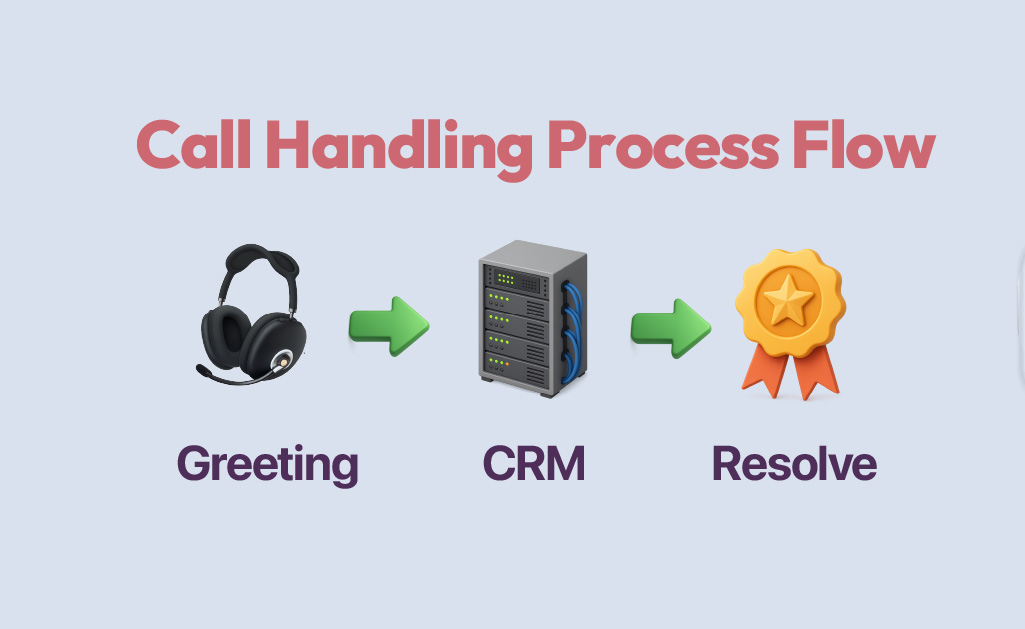
An effective call flow usually breaks down like this:
- A Confident Opening: A warm but professional greeting that clearly states the agent’s name and company.
- Structured Discovery: Using smart, pointed questions to get to the heart of the issue fast.
- Clear Resolution Steps: Walking the customer through the fix one step at a time, and checking that they’re following along.
- A Proactive Close: Briefly summarizing what was done, confirming there are no other issues, and clearly explaining what happens next.
When you standardize this flow, agents can navigate calls more efficiently. Customers hang up feeling like their time was respected and their problem was handled by a pro.
Leveraging CRM for Personalized Service
A CRM is so much more than a digital filing cabinet. For a sharp agent, it’s the ultimate tool for making service feel personal. Before an agent even picks up the phone, they should have the customer’s entire history right there on the screen.
Real-world Example: An agent working for a healthcare provider sees in the CRM that the patient recently called about a billing question. Instead of starting from a blank slate, the agent can open with, “Hi, Mrs. Jones. I see you called last week about your recent statement. Are you following up on that, or is this about something new?”
That simple move tells the customer they’re not just another ticket number—they’re remembered. A well-used CRM helps agents:
- Anticipate what a customer might need based on past calls.
- Avoid making customers repeat themselves.
- Personalize solutions and even suggest relevant products.
If you want to get a better sense of the systems that make this possible, it’s worth exploring the different types of call center software out there.
Building Deep Product Knowledge and Troubleshooting Skills
You can’t solve a problem you don’t fully understand. Deep product knowledge is what gives an agent confidence and credibility. When an agent knows the product inside and out, they can ditch the scripts and actually solve problems in real-time. To really succeed today, agents also need a solid grasp of tools like AI chatbot technology, which often serve as the first point of contact before a conversation gets to them.
“An agent with true product mastery doesn’t just provide answers; they provide insights. They can explain the ‘why’ behind a solution, empowering the customer and building unshakable trust in your brand.”
Training for this has to go beyond reading a manual. It demands hands-on practice with the product, regular briefings on new features, and a team culture where it’s always okay to ask questions. This kind of expertise allows agents to troubleshoot common issues on their own, which boosts first-call resolution and frees up your senior people for the really tough cases.
Implementing Effective Training and Coaching to Improve Customer Service Skills
Knowing which skills matter is one thing. Actually building them on the floor requires a smart, continuous training program. A one-and-done onboarding session just won’t cut it; you need a system that translates theory into practice through hands-on coaching, consistent feedback, and daily reinforcement. This is where real skill development happens.
Designing Realistic Role-Playing Scenarios
The best way to prep agents for high-stakes calls is to throw them into those situations in a controlled setting. The secret is to simulate the exact, high-pressure challenges your clients actually face.
Real-world Examples:
- For a Financial Services Client: Build a scenario where an agent must handle a call about a potential data breach. The agent must calm the customer, follow strict identity verification protocols, and clearly explain the next steps without creating panic.
- For an E-commerce Brand: Role-play a major product recall. The agent needs to navigate the customer’s disappointment, explain the return process clearly, and try to save the relationship with a well-timed offer.
These targeted exercises prepare agents for both the emotional and procedural complexities of real calls. It makes them far more effective when a crisis actually hits.
“Practice doesn’t make perfect. Perfect practice makes perfect. Realistic training scenarios are the difference between an agent who knows the script and an agent who owns the solution.”
Building a Structured Feedback Loop
Feedback is the fuel for improvement, but only if it’s delivered in a way that’s constructive, not critical. Vague advice like “be more empathetic” is totally useless. For feedback to actually stick, it needs to be specific, objective, and actionable. We’re big believers in the Situation-Behavior-Impact (SBI) model.
Real-world Example:
- Situation: “On that last call with the client from Acme Corp…”
- Behavior: “…I noticed that when he started raising his voice, you began speaking much faster.”
- Impact: “…the impact was that the customer seemed to get even more agitated because it felt like you were trying to rush him off the phone.”
This method gives the agent a clear, concrete action to work on—it’s a tactical observation, not a personal attack. This approach is a cornerstone of effective training. You can dig into more strategies in our guide to call center coaching techniques.
Fostering Continuous Learning
Top-tier service skills aren’t built in a week. They’re honed over time through consistent, accessible learning. This flow diagram shows a simple, effective process for handling customer interactions, from greeting to resolution.
This is where micro-learning and a solid knowledge base become game-changers.
- Micro-learning Modules: Think short, 5-10 minute training videos or interactive quizzes that agents can knock out during downtime.
- A Living Knowledge Base: Your internal wiki or knowledge base should be the team’s collective brain, constantly updated with new information and best practices.
When you combine realistic practice, structured feedback, and continuous learning, you create a powerful system for how to improve customer service skills across your entire team.
Measuring Success and Driving Continuous Improvement
All the training and coaching in the world won’t mean a thing if you can’t see the results. You simply can’t improve what you don’t track. This is where we pivot from skill-building exercises to sharp, strategic performance management. When you tie specific metrics back to individual skills, you create a culture where excellence isn’t just a goal—it’s actively built, day in and day out.
Moving Beyond Standard KPIs
Sure, metrics like Customer Satisfaction (CSAT) and Net Promoter Score (NPS) are great for a high-level pulse check. But to really understand agent performance, you have to look at agent-centric metrics that show how well they’re actually resolving issues.
Here are a few that paint a much clearer picture:
- First Contact Resolution (FCR): This measures the percentage of customer issues solved in a single interaction. A high FCR is a direct reflection of an agent’s product knowledge and problem-solving chops.
- Customer Effort Score (CES): This metric asks, “How easy was it to get your problem solved?” A low effort score means your processes are seamless and your agents are masterful guides.
- Average Handle Time (AHT): While quality is king, a healthy AHT shows an agent is comfortable and efficient with their tools and workflows.
Using Data to Pinpoint Skill Gaps
Performance data is your best diagnostic tool. Instead of just flagging a low score, you have to dig into the why behind it. This is what allows you to create targeted coaching plans that actually fix the root cause.
Real-world Example: A telecom client dives into their CES data and finds a recurring theme: customers report high effort when trying to understand their bills. This isn’t a generic “communication issue”—it’s a specific knowledge gap. That insight lets managers shift from vague feedback like “be clearer” to direct, actionable coaching on how to break down billing statements and explain common charges.
“Data doesn’t just measure performance; it illuminates the path to improvement. The best leaders use KPIs not to judge their team, but to guide them toward mastery.”
Choosing The Right KPIs To Measure Customer Service Skills
Not all metrics are created equal. The right ones for you will depend entirely on your business goals. A team handling complex technical support will naturally prioritize different KPIs than one focused on sales inquiries. For a deeper dive, check out our guide on the most important KPIs in customer service.
| KPI | What It Measures | When To Use It |
|---|---|---|
| First Contact Resolution (FCR) | An agent’s ability to solve a problem on the first try. | Use this when your main goal is to boost efficiency and cut down on customer frustration. It’s a fantastic indicator of strong problem-solving and product knowledge. |
| Customer Effort Score (CES) | The ease of the customer’s experience. | Perfect for sniffing out friction points in your processes. High effort scores can point directly to gaps in agent training or clunky, overly complex procedures. |
| Net Promoter Score (NPS) | Overall customer loyalty and brand perception. | Best used as a big-picture indicator of long-term success. Shifts in NPS often reflect the cumulative impact of improved service skills over time. |
By tracking the right metrics, you create a powerful feedback loop that constantly refines how to improve customer service skills.
Common Questions About Improving Customer Service Skills
As you start digging into a new customer service strategy, questions always pop up. This section tackles the most frequent questions we hear from clients and partners at our nearshore call center in Tijuana. Think of it as a quick guide to help you refine your approach to building a world-class service team.
What Is the Single Most Important Customer Service Skill for an Agent?
If we had to pick just one, it would be adaptive communication. This is the ability to instantly read a customer’s mood, personality, and technical expertise, then adjust your tone and language to match. It’s what separates a genuine conversation from a robotic script.
Real-world example: An agent helping a frustrated, non-technical senior with a billing issue needs a completely different approach than one guiding a tech-savvy millennial through a software bug. The first interaction demands patience and simple language; the second requires speed and technical precision.
How Can I Train My Team on Empathy Without It Feeling Fake?
You have to get them away from stale, scripted lines like, “I understand your frustration.” Customers see right through that. The key is to build genuine understanding through experience.
- Use Real Call Recordings: In a group session, listen to tough (anonymized) calls. Discuss what the customer was feeling and how the agent could have better shown they were on the customer’s side.
- Try “Agent Journey Mapping”: Make your agents experience your own customer service process. Have them call in or use the live chat. When they feel the pain of a long hold time or a confusing menu, it builds a level of empathy that no training manual ever could.
What Is the Best Way to Handle Bilingual Customer Service Training?
Great bilingual training is about more than just translating words—it’s about training for cultural nuance. An approach that sounds friendly to a customer in the U.S. might come off as too blunt or overly casual to someone in Mexico. Your training needs to include role-playing scenarios that bring these cultural differences to life.
Our unique position in Tijuana gives our agents a huge advantage. They aren’t just fluent; they’re bicultural. They instinctively understand the communication styles of both U.S. and Latin American customers.
We always recommend building separate “best practice” playbooks for each language, covering everything from tone of voice to culturally appropriate de-escalation tactics.
How Long Does It Take to See Measurable Improvements?
You’ll start seeing early wins—like a boost in agent confidence—within about 30 days of launching a solid training program. However, for the big-ticket metrics leaders care about (CSAT, NPS, customer retention), it typically takes 60 to 90 days to see a real, statistically significant jump. The secret is consistency. A one-day training seminar creates a short-term bump, but a successful program requires ongoing coaching and reinforcement to turn new skills into lasting habits.
🚀 Ready to Elevate Your Customer Service Team?
CallZent builds high-performance nearshore teams trained to improve customer service skills and drive measurable growth.
Schedule a CallAt CallZent, we build custom-fit training and coaching programs that turn your agents into brand ambassadors. As a leading BPO and nearshore call center, we provide expert call center services and solutions to our clients. If you’re ready to elevate your customer experience with a team that truly understands service excellence, let’s connect. Explore our solutions at https://callzent.com.