Skip to content
Customer Experience
Inbound Call Centers:
How They Boost FCR, CSAT & Customer Loyalty
Discover how inbound call centers improve First Call Resolution, increase CSAT scores, and strengthen customer loyalty through skilled agents, smart technology, and nearshore support.
TL;DR — Quick Takeaways
- Inbound call centers handle customer-initiated inquiries, support, billing questions, and sales assistance.
- Strong inbound operations directly improve FCR, CSAT, and long-term customer loyalty.
- Technology like IVR, CRM integrations, and AI routing reduces handle times and improves resolution rates.
- Nearshore inbound call centers provide high-quality, bilingual support with major cost advantages.
Is your current customer support turning frustrated callers into loyal brand fans? An inbound call center is your business’s front line, the dedicated team that handles incoming calls for everything from technical troubleshooting to sales inquiries. Think of it as the central hub where customer problems get solved, questions get answered, and relationships are built, one conversation at a time.
When customers need you most, your inbound call center is the voice of your brand.
What an Inbound Call Center Really Means for Your Business
Let’s get practical. Imagine a customer receives a new smart thermostat they ordered from your e-commerce store, but they can’t get it to connect to their Wi-Fi. Their first instinct isn’t to fire off an email and wait 24 hours—it’s to pick up the phone for an immediate solution.
That critical moment is where a high-performing inbound call center proves its worth. It’s so much more than a room full of people answering phones; it’s the operational core of your entire customer experience strategy.
This specialized team acts as the primary point of contact, managing a huge range of interactions that are always initiated by the customer. Unlike an outbound center that makes calls, an inbound call center is purely reactive, built to respond efficiently and professionally to customer needs as they arise.
Ultimately, its purpose is to provide a reliable, professional, and accessible channel for customers to connect with your business. This simple act builds trust and shows you value their time and their business.
How an Inbound Call Center Functions as Your Customer Hub
An inbound call center is a dynamic hub for different functions that all directly impact customer satisfaction and loyalty. Every single call is an opportunity to reinforce your brand’s commitment to excellent service. To give you a clearer picture, here’s a breakdown of what these teams handle day-to-day.
Core Functions of a Professional Inbound Call Center
| Service Type | Primary Goal | Real-World Example |
|---|---|---|
| Customer Service | Resolve non-technical issues and provide general information. | A customer calls to ask about your return policy or check their order status. |
| Technical Support | Guide customers through troubleshooting steps for a product or service. | Helping a user fix a software bug or set up a new electronic device. |
| Order Processing | Take orders and process payments securely over the phone. | A customer calls in to purchase a product they saw in a catalog or online ad. |
| Appointment Setting | Schedule, reschedule, or cancel appointments for service-based businesses. | Booking a consultation for a home service company or a patient appointment for a clinic. |
| General Inquiries | Answer questions about billing, accounts, or company policies. | A caller asks for clarification on a recent invoice they received. |
Essentially, it’s the place where potential frustrations are transformed into positive, loyalty-building experiences. The scale of these operations can be significant; many inbound call centers field thousands of calls per month as customers continue to seek direct, real-time help. This underscores how vital a solid system for managing customer calls has become.
“A great inbound call center doesn’t just solve problems; it builds relationships. Every call is a chance to turn a customer into a loyal advocate for your brand.”
While we’re using the term “call center,” it’s good to know that it’s part of a bigger ecosystem. A contact center integrates other channels like email, live chat, and social media. Knowing the differences between a contact center vs. call center helps clarify the specific, vital role a voice-focused team plays.
A well-run inbound call center isn’t just a “nice-to-have”—it’s a non-negotiable asset for any business that cares about its customer relationships. It is your dedicated team, ensuring every inbound call is handled with the professionalism, empathy, and efficiency that define your brand.

Diving Into Key Inbound Call Center Services
A top-tier inbound call center does much more than just answer the phone. It handles a range of business-critical functions that directly impact revenue, brand reputation, and customer retention. These services are all about managing specific customer needs with skill and efficiency, turning every call into a positive touchpoint.
Think of your inbound team as a versatile crew trained to handle a variety of complex—and important—tasks.
Technical Support and Troubleshooting Solutions
Technical support is one of the most vital services an inbound call center can provide. When a customer’s product isn’t working or their software is glitching, frustration can build quickly. A sharp, well-trained technical support agent is your first line of defense against a negative review or a lost customer.
For example, a user struggling to set up new software they just purchased calls your support line. A patient, knowledgeable agent calmly walks them through the installation, step-by-step. In just a few minutes, their confidence in your product—and your company—is restored. That single interaction can flip a moment of frustration into one of genuine gratitude.
The key to success is crystal-clear communication. Resources for improving communication for customer service teams can be a game-changer, ensuring agents can tackle complex technical issues with confidence.
Inbound Call Center Sales and Order Processing
Many customers still prefer to place orders over the phone, especially for complex purchases or when they have questions. An inbound call center handles this entire process, ensuring the transaction is smooth, secure, and accurate. But this isn’t just about data entry. Skilled agents can also provide real sales support by answering product questions and even upselling or cross-selling relevant items.
- Upselling in action: A customer calls to buy a standard camera. The agent learns they are interested in wildlife photography and suggests a model with a superior zoom lens, increasing the order value and better meeting the customer’s needs.
- Cross-selling in action: While a customer is ordering a new laptop, the agent recommends a compatible carrying case and an extended warranty to protect their purchase.
This proactive approach doesn’t just boost sales; it helps customers get the products that best fit their needs, leading to higher satisfaction.
Appointment Scheduling and Reservations
For any service-based business—from healthcare clinics to home repair companies—managing the appointment book is a constant juggling act. An inbound call center team can take this entire function off your plate, handling all scheduling, cancellations, and confirmation calls.
By outsourcing appointment management, your core staff can focus on serving the clients right in front of them, rather than being constantly interrupted by a ringing phone.
This leads to a more organized schedule, fewer no-shows, and a professional booking experience for every client. The same logic applies to restaurants or hotels managing reservations. If you want to see a full list of functions like these, check out the top services provided by call centers in Tijuana.
Billing Inquiries and Account Management
Questions about invoices, payments, and account details are common and require careful handling. A specialized team within an inbound call center can manage these sensitive conversations with professionalism and accuracy. Agents trained in billing support can explain charges, process payments, update account information, and resolve discrepancies. This frees up your in-house finance team to focus on higher-level financial tasks while ensuring customers receive clear and patient support for their billing questions.
How Technology Is Transforming Inbound Support
The modern inbound call center isn’t just a room full of people—it’s a tech powerhouse built to make human conversations smarter, not just faster. These tools don’t replace skilled agents; they empower them. Think of it as automating repetitive tasks so your team can focus on the complex, high-value conversations that define a customer’s experience.
It’s like giving a great chef the best kitchen tools. The tools don’t create the recipe, but they allow the chef to work more efficiently and deliver a better meal. In the same way, the right tech stack lets our agents provide exceptional support, call after call.
The Smart Tools Behind Every Great Inbound Call
Behind the scenes, modern inbound call center technology works together to create a smooth, frictionless customer journey. From the moment someone dials your number, these systems ensure they get to the right person with the right answer, fast.
Here are the workhorses of the industry:
- Interactive Voice Response (IVR): This is the automated menu that greets callers (“Press one for sales…”). A well-designed IVR is a huge time-saver. It can handle simple queries like checking an account balance on its own, freeing up agents for issues that need a human touch.
- Automatic Call Distributor (ACD): Once a customer chooses an option, the ACD acts like an expert traffic controller. It intelligently routes the call to the best-suited agent based on predefined rules, such as skill set, language, or availability.
- Customer Relationship Management (CRM) Integration: This is a true game-changer. When a call comes in, CRM integration displays the customer’s entire history on the agent’s screen—past purchases, previous support tickets, and contact notes. This context allows the agent to immediately say, “I see you spoke with us last week about your modem. Are you still having that same issue?” instead of making the customer repeat their story.
AI and Automation: The New Frontier for Your Inbound Call Center
Artificial Intelligence (AI) is pushing these capabilities even further. AI-powered tools can analyze a customer’s tone of voice to gauge their emotional state, feed agents real-time suggestions during a call, and even help with post-call documentation. For example, advanced tools like AI voice charting solutions streamline note-taking and summaries.
This move toward automation is gaining serious momentum. By 2026, it’s predicted that one in every ten agent interactions will be automated—a massive leap from just 1.6% in 2022. This shift is all about driving efficiency and improving outcomes.
“Technology’s true power in an inbound call center isn’t about replacing human connection; it’s about removing the friction so that connection can happen more effectively.”
This blend of human skill and tech-driven efficiency is what modern support is all about. The right tech backbone, often found in advanced cloud call center solutions, allows a partner like CallZent to deliver consistent, high-quality service that feels like a natural extension of your team. We use technology to empower our agents to be more human, not less.
Choosing Between In-House and Outsourced Teams
One of the biggest decisions a growing business faces is how to handle its customer conversations. Do you build an in-house call center from the ground up, or do you partner with an expert? This choice shapes your budget, your ability to scale, and the very experience your customers have with your brand.
Going the in-house route means launching a new department. It requires a significant upfront investment in hiring, training, technology, and physical space. You own every piece of the puzzle, from finding the right agents to managing payroll.
Outsourcing, on the other hand, is like hiring a specialized firm that has already mastered the craft. You get immediate access to a professional team, proven processes, and a ready-to-go tech stack for a predictable cost. It frees you up to focus on your core business while a dedicated partner handles your inbound support.
The True Cost of an In-house Inbound Call Center
It’s easy to underestimate the real price tag of an in-house call center. The costs extend far beyond agent salaries.
Consider everything you need to account for:
- Recruitment and Hiring: The time and money spent on job ads, interviews, and background checks.
- Training and Onboarding: Developing training programs from scratch and dedicating staff time to onboard new agents.
- Technology and Infrastructure: Ongoing costs for phone systems, CRM licenses, headsets, computers, and office space.
- Management and QA: Salaries for team leads, quality analysts, and managers to oversee the operation.
When you add it all up, the total cost of ownership for an in-house team is often much higher than anticipated. We dive deeper into this in our guide on hiring vs. outsourcing bilingual call center agents.
The Strategic Value of an Outsourced Partner
An outsourced inbound call center provides a clean, predictable model that eliminates the complexities of managing it all yourself. The biggest advantage is gaining immediate access to top-tier expertise and infrastructure without the massive capital outlay.
Scalability is another game-changer. Imagine you’re launching a new product and expect a surge in calls. With an in-house team, you’d be scrambling to hire and train temporary staff. An outsourced partner like CallZent can scale your team up or down on demand, ensuring you always have the right coverage.
“Outsourcing your inbound call center isn’t about giving up control; it’s about gaining strategic flexibility. It allows you to tap into world-class expertise and scale on your terms.”
This agility ensures your customer service remains top-notch, no matter how much your call volume fluctuates.
Comparing In-House vs. Outsourced Inbound Call Center Models
To help you decide which path makes sense for your business, here’s a side-by-side comparison:
| Factor | In-House Call Center | Outsourced Call Center (Nearshore BPO) |
|---|---|---|
| Initial Cost | High (recruitment, infrastructure, technology) | Low (minimal setup fees) |
| Operational Control | Full, direct control over all operations | Collaborative control with a dedicated partner |
| Scalability | Difficult and slow; requires new hiring cycles | Easy and fast; adjust team size as needed |
| Expertise | Developed over time, requires internal training | Immediate access to experienced agents and managers |
| Technology | Requires significant capital investment and maintenance | Leverages the partner’s advanced, existing tech stack |
| Focus | Diverts internal resources from core business activities | Allows you to focus on your primary business goals |
Ultimately, the right choice depends on your goals, budget, and growth strategy. While an in-house team offers total control, an outsourced partner delivers efficiency, expertise, and agility that is tough to match on your own.
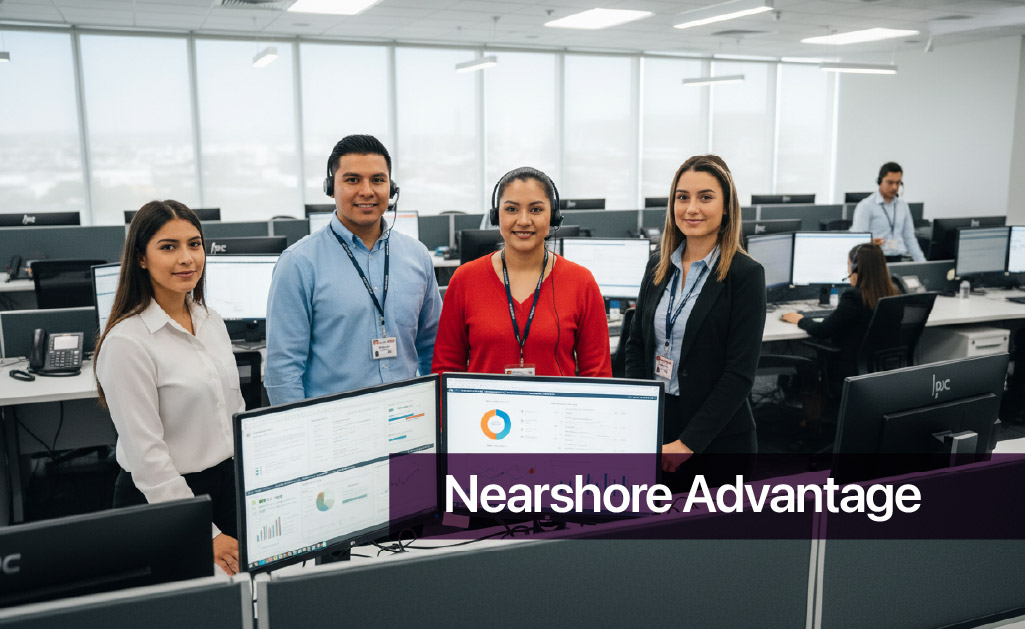
The Strategic Advantage of a Nearshore Inbound Call Center
When choosing an outsourcing partner for your inbound call center, location isn’t just a pin on a map—it’s a critical strategic decision. This is where the nearshore model shines, offering a powerful mix of benefits that are tough to find elsewhere.
“Nearshore” simply means partnering with a company in a neighboring country. For a US-based business, that means working with a team like ours in Tijuana, Mexico. It’s about a deep operational alignment that makes a massive difference in service quality.
The Power of Cultural Affinity in Your Call Center
One of the biggest advantages of a nearshore inbound call center is cultural affinity. Customers want to feel heard and understood. Real communication goes beyond speaking the same language—it’s about understanding cultural nuances and having a natural conversation.
Our agents in Tijuana understand North American culture because they live it. They watch the same shows, follow the same trends, and understand the references that make conversations feel authentic, not scripted. This shared context is priceless and leads to smoother chats, faster resolutions, and happier customers. Plus, our bilingual agents can switch between English and Spanish seamlessly, providing genuine support to a wider audience.
Why Time Zone Alignment Matters for Inbound Teams
While cultural understanding forges connection, time zone alignment makes the operation run like a well-oiled machine. Working with a team halfway across the world can lead to frustrating communication delays.
A nearshore partner, however, operates on the same clock you do.
“Time zone alignment transforms your outsourced team from a distant vendor into a true extension of your in-house operations. It enables real-time collaboration, immediate problem-solving, and a seamless workflow.”
This provides real-world benefits:
- Immediate Collaboration: If an urgent issue arises, you can jump on a call with your team lead right now, not wait until tomorrow.
- Real-Time Reporting: You can review performance reports during your own workday, enabling quick, informed decisions.
- Integrated Training: Your in-house staff can run training sessions with the nearshore team without anyone staying up late or waking up at dawn.
This synergy makes the entire partnership feel more connected and responsive. To see how much this model can benefit your business, explore the benefits of nearshore outsourcing in our detailed guide.
The Perfect Balance of Cost and Quality
The nearshore model hits the sweet spot between cost-effectiveness and high-quality service. While offshore partners in distant locations may offer lower prices, it often comes at the cost of communication hurdles and cultural disconnects that can frustrate customers.
Nearshore solutions provide a significant cost advantage over domestic options without sacrificing the quality of interaction your customers deserve. You get highly skilled, bilingual agents who understand your customer base and work when you work. It’s a strategic move that pays off both financially and operationally.
How to Select the Right Inbound Call Center Partner
Choosing a partner to represent your brand is a major decision. You aren’t just buying a service; you’re entrusting them with your customer relationships. The right choice requires looking beyond the price tag and digging into how a potential inbound call center actually operates.
The process boils down to asking the right questions—the kind that reveal a provider’s true skills, company culture, and commitment to excellence.
Evaluating Inbound Agent Training and Quality Assurance
Before signing a contract, you need a clear picture of how a partner trains its agents and maintains high standards. A top-tier provider will have a transparent and robust system for both initial onboarding and ongoing quality assurance (QA).
Ask them directly:
- “Can you walk me through your new agent training process?” Look for a detailed program covering soft skills like empathy and active listening, not just product specs. A multi-week, immersive program is a great sign; a one-day workshop is a red flag.
- “How do you measure and ensure call quality?” They should talk about regular call monitoring, using scorecards for evaluation, and providing consistent coaching. The best partners review multiple calls per agent each week, giving actionable feedback for continuous improvement.
Assessing Technology and Security Protocols
The right technology empowers agents to provide smooth, efficient support, while rock-solid security protects your customer’s data.
“A potential partner’s technology should be an enabler, not a barrier. If their systems are outdated or their security is questionable, it directly impacts your customers and your reputation.”
Key questions to ask:
- “What CRM and call management platforms do you use, and how do they integrate with our systems?” A modern partner will be comfortable with flexible platforms and have experience with various integrations.
- “What security protocols do you have in place to protect our customer data?” Listen for specifics like data encryption, secure network access, and compliance with standards like PCI DSS if you process payments.
By focusing on these practical areas—training, quality, technology, and security—you can confidently choose an inbound call center partner like CallZent that meets your high standards for professionalism and performance.
Got Questions About Inbound Call Centers? We’ve Got Answers.
Stepping into the world of inbound call centers can bring up some practical questions. Getting clear, no-nonsense answers is the best way to feel confident you’re making the right move. Let’s tackle the top questions we hear from businesses just like yours.
How Quickly Can We Launch an Inbound Call Center Team?
While the exact timeline depends on complexity, a standard inbound team can typically be fully trained and taking calls in just a few weeks. This structured process includes:
- Discovery and Strategy: We work with you to define your goals, call types, and your brand’s unique voice.
- Recruitment and Training: We select agents who fit your culture and put them through an intensive, client-specific training program. They learn your business, not just a generic script.
- Tech Setup: Our IT team integrates everything from your CRM to our phone systems, testing thoroughly before launch.
The goal is a seamless transition with zero disruption to your business.
What Do Inbound Call Center Pricing Models Look Like?
Understanding costs is critical. For an outsourced inbound call center, pricing generally falls into three common models:
- Per-Hour/Per-Agent: You pay a set hourly rate for agents dedicated to your account. This is simple and predictable.
- Per-Call: This model works well for unpredictable call volumes. You’re charged a flat fee for each call handled.
- Dedicated Team: You get a team of agents who work only for you for a fixed monthly fee, perfect for businesses needing consistent, specialized support.
We can help you determine which model makes the most sense for your call volume and business needs.
How Do We Measure the Success of an Inbound Call Center?
You can’t improve what you don’t measure. Focusing on a handful of key performance indicators (KPIs) provides a clear picture of performance.
For an inbound call center, these are the metrics that truly matter:
- First Call Resolution (FCR): Are customer problems being solved on the first try? A high FCR indicates an efficient, well-trained team.
- Average Handle Time (AHT): How long does it take an agent to resolve an issue? The goal is efficiency without sacrificing quality.
- Customer Satisfaction (CSAT): The ultimate report card. Simple post-call surveys give you direct feedback on customer happiness.
- Service Level: This measures responsiveness, such as the percentage of calls answered within a specific timeframe (e.g., 80% of calls answered in 20 seconds).
Together, these numbers provide a balanced view of both efficiency and quality, ensuring your partner is delivering an experience that strengthens your brand.
🚀 Boost Your FCR, CSAT & Loyalty With CallZent
CallZent provides bilingual, scalable, nearshore inbound call center solutions built to elevate your customer experience.
Ready to build a world-class customer experience with a dedicated nearshore partner? CallZent provides scalable, professional, and cost-effective inbound call center solutions from our strategic location in Tijuana. Contact us today to design your custom support strategy.