Skip to content
Lead Generation Strategy
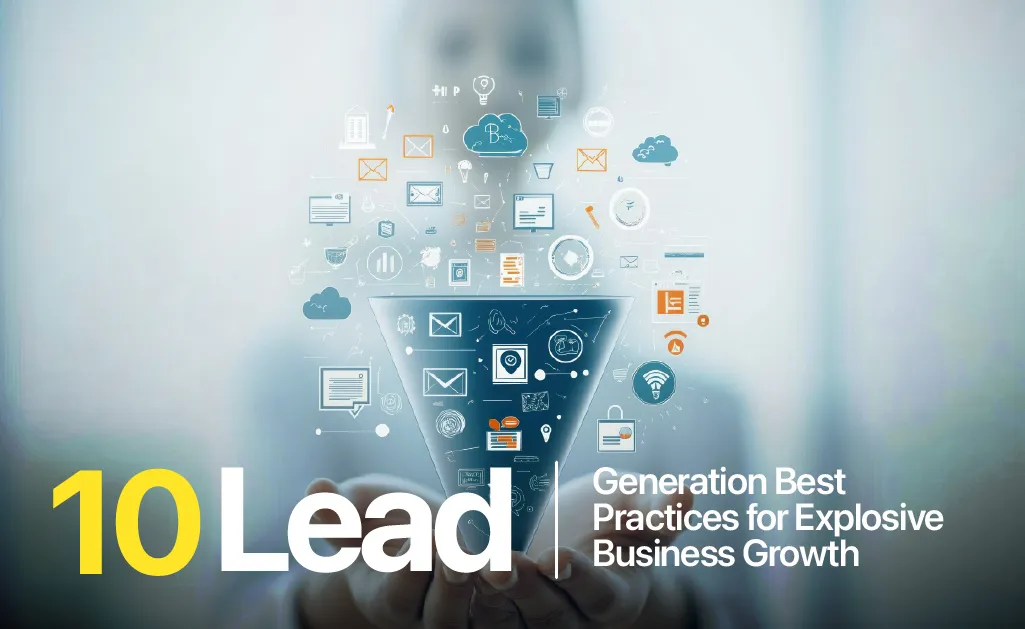
Lead Generation Best Practices: 10 Proven Strategies to Build a Strong Sales Pipeline
Discover the most effective lead generation best practices to attract qualified prospects, optimize conversions, and build a predictable sales pipeline.
TL;DR — Quick Takeaways
- Effective lead generation requires combining multiple strategies rather than relying on a single channel.
- Multi-channel lead capture, automated scoring, and high-value content are essential foundations.
- Landing page optimization, email nurturing, and paid advertising improve conversion rates.
- Integrating data with CRM and call center support ensures faster follow-up and higher close rates.
Is your sales pipeline feeling a little empty? In a crowded market, passively waiting for customers to find you is a recipe for stagnation. The difference between a thriving business and one that’s just surviving often boils down to a single, critical element: a consistent flow of high-quality leads. So, how do you build a lead generation engine that not only attracts prospects but turns them into loyal customers?
This guide moves beyond generic advice to provide actionable, real-world guidance. We’ll break down the proven lead generation best practices top-performing companies use to dominate their markets, from multi-channel capture to automated scoring and content that actually converts. Whether you’re looking to refine your call center outreach or supercharge your digital marketing, these strategies are your blueprint for a healthier, more predictable sales pipeline.
1. Implement a Multi-Channel
Lead Capture Strategy
A multi-channel lead capture strategy is a foundational approach that involves actively collecting prospect information from every touchpoint where a potential customer might interact with your brand. Instead of relying on a single source, this method creates a wide net across digital and traditional channels, including website forms, social media ads, live chat, email inquiries, and inbound phone calls. This ensures no matter how a lead discovers you, their information is captured efficiently.
This is one of the most effective lead generation best practices for businesses targeting diverse demographics. For example, a solar panel company might capture leads from a home show kiosk, a “Request a Quote” form on their website, and a click-to-call Google ad. By integrating all these sources, they get a complete picture of their pipeline. For companies targeting the North American market, a nearshore BPO partner like CallZent can seamlessly manage bilingual inquiries across all these channels.
A successful multi-channel strategy doesn’t just open more doors; it creates a single, unified view of your entire lead pipeline, allowing for smarter prioritization and follow-up.
How to Implement a Multi-Channel
Lead Capture Strategy
- Centralize Your Data: Use a Customer Relationship Management (CRM) system like Salesforce or HubSpot. Integrate it with all your lead sources—website forms, social media ads, chatbot, and call center software—to create a single source of truth for all incoming leads.
- Train Your Teams: Ensure sales and support agents, whether in-house or outsourced, understand the follow-up protocols specific to each channel. A lead from a chatbot may require a different approach than one from a direct phone call.
- Enable Bilingual Support: For companies serving North American markets, offering bilingual (English/Spanish) support across all channels is non-negotiable. This includes website forms, chatbot scripts, and having bilingual agents at a nearshore call center ready for phone and email inquiries.
- Monitor and Optimize: Review channel performance monthly. If Instagram ads are generating low-quality leads while webinar sign-ups are converting well, reallocate your budget and effort accordingly.
2. Use Automated Lead Qualification
and Scoring
Automated lead qualification and scoring is a systematic process that uses technology to rank leads based on their likelihood to convert. Instead of having sales teams manually sift through every incoming inquiry, this method applies predefined criteria to automatically score prospects based on demographic data (like job title or company size) and behavioral signals (like visiting your pricing page). This allows your team to focus its energy on high-potential opportunities, dramatically improving efficiency and conversion rates.
This is one of the most impactful lead generation best practices for high-volume industries. For example, a mortgage lender could assign points to a visitor who uses their online payment calculator (+10 points) and downloads a “First-Time Homebuyer’s Guide” (+15 points). Once a lead reaches a score of 50, they are automatically flagged as “sales-ready” and assigned to a loan officer. The integration of automation and artificial intelligence in call centers makes this process seamless.
Key Takeaway: Lead scoring isn’t about rejecting leads; it’s about prioritizing them. It ensures that the hottest prospects get immediate attention, increasing the chances of closing a deal while nurturing colder leads for the future.
How to Implement Automated Lead Scoring
- Define Your Ideal Customer Profile (ICP): Before you can score leads, you must know who you’re looking for. Document the key attributes of your best customers, including industry, company size, job title, and geographic location.
- Identify Key Scoring Factors: Start with 5-7 critical data points. Weight engagement behaviors (e.g., visited the pricing page, downloaded a case study) higher than passive attributes.
- Set Clear Thresholds: Establish what score qualifies a lead as a “Marketing Qualified Lead” (MQL) for nurturing and what makes it a “Sales Qualified Lead” (SQL) for immediate follow-up. Once a lead hits the SQL threshold, it should be automatically routed to a sales agent.
- Review and Adjust Quarterly: Your scoring model is not a set-it-and-forget-it tool. Analyze conversion data to see if your scores align with actual outcomes. If low-scoring leads are converting or high-scoring ones are not, adjust your model’s criteria and point values.
3. Create High-Value Content
and Lead Magnets
Content marketing is the practice of creating valuable, relevant material designed to attract and engage a target audience, compelling them to share their contact information. Central to this strategy are lead magnets—premium content offerings like eBooks, whitepapers, webinars, or templates. They establish trust, demonstrate expertise, and provide genuine value to prospects early in their buying journey.
A great real-world example is a B2B software company that offers a free “ROI Calculator” for their service. Prospects enter their own data and get an instant, personalized report showing potential savings. This is far more compelling than a generic brochure. This approach is a cornerstone of effective lead generation best practices because it builds a relationship based on value before asking for a sale.
Key Takeaway: A powerful lead magnet doesn’t just offer information; it solves an immediate problem for your prospect, positioning your brand as an indispensable resource and expert in the field.
How to Implement Content Marketing and Lead Magnets
- Address Specific Pain Points: Develop content that directly answers your ideal customer’s most pressing questions. A financial firm might offer a retirement planning checklist, while a logistics company could create a guide to reducing shipping costs.
- Prioritize Problem-Solving Tools: Create lead magnets that offer immediate utility. Interactive tools, calculators, and templates often convert better than static guides because they provide instant, personalized value.
- Develop Compelling Landing Pages: Each lead magnet needs a dedicated landing page with a clear value proposition, concise copy, and a simple form. The page must quickly communicate what the user gets in exchange for their information.
- Promote Content Widely: Distribute your lead magnets through multiple channels, including your email list, social media platforms, and targeted paid advertising campaigns to maximize reach.
- Offer Bilingual Content: To effectively engage the North American market, provide key lead magnets in both English and Spanish. This simple step can significantly expand your audience and show a commitment to inclusivity.
- Measure and Repurpose: Track performance by monitoring metrics like cost-per-lead and conversion rates. Extend the life of high-performing assets by repurposing a single whitepaper into a blog post series, an infographic, and a short video.
4. Master Strategic Email
Marketing and Nurturing
Strategic email marketing and nurturing is a targeted approach to building relationships with prospects through value-driven communications. Instead of broadcasting generic messages, this method delivers personalized content at key stages of the buyer’s journey. By automating yet personalizing sequences, email nurturing keeps prospects engaged, provides relevant information, and guides them toward conversion without aggressive sales tactics.
This is one of the most cost-effective lead generation best practices, as it allows businesses to build trust over time. For example, a SaaS company can set up a drip campaign for new trial users, sending a series of helpful tips over 14 days to showcase the product’s value and encourage subscription.
Key Takeaway: Email nurturing is not about just sending emails; it’s about delivering the right message to the right person at the right time. This turns a cold lead into a warm, educated prospect who is ready to convert.
How to Implement Strategic Email Marketing
- Build Your List Organically: Create valuable lead magnets like ebooks, webinars, or free consultations to attract genuinely interested prospects who opt-in to receive your communications.
- Segment Your Audience: Divide your email lists based on demographics, engagement level, or past behavior. A B2B company might segment by industry, while an e-commerce store could segment by purchase history. This allows for more relevant messaging.
- Create Automated Nurture Sequences: Develop automated workflows for key actions. A welcome series can introduce new subscribers to your brand, an abandoned cart sequence can recover lost sales, and a post-purchase series can encourage repeat business.
- Personalize Your Communications: Use recipient names, company information, and past interactions to tailor your content. Learning how to personalize customer interactions is critical for making your automated emails feel human and building a genuine connection.
- Monitor and Comply: Track metrics like open rates, click-through rates, and unsubscribes. If your unsubscribe rate exceeds 0.5%, you may be sending emails too frequently. Always ensure your practices comply with regulations like CAN-SPAM and GDPR.
5. Develop Strategic Partnerships
and Referral Programs
Developing strategic partnerships is a powerful method for generating a consistent stream of warm, high-quality leads. This approach involves building mutually beneficial relationships with complementary, non-competing businesses that serve the same customer base. Instead of relying solely on cold outreach, you tap into existing networks of trust, reaching new prospects who are already primed to consider your services.
For businesses where trust is paramount, this stands out as one of the most effective lead generation best practices. For instance, a wedding photographer could partner with a local florist and a venue. When a couple books the venue, the coordinator refers them to the trusted photographer and florist, creating warm leads for all three businesses. The core principle is that a recommendation from a trusted source is far more impactful than a traditional advertisement.
Key Takeaway: A well-executed referral program doesn’t just create a new lead source; it shortens the sales cycle by delivering prospects who arrive with a high degree of pre-established trust and a clear need for your solution.
How to Implement a Partnership and Referral Program
- Identify Complementary Partners: Create a target list of 10-15 non-competing businesses that serve your ideal customer. A web design agency could partner with a copywriter, an SEO specialist, and a business lawyer.
- Establish Clear Agreements: Formalize the partnership with a written agreement. Clearly outline the commission structure, lead qualification criteria, and responsibilities for both parties to prevent misunderstandings.
- Arm Your Partners for Success: Develop a partner toolkit with co-branded marketing materials, case studies, and email templates. Make it as easy as possible for them to promote your services effectively.
- Track and Reward Performance: Implement a reliable system, such as unique referral links or codes, to track every lead back to its source. Ensure timely and accurate commission or reward payouts to keep partners motivated. For more on this, you can learn about outsourcing lead generation to manage partner programs efficiently.
- Maintain Regular Communication: Schedule monthly or quarterly check-ins with your partners. Discuss performance, share updates about your services, and gather feedback to strengthen the relationship.
6. Leverage LinkedIn and Social
Selling Strategies
Social selling transforms social media from a passive marketing bulletin board into a proactive sales channel. This approach, particularly effective on LinkedIn for B2B, centers on identifying, engaging, and building genuine relationships with decision-makers through authentic, value-driven interactions. It moves beyond just posting brand updates to enable direct, one-on-one engagement with potential customers.
For B2B companies, this is one of the most powerful lead generation best practices available. A sales rep for a logistics company can use LinkedIn Sales Navigator to find supply chain managers in their target territory, comment thoughtfully on their posts for a few weeks, and then send a personalized connection request referencing their shared interests. This complements traditional outbound lead generation strategies by warming up cold contacts.
Key Takeaway: Social selling is not about spamming inboxes; it’s about building professional rapport and credibility, so when a prospect has a need, you are the first person they think of.
How to Implement LinkedIn and Social Selling
- Optimize Your Profile for Sales: Treat your LinkedIn profile as a landing page. Use a professional headshot, a compelling headline that states who you help and how (e.g., “Helping Retailers Optimize Their Supply Chain”), and a summary that showcases your value proposition.
- Share Valuable Content Consistently: Post industry insights, client success stories, or helpful resources at least twice a week. This establishes your expertise and keeps you visible to your network. Engaging with your prospects’ content is equally important.
- Personalize Your Outreach: Avoid generic connection requests. Reference a shared connection, a recent post they made, or a common industry group. Your initial message should offer value, not make an immediate sales pitch.
- Use Sales Navigator Intelligently: Invest in LinkedIn Sales Navigator to create hyper-targeted prospect lists. Filter by job title, company size, industry, and recent activity to find the most relevant decision-makers for your business.
7. Host Webinars and Virtual Event Marketing
Hosting educational webinars and virtual events is a powerful method for showcasing expertise, establishing authority, and capturing high-intent leads in a scalable way. This interactive format allows you to engage with a captive audience in real-time, address their questions directly, and present a clear path to conversion, all within a single session. It moves prospects from awareness to consideration efficiently.
This strategy is proven across industries and stands out as one of the top lead generation best practices because it offers value upfront. For example, a financial advisory firm could host a “5 Strategies for Retirement in a Volatile Market” webinar. Attendees are highly qualified leads who are actively thinking about their financial future. For bilingual audiences, a nearshore BPO partner like CallZent can manage event registration, provide live support, and conduct follow-up calls in both English and Spanish.
Key Takeaway: Webinars create a unique environment where you can educate and sell simultaneously, turning engaged attendees into qualified leads who are already familiar with your value proposition.
How to Implement a Webinar Marketing Strategy
- Choose a High-Impact Topic: Select a topic that solves a pressing pain point for your ideal customer. Use tools like AnswerThePublic or review sales call notes to find common challenges.
- Promote Strategically: Start promoting your event 2-3 weeks in advance across your email list, social media, and targeted paid channels. Create a dedicated landing page with a clear value proposition and a simple registration form.
- Structure for Engagement: Keep the main presentation to 45 minutes to maintain attention, and always reserve at least 15 minutes for a live Q&A segment. This is your chance to handle objections and learn what’s on your prospects’ minds.
- Systematize Your Follow-Up: Within 24 hours, send an email to all registrants (attendees and no-shows) with a link to the recording and presentation slides. Create a separate, more direct follow-up sequence for those who attended live.
- Expand Your Reach with Bilingual Options: To effectively engage North American markets, offer your webinars with bilingual support. This can be achieved through separate sessions in different languages or by using platforms that support simultaneous translation.
8. Focus on Landing Page and
Conversion Rate Optimization (CRO)
Driving traffic to your website is only half the battle; converting that traffic into leads is where the real value is created. This is done through landing page optimization and its analytical counterpart, Conversion Rate Optimization (CRO). A landing page is a standalone web page created for a specific campaign, designed with a single goal: to get a visitor to take action.

This methodical approach is one of the most crucial lead generation best practices. For instance, an e-commerce brand running a Facebook ad for a new sneaker should send users to a landing page featuring only that sneaker, not their generic homepage with dozens of products. They can then A/B test the “Buy Now” button color (e.g., green vs. orange) to see which one gets more clicks, systematically improving results.
Key Takeaway: Stop sending valuable campaign traffic to your generic homepage. Dedicated landing pages with a single, clear call-to-action consistently outperform them, and CRO provides the scientific method for maximizing their effectiveness.
How to Implement Landing Page and CRO Best Practices
- Create Campaign-Specific Pages: Build a unique landing page for each distinct ad group. The message on the landing page must match the message in the ad that brought the visitor there.
- Simplify and Focus: Remove all distractions like the main navigation menu, footer links, and competing offers. The page should have one clear goal, supported by a compelling headline, benefit-oriented copy, and social proof like testimonials.
- Optimize Your Forms: Keep lead capture forms as short as possible. Ask only for the information you absolutely need (e.g., Name, Email, Phone Number). Every additional field will cause a drop in your conversion rate.
- Test and Measure Everything: Use tools like Unbounce or Google Optimize to A/B test one element at a time. Test your headline, call-to-action button color, imagery, and form length. For detailed strategies, learn how to optimize landing pages for conversions.
- Offer Bilingual Options: For businesses serving diverse markets, providing a Spanish-language version of your landing page is essential. This ensures that Spanish-speaking prospects receive a clear, culturally relevant message, which dramatically improves conversion.
9. Run Paid Advertising and Retargeting Campaigns
A paid advertising strategy involves a direct investment in platforms like Google Ads, Facebook, and LinkedIn to place your brand in front of highly targeted audiences. This approach allows you to reach prospects who are actively searching for solutions or who fit your ideal customer profile. It’s paired with retargeting, which re-engages website visitors who showed interest but did not convert, keeping your brand top-of-mind.
For businesses that need immediate and scalable results, paid advertising is one of the most powerful lead generation best practices. For example, a local plumbing company can use Google Ads to show up at the very top of search results when someone searches “emergency plumber near me,” capturing a high-intent lead at the exact moment of need.
Key Takeaway: Paid advertising provides control and speed, allowing you to turn lead flow on and off as needed, while retargeting maximizes your budget by focusing on an already-warm audience, boosting conversion rates significantly.
How to Implement Paid Advertising and Retargeting
- Focus on High-Intent Keywords: Start your Google Ads campaigns by bidding on keywords that signal a strong intent to buy, such as “acme software pricing” or “divorce lawyer houston.” Use negative keywords to filter out irrelevant traffic.
- Segment Your Audiences: On social platforms like Facebook, create detailed audiences based on interests and demographics. For B2B, use LinkedIn’s powerful targeting to reach decision-makers by industry, company size, or job function.
- Implement a Retargeting Pixel: Place a tracking pixel (from Google, Facebook, etc.) on your website. This allows you to create an audience of visitors who viewed a product or pricing page but didn’t convert, so you can serve them follow-up ads.
- Send Traffic to Optimized Landing Pages: Never send paid traffic to your homepage. As discussed in the previous point, each ad campaign should have its own dedicated landing page for maximum conversion.
- Measure and Adjust: Continuously monitor your campaign performance. Track key metrics like Cost Per Lead (CPL) and Return on Ad Spend (ROAS). Allocate more budget to high-performing campaigns and pause or adjust those that are not delivering results.
10. Integrate a Customer Data Platform
(CDP) for Lead Intelligence
A Customer Data Platform (CDP) is a system that unifies prospect and customer information from disparate sources—like your website, CRM, and email platform—into a single, cohesive profile. By combining a CDP with lead intelligence, you move beyond basic contact details to understand a lead’s behavior, intent, and position in the buying journey. This consolidated view allows for superior segmentation and highly relevant personalization.
This method is one of the most powerful lead generation best practices for B2B companies. For instance, a B2B business can use intent data to see that multiple people from a target company are suddenly visiting their pricing page. A CDP unifies this activity, flags the account as “surging,” and alerts a sales agent. That agent, whether in-house or with a BPO partner like CallZent, can then make a highly informed and timely outreach call.
Key Takeaway: Lead intelligence isn’t just about collecting data; it’s about turning that data into foresight, enabling your sales team to engage the right accounts with the right message at the exact moment they show buying intent.
How to Implement a CDP and Lead Intelligence Strategy
- Start with Key Data Sources: Begin by integrating your top three or four most valuable data sources, such as your CRM, website analytics, and email marketing platform.
- Establish Data Governance: Create clear rules for data entry, formatting, and maintenance to ensure the information in your CDP remains clean and reliable.
- Use Intent Data for Prioritization: Employ tools that provide intent data to identify prospects actively showing buying signals. This allows your sales team or BPO partner to prioritize follow-ups on the warmest leads, dramatically improving efficiency.
- Map and Integrate Systems: Carefully map data fields between your CDP and other systems like your marketing automation platform. This ensures that when a lead is enriched, the new information flows correctly for use in personalized email campaigns or targeted ad audiences.
- Ensure Data Privacy Compliance: Develop and enforce strict customer data policies that adhere to regulations like GDPR and CCPA. This protects your customers’ privacy and your business from legal risks.
Top 10 Lead Generation Best Practices: A Comparison
| Tactic | Implementation Difficulty | Resource Needs | Expected Outcome | Best For | Key Advantage & Pro Tip |
|---|---|---|---|---|---|
| Multi-Channel Capture | High | High (CRM, Integrations) | Broader coverage, higher volume | Businesses with diverse customer touchpoints | Advantage: Maximizes lead capture. Tip: Centralize all data in one CRM. |
| Automated Scoring | High | Medium (Analytics) | Prioritized, high-converting leads | High-volume B2B or B2C sales funnels | Advantage: Focuses sales on hot leads. Tip: Regularly review and adjust your scoring model. |
| Content & Lead Magnets | Medium | Medium (Content Creators) | High-quality inbound leads, builds authority | Trust-driven sectors (SaaS, finance) | Advantage: Creates lasting assets. Tip: Create problem-solving tools, not just guides. |
| Email Nurturing | Medium | Low-Medium (Platform) | High ROI, better lead conversion | All businesses, especially e-commerce/SaaS | Advantage: Scalable personalization. Tip: Segment your audience for maximum relevance. |
| Partnerships & Referrals | Medium | Low-Medium (Management) | Warm leads, lower acquisition cost | Local services, B2B networks | Advantage: Leverages existing trust. Tip: Formalize agreements and make referrals easy. |
| Social Selling (LinkedIn) | Low-Medium | Low (Time, Sales Navigator) | Targeted B2B relationships | B2B sales and high-value services | Advantage: Direct access to decision-makers. Tip: Personalize every outreach attempt. |
| Webinars & Virtual Events | Medium-High | Medium-High (Production) | Highly engaged, educated leads | Education-heavy sales (tech, finance) | Advantage: Builds credibility at scale. Tip: Follow up immediately with attendees. |
| Landing Page & CRO | Medium | Medium (Testing Tools) | Higher conversion rates, better ROI | Any business running paid ad campaigns | Advantage: Maximizes traffic value. Tip: Test one element at a time for clear results. |
| Paid Ads & Retargeting | Medium | High (Ad Spend, Management) | Immediate, scalable, measurable leads | Businesses needing quick results | Advantage: Speed and control. Tip: Retarget website visitors who don’t convert. |
| CDP & Lead Intelligence | High | High (Platform, Engineering) | 360° prospect view, predictive insights | B2B enterprises, complex sales cycles | Advantage: Enables data-driven personalization. Tip: Start by unifying your top 3 data sources. |
Conclusion: From Plan to Pipeline
We’ve explored a powerful set of ten lead generation best practices, moving from high-level strategy to the granular details of execution. The core lesson is this: modern lead generation isn’t about finding a single “magic bullet.” It’s about building an interconnected system where insights from one channel inform the strategy for another.
For example, the keyword data from your paid ad campaigns can reveal the exact pain points to address in your call center scripts, while feedback gathered by your call agents can inspire your next high-value lead magnet.
Key Takeaways for Your Growth Engine
Mastering this process requires a shift in mindset from disconnected tasks to a unified, data-driven operation. The goal is to create a predictable and scalable pipeline that consistently delivers qualified prospects to your sales team.
- Integration Over Isolation: Your strategies must work together. Social media efforts should drive traffic to optimized landing pages, and your call center agents should be armed with intelligence gathered from every digital touchpoint.
- Data is Your Compass: Stop guessing and start measuring. KPIs like Cost Per Lead (CPL) and Lead Conversion Rate are critical signals that tell you what’s working and where to invest your resources.
- Personalization at Scale: Today’s buyers expect relevance. Using a CDP and strategic segmentation allows you to deliver the right message to the right person at the right time.
Your Actionable Next Steps
Don’t try to implement all ten strategies at once.
- Conduct a Quick Audit: Identify the one or two areas with the biggest gaps in your current process. Is your landing page conversion rate dismal? Start there.
- Launch a Pilot Project: Choose one specific strategy to implement, like creating a single lead magnet with a simple email nurture sequence. Measure the results closely.
- Consider Strategic Support: Implementing these complex, multi-channel strategies requires specialized skills and time. This is particularly true for outbound/inbound calling, bilingual support, and 24/7 lead qualification, which are often beyond the capacity of internal teams.
A successful lead generation program is not a one-time setup. It is a commitment to continuous improvement, driven by data, and adapted to the changing needs of your market.
The journey from a simple plan to a profitable sales pipeline is built one qualified lead at a time. The principles we’ve discussed provide the blueprint. By adopting a systematic, data-informed approach, you move from hoping for leads to engineering their creation.
🚀 Ready to Turn Leads Into Revenue?
CallZent helps businesses capture, qualify, and convert more leads through professional bilingual call center services and advanced technology integrations.
Talk to an ExpertReady to turn these lead generation best practices into a high-performing pipeline? The experts at CallZent, a leading nearshore call center in Tijuana, specialize in building and managing the exact systems we’ve discussed—from 24/7 lead qualification and bilingual agent support to seamless technology integration. Let us handle the heavy lifting of lead management so your team can focus on what it does best: closing sales.