Skip to content

Financial Services Growth
A Modern Playbook for Lead Generation for Banks
Relying on walk-in traffic is outdated. Discover modern, compliant lead generation for banks using digital channels, data, and nearshore BPO support.
TL;DR — Quick Takeaways
- Traditional bank lead generation is failing due to declining customer loyalty and digital-first behavior.
- Modern strategies require a multi-channel mix: SEO, digital ads, and outbound engagement.
- Compliance (TCPA, data privacy) must be embedded into every campaign.
- Nearshore BPO partners like CallZent enable scalable, compliant, and high-performing lead generation.
If your bank is still just waiting for customers to walk through the door, you’re operating on a broken strategy. In a world of endless financial choices, passively waiting for business is simply not an option anymore. True lead generation for banks now demands a proactive, multi-channel approach that actively engages prospects where they live, work, and connect online.
Why Your Bank’s Lead Generation Strategy Is Outdated
Let’s be honest: the old ways of attracting banking customers are failing. Customer loyalty has all but evaporated, and fintech disruptors have permanently reset consumer expectations. Relying on brand recognition and physical branches is a fast track to being left behind.
The core issue is a massive shift in how people make financial decisions. They no longer automatically turn to their primary bank for new products. Instead, they’re online comparing rates, reading reviews, and doing their homework long before they ever think about speaking to a representative.
This isn’t an opinion; it’s a measurable, and frankly alarming, trend.
The Alarming Decline in Customer Loyalty
Recent data from McKinsey’s Global Banking Annual Review paints a stark picture. The traditional customer journey has been completely reshaped.
The days of customers defaulting to their primary bank for new accounts are over. This table shows just how dramatically loyalty has fallen in less than a decade.
The Decline of Automatic Customer Loyalty (2018 vs. 2026)
| Banking Product | Loyalty-Driven Openings (2018) | Loyalty-Driven Openings (2026) |
|---|---|---|
| Credit Cards | 10% | 4% |
| Checking Accounts | 25% | 4% |
In the United States, only 4% of new credit card applicants now choose their existing bank without looking at alternatives—a steep fall from 10% in 2018.
The drop is even more dramatic for core products like checking accounts. Loyalty-driven openings plummeted from 25% in 2018 to just 4% today.
These numbers signal a profound change. Customers are actively shopping around, and if your bank isn’t competing for their attention, you’re invisible. This is precisely why modern lead generation for banks has become critical for survival and growth. It’s interesting to see how this challenge stacks up against other sectors; our guide on lead generation for technology companies provides a different perspective.
The Urgency for a Modern Approach
The gap between traditional banks and agile fintechs is only getting wider. Fintechs are winning because they were built for this new reality—they excel at digital marketing, personalized outreach, and creating frictionless online experiences.
For established banks, this isn’t a time for panic, but it is a time for urgent action.
In an era of endless choice, banks must shift from passively waiting to actively engaging prospects where they live, work, and connect online.
This means getting serious about moving beyond occasional print ads or local sponsorships. It requires a sophisticated, data-driven strategy that blends digital ads, educational content, and personalized human interaction. The goal is to meet potential customers on their terms, providing real value and building trust long before they need to make a transaction.
Fortunately, you don’t have to build this capability from the ground up. Partnering with a specialized BPO offers a powerful, scalable solution. An expert partner like CallZent brings the trained teams, proven processes, and technology needed to run high-volume, compliant lead generation campaigns. This lets your bank compete effectively without the massive overhead of an in-house operation.
This playbook will walk you through exactly how to design that modern framework.
Building a Compliant and Effective Lead Generation Framework
If you’re still relying on walk-in traffic and outdated prospecting methods, you’re not just falling behind—you’re actively losing ground. The old playbook is broken. To win today, you need a modern, compliant, and genuinely effective lead generation framework. This isn’t about simply collecting names; it’s about building a machine that consistently attracts and nurtures the right kind of high-value prospects.
The entire banking world has shifted from branch-centric handshakes to digital-first clicks. This is the single biggest change we’ve seen, and your strategy needs to reflect it.
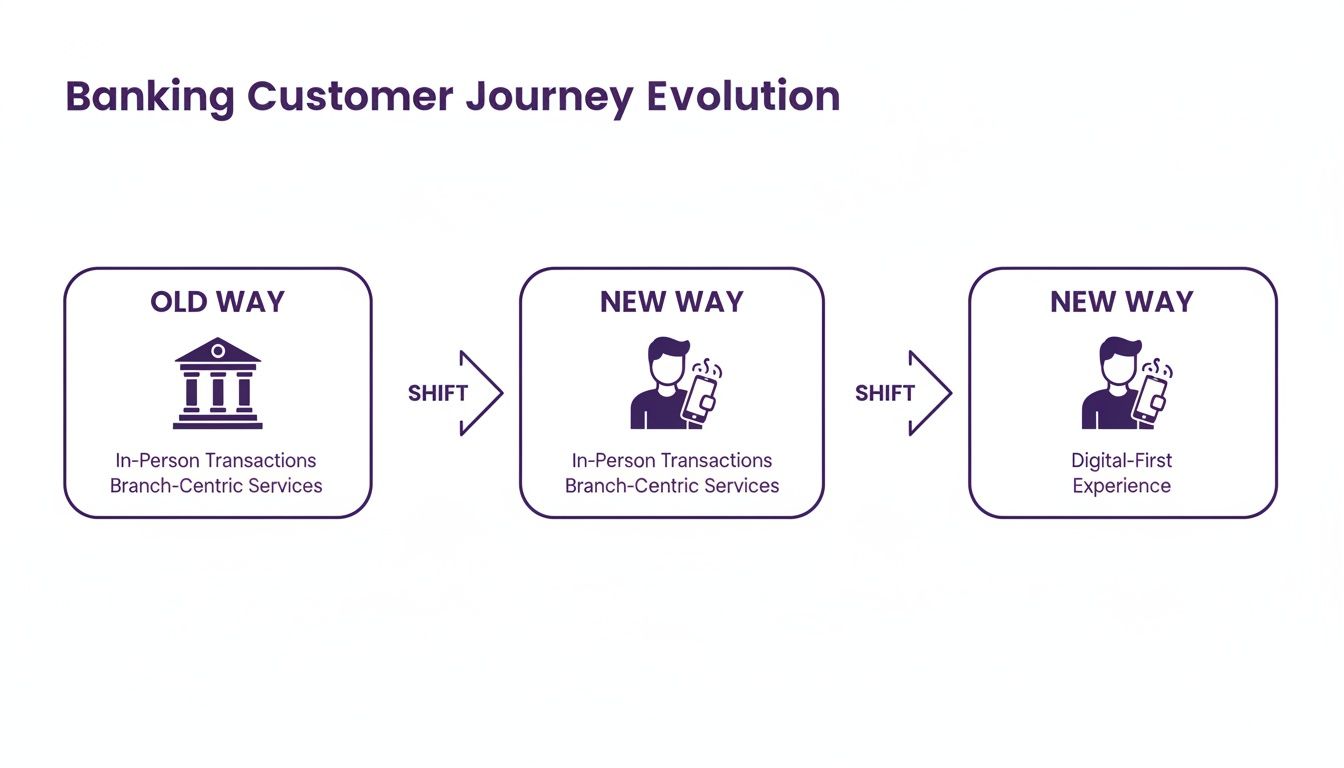
This journey map says it all. Today’s prospects don’t start their search by walking into a bank; they start it on their phone or laptop. Your lead generation efforts have to be built for this new reality.
Advanced Audience Segmentation for Banks
Look, basic demographics like age and income are table stakes. They won’t get you very far anymore. To really connect with potential clients, you have to go deeper by segmenting based on psychographics (their values and attitudes) and digital behaviors (what they’re reading, searching for, and clicking on).
Stop targeting “small businesses” and start building detailed personas for the specific, high-value segments you actually want.
- The Expanding E-commerce Retailer: This owner is juggling cash flow, hunting for inventory financing, and needs to figure out international payments. You’ll find them on LinkedIn, probably following the latest fintech news.
- The Private Healthcare Practice: They’re not just a business; they need specialized financing for medical equipment, a robust checking account to manage complex insurance payouts, and wealth management services for the partners.
- The First-Time Real Estate Investor: This person is glued to their screen, researching mortgage rates, devouring blogs on property management, and plugging numbers into online loan calculators. They are prime candidates for educational content about investment loans.
When you get this specific, your marketing stops feeling like a generic ad and starts feeling like a direct answer to their biggest problems.
Crafting a Balanced Channel Mix
There’s no magic bullet here. Relying on a single channel is a recipe for failure. Real success comes from a smart, balanced mix of channels that work together, each playing to its strengths and aligning with your target personas.
Digital Advertising (Google & Social Ads):
- The Good: You get immediate, measurable results. It’s perfect for grabbing high-intent prospects who are actively searching for products like yours. You can target them with incredible precision.
- The Bad: It can get expensive, fast. Ad fatigue is a real problem, and you have to constantly be tweaking your campaigns to see a positive ROI.
Content Marketing & SEO:
- The Good: This is your long-term play. It builds trust, establishes your bank as the go-to expert, and generates a steady stream of organic leads at a very low cost over time.
- The Bad: It takes patience. You won’t see results overnight. It demands a consistent commitment to creating genuinely helpful content and climbing the search rankings.
Outbound Calling Campaigns:
- The Good: For high-value, complex leads—think commercial loans or wealth management—nothing beats a real conversation. A skilled agent can build rapport and uncover needs that digital channels completely miss.
- The Bad: Let’s be honest, it can feel intrusive if done poorly. This requires highly trained agents who know the industry and strict adherence to compliance.
The best lead generation programs don’t just pick one tactic. They orchestrate multiple channels to guide a prospect from that first flicker of awareness all the way to conversion.
Here’s how it works in the real world: You run a targeted LinkedIn ad promoting a whitepaper on business financing. A prospect downloads it, triggering an automated email sequence. If their profile screams “high-value,” a skilled agent from a nearshore BPO partner like CallZent follows up with a call to have a real conversation about their specific needs. See how it all connects?
Navigating the Regulatory Minefield in Lead Generation for Banks
In finance, compliance isn’t just a box to check—it’s your license to operate. A lead gen program that stumbles on regulations like the Telephone Consumer Protection Act (TCPA) or data privacy rules can bring on massive fines and wreck your reputation.
You absolutely need a rock-solid compliance checklist. It should cover everything from data handling and consent for outreach to the disclosures in your marketing and the scripts your agents use. Getting this right is non-negotiable.
For a much deeper dive into this critical area, check out our guide on how to ensure data security and compliance. This is precisely where a BPO partner with deep financial sector experience becomes a game-changer. A true expert builds compliance into every single campaign from the ground up, shielding your bank from risk so you can focus on growth.
Mastering Content and Digital Channels for Bank Leads
Having a strong digital footprint is ground zero for modern lead generation for banks. But let’s be clear—it’s not about simply existing online. It’s about building a precise digital engine that pulls in high-value prospects. We need to get past vague ideas and into the nitty-gritty tactics that actually work.
Your goal is to stop broadcasting and start connecting. Each of your digital channels should work together to attract, educate, and engage potential clients by zeroing in on their most pressing financial pain points.
Create Content That Solves Real Problems
Think of content marketing as your long-game for organic growth. Instead of just writing about your products, create content that solves the real-world problems your ideal customers are wrestling with. This is how you build trust and position your bank as an essential expert partner, not just a vendor.
Here are a few concrete ideas to get you started:
- Blog Post Concept: A Founder’s Guide to Choosing a Business Bank Account. This directly targets new entrepreneurs who are actively searching for solutions and helps them make a critical early decision.
- Whitepaper Idea: Five Financial Pitfalls New E-commerce Businesses Must Avoid. This downloadable resource is a magnet for leads from a high-growth sector while offering genuine, actionable advice.
- Video Tutorial: How to Apply for Your First Small Business Loan. A short, punchy video can demystify a complex process, building a ton of confidence in prospective borrowers.
Content like this naturally attracts people who are already in a research phase, making them much warmer leads for your sales team to follow up with.
Win with Hyper-Focused SEO for Banks
Search Engine Optimization (SEO) for banking isn’t about ranking for a broad term like “bank.” It’s about winning the fight for high-intent, specific keywords that show a user is ready to make a move. Your SEO strategy has to capture prospects who are already deep in their decision-making journey.
You should be chasing keywords like:
- “Commercial real estate loans in Texas”
- “Best high-yield savings accounts for physicians”
- “Equipment financing for construction companies”
These aren’t casual browsers. They are qualified leads looking for a specific financial solution. By building dedicated landing pages and content around these long-tail keywords, you put your bank directly in their path at the exact moment they need you.
To really capture this high-intent traffic immediately, you need to understand specific strategies like effective PPC for lead generation campaigns.
Execute Targeted Digital Ad Campaigns
While SEO builds your long-term foundation, paid advertising delivers immediate, predictable results. A well-run digital ad campaign lets you surgically target your ideal customer profile with an offer they can’t ignore.
Your digital advertising shouldn’t feel like an ad; it should feel like a timely solution to an urgent problem.
Let’s walk through a real-world scenario. A regional bank wants to grow its equipment financing portfolio.
- Objective: Generate qualified leads for equipment loans from construction company owners.
- Channel: LinkedIn Ads, where professional targeting is second to none.
- Targeting: Job title (Owner, CEO, Founder), Industry (Construction), and Geographic Location (specific counties or states).
- Ad Creative: The ad promotes a free guide: “The Contractor’s Guide to Financing Heavy Equipment in 2026.” The copy quickly hits on benefits like preserving working capital and gaining tax advantages.
- The Funnel: A construction company owner sees the ad, downloads the guide, and bam—they’re in the bank’s nurturing funnel. Since this is a high-value prospect, this action could trigger an automated email and a follow-up call from a specialized lending officer or a trained BPO agent.
This targeted approach ensures your advertising dollars are spent reaching only the most relevant prospects, which drastically improves your ROI. When you combine these digital strategies, you create a powerful, repeatable system for lead generation. For more on building out these strategies, dive into our full guide on lead generation best practices.
The Human Touch: When a Call Center Excels in Bank Lead Generation

As powerful as digital marketing is, it creates a lot of noise. In the world of high-finance, where trust is everything, a genuine human conversation can cut through it all. For complex products like commercial loans, treasury services, or wealth management, the final decision rarely comes from an ad click. It comes from a handshake—or a phone call that feels just as personal.
While your digital campaigns are great for filling the top of the funnel, a dedicated voice team is what turns those lukewarm leads into qualified opportunities. They provide a level of nuance and personalization that an email simply can’t match. But building an in-house call center is a massive undertaking, demanding huge investments in hiring, tech, and compliance. This is where a strategic Business Process Outsourcing (BPO) partnership becomes a game-changer.
The Nearshore Advantage for Financial Services
Outsourcing lead generation is nothing new, but where you outsource makes all the difference. For years, the default was “offshore” to places like India or the Philippines. Today, savvy financial institutions are looking closer to home with the “nearshore” model, partnering with BPOs in neighboring countries like Mexico.
There’s a reason the outsourced lead generation market is booming—it was valued at $14,457.3 million this year and is on track to more than double to $31,450.7 million by 2033. Businesses are tired of high non-conversion rates and are turning to specialists to get real results.
A nearshore partner like CallZent, based right on the border in Tijuana, offers clear advantages over distant offshore alternatives.
- Cultural Fluency: Our agents don’t just speak the language; they understand the nuances of North American business culture. They build rapport naturally because they get the context.
- Timezone Alignment: We operate on the same schedule as you and your prospects. No more late-night calls or delayed reporting. Collaboration is seamless because we work when you work.
- A Deep Bilingual Talent Pool: You gain access to a highly skilled, professional workforce fluent in both English and Spanish, allowing you to connect authentically with a much broader customer base.
Think of a nearshore BPO not as a cost-cutting measure, but as a strategic growth engine. It combines cultural fluency, operational efficiency, and top-tier talent to drive superior results.
Practical Tools for Voice-Based Lead Generation
Effective outbound calling is more art than science. It’s not about hammering phones with aggressive pitches; it’s about initiating strategic, value-driven conversations. The agent’s mission is to quickly establish credibility, diagnose the prospect’s needs, and see if your bank is the right solution.
This requires more than just a phone. It requires sharp scripts and a clear qualification framework. After all, engaging a busy small business owner demands a totally different approach than connecting with a high-net-worth individual.
Sample Call Opening for a Small Business Owner
This script is designed to be concise, respectful, and immediately focused on value.
Agent: “Hi, [Prospect’s Name]. My name is [Agent’s Name], calling from [Your Bank’s Name]. I know you’re incredibly busy, so I’ll be brief. We’ve recently helped several businesses in the [Prospect’s Industry] sector secure better financing terms to expand their operations, and I noticed you’re in that space. Is improving cash flow or funding growth on your radar for this year?”
This opening works because it:
- Shows respect for their time.
- Establishes relevance by mentioning their industry.
- Offers a specific, benefit-focused reason for the call.
- Asks a direct qualifying question to quickly gauge interest.
Qualifying Leads Effectively Over the Phone
Once a conversation is flowing, agents need a simple framework to qualify the lead without making it feel like an interrogation. A great method is a banking-specific spin on the classic BANT model (Budget, Authority, Need, Timeline).
The Banking Qualification Framework
| Criteria | Key Question for Agents to Ask |
|---|---|
| Need | “What are the biggest financial challenges your business is facing right now?” |
| Authority | “Are you the primary person who makes decisions regarding the company’s banking and financing?” |
| Timeline | “How soon are you looking to solve this challenge or make a decision on a new banking partner?” |
| Fit | “Based on your needs, our [Specific Product, e.g., Commercial Line of Credit] seems like it could be a strong fit. Are you open to a brief chat with one of our specialists next week?” |
By training agents on this framework, you ensure they’re having strategic conversations that move the most promising leads forward. Partnering with a skilled BPO gives you a team that already knows these techniques and is ready to represent your brand with professionalism from day one.
To see how we build these solutions from the ground up, take a look at our approach to creating a dedicated financial services call center.
How to Measure and Optimize Your Lead Generation Funnel
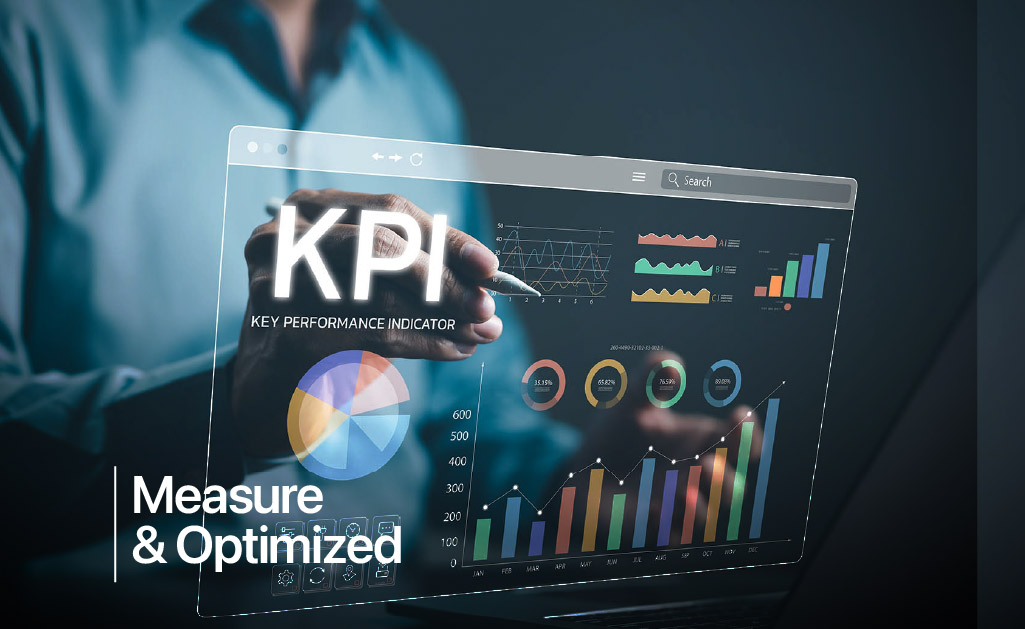
That old business saying, “If you can’t measure it, you can’t improve it,” has never been more true for bank lead generation. Kicking off a campaign is one thing, but the real growth comes from knowing exactly what’s working, what’s falling flat, and constantly tweaking your approach to get the best possible return.
It’s easy to get distracted by vanity metrics like impressions and clicks. They might look good on a report, but they don’t grow your portfolio. What you really need is a solid feedback loop where performance data directly informs your targeting, messaging, and channel mix.
Defining the KPIs That Actually Matter
To get a true picture of your funnel’s health, you have to focus on the key performance indicators (KPIs) that connect directly to business growth. These are the numbers that tell you the real story about your efficiency and profitability.
Here are the essential metrics every bank should have on their radar:
- Cost Per Lead (CPL): This is your cost to generate one new lead. For a bank, a lead could be anyone from someone who downloads a home-buying guide to a business owner filling out a form for a loan consultation.
- Cost Per Acquisition (CPA): This is the total cost to land one new customer—not just a lead. It’s a far more powerful metric because it tracks the actual cost of getting someone to open an account or close a loan.
- Lead-to-Customer Conversion Rate: This percentage reveals how many of your leads actually become paying customers. A low rate is a red flag, often pointing to issues with lead quality or a broken follow-up process.
- Customer Lifetime Value (CLV): This is an estimate of the total revenue your bank can expect from a single customer over the course of their relationship with you. Knowing your CLV is critical for deciding how much you can afford to spend acquiring new customers in the first place.
Here’s a table breaking down these core KPIs.
Essential KPIs for Bank Lead Generation Campaigns
| KPI | What It Measures | Why It Matters for Banks |
|---|---|---|
| Cost Per Lead (CPL) | The total marketing spend divided by the number of new leads generated. | Measures the efficiency of top-of-funnel activities. Helps you see which channels are most cost-effective for starting conversations. |
| Cost Per Acquisition (CPA) | The total campaign spend divided by the number of new customers acquired. | The ultimate measure of ROI. It tells you exactly how much you spent to win a new banking relationship. |
| Lead-to-Customer Conversion Rate | The percentage of leads that successfully convert into new customers. | A direct reflection of lead quality and sales effectiveness. A low rate can signal a disconnect between marketing and sales. |
| Customer Lifetime Value (CLV) | The total net profit a bank can expect from a customer over their entire relationship. | Informs your acquisition budget. A high CLV means you can justify a higher CPA to attract valuable long-term clients. |
Tracking these numbers gives you a clear, data-backed view of your performance, moving you beyond guesswork and into strategic decision-making. If you want to go deeper on building out your measurement framework, our guide on call center reporting and metrics dashboards is a great resource.
Building Your Lead Scoring System
Let’s be honest: not all leads are created equal. Someone who grabs a generic budgeting template is worlds away from a business owner requesting a demo of your treasury management platform. That’s where lead scoring comes in. It’s a system for automatically ranking leads based on their value and how ready they are to talk to your team.
The system works by assigning points based on who a lead is and what they do.
- Demographic/Firmographic Scoring: You award points based on a lead’s profile. For a bank, you might assign higher scores to leads from specific industries (like healthcare practices) or those with job titles like “CFO” or “Owner.”
- Behavioral Scoring: Here, you award points for actions. Visiting your mortgage rates page might be worth 10 points. Filling out a “Contact a Loan Officer” form? That could be worth 50 points.
A crucial part of this process is understanding how to qualify leads so your team only spends time on prospects with real potential.
A well-designed lead scoring system is a force multiplier for your team. It automates prioritization, ensuring that your best bankers and agents spend their valuable time talking to the hottest leads, not chasing cold trails.
Creating a Simple Performance Dashboard
You don’t need a complex, enterprise-level analytics platform to get started. Honestly, a simple dashboard—even one built in a spreadsheet—can bring tremendous clarity by centralizing your data and making it easy to spot trends.
Your dashboard should track your main KPIs over time, broken down by channel. This is what allows you to answer the make-or-break questions. Is LinkedIn generating a better CPA for commercial loans than your Google Ads? Are the leads from your outbound call campaign converting at a higher rate?
This kind of visibility is what turns your lead generation from a guessing game into a predictable growth engine. By consistently measuring, analyzing, and acting on the data, you ensure every dollar you spend is working as hard as possible to grow your bank.
Frequently Asked Questions About Bank Lead Generation
Let’s be honest, modern lead generation for banks can feel overwhelming. With a constant stream of new channels, tech, and compliance rules, it’s easy to get stuck. Here are some straight-to-the-point answers to the questions we hear most from banking pros looking to build a better growth engine.
How Can My Bank Generate Leads While Staying Compliant?
This is the question. In finance, compliance isn’t just a box to check—it’s the bedrock of your entire marketing strategy. One wrong move can cost you in fines and, more importantly, in customer trust.
Building a compliant program means weaving the rules into every single thing you do. It’s not about finding workarounds; it’s about creating a bulletproof process from day one.
-
Constant, Rigorous Training: Everyone who touches a lead—from marketers to your call center team—needs to live and breathe the regulations. That means knowing TCPA for calls and texts, CAN-SPAM for emails, and all the industry-specific disclosure rules like the back of their hand.
-
Use Tech as a Guardrail: Your CRM and marketing platforms should be your first line of defense. These systems can automatically scrub do-not-contact lists, log customer consent, and make sure the right disclosures are in every communication.
-
Partner with a Specialist: The safest and fastest route is to work with a BPO that gets financial services. A partner like CallZent builds compliance into every script, every agent training session, and every data transfer, acting as a shield for your bank.
What Is the Most Cost-Effective Channel for Quality Bank Leads?
There’s no magic bullet here. Anyone who tells you there’s one “best” channel isn’t giving you the full picture. The most cost-effective strategy is almost always a smart blend of different methods.
For steady, sustainable growth over the long haul, content marketing and SEO are tough to beat. A single, high-quality guide on commercial lending or mortgage options can pull in organic leads for years, driving your cost-per-lead down over time.
But if you need to connect with high-value clients right now—say, for wealth management or large business loans—nothing beats a strategic outbound calling campaign. A conversation with a skilled agent builds rapport and uncovers needs in a way digital ads just can’t.
The smartest play is to combine these forces. Use digital content to attract prospects and warm them up. Then, deploy a skilled nearshore call center to engage and convert your most qualified leads. This maximizes your ROI across the entire funnel.
Should Our Bank Handle Lead Generation In-House or Outsource It?
This really comes down to your bank’s resources, expertise, and growth ambitions. Each path has clear pros and cons.
An in-house team offers total control. The downside? It’s a massive investment. You’re on the hook for hiring niche experts, buying expensive tech, and building training programs from scratch. Scaling up or down is slow and costly.
Outsourcing to a specialized nearshore BPO like CallZent gives you instant access to trained agents, proven playbooks, and top-tier technology without the crippling overhead. It allows your bank to be agile, scaling campaigns up or down in a snap to seize new market opportunities. For most banks focused on smart, efficient growth, a hybrid model works best—keep strategy in-house, but outsource the execution to an expert partner who can deliver results.
How Does AI Improve Lead Generation for Banking Services?
Think of Artificial Intelligence (AI) as a massive efficiency booster for your team. It’s not about replacing your experts; it’s about giving them superpowers so they can focus on high-value conversations.
Here’s how AI is changing the game for banks:
- Predictive Lead Scoring: Instead of guessing, AI analyzes mountains of data to predict which leads are actually likely to convert. This lets your team stop wasting time on dead ends and focus their energy where it counts.
- Personalization at Scale: AI can customize marketing messages and product offers for each individual based on their behavior and profile. Your outreach feels relevant and helpful, not like a generic mass email.
- Automated Qualification: AI-powered chatbots can work your website 24/7, answering basic questions and gathering key info from new prospects. This tees up perfectly qualified leads for your human agents to close.
When you work with a tech-forward BPO, AI is already baked into the process. This ensures your agents are only talking to qualified, high-intent prospects, which sends conversion rates—and your campaign ROI—through the roof.
🚀 Ready to Scale Your Bank’s Lead Generation?
Partner with CallZent to build a compliant, high-performance lead generation engine powered by nearshore expertise and bilingual support.
Schedule a CallReady to build a powerful, compliant, and scalable lead generation engine for your bank? CallZent provides the expert teams, proven processes, and bilingual talent you need to connect with more high-value customers. Learn how our nearshore BPO solutions can drive measurable growth for your institution.
Discover CallZent’s specialized financial services solutions