Skip to content

B2B Growth · Lead Generation
Lead Generation for Tech Companies:
A Proven Growth Framework
Discover how to build a scalable, data-driven lead generation system for tech companies using inbound, outbound, AI, and smart automation.
TL;DR — Quick Takeaways
- Build a Strong Foundation: Define your ICP, choose the right channels, and deliver tailored value-driven outreach.
- Leverage Inbound Marketing: Use content like whitepapers, case studies, and webinars to attract decision-makers.
- Execute Smart Outbound: Run personalized, multi-touch campaigns across email, LinkedIn, and calls.
- Use Technology & AI: Combine CRM systems, automation, and predictive analytics to scale efficiently.
Is your sales pipeline looking a little thin? When it comes to lead generation for tech companies, simply casting a wide net and hoping for the best is a surefire way to burn through your budget and frustrate your sales team. The real challenge is building a precise, multi-channel machine designed for how modern tech buyers actually make decisions.
The secret isn’t a single magic tactic. It’s about architecting a repeatable, strategic system that consistently delivers high-quality, sales-ready leads.
Your Blueprint for Effective Tech Lead Generation
In a market as saturated as technology, a generic strategy is a recipe for failure. Your approach needs to be as intelligent and sophisticated as the products you’re selling. That means designing a lead generation engine built to attract, engage, and convert the high-value customers you really want.
For many teams, this starts with nailing the basics. If you need a refresher on the foundational principles of how to generate B2B leads, it’s a great place to start.
The entire process boils down to a few core pillars that must work in harmony. If you neglect one, the entire structure becomes unstable, leading to wasted effort and a leaky sales funnel.
The Core Pillars of a Modern Framework
To build a lead generation machine that actually works, you need to pour the foundation with three critical components. Get these right, and everything else falls into place.
- Ideal Customer Profile (ICP): This is far more than basic demographics. A powerful ICP digs into the firmographics (company size, industry), technographics (current tech stack), and—most importantly—the specific pain points of your perfect customer. For example, a cybersecurity firm’s ICP isn’t just “companies with 100-500 employees”; it’s “mid-sized fintech companies using cloud infrastructure who are struggling with compliance.”
- Strategic Channel Selection: Stop chasing every shiny new platform. You need to determine where your ICP actually spends their time and seeks information. Is it LinkedIn? Niche Subreddits? Specific industry publications like TechCrunch? Go there and concentrate your resources.
- Targeted Outreach and Engagement: This is where you make the connection. Whether it’s through insightful content, a personalized email, or a strategic phone call, your outreach must deliver genuine value from the very first touchpoint.
This is how these pieces fit together to form a solid, cohesive framework.
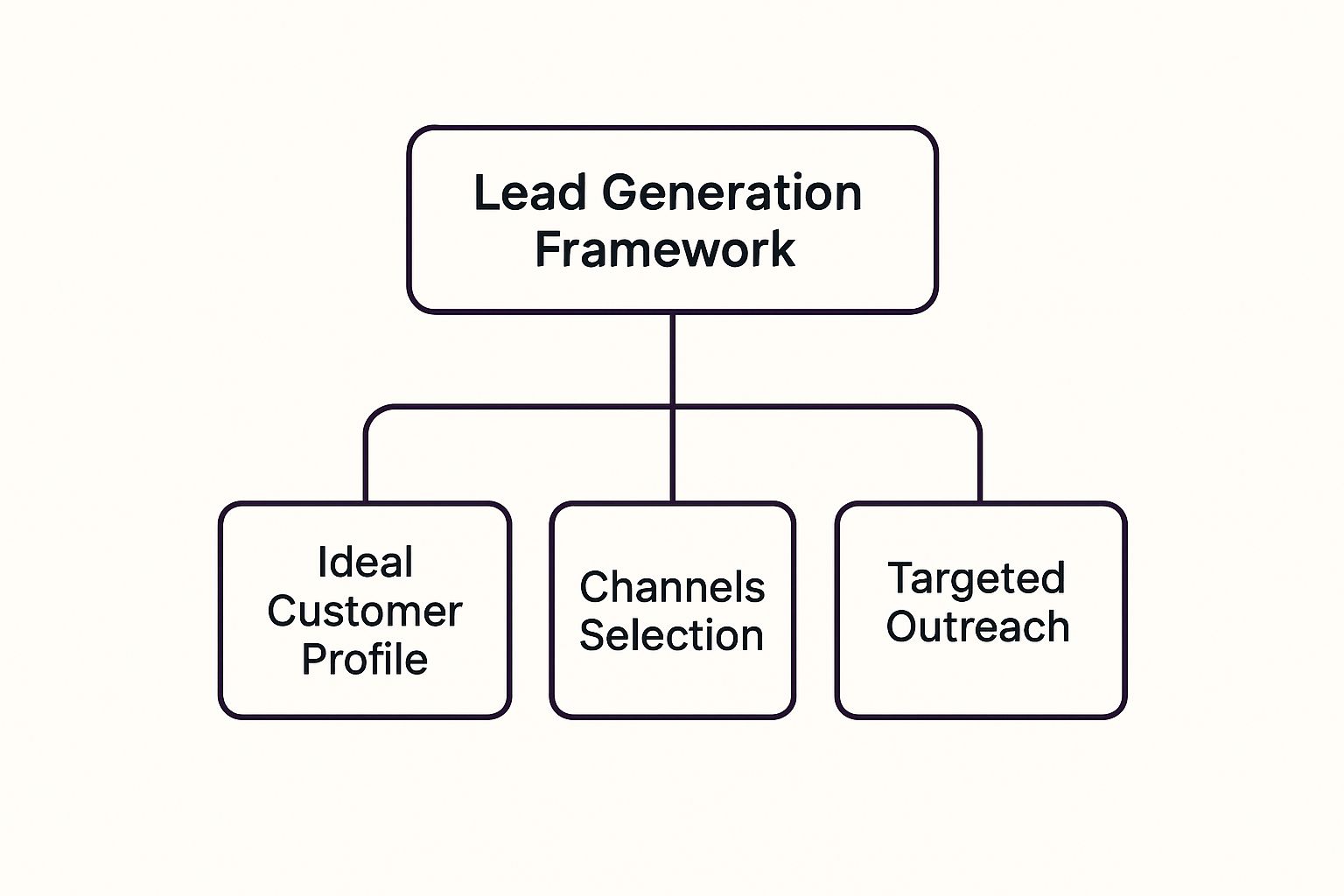
As you can see, a strong framework always starts with defining your target. From there, you can systematically move on to picking the right channels and executing your outreach. Pulling this off requires precision and dedicated resources, which is exactly why many scaling tech firms look into outsourced lead generation services to hit their growth goals without the overhead.
Key Takeaway: Success in tech lead generation isn’t about finding one “magic bullet” channel. It’s about building a well-defined framework that aligns your ideal customer, the channels they trust, and the value you bring to the table.

Mastering Inbound: A Key Strategy for
Lead Generation for Tech Companies
If you’re looking for a sustainable engine to drive lead generation for your tech company, inbound marketing is essential. Forget shouting at prospects with ads that interrupt their day. Inbound acts as a magnet, pulling them in by offering real value and solving their problems.
It’s all about positioning your company as an indispensable resource. This approach builds a foundation of trust long before a sales call is even on the table. When a prospect finally engages with your content, they are already educated and interested, making every subsequent conversation far more productive.
Moving Beyond Basic Blog Posts
Consistent blogging is a solid start, but a truly powerful content strategy goes much deeper. The real goal is to create high-impact assets that decision-makers see as so valuable, they’ll gladly trade their contact information for them.
Think of it this way: a blog post is like having a friendly, helpful chat. A comprehensive whitepaper, on the other hand, is like getting a detailed consultation. Both have their place, but only one is built to capture a serious lead.
Here are some high-value content examples that work for tech companies:
- Data-Driven Whitepapers: Imagine your SaaS firm analyzing its own usage data to uncover new industry trends. A whitepaper packed with those unique insights is exactly the kind of asset a CIO will download to inform their strategy.
- In-Depth Case Studies: Show, don’t just tell. A detailed case study walking through how your logistics software solved a complex supply chain problem for a well-known retail client is powerful social proof.
- Educational Webinars: Host a live session that teaches your audience something new. A cybersecurity company could run a webinar on “The Top 5 Ransomware Threats to SMBs in Q3” and attract a virtual room full of concerned IT managers.
- Comprehensive Guides and eBooks: Your aim should be to create the definitive resource on a topic your audience is passionate about. Do that, and you become the go-to expert in your niche.
Your content needs to be so good that your target audience would pay for it if it wasn’t free. That’s the benchmark for creating assets that pull in high-quality leads.
But getting the download is only half the battle. What you do next is just as crucial. A generic, one-size-fits-all follow-up can erase all the goodwill you just built. By seeing which piece of content a lead consumed, you can tailor your outreach to their specific problem. You can learn more by checking out our guide on how to personalize customer interactions. This simple step ensures the conversation feels relevant and helpful, not like just another sales pitch.

Fueling Growth with Strategic Outbound Prospecting
While a solid inbound strategy brings leads to your door, a proactive outbound plan is the accelerator that ignites rapid growth. But let’s be clear: modern outbound prospecting isn’t about blasting generic messages to a massive, purchased list. That’s the old way. Today, it’s an intelligent, value-first approach built on precision and personalization.
Think of it as the difference between putting up a billboard on the highway and sending a carefully researched, personal message. Both might get attention, but only one feels relevant and builds an immediate connection. Effective outbound starts with hyper-targeted lists and leads to outreach that feels more like helpful advice than a cold sales pitch.
Building Your Targeted Outbound Lead Generation Machine
The first move in any strong outbound lead generation for tech companies is to pinpoint exactly who you need to talk to. This means going beyond simple job titles and digging into the specific challenges, goals, and pain points of decision-makers at your ideal customer accounts.
Once you’ve built that targeted list, the real work begins. The goal is creating multi-touch campaigns that are both persistent and respectful.
- Personalized Email: Craft emails that reference a prospect’s recent company news, a shared connection on LinkedIn, or a specific pain point you know their industry is wrestling with. For example: “I saw your company recently expanded into the APAC region—congrats! As you scale, managing cross-border data compliance can be tricky. Our platform helps companies like yours navigate that exact challenge.”
- LinkedIn Engagement: Don’t just fire off a connection request. Genuinely engage with their posts, leave thoughtful comments, and use tools like Sales Navigator to spot key conversation starters and identify buying signals.
- Strategic Calling: A well-timed call can cut through digital noise, but it has to be backed by solid research. This is where a skilled partner can be a game-changer, providing the high-touch, professional outreach modern buyers expect. You can explore how our dedicated teams execute these powerful outbound lead generation strategies for our clients.
“Great outbound prospecting isn’t about volume; it’s about relevance. The more you know about the person you’re contacting, the less your outreach feels like an interruption and the more it feels like a solution.”
Ultimately, a successful outbound engine requires dedicated effort and a unique skillset. It’s a high-touch process of building relationships one conversation at a time, turning cold contacts into warm opportunities that your sales team will be thrilled to receive.
Using Technology and AI for Smarter Lead Generation
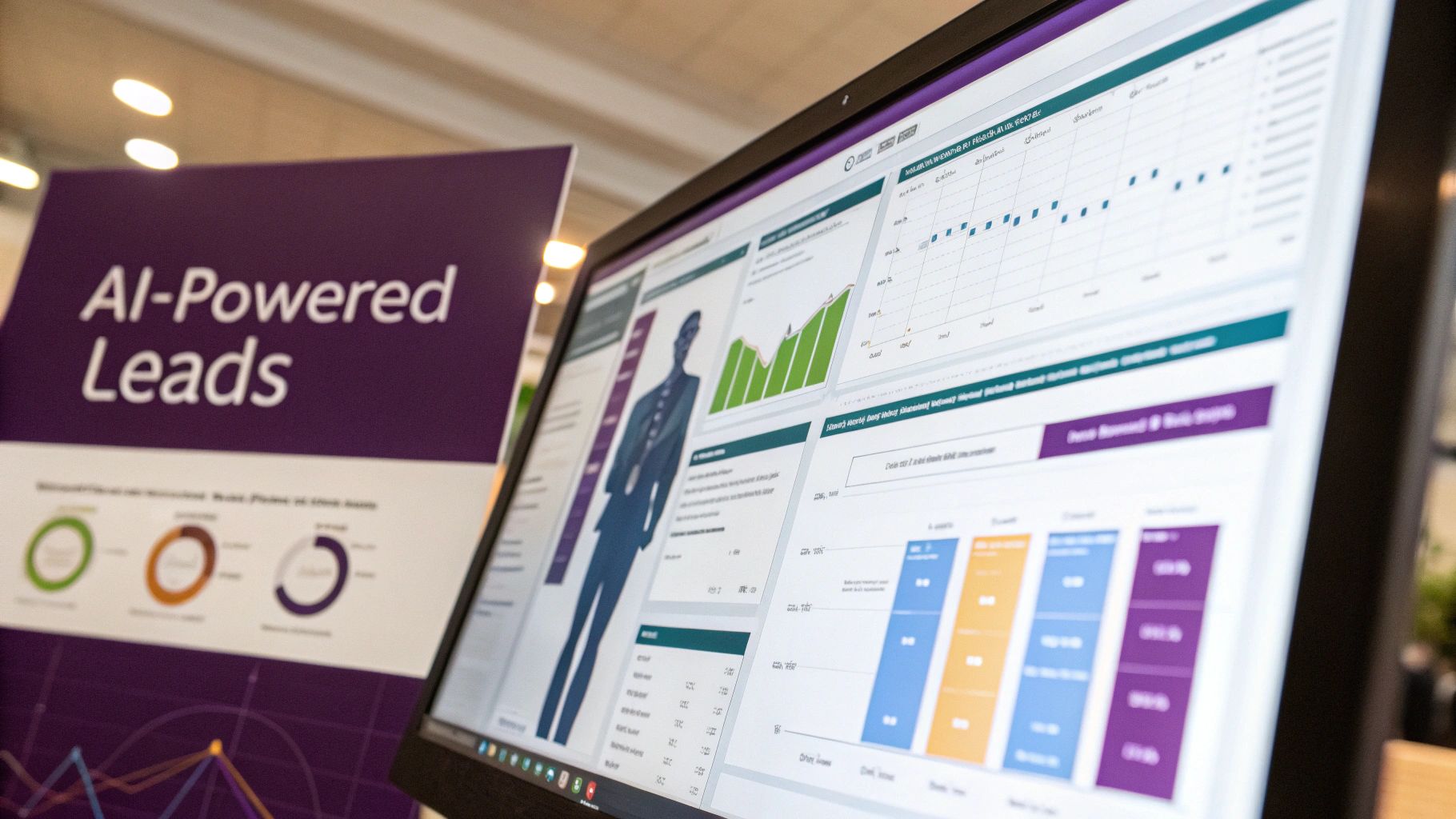
Let’s be honest, the days of “spray and pray” are long gone. The most successful lead generation for tech companies today is powered by smart technology. To compete, you need a modern marketing technology (martech) stack that acts as a command center for attracting, nurturing, and converting leads.
It starts with a Customer Relationship Management (CRM) system—like Salesforce—as your single source of truth for every prospect interaction. When you pair that with a marketing automation platform like HubSpot, you can streamline workflows and ensure no lead falls through the cracks.
But the real competitive edge comes from layering artificial intelligence into the mix.
The Real Impact of AI on Lead Generation for Tech Companies
Think of AI in your sales funnel like a super-smart GPS. It doesn’t just show you the destination (a closed deal); it constantly crunches data to find the most efficient route. By analyzing vast datasets, AI tools can predict buyer behavior and personalize your outreach to improve lead quality.
AI’s predictive analytics capabilities are perfect for pinpointing which leads are ready for a sales conversation, optimizing your entire process. Integrating AI into your CRM gives you a data-backed approach to lead generation that can actually scale. You can dig deeper into how this works in our guide exploring automation and artificial intelligence in call centers.
This layer of intelligence helps your team work smarter, not harder.
How AI-Powered Tools Create Smarter Outreach
AI isn’t just about doing tasks faster; it’s about taking predictive action. It helps your team focus their efforts and personalize conversations on a scale that would be impossible for a human to manage alone.
Here’s how AI is changing the outreach game:
- Predictive Lead Scoring: Instead of treating every new lead equally, AI analyzes a prospect’s behavior, firmographics, and engagement history to assign a score. This allows your sales team to immediately prioritize the hottest prospects.
- Hyper-Personalization at Scale: AI can dynamically tweak email content, subject lines, and even send times based on a person’s profile and past actions. Every message feels like it was written just for them.
- Automated Initial Follow-Ups: AI-driven chatbots or email bots can handle the first few rounds of qualification and follow-ups. This frees your team from repetitive tasks so they can focus on high-value conversations with leads who are already warmed up.
Key Takeaway: Integrating AI into your martech stack isn’t about replacing people. It’s about empowering them with tools to focus on what humans do best: building relationships and closing deals.
Building Your Lead Nurturing and Qualification Engine
Getting a new lead is just the beginning. The real magic in lead generation for tech companies happens in the follow-up, where you transform initial interest into a genuine sales opportunity. A lead without a nurturing plan is just a name in your database; a nurtured lead is a future customer.
This is where you build the engine that maintains momentum. You need a system to educate prospects, guide them through their buying journey, and ensure your sales team only talks to people who are ready to buy. For tech companies with complex products, this nurturing phase is critical—it’s how you build the trust needed to close a high-value deal.
Creating Automated Nurturing Sequences
Imagine a prospect downloads your new whitepaper. Instead of a single, forgettable “thank you” email, what if they received a series of genuinely helpful, automated messages over the next few weeks? That’s the power of a lead nurturing sequence.
These aren’t pushy sales pitches. They’re about delivering value and building a relationship. The goal is to gently guide a prospect from problem-aware to solution-ready.
Here’s what a practical sequence might look for a tech lead:
- Email 1 (Immediately): Deliver the requested content and include a related resource, like a short case study.
- Email 2 (3 Days Later): Share a blog post that addresses a common question related to the whitepaper’s topic.
- Email 3 (7 Days Later): Invite them to a low-commitment event, like an upcoming educational webinar.
- Email 4 (12 Days Later): Share a powerful customer testimonial that showcases real, tangible results.
This methodical approach builds credibility without being intrusive. You can enhance this process with data to figure out which content will resonate most. Learn more about how the role of predictive analytics in customer retention and engagement can transform this process.
Qualifying Leads with the BANT Framework
Not every lead is ready for a sales call. Acting too soon can scare off a potential customer. This is why a qualification framework is a must-have. Think of it as a filter that ensures only the most promising leads land on your sales team’s desk.
A classic, effective framework is BANT.
BANT: A Quick Qualification Checklist
- Budget: Does the prospect have the financial resources allocated to purchase your solution?
- Authority: Are you speaking with the decision-maker, or at least someone who has significant influence?
- Need: Is there a clear, urgent business problem that your product is designed to solve?
- Timeline: Do they have a specific timeframe in mind for making a purchase decision?
This initial qualification can be handled with simple forms or a dedicated team. This is where partnering with a specialist BPO like CallZent becomes a strategic advantage. Our skilled teams can manage this crucial first touchpoint, handling qualification and setting appointments. This frees up your expert account executives to do what they do best: close high-value deals with well-prepared, fully qualified prospects.
FAQs: Lead Generation for Tech Companies
Even the best strategy encounters questions. When mastering lead generation for tech companies, a few common hurdles always appear. Let’s tackle them head-on.
What’s the most effective channel for a B2B SaaS company?
While there’s no single magic bullet, the most powerful combination is often content marketing paired with hyper-targeted LinkedIn outreach. This duo creates a synergy that consistently delivers high-quality leads.
High-value content (like an original research report) establishes you as an authority and acts as a magnet for prospects seeking answers. Then, LinkedIn allows you to pinpoint the exact decision-makers at your ideal customer accounts. You can then craft personalized outreach offering your valuable content, giving you a warm reason to connect and start a conversation.
How long does it take to see results from lead generation?
This depends on your strategy. Setting the right expectations is critical to avoid abandoning a great plan just before it yields results.
- Targeted Outbound Campaigns: These are your sprinters. You can start generating meetings and pipeline opportunities within a few weeks, which is great for building immediate momentum.
- Inbound Strategies (Content/SEO): These are marathons. It typically takes 3-6 months to build authority and rank for valuable keywords. However, once the engine is running, it delivers a steady, reliable flow of organic leads.
The smartest approach is balanced: use outbound to fill the pipeline now while building your inbound machine for sustainable, long-term growth.
Should we outsource lead generation or build an in-house team?
This is a crossroads every growing tech company faces. The right answer depends on your current stage and resources.
Building an in-house team offers total control but requires a significant investment in hiring, training, technology, and management. It can take months to become fully operational.
Outsourcing to a specialized BPO provides immediate access to a seasoned team and proven processes. It’s often more cost-effective, predictable, and allows you to scale up or down quickly.
Many successful tech companies use a hybrid model: they keep high-level strategy in-house but outsource scalable activities like lead qualification and appointment setting. It’s a smart way to accelerate growth efficiently.
What are the most important lead generation metrics to track?
It’s easy to get lost in vanity metrics that look good but don’t impact revenue. Focus on the numbers that directly connect marketing efforts to sales outcomes.
Your essential metrics should be:
- Cost Per Lead (CPL): How much are you spending to acquire each new lead?
- Customer Acquisition Cost (CAC): What is the total cost to turn a lead into a paying customer?
- Lead-to-Customer Conversion Rate: What percentage of your leads ultimately close? This is a key indicator of lead quality.
- Marketing Qualified Lead (MQL) to Sales Qualified Lead (SQL) Rate: What percentage of MQLs does sales accept? This measures marketing and sales alignment.
Tracking these figures reveals the true ROI of your campaigns and tells you where to double down for maximum impact.
🚀 Ready to Scale Your Tech Pipeline?
Partner with CallZent to build a predictable, scalable lead generation system. Our nearshore teams specialize in tech outreach, qualification, and appointment setting.
Ready to accelerate your growth without the overhead of building an in-house team? CallZent provides expert lead generation and appointment setting services designed specifically for the tech industry. Our nearshore teams in Tijuana act as a seamless extension of your business, delivering qualified leads directly to your sales pipeline.
Discover how we can help you scale efficiently. Visit us at https://callzent.com to learn more.