Skip to content
Healthcare BPO
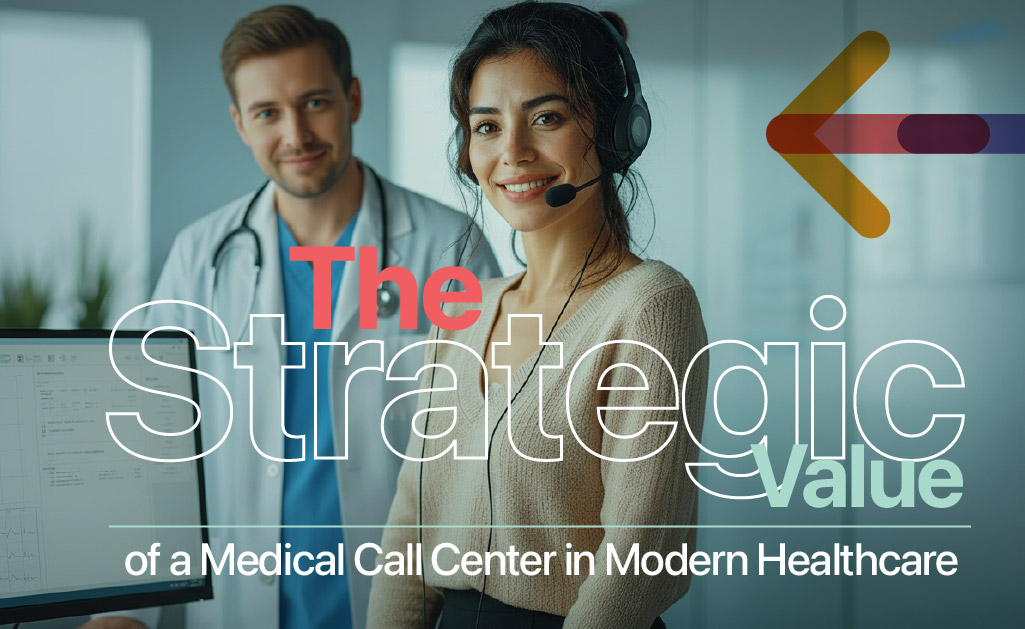
The Strategic Value of a Medical
Call Center in Modern Healthcare
Discover how a medical call center improves patient experience, strengthens HIPAA compliance, boosts efficiency, and supports scalable healthcare operations.
TL;DR — Quick Takeaways
- Medical call centers are essential patient communication hubs in modern healthcare.
- They streamline scheduling, triage, billing questions, and ongoing patient support.
- HIPAA-trained agents and secure systems are critical for compliance and trust.
- Nearshore medical call centers improve quality while reducing operational costs.
What if you could fix your biggest communication headaches and boost patient satisfaction all at once? A medical call center isn’t just a bank of phones; it’s the central nervous system for patient communication in today’s healthcare world. Think of these specialized hubs as the operational core for hospitals, clinics, and insurance providers, handling critical interactions that go way beyond simple inbound calls.
What Is a Medical Call Center?
Picture a medical call center as the air traffic control tower for patient care. Just as a tower coordinates every flight to keep things safe and on schedule, a medical call center manages the constant flow of patient information and requests. It ensures every interaction—from booking a routine check-up to clarifying an urgent symptom—is handled with precision, empathy, and ironclad adherence to privacy laws.
This is a far cry from your typical customer service line. A healthcare call center is a specialized Business Process Outsourcing (BPO) operation, staffed by agents trained in medical terminology, patient privacy laws like HIPAA, and the compassionate communication skills needed for sensitive health topics. If you want a deeper dive, you can explore more about what a BPO call center is in our detailed guide. The ultimate goal is to create a seamless, reassuring experience for patients, every single time.
The Strategic Role of a Medical Call Center in Modern Healthcare
A high-performing medical call center is much more than a cost center; it’s a strategic asset. It directly shapes patient retention, operational efficiency, and even clinical outcomes. When patients can easily schedule appointments, get clear answers on their bills, or receive timely medication reminders, their trust in their provider skyrockets.
This operational hub takes on a huge range of tasks that keep a healthcare facility humming along.
- Appointment Lifecycle Management: Coordinating everything from the initial scheduling and confirmations to pre-visit instructions and post-appointment follow-ups.
- Patient Inquiries and Support: Serving as the first point of contact for non-clinical questions about insurance verification, billing, and facility hours.
- Prescription Refill Requests: Managing and processing routine medication refill requests, which frees up clinical staff for more hands-on patient care.
- Physician Referrals: Guiding patients to the right specialists within the network based on their specific needs and insurance plans.
By centralizing these functions, a medical call center lifts a massive administrative weight off the shoulders of doctors, nurses, and front-desk staff. This lets your clinical teams do what they do best: provide top-tier medical care.
A well-run medical call center is the bridge between clinical excellence and an exceptional patient experience. It ensures that every interaction outside the examination room supports the high standard of care provided within it.
More Than Just Answering Calls
At the end of the day, a medical call center’s true value lies in its ability to blend efficiency with empathy. For instance, a patient calling to reschedule a procedure might also have a question about their insurance coverage for the new date. A properly trained agent can handle both issues in a single conversation, preventing frustration and the need for multiple callbacks.
This integrated approach doesn’t just make patients happier—it also generates incredibly valuable data. Call trends can highlight common patient questions or sticking points in the healthcare journey, offering insights you can use to improve processes across the board. In this way, the call center transforms into a source of business intelligence that drives continuous improvement.
 Core Services That Define Patient Care
A top-notch medical call center does so much more than just answer the phone. Think of it as the central nervous system for patient communication, handling the entire journey with a mix of specialized services.
These services are built to improve access to care, take the administrative load off your clinical staff, and give patients a supportive, human experience from start to finish. Instead of just rattling off a list, let’s walk through what this looks like for a real patient.
Imagine Maria needs to see a specialist. Her first point of contact is a single phone call. A well-trained agent doesn’t just jam her into an open time slot. They take the time to verify her insurance, explain any copays, and send a confirmation via text or email—whichever she prefers. That one interaction prevents a ton of back-and-forth and starts her journey on a positive note.
Complete Appointment Lifecycle Management
That initial call is just the tip of the iceberg. A truly effective medical call center manages the entire lifecycle of an appointment. This is huge for tackling no-show rates, which can climb as high as 23% in some specialties.
Here’s what that end-to-end management looks like:
- Automated Reminders: Sending out timely appointment reminders by phone, text, or email to keep schedules on track.
- Pre-visit Instructions: Clearly communicating any prep work a patient needs to do, like fasting or filling out paperwork, so they arrive ready for their visit.
- Seamless Rescheduling: Offering a simple, no-stress way for patients to reschedule when life happens. This keeps your provider’s calendar full and your practice running smoothly.
- Post-visit Follow-ups: Making outbound calls to check on a patient’s recovery, remind them about follow-up care, and get their next visit on the books.
This proactive cycle ensures patients don’t fall through the cracks and proves you’re invested in their health long after they’ve left the clinic. To see this in action, check out our specialized medical appointment scheduling services.
Beyond Scheduling: General and Specialized Support
Let’s be real—not every patient call is about an appointment. A skilled medical call center is set up to handle all kinds of questions, separating general support from issues that need a clinical eye. This is where the line between a general agent and a role like a triage nurse becomes absolutely critical.
A general support agent is your frontline for everyday patient needs. For instance, a bilingual agent at a nearshore center can compassionately walk a Spanish-speaking patient through a confusing bill, clarifying charges and explaining payment options in their native language. That single conversation builds incredible trust and solves a problem that could have easily led to frustration and an unpaid invoice.
The true value of a medical call center lies in its ability to match the right expertise to every patient need, ensuring both efficiency and safety.
On the other side of the coin, a nurse triage line is staffed by licensed clinical professionals. When a patient calls with symptoms—say, a worried parent with a child who has a high fever—the triage nurse uses strict clinical protocols to assess the situation. They have the training to decide if the child needs an immediate ER visit, an urgent care appointment, or if the situation can be managed at home with clear, safe instructions.
This division of labor is essential. It guarantees non-clinical staff never give out medical advice, protecting both the patient and the provider from serious risk. It also frees up your clinical experts for situations where their skills are genuinely required, leading to a much more efficient and responsive healthcare system.
Mastering Healthcare Compliance and Security
In healthcare, a data breach isn’t just a technical problem or an IT headache. It’s a catastrophic failure of the provider-patient relationship. Compliance isn’t some bureaucratic box to check off—it’s the absolute bedrock of patient trust.
Without that trust, even the best clinical care is undermined by fear and doubt. Think of the Health Insurance Portability and Accountability Act (HIPAA) not as a set of restrictive rules, but as the framework that protects patients and builds confidence. It sets the non-negotiable standards for handling Protected Health Information (PHI), and for a medical call center, mastering these rules is mission-critical.
The Pillars of a Secure Medical Call Center
A top-tier medical call center doesn’t just say it’s secure; it builds its entire operation on a foundation of interlocking security pillars. These aren’t just features on a sales sheet; they are the absolute non-negotiables for any healthcare provider looking for an outsourcing partner.
These essential security layers work together to create a fortress around patient data:
- End-to-End Encryption: Every piece of data—from a voice recording to a patient’s chart notes—must be encrypted from the moment it’s captured to the second it’s stored. No exceptions.
- Secure Data Infrastructure: This means hardened servers, advanced firewalls, and secure networks that are under constant watch for any vulnerabilities.
- Strict Access Controls: Agents should only ever see the specific information they need to do their job, and nothing more. It’s called the principle of least privilege, and every single access attempt should be logged and audited.
- Continuous Agent Training: Technology alone can’t stop a breach. Agents need rigorous, ongoing training on how to handle PHI, spot phishing attempts, and stick to strict privacy protocols.
These layers ensure a partner isn’t just compliant on paper but is actively protecting patient data every second of every day. To get a better sense of what this looks like in practice, you can dig into the essentials of a truly HIPAA-compliant call center.
The High Cost of Failure
The fallout from a compliance failure goes way beyond regulatory fines. A data breach obliterates the trust that is so essential to effective healthcare. But it’s not just about security—operational shortcomings can be just as damaging.
Healthcare call centers handle around 2,000 calls daily on average, yet often operate with staffing levels that cover only 60% of what’s needed. The result? An average hold time of 4.4 minutes, a world away from the industry goal of 50 seconds. Worse, the First Call Resolution rate is a dismal 71%, meaning nearly a third of patients hang up without answers. Patients who have a negative phone experience are four times more likely to switch providers. You can see the full breakdown in this research on healthcare call center statistics.
A security failure in healthcare isn’t just a technical problem; it’s a fundamental breakdown of the provider-patient relationship.
Ultimately, choosing a medical call center that lives and breathes security and compliance is a strategic decision. It shows a commitment to patient welfare that extends far beyond the four walls of the examination room. It tells your patients you value and protect their most sensitive information, building a foundation of trust that creates loyalty for years to come.
Measuring Performance in a Medical Call Center
So, how can you tell if a medical call center is actually doing its job well? It’s about so much more than just answering calls quickly. In healthcare, the metrics that count go way beyond traditional benchmarks. They have to. The real focus is on patient outcomes and building trust, not just hitting a stopwatch target.
Standard call center key performance indicators (KPIs), like Average Handle Time (AHT), can be dangerously misleading in a medical setting. Nobody wants an agent rushing a worried patient off the phone just to meet an arbitrary time limit—that’s a recipe for disaster. A successful medical call center knows how to strike a careful balance between being efficient and being deeply empathetic, accurate, and supportive.
Balancing Speed with Compassion
The best healthcare organizations get it: a patient interaction isn’t just another transaction. It’s a critical moment in their care journey. Because of this, the focus has to shift from metrics obsessed with speed to ones that actually reflect the quality of care and whether a patient’s issue was truly resolved.
This requires a delicate touch. While no patient wants to sit on hold forever, they absolutely need to feel heard and understood once they get through. To get this right, it’s useful to understand how to measure operational efficiency and boost performance but adapt those principles to a patient-first model. This ensures your operational goals are supporting the patient experience, not undermining it.
This whole approach is built on a foundation of strict compliance. Think of it like a pyramid: solid agent training forms the base, robust data security sits in the middle, and total HIPAA adherence is the peak. Everything flows from there.
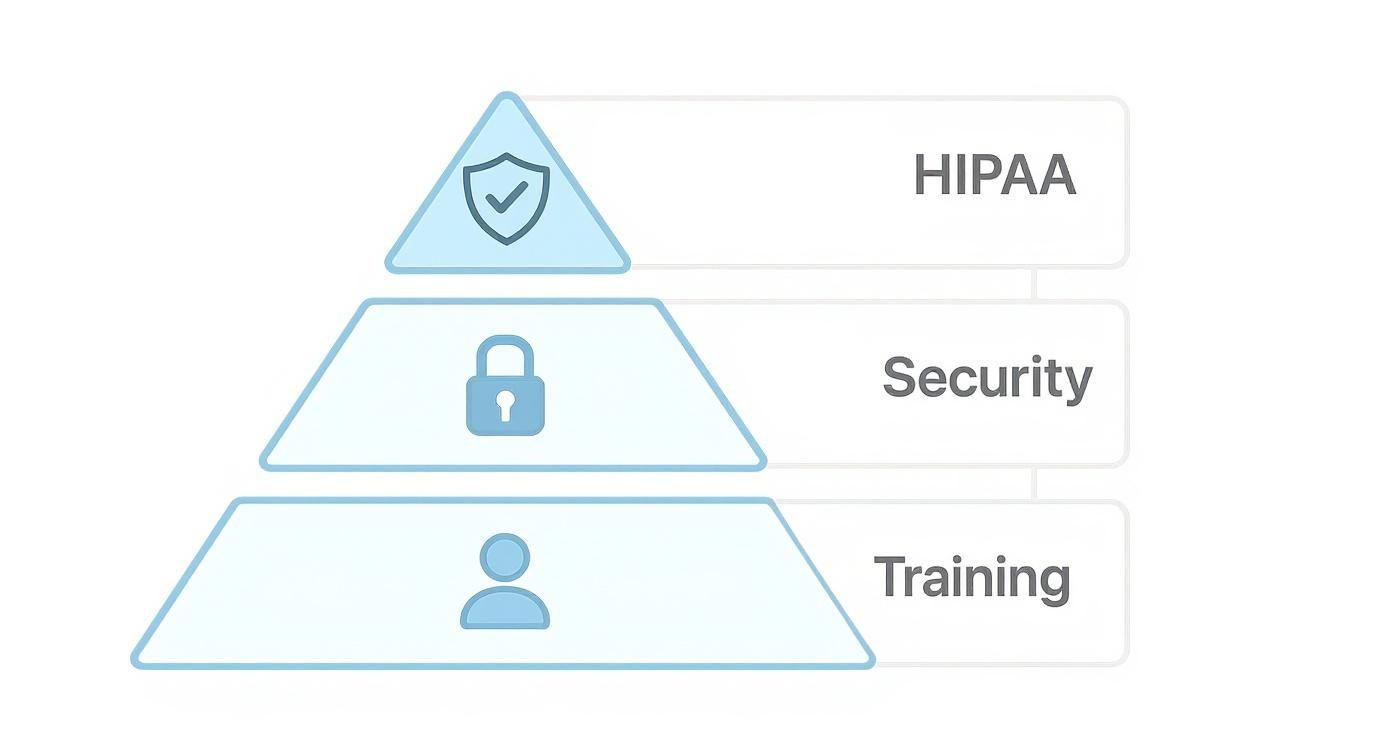
This pyramid makes it crystal clear: before you even think about tracking performance, a rock-solid framework of training, security, and HIPAA compliance has to be locked in place.
The KPIs That Truly Matter in Healthcare
To get a real sense of performance, a medical call center has to zero in on KPIs that are all about the patient. These are the numbers that paint a clear picture of the quality of care being delivered.
Generic call center metrics often fall short in a healthcare context because they prioritize volume over value. The table below highlights the critical shift in focus from standard KPIs to patient-centric ones.
Standard vs. Medical Call Center KPIs
| Metric | Standard Call Center Focus | Medical Call Center Focus |
|---|---|---|
| First Call Resolution | Closing tickets quickly. | Resolving patient issues accurately and completely on the first try to build trust and reduce anxiety. |
| Average Handle Time | Keeping calls as short as possible. | Ensuring agents take the necessary time to show empathy, listen fully, and provide clear information. |
| Patient Satisfaction | General happiness with the service. | Measuring the patient’s confidence in the care advice, the agent’s empathy, and their overall sense of support. |
| Compliance | Meeting basic company policies. | 100% adherence to HIPAA and other healthcare regulations to protect sensitive patient data. It’s non-negotiable. |
As you can see, the goals are fundamentally different. One is about managing volume; the other is about managing care.
Here are the essential KPIs that truly define success:
- First Call Resolution (FCR): This might just be the most important metric of all. A high FCR means patients get their problems solved or questions answered in one go. That drastically cuts down on their frustration and eliminates the need for stressful follow-up calls.
- Patient Satisfaction (CSAT): Measured through simple post-call surveys, CSAT scores give you direct feedback on an agent’s knowledge, professionalism, and, most importantly, their empathy. Consistently high scores are a great sign that the call center is earning patient trust.
- Compliance Adherence: This one is non-negotiable. It involves regular audits of calls to make sure agents are following HIPAA protocols to the letter. Any slip-ups here can have massive consequences for both the patient and the organization.
- Agent Empathy and Sentiment Scores: Modern call center tech can use AI to analyze the sentiment of call recordings. This gives you objective data on an agent’s tone and use of empathetic language, turning compassion into a measurable part of every single interaction.
Using Technology to Drive Improvement
You can’t just set these benchmarks and hope for the best; you have to actively work to improve them. This is where the right tools come in. For a deeper dive into the different metrics available, our guide on how to measure and improve call center KPIs offers some great strategies.
Call recording is an absolute must-have. It allows managers to perform detailed quality assurance checks and provide targeted coaching. When you pair it with AI-powered analytics, the system can automatically flag calls where a patient sounded frustrated or where an agent might have missed a key compliance step. This technology lets a medical call center shift from just reacting to problems to proactively improving quality, ensuring every patient interaction is handled with the care and professionalism they deserve.
The Strategic Benefits of a Nearshore Medical Call Center
Deciding whether to build a medical call center in-house or to outsource is a huge strategic choice for any healthcare provider. While keeping operations internal offers a sense of direct control, it often comes with immense overhead, staffing headaches, and technological burdens. This is where partnering with a specialized nearshore provider becomes a powerful growth lever, not just a cost-cutting tactic.
Outsourcing to a nearshore medical call center in a location like Tijuana gives you a distinct strategic edge. It allows your organization to pour valuable resources back into its primary mission—providing exceptional patient care—while entrusting all patient communication to dedicated experts. This single move solves core business challenges by introducing serious cost efficiencies, tapping into a rich bilingual talent pool, and giving you the flexibility to scale on demand.
Achieving Significant Cost Efficiencies
One of the most immediate and compelling reasons to go nearshore is the massive reduction in operational costs. Building and maintaining an in-house medical call center requires a huge capital investment in technology, infrastructure, and—most importantly—the constant cycle of recruiting and training a specialized workforce.
A nearshore partnership completely sidesteps these upfront expenses. Instead of footing the bill for salaries, benefits, office space, and advanced call center software, you simply pay for a service. This shifts your financial model from a heavy capital expenditure (CapEx) to a predictable operational expenditure (OpEx), freeing up capital that can be reinvested into clinical services, medical equipment, or facility upgrades.
Accessing a Vast Bilingual Talent Pool
In today’s diverse patient communities, being able to communicate in multiple languages isn’t just a nice-to-have—it’s an absolute necessity. Nearshore locations like Tijuana are hubs for highly skilled, bilingual professionals who are fluent in both English and Spanish. This immediately allows you to serve a broader patient demographic with the empathy and clarity they deserve.
Just imagine a Spanish-speaking elderly patient trying to understand their post-operative care instructions or navigate a complex insurance question. Connecting them with a native bilingual agent who can explain everything clearly in their own language transforms a potentially stressful interaction into a supportive and reassuring one. This level of service builds immense patient loyalty and ensures critical health information is never lost in translation. For a deeper look, you can explore the many benefits of nearshore outsourcing we’ve detailed.
Ensuring Seamless Scalability
Patient call volumes are rarely consistent. They can fluctuate dramatically during events like open enrollment, flu season, or the launch of a new public health initiative. For an in-house center, managing these peaks and valleys means either being constantly understaffed or paying for idle agents during slower periods.
Nearshore outsourcing transforms your medical call center from a fixed operational cost into a flexible, strategic asset that scales with your needs.
A nearshore partner provides the agility to scale your team up or down seamlessly. This elasticity ensures that when call volumes surge, your patients aren’t stuck with long hold times. And when things quiet down, you aren’t paying for unused capacity. This strategic flexibility is a key advantage in the ever-changing healthcare environment. While our focus is on nearshore models, it’s also valuable to explore the broader benefits of offshore outsourcing to understand the full spectrum of global talent solutions.
The demand for these flexible, high-quality services is skyrocketing. The global healthcare contact center market, valued at USD 5.86 billion, is projected to reach approximately USD 36.24 billion by 2034. With over 51,000 healthcare companies and more than 1 million active physicians in the United States alone, the need for efficient patient communication solutions is more critical than ever. By outsourcing, you tap into a ready-made solution designed to handle this massive scale.
 How AI Is Modernizing Patient Communication
Artificial intelligence isn’t some far-off concept from a sci-fi movie anymore. It’s here, and it’s already changing how modern medical call centers talk to patients. The goal isn’t to replace the human touch—that’s irreplaceable in healthcare. Instead, AI is being used to augment agents, handling the repetitive stuff so people can focus on the complex, high-empathy conversations where they truly shine.
This shift is happening right now. Think about it: AI-powered chatbots are now smart enough to handle routine questions like clinic hours or walk a patient through pre-appointment paperwork. This simple handoff frees up a human agent to manage a much more sensitive call that demands a compassionate ear.
Practical AI Applications in a Medical Call Center Today
AI’s real power is in making every single patient interaction smarter and faster. Intelligent routing systems are a perfect example. When a patient calls, AI can analyze their words in real-time to figure out what they need and instantly send them to the right person—whether that’s someone in billing, a scheduler, or a nurse on the triage line.
This small step is huge. It cuts out those frustrating transfers and gets patients to the right specialist on the first try, which dramatically improves first-call resolution rates.
Here are a few other ways AI is making a real difference today:
- AI-Powered Chatbots: These are your digital front-line workers. They handle the high-volume, low-complexity tasks like scheduling appointments or processing prescription refill requests, giving patients 24/7 access to support.
- Intelligent Routing Systems: AI listens to a caller’s needs and connects them to the right specialist instantly. This means shorter wait times and happier, less-frustrated patients.
- Real-Time Sentiment Analysis: This is like an “AI co-pilot” for your agents. It provides on-screen cues about a patient’s emotional state, helping agents navigate tough conversations with greater empathy.
Augmenting Agents, Not Replacing Them
The AI revolution is shaking up the entire call center world, but healthcare is where the fastest growth is happening. The global call center AI market, valued at around $1.6 billion, is expected to hit $4.1 billion. Within that, the healthcare and life sciences sector is exploding, driven by an urgent need to fix patient communication bottlenecks. It’s a clear sign that the industry sees AI as the answer to stubborn problems like staffing shortages and long wait times. You can learn more about the growth of AI in contact centers.
The smartest medical call centers use AI to handle the predictable, freeing human agents to manage the exceptional.
By taking routine administrative work off their plates, AI lets agents operate at the absolute top of their game. They can give their full attention to a worried parent, an elderly patient confused about their medication, or someone just discharged from the hospital who needs follow-up care. This partnership between human expertise and AI efficiency isn’t just a trend—it’s the future of patient communication.
Your Medical Call Center Questions Answered
When you’re thinking about bringing on a medical call center partner, you’re going to have questions. And you should. Here are some of the most common ones we hear from healthcare providers, with straight-to-the-point answers.
How Do You Ensure Agents Are HIPAA Trained And Compliant?
This is non-negotiable for us, and our approach is built on continuous, rigorous training—not a one-and-done checkbox. Every single agent starts with an intensive HIPAA certification that dives deep into patient privacy, data security, and exactly how to handle Protected Health Information (PHI).
But that’s just the beginning. We follow that up with mandatory annual refreshers and have quality assurance teams consistently monitoring interactions. It’s a multi-layered system designed to make sure protocols are second nature, keeping your patients’ data safe and your organization protected.
What Is The Onboarding Process For A New Healthcare Client?
We’ve refined our onboarding to be as smooth and efficient as possible, usually taking about four to six weeks. We kick things off with a deep-dive discovery phase where we learn the ins and outs of your practice—your specific workflows, EMR systems, and patient care protocols.
From there, we build out customized training materials and scripts for the agents who will be dedicated to your account. The final steps are handling the technical integration and rolling out a phased go-live, ensuring there’s zero disruption to your patient services.
Can You Scale Services For Events Like Open Enrollment?
Absolutely. This is one of the biggest advantages of our nearshore model. We work hand-in-hand with you to forecast demand for those peak seasons, like open enrollment or flu season. Then, we proactively staff up with trained agents ready to manage the surge in call volume.
This means your patients get the same great service without sitting in a long queue. More importantly, it saves you from the massive overhead of keeping extra staff on the payroll all year long, making your operation much more financially efficient.
🚀 Transform Your Patient Communication With CallZent
CallZent provides HIPAA-compliant, bilingual, nearshore medical call center solutions designed for modern healthcare organizations.
Ready to elevate your patient communication strategy? CallZent offers a secure, scalable, and professional medical call center solution designed to meet the unique needs of healthcare providers. Contact us today to learn more.