Skip to content
CALL CENTER OPERATIONS
How to Monitor Call Center
Performance (KPIs, QA & Dashboards)
Learn how to monitor call center performance using KPIs, QA, and real-time dashboards to improve CSAT, reduce costs, and drive revenue.
TL;DR — Quick Takeaways
- Start with business goals, then choose KPIs that directly reflect outcomes like retention, efficiency, and revenue.
- Use a balanced scorecard across quality (FCR/CSAT), efficiency (AHT), service level (ASA/abandonment), and business outcomes (conversion).
- Run a coaching-first Quality Assurance (QA) program with calibrated scorecards so feedback is consistent and trusted.
- Make performance visible with integrated dashboards and a review cadence (daily/weekly/monthly) that turns insights into action.
Struggling to turn all that call center data into actual business growth? It’s a common headache. Many managers find themselves drowning in a sea of metrics, not sure which ones truly move the needle. The secret isn’t just to track everything, but to start measuring what directly fuels your business goals and customer satisfaction.
Effective monitoring isn’t a one-off task; it’s a living system. It’s about building a clear blueprint that connects your agents’ daily activities to customer satisfaction and, ultimately, to your bottom line. This approach ensures every decision you make is backed by data and serves a real purpose.
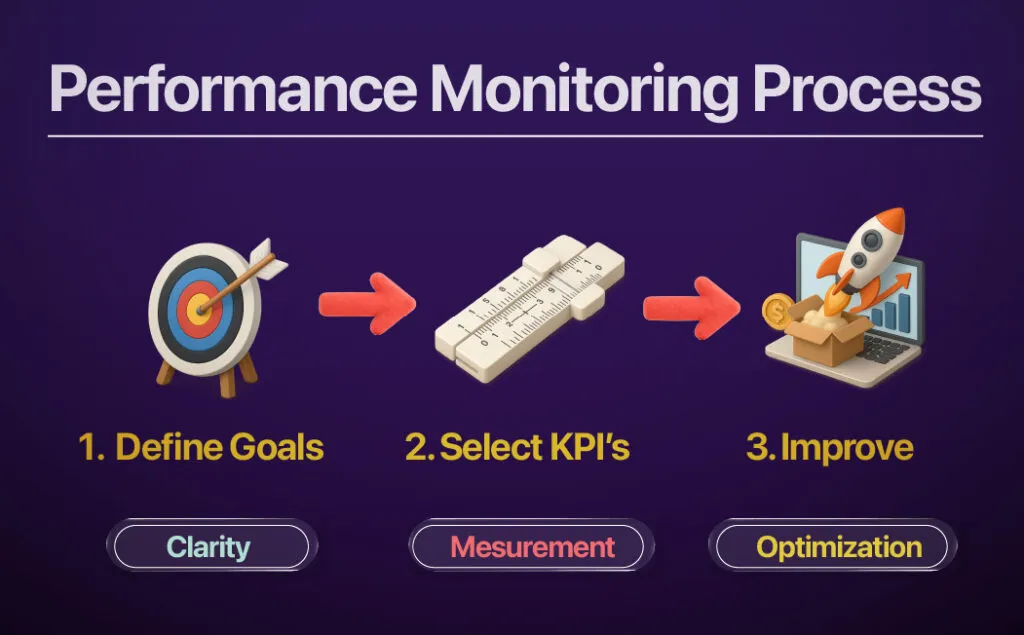
It really is that straightforward. Strong monitoring always starts with clear business objectives, which then dictate the metrics you track. Those metrics, in turn, feed a cycle of constant improvement, creating a direct line from your high-level strategy to your daily operations.
How to Align Your Business Goals with Call Center KPIs
The first step in effective monitoring is to tie your high-level business goals directly to the KPIs your team tracks every day. This simple alignment ensures you’re not just collecting data for its own sake but are actively measuring what contributes to success.
Here’s a quick reference table showing how this works in the real world:
Connecting Business Goals to Core Call Center KPIs
| Business Goal | Primary KPI | Secondary KPI | Real-World Scenario (E-commerce) |
|---|---|---|---|
| Increase Customer Loyalty | Customer Satisfaction (CSAT) | First Call Resolution (FCR) | After a support call about a missing package, a CSAT survey is sent. High scores indicate a positive experience that builds trust. |
| Boost Operational Efficiency | Average Handle Time (AHT) | Agent Occupancy Rate | Agents use streamlined scripts and knowledge bases to resolve order inquiries faster, reducing AHT and allowing them to handle more calls. |
| Drive Revenue & Sales | Conversion Rate | Net Promoter Score (NPS) | For an outbound campaign promoting a new product, tracking how many calls lead to a sale is key. A high NPS shows these new customers are likely to recommend the brand. |
| Improve Service Accessibility | Service Level (SL) | Abandonment Rate | During a flash sale, the goal is to answer 80% of calls within 20 seconds. Meeting this SL keeps abandonment rates low and prevents lost sales. |
This table isn’t just a list of metrics; it’s a roadmap. It shows you how to choose the right KPIs to tell you whether your call center is truly supporting the business’s most important objectives.
The Foundation of Performance Monitoring
A solid monitoring strategy is built on a few core pillars. Get these right, and the rest falls into place.
- Strategic Alignment: Every metric you track, from AHT to CSAT, should have a clear link back to a larger business goal, like boosting customer retention or growing revenue.
- Data-Driven Decisions: Use real-time, accurate data to guide everything from agent coaching and staffing adjustments to process changes. No more guessing.
- Agent Empowerment: Give agents visibility into their own performance metrics. When they can see how they’re doing, they’re more likely to self-correct and take ownership of their growth.
- Continuous Improvement: Foster a culture where feedback and analysis aren’t seen as criticism but as fuel for constantly refining how your team operates.
The goal isn’t just to report the numbers; it’s to understand the story behind them and write a better next chapter.
A crucial part of this blueprint is mastering workforce capacity planning to make sure you always have the right number of agents on deck. This directly impacts your Service Level (SL), a cornerstone KPI for gauging how well you meet customer demand. The industry gold standard is 80/20—answering 80% of calls within 20 seconds. This single metric has a massive effect on your abandonment rate.
As you build out your monitoring plan, you can explore more advanced strategies in our complete guide to contact center best practices.

How to Choose KPIs That Truly Measure What Matters
Once you’ve got your call center operations pointing in the same direction as your business goals, it’s time to pick the right Key Performance Indicators (KPIs). The market is flooded with dozens of metrics, but tracking too many just creates noise. The real key is building a balanced scorecard that gives you a complete picture of your operation’s health without drowning your team in data.
A practical way to do this is by grouping your KPIs into four buckets: Quality, Efficiency, Service Level, and Business Outcomes. This framework makes sure you’re not just measuring how fast agents work, but also how well they solve problems and how their efforts actually help the bottom line.
Focusing on Quality and Customer Experience
Quality metrics are all about how well your team is meeting—or exceeding—customer expectations. These are non-negotiable for building loyalty and a solid brand reputation.
- First Call Resolution (FCR): This is the gold standard. It’s the percentage of calls where the customer’s problem gets solved on the first try, no follow-up needed. High FCR is a direct sign of knowledgeable agents, smart processes, and happy customers. It also slashes costs by killing repeat calls.
- Customer Satisfaction (CSAT): Usually measured with a quick post-call survey (“How satisfied were you?”), CSAT gives you immediate feedback on an interaction. It helps you see which agents are knocking it out of the park and which calls are missing the mark.
FCR is especially critical across different fields. For example, top-tier healthcare call centers shoot for an FCR of 75-85%, while e-commerce leaders aim for 70-80%. Hitting these numbers can cut down repeat calls by 20-30%. Not only does that save money, but it also boosts CSAT since customers who get instant solutions are far more likely to stick around.
Measuring Efficiency and Productivity
Efficiency metrics are about how well your team uses its time and resources. They’re great for managing costs, but you have to balance them with quality. Pushing for speed can easily torpedo the customer experience.
- Average Handle Time (AHT): This is the total time spent on a customer interaction, from “hello” to finishing up any post-call notes. AHT is useful for staffing and forecasting, but putting too much pressure on agents to lower it is a classic mistake that leads to rushed, sloppy service.
- Agent Utilization: This tracks the percentage of time an agent is actively working on calls versus their total paid time. It helps make sure your staffing is on point, but a sky-high utilization rate is often a warning sign of agent burnout.
Maintaining Service Levels and Accessibility
Service Level KPIs tell you how easy it is for customers to reach you. If they can’t get through, even your best agents are useless. These metrics are fundamental for cutting down customer frustration and preventing lost business.
- Average Speed of Answer (ASA): This is the average time a customer has to wait in the queue before an agent picks up. A low ASA is crucial for making a good first impression.
- Abandonment Rate: This is the percentage of callers who hang up before ever talking to an agent. A high abandonment rate usually points to long wait times or a confusing IVR menu that customers can’t escape.
Think about an e-commerce company during a huge holiday sale. Their goal might be to answer 80% of calls within 30 seconds to keep their Abandonment Rate under 5%. On the other hand, a healthcare provider scheduling appointments might focus on a super-low ASA to make sure patients don’t get fed up and hang up, even if the calls themselves end up being longer.
Connecting Actions to Business Outcomes
Finally, we have the metrics that prove your call center’s value. Business Outcome KPIs tie your team’s performance directly to tangible results that the C-suite actually cares about, like revenue and growth. If you want to go deeper, check out our guide on essential KPIs in customer service.
- Conversion Rate: For any team with a sales component, this is key. It measures the percentage of calls that lead to a sale or another desired action, like signing up for a free trial.
- Customer Lifetime Value (CLV): While it’s harder to track directly from call data, there’s no doubt that great service interactions lead to better retention and a higher CLV. You can start by correlating high CSAT scores with customer tenure.
By picking a few vital metrics from each of these four categories, you create a balanced, insightful dashboard for your call center. This approach ensures you’re not just tracking busy work, but measuring real impact.
How to Use Quality Assurance to Monitor Performance
Picking the right KPIs is a great start, but it’s just one piece of the puzzle. If you really want to know the story behind your numbers, you need a solid Quality Assurance (QA) program.
Let’s be real—many QA programs feel more like a “gotcha” system than a genuine tool for growth. But a well-designed program isn’t about ticking boxes. It’s the single most powerful driver for agent development and performance improvement you have.
The whole point is to shift QA from a penalty box to a coaching corner. It’s not about catching agents messing up; it’s about finding opportunities to help them level up. That change in mindset is how you build a culture of trust and continuous improvement.
Go Beyond the Basic Checklist
A modern QA program needs a balanced scorecard that looks at more than just whether an agent followed a script. Sure, it’s important for agents to stick to company policies, but that alone doesn’t tell you anything about the actual customer experience. Your scorecards have to measure both the “what” and the “how.”
Here’s how we structure a balanced QA scorecard:
- Procedural Adherence: Did the agent verify the customer’s identity correctly? Did they use the right disposition codes? These are the non-negotiable, foundational steps.
- Information Accuracy: Was the information given to the customer correct and complete? This is a huge factor in First Call Resolution (FCR).
- Systems Navigation: Did the agent fly through the CRM and other tools, or were they fumbling around, creating dead air and a clunky experience?
- Soft Skills & Empathy: This is where the magic happens. Did the agent show empathy? Was their tone positive and professional? Did they actively listen and build rapport?
By weighing these different areas, you get a complete picture. An agent might follow every rule perfectly but leave a customer feeling ignored, tanking their CSAT score. A balanced scorecard helps you pinpoint that exact disconnect.
The Importance of Calibration and Consistency
One of the biggest ways a QA program fails is inconsistency. If one evaluator scores a call at 85% and another gives the same call a 95%, the feedback becomes useless. Agents lose trust fast.
This is where calibration sessions become absolutely critical.
These sessions involve getting all your evaluators—managers, team leads, and QA specialists—to score the same set of calls on their own. Then, everyone gets together to talk through their scores and why they gave them. These sessions aren’t about finding one “right” answer. They’re about getting everyone aligned on what “good” actually looks like. Through these discussions, you build a shared standard, ensuring every agent gets fair and consistent feedback, no matter who reviews their interaction.
This process is fundamental for creating a system people can rely on. To get a deeper look at how we put this into practice, you can read more about the structure of our quality assurance team.
Turning One Flagged Call into a Team-Wide Win
Here’s a real-world example from our floor. One of our QA analysts recently flagged a call for a financial services client. The agent was struggling to explain a complex billing change, and while they were technically correct, they used a ton of confusing jargon. The customer hung up sounding even more lost than when they called.
Instead of just marking the agent down, the manager spotted an opportunity. She sat down with the agent and listened to the call together—not to criticize, but to understand their thought process. It turned out the agent just wasn’t confident explaining the new fee structure.
So, the manager created a quick “micro-training” session. It was a simple, 15-minute huddle focused on breaking down the billing explanation with a simple analogy. She even had the original agent role-play the new approach with a teammate.
The result? Within a week, the entire team’s FCR on billing-related calls jumped by 10%.
This is what effective call center monitoring is all about. A single QA flag didn’t lead to a penalty. It uncovered a knowledge gap and sparked an improvement that helped everyone. That’s what turning QA into a coaching engine looks like in the real world.
Using Technology for Real-Time Performance Insights
Let’s be honest: raw data is useless. You can have all the performance metrics in the world, but if they’re trapped in different systems, they’re not doing you any good. To get a real grip on your call center’s performance, you need to tear down the walls between your core platforms.
This means getting your Customer Relationship Management (CRM) system, telephony platform, and Workforce Management (WFM) software to talk to each other. When they’re all connected, you create a single, reliable source of truth. Suddenly, the Average Handle Time from your phone system is right next to the customer’s entire history from your CRM. That’s the foundation for making smart, fast decisions.

Building Dashboards That Drive Action
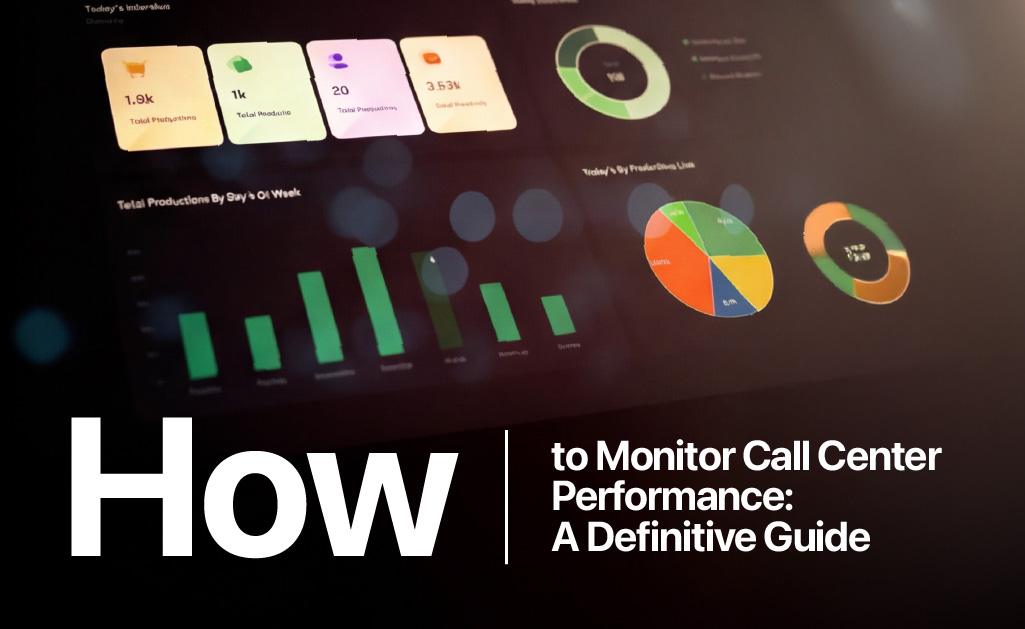
Once your data is flowing, you need to make it visible. And I don’t mean with cluttered spreadsheets that give everyone a headache. A great dashboard tells a clear story about your team’s performance at a glance—for both the manager watching the floor and the agent tracking their own progress.
The secret is using simple visual cues to show how you’re tracking against your goals. This makes the data instantly digestible.
- Color-Coded Thresholds: This one is classic for a reason. Green means a KPI is on target. Yellow is a warning that it’s slipping. Red signals you’ve dropped below the standard and need to act.
- Gauges and Progress Bars: These are fantastic for tracking things like daily call quotas or CSAT scores. They give agents a quick hit of accomplishment and show them how far they have to go.
- Leaderboards: For sales or collections teams, a leaderboard showing the top performers can ignite some healthy competition and give the whole floor a motivational boost.
Agent-facing dashboards are a game-changer. When agents see their own stats in real time—like their current AHT versus the team average or their FCR rate for the day—it empowers them to take ownership. They don’t have to wait a week for a report to find out they’re off track; they can self-correct on the fly.
The Rise of Predictive Insights With AI
Real-time dashboards show you what’s happening right now. But the next frontier is using Artificial Intelligence (AI) to predict what’s coming next. AI and machine learning are adding a powerful, forward-looking layer to performance monitoring.
Instead of just reacting to a surprise spike in call volume, AI-powered tools can analyze historical data, seasonality, and even marketing campaigns to forecast call volume with stunning accuracy. This allows managers to adjust staffing proactively, keeping Service Levels high without overspending on agents who sit idle.
Moving from reactive reporting to predictive analytics is the key to unlocking true operational efficiency. It’s the difference between navigating by looking in the rearview mirror and using a GPS that sees the road ahead.
This predictive power goes beyond staffing. For certain industries, the right tools are critical. For example, specialized healthcare call center software can anticipate patient needs and help maintain compliance.
AI can even analyze call sentiment in real time. If a customer is getting frustrated, the system can flag the conversation, allowing a supervisor to step in and de-escalate the situation before it gets worse. This proactive approach is a core part of our strategy at CallZent—we’re always looking to stay one step ahead. To see how we put these ideas into practice, take a look at our guide to call center reporting and metrics dashboards. This isn’t a futuristic concept; it’s a practical tool that smart BPOs are using today to deliver better results.
How to Turn Call Center Insights Into Action
Data is just a pile of numbers until you use it to make better decisions. The final, and most crucial, piece of the monitoring puzzle is turning all those raw metrics into real-world results through a steady rhythm of analysis, action, and improvement.
This isn’t about generating endless reports that collect dust. It’s about building a practical cadence where performance data is discussed, understood, and acted on at every level—from agents on the floor to the leadership team reviewing strategic goals.
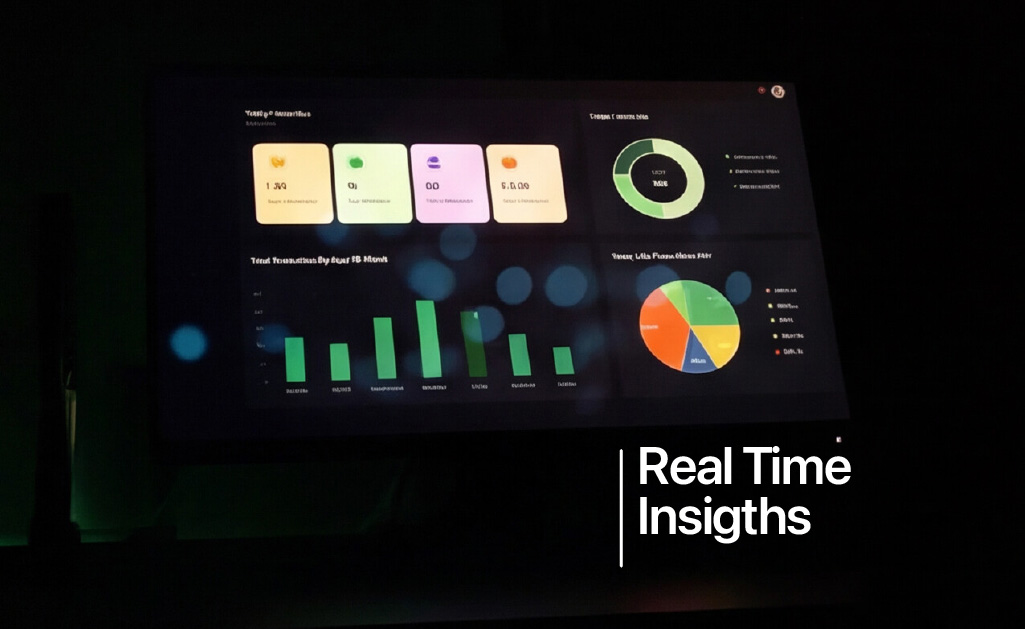
Find Your Rhythm With Performance Reviews
A one-size-fits-all meeting schedule just doesn’t cut it. You need different conversations for different purposes. We’ve found a multi-layered cadence is the best way to ensure that both small fires and long-term trends get the attention they deserve.
- Daily Huddles (10-15 minutes): These are quick, tactical stand-ups focused on the here and now. Review yesterday’s numbers, flag anything unusual on the real-time dashboards (like a sudden spike in AHT or a dip in Service Level), and set the tone for the day. This is where you make small, immediate course corrections.
- Weekly Performance Reviews (45-60 minutes): Now you can zoom out and look at the bigger picture. Team leads and managers use this time to dig into the past week’s KPI trends, celebrate wins, and brainstorm solutions for recurring challenges.
- Monthly/Quarterly Business Reviews (QBRs): These are the high-level strategy sessions. Here, we sit down with our clients to review performance against overarching business goals, spot long-term patterns, and adjust our strategy for the quarter ahead.
This structured rhythm keeps information flowing smoothly, from daily tactical fixes to high-level strategic pivots.
The Makings of a Productive Weekly Review
A weekly performance review should be a collaborative workshop, not a lecture. It’s a chance for leaders to analyze trends, share what’s working, and figure out how to lift the entire team. A vague agenda leads to a wasted hour, so being structured is absolutely key.
Here’s a simple but effective agenda we use to keep things on track:
- Start With the Wins (5 mins): Always kick things off on a positive note. Highlight a top-performing agent, a team that crushed their FCR goal, or some great customer feedback.
- KPI Deep Dive (20 mins): Focus on 2-3 core KPIs and their trends. Don’t just read the numbers—ask “why?” Why did the Abandonment Rate jump on Wednesday afternoon? What is Agent A doing that keeps their CSAT score so high?
- Challenge & Solution Workshop (15 mins): Zero in on a specific, recurring problem, like a common customer complaint or a process bottleneck. Brainstorm solutions as a group.
- Action Items & Ownership (5 mins): End by clearly defining the next steps. Who is responsible for what, and by when? This is the step that separates talk from action.
The Continuous Improvement Loop
Ultimately, all this monitoring fuels a cycle of continuous improvement. The insights you pull from your performance data should feed directly back into your operations, creating a positive feedback loop that drives real growth. This means using data for targeted coaching, smart process refinements, and even technology upgrades.
This process is powered by a commitment to gathering and acting on feedback from all sources. In our guide on using customer feedback for continuous improvement, we explore how to weave customer insights directly into this performance cycle.
This action-oriented approach is the final, most important piece of the puzzle. By establishing a clear rhythm for review and fostering a culture of collaborative problem-solving, you ensure your monitoring efforts translate directly into a better agent experience, happier customers, and a healthier bottom line.
Frequently Asked Questions About Call Center Monitoring
Even with the best-laid plans, a few questions always pop up when you start digging into call center performance. Let’s tackle some of the most common ones we hear from businesses just like yours.
What is the most important KPI to monitor in a call center?
While it really does come down to your specific business goals, First Call Resolution (FCR) is almost always at the top of the list. A high FCR is a powerful sign that your agents are knowledgeable and your processes are solid. It directly boosts customer satisfaction and slashes operational costs by cutting down on repeat calls. It’s a win-win.
However, never track a single KPI in a vacuum. Always pair FCR with Customer Satisfaction (CSAT) to make sure those fast resolutions are also good resolutions.
How often should we review call center performance?
There’s no single answer here—the key is to use a multi-layered review cadence.
- Daily: Use real-time dashboards for immediate adjustments and quick team huddles to address anything urgent, like a spike in your call abandonment rate.
- Weekly: Hold more in-depth performance meetings to analyze trends from the past seven days, solve recurring issues, and provide coaching.
- Monthly & Quarterly: Use these high-level, strategic sessions (QBRs) to review performance against major business objectives with stakeholders or your BPO partner.
How can a nearshore BPO partner help us monitor performance?
Absolutely. In fact, this is one of the biggest reasons to work with a modern, nearshore BPO like CallZent. You don’t just get agents; you get immediate access to advanced monitoring platforms and years of deep expertise. We don’t just run your call center—we help you make it better.
A true BPO partnership is built on transparency and shared goals. It’s not about sending reports; it’s about co-creating strategies for continuous improvement by analyzing data together.
From day one, we work with you to define the right KPIs for your business and set up customized, real-time dashboards that give you a crystal-clear window into performance. Our model is built on total transparency, so we’re right there with you, turning those insights into action.
How do I start building a Quality Assurance program?
Starting a Quality Assurance (QA) program sounds intimidating, but it doesn’t have to be. The trick is to start simple.
Begin with a balanced scorecard that covers a few key areas: procedural adherence, information accuracy, and essential soft skills like empathy or active listening. Review a manageable number of calls—maybe 3-5 calls per agent each week. The two most important things? Hold regular calibration sessions to ensure all your evaluators score consistently, and frame the entire QA process as a coaching tool designed to help agents grow.
🚀 Ready to turn performance data into growth?
CallZent helps you build KPI dashboards, coaching-first QA, and nearshore teams that hit service level targets while protecting customer experience.
Talk to an ExpertReady to see how a transparent, data-driven BPO partner can transform your customer service? At CallZent, we build custom-fit solutions that give you the insights you need to grow. Discover how our nearshore model can reduce costs and boost performance by exploring our services at https://callzent.com.