Skip to content

CALL CENTER STRATEGY
Offshoring Call Centers: Pros, Cons, and Smarter Alternatives
Learn the real pros and cons of offshoring call centers, including costs, risks, and why nearshore alternatives like Mexico may deliver better results.
TL;DR — Quick Takeaways
- Offshoring call centers can reduce costs by 40–70% but comes with operational risks.
- Time zone gaps and cultural differences often impact service quality.
- Hidden costs like training, turnover, and management complexity reduce ROI.
- Nearshore solutions like Tijuana offer better balance between cost and performance.
What if you could offer 24/7 customer support without tripling your budget? For many businesses, that’s the core promise of offshoring call centers. This strategy means partnering with a BPO (Business Process Outsourcing) provider in a distant country, like the Philippines or India, to handle your customer interactions. But is it the right move for your business?
Summary: The Bottom Line on Offshoring Call Centers
Thinking about offshoring your call center? Here’s the short version:
- What It Is: Moving your customer service operations to a distant country (think India or the Philippines) to tap into lower labor costs, get 24/7 coverage, and access a huge talent pool.
- The Big Trade-Off: The main draw is serious cost savings—often 40-70% lower than keeping things onshore. The biggest risk? A potential dip in service quality due to cultural gaps and massive time zone differences.
- The Alternative: Nearshoring (like in Tijuana, Mexico) strikes a middle ground, delivering cost savings with much better cultural alignment and time zone overlap for North American businesses.
- The Real Key: Success isn’t about finding the cheapest option. It demands a rock-solid strategy for picking the right vendor, locking down data security, and managing performance.
What Are Offshoring Call Centers, Really?
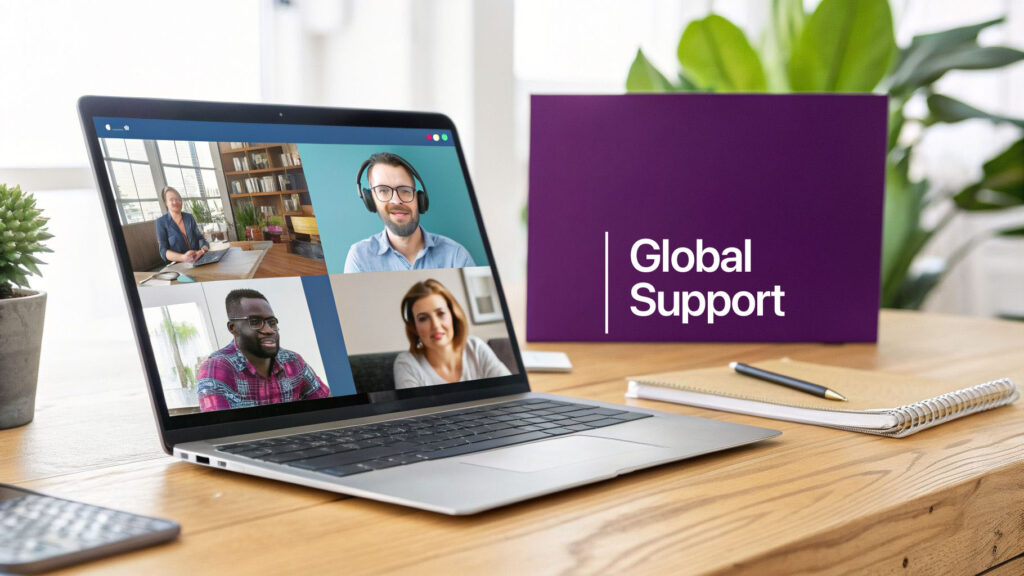
Unpacking the Concept of Offshoring
At its heart, offshoring a call center means you’re building a remote extension of your team, placed strategically to leverage global talent and different economic structures. Years ago, this was almost purely a cost-cutting play. Companies saw the huge labor arbitrage—the wage difference between home and an offshore location—and jumped at it.
The global BPO market, valued at over $113 billion, is proof of how big this model has become. Countries like the Philippines and India have built massive industries around it, employing millions of skilled agents. But the conversation has gotten a lot smarter than just saving a few bucks.
“The biggest risk of offshoring isn’t the money you might lose, but the customer trust you can’t afford to break.”
This evolution means modern offshoring is now about finding strategic value. Can an offshore partner bring specialized skills you can’t find at home? Can they provide the round-the-clock support that lets you break into new markets? These are the questions smart leaders are asking today.
For instance, a US-based e-commerce brand might team up with a call center in the Philippines. It’s not just for the lower payroll, but to offer genuine 24/7 support. This move transforms their service team into a global, always-on operation, letting them serve customers anywhere without hiring expensive overnight staff back in the States.
Of course, a move like this isn’t without its hurdles. It brings challenges with cultural nuances, different communication styles, and the sheer complexity of managing a team thousands of miles and multiple time zones away. If you’re looking for a broader understanding of the BPO world, our call centers and BPO guide for business leaders is a great place to start. This article will help you dig into the specific trade-offs and decisions you’ll face when choosing an offshoring partner.
Weighing the Real Pros and Cons of Offshoring Call Centers

When you hear “offshoring,” your mind probably jumps straight to cost savings. And you’re not wrong—it’s a huge piece of the puzzle. But smart leaders know the decision goes way beyond the price tag.
Focusing only on the initial savings can blind you to pitfalls that wipe out those gains and then some. You have to weigh both sides of the scale.
The biggest draw, of course, is the potential for massive cost reductions. In popular offshore hubs, labor and operational expenses can be 40-70% lower than in North America. We’re not just talking about wages; that number includes cheaper real estate, utilities, and all the other overhead that quietly eats away at your budget.
But the real wins often come from strategic advantages that are just too expensive or complicated to build at home.
The Strategic Advantages of Offshoring
One of the biggest game-changers is the ability to offer true 24/7 support. By partnering with a team in a completely different time zone, your business can be “always on” for customers, no matter where they are. For companies with a global footprint, this isn’t a luxury; it’s a necessity.
Then there’s scalability. Imagine you’re an e-commerce brand gearing up for the holiday madness. Instead of scrambling to hire and train a temporary domestic team for a three-month sprint, your offshore partner can dial up your agent count to meet the rush—and then dial it right back down in January. That’s agility without the long-term payroll commitment.
- Access to a Global Talent Pool: Offshore markets are often flush with educated, ambitious workers looking for professional roles. This opens up a huge pool of talent, including multilingual agents who can help you connect with diverse customer bases.
- Focus on Core Business Functions: Let’s be honest, you’re not in the business of running a call center. Outsourcing frees up your in-house team to do what they do best: innovate, build your product, and grow the company.
The Realistic Downsides of Offshoring Call Centers
For all its upside, offshoring isn’t a silver bullet. The same distance that drives down costs can create serious friction, both operationally and with your customers.
Communication and cultural gaps are the classic hurdles. An agent might have perfect English grammar but completely miss the sarcasm, slang, or cultural cues that make a conversation feel natural. The result? Stilted, awkward interactions that leave customers feeling like they haven’t been heard.
We saw this happen with a US-based tech company. They moved their support desk offshore, and while the agents knew the product manual inside and out, they had no feel for how American users actually used the software. This disconnect led to a spike in unresolved tickets and a 20% rise in customer churn in just six months. They had to rethink their entire strategy, and it was a painful, expensive lesson.
As you dive into offshoring, it helps to see how these trade-offs play out in other business functions. For a parallel perspective, check out this piece on weighing the pros and cons of HR outsourcing. The core challenge is always the same: balancing cost savings against quality and control.
Finally, don’t underestimate the headache of time zones. A 12-hour difference makes real-time collaboration with your leadership team a nightmare. A quick five-minute question becomes a 24-hour email chain, killing your agility and slowing down decisions, feedback, and vital improvements.
The Hidden Costs of Offshoring Your Call Center
It’s hard to ignore the numbers. When you see offshore agent wages that are 70-80% lower than what you’d pay at home, it’s easy to feel like you’ve struck gold. But the sticker price is almost never the full story.
Chasing that rock-bottom hourly rate can lead you straight into a minefield of surprise expenses. These hidden costs don’t just eat away at your savings; they can completely reverse them. To make a smart call, you have to look past the per-hour number and figure out the true total cost of running the operation.
Beyond the Hourly Rate: The Real Expenses in Offshoring
Offshoring isn’t as simple as swapping a domestic agent for an international one. You’re building an entirely new operational wing to manage a team thousands of miles and multiple time zones away. That kind of infrastructure doesn’t come cheap.
Here are some of the most common costs that blindside business leaders:
- Intensive Cultural and Product Training: Your offshore agents need to learn more than just your product catalog. They need to understand your customer’s culture, including local slang, communication styles, and service expectations. This is a much heavier and more continuous training investment than what’s required for a culturally-aligned team.
- Higher Agent Turnover: Offshore call center markets are incredibly competitive. Agents will often jump to another BPO for even a slight pay bump. High turnover means you’re stuck in a costly cycle of recruiting, hiring, and training new people, which kills consistency and drains your budget.
- Technology and Infrastructure Overhead: Keeping a global team connected requires a robust—and often pricey—tech stack. We’re talking secure data lines, project management tools, and reliable communication platforms that can bridge a 12-hour time difference without a hitch.
A wise investment in your call center isn’t about finding the cheapest hourly rate; it’s about securing the best value for your customer lifetime value.
This is the critical distinction. When you focus only on cutting operational costs, you risk delivering a poor customer experience that chips away at brand loyalty and long-term revenue. It’s a classic mistake many businesses don’t recognize until the damage is done.
The True Cost of a Bad Customer Experience
Let’s look at a real-world example. A mid-sized software company was drawn in by the promise of 70% cost savings and moved its entire technical support team offshore. For the first few quarters, the financial reports looked fantastic.
But within a year, they noticed a 20% drop in customer retention. Their users were getting frustrated with communication barriers and agents who couldn’t grasp complex, nuanced problems. Customers started leaving for competitors who offered better support.
The company was forced into a disruptive and expensive retreat, moving support back to a provider with better cultural alignment. The lesson was painful but clear: the money they “saved” on agent wages was dwarfed by the revenue they lost from churning customers.
A good ROI analysis has to go deeper than just salaries. Once you factor in the financial hit from customer churn, a damaged brand reputation, and the nonstop cost of managing a distant team, the math looks very different. For a closer look at these financial models, our guide on call center outsourcing costs breaks down how to compare them properly.
At the end of the day, the goal isn’t just to slash your budget. It’s to build a customer service operation that actually adds value. Sometimes, the cheapest option is the most expensive one you can choose.
Navigating Data Security and Compliance with Offshoring Call Centers
When you offshore your call center, you’re not just sending tasks overseas—you’re sending your customers’ data. And let’s be blunt: this is where the biggest risks in any offshoring strategy lie. Keeping sensitive information safe and compliant with a tangled web of international laws is no small feat.
A data breach isn’t just a technical problem. It’s a direct hit to your brand’s reputation and your bottom line. When your team is thousands of miles away, the challenge of keeping a tight grip on data protection becomes that much harder.
The High Stakes of Global Data Laws
Every country plays by its own data privacy rules, and they rarely line up perfectly. A US company has to follow strict standards like HIPAA (Health Insurance Portability and Accountability Act) for healthcare data or PCI DSS (Payment Card Industry Data Security Standard) for financial info. But your offshore partner in India or the Philippines is operating under a completely different legal system.
This creates a massive compliance headache. For instance, if you have European customers, your offshore partner must also be fully compliant with GDPR (General Data Protection Regulation). A misstep there could cost you up to 4% of your global annual revenue.
Think about it: a US-based financial firm partners with an offshore call center to handle customer account questions. If that partner gets hit by a data breach because of sloppy security, the US firm is the one on the hook. We’re talking multi-million dollar fines from regulators, lawsuits from angry customers, and a catastrophic loss of public trust that could take years, if not decades, to rebuild.
Security isn’t a feature you can add on later; it’s the foundation of customer trust. A single breach can wipe out decades of brand loyalty.
This is the one area where you can’t compromise, especially if you’re in healthcare, finance, or e-commerce. You have to be absolutely certain your partner treats your data with the same level of paranoia and care that you do.
A Security Checklist for Potential Offshore Partners
Before you even think about signing a contract, you need to put potential partners under a security microscope. Don’t settle for a simple “yes” or “no.” You need to ask pointed questions and demand hard proof of their security measures.
Here’s a practical checklist to get you started:
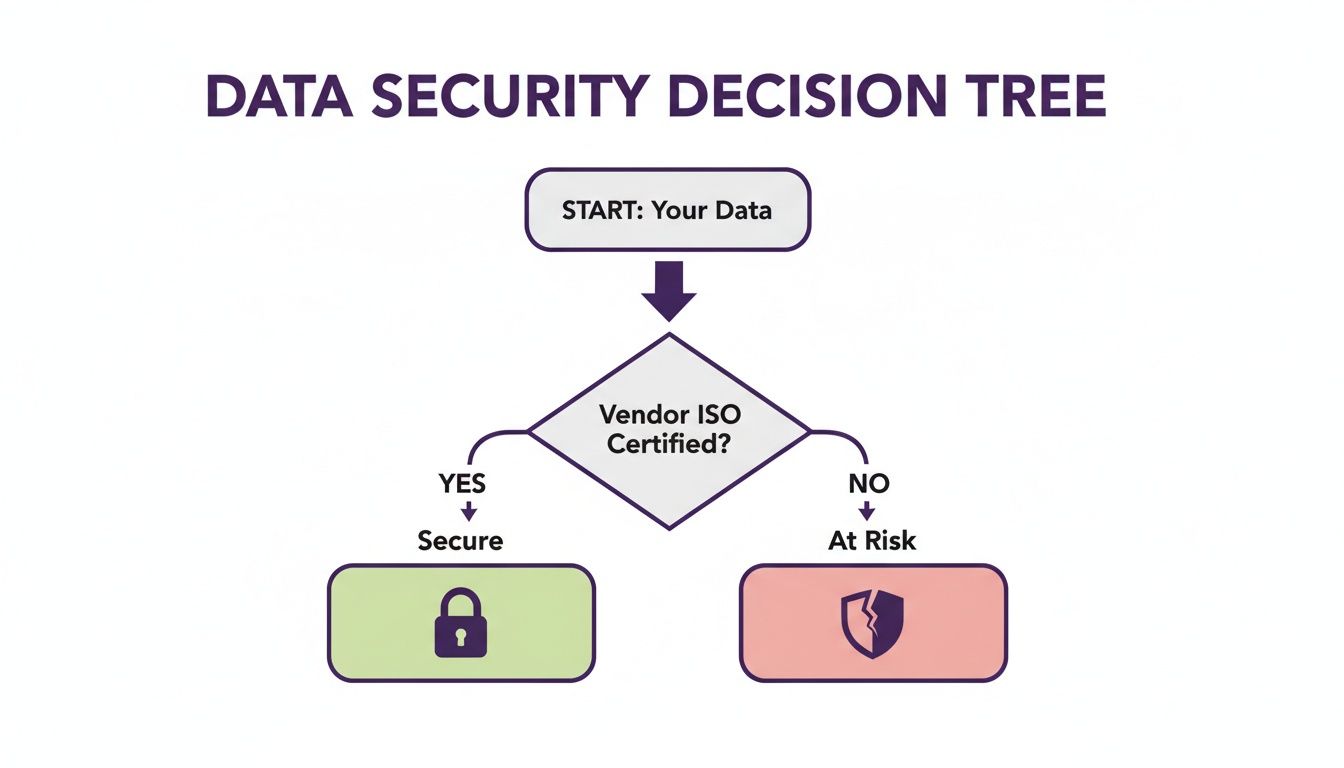
- Certifications and Audits: Are you compliant with major international standards like ISO 27001 or SOC 2? Can you show us your most recent audit reports? These aren’t just fancy badges; they’re independent proof that a vendor’s security systems are up to snuff.
- Physical Security: How do you lock down your facilities? Ask about access controls (like keycard-only entry), 24/7 surveillance, and clean-desk policies that stop agents from jotting down sensitive info.
- Employee Vetting: What does your screening process look like? Do you run thorough background checks? How often do you conduct security training to prevent insider threats?
- Data Handling Protocols: How is customer data accessed, stored, and moved? Is every connection encrypted? What stops an agent from downloading data to a personal device?
- Incident Response Plan: What happens if a breach does occur? A mature partner will have a well-documented plan to identify, contain, and report any incident the moment it happens.
This is where a nearshore partner can offer a serious advantage. A provider like CallZent, operating from Tijuana, works within a legal framework that’s much more closely aligned with North American standards. That proximity and legal familiarity create a more stable, secure environment for your data. You can dig deeper into this by reading about security and compliance in Mexican BPOs.
Ultimately, choosing a partner isn’t just about their price tag. It’s about their commitment to protecting your most valuable asset: your customers’ trust.
Nearshore vs. Offshore: A Strategic Comparison for Call Centers
When you’re looking to outsource your call center, offshoring and nearshoring might seem like two sides of the same coin. Both involve moving operations out of the country, right? But for any North American business, the strategic difference between them is as big as the ocean that separates them.
While offshoring to places like the Philippines or India promises the biggest cost savings, it’s a decision that comes with major trade-offs. This isn’t just about the bottom line; it’s about control, quality, and how well your outsourced team can actually connect with your customers. The right choice depends on what your business really needs to win.
The Time Zone Advantage of Nearshore
One of the first and most painful differences you’ll feel is the time zone gap. An offshore team on the other side of the planet means a 12 to 15-hour time difference. This isn’t a minor inconvenience; it’s an operational killer.
A simple question that needs a quick answer from your home office can easily turn into a 24-hour delay. Forget about agility. Problem-solving grinds to a halt. In contrast, a nearshore partner in a location like Tijuana operates in the same time zones as the U.S. (PST/MST). That changes everything.
- Real-time Collaboration: Got an urgent issue? Just pick up the phone and solve it. There’s no waiting for another country to wake up to get an answer.
- Synchronized Operations: Product launches, marketing campaigns, and emergency escalations all happen in perfect sync. Your outsourced team feels like a true extension of your company, not a disconnected satellite.
This alignment isn’t just a nice-to-have. It’s a massive operational advantage that keeps your business moving at the speed your customers expect.
Bridging the Cultural Gap
Next up is cultural affinity—a factor that’s often underestimated. Offshore agents might have perfect English grammar, but understanding the subtle nuances of North American culture is a completely different ballgame. They might not catch the local references, get the latest consumer trends, or truly grasp the unspoken frustrations that drive a customer to call in the first place.
Nearshore agents, especially in border cities like Tijuana, are immersed in American culture. They watch the same shows, follow the same trends, and often have friends and family just across the border. This shared context creates more natural, empathetic, and effective customer conversations.
A US e-commerce brand saw its CSAT scores jump by 30% after switching from an offshore provider to CallZent. The reason was simple: our agents understood the brand’s customer base on a cultural level, leading to better problem-solving and stronger connections.
This shared understanding makes training faster, cuts down on misunderstandings, and ultimately delivers a far superior customer experience. You can dig deeper into this dynamic in our detailed breakdown of offshore versus nearshore contact center outsourcing.
Proximity and Partnership
Finally, think about the simple logistics of managing your team. Visiting an offshore site is a major undertaking—a multi-day trip with long-haul flights and a significant price tag. That distance often forces a hands-off management style, which can lead to your brand’s standards and goals slowly getting lost in translation.
A nearshore center in Tijuana, however, is just a short drive from Southern California. This proximity makes it easy for your leadership to pop down for a visit, run in-person training sessions, and build real relationships with the people representing your brand.
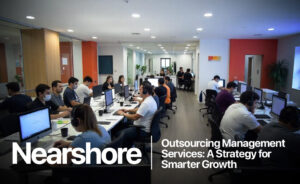
At the end of the day, nearshoring gives you the best of both worlds. You get the significant cost savings you’re looking for without having to sacrifice the quality, control, and cultural alignment that are so often lost when you go fully offshore.
Your Actionable Checklist for Choosing a BPO Partner
Alright, let’s get practical. Picking the right Business Process Outsourcing (BPO) partner is the one decision that will make or break your entire outsourcing effort. A great partner feels like a true extension of your team, someone who champions your brand and helps you grow.
A bad one? It’s a constant source of fires to put out, and it can do real damage to your reputation. To sidestep the disasters, you need to go in with a solid game plan and ask the tough questions that cut through the sales pitch.
This checklist is your guide to digging deep. Use it to find a partner that’s not just capable, but a perfect fit for your long-term vision.
Cultural and Operational Fit
If a partner’s culture doesn’t sync with yours, you’re setting yourself up for friction and missed targets. This is where most partnerships go wrong.
- Brand Voice and Values: How, exactly, will you train your agents to sound like us? Show me examples of how you’ve nailed this for other clients who have a customer base like ours.
- Communication Cadence: What’s the day-to-day communication look like? Who is my dedicated point of contact, and how often are we meeting to talk strategy and numbers?
- Problem Resolution: Walk me through your escalation process step-by-step. When a customer has a gnarly problem an agent can’t fix, what happens next? Who gets involved and when?
Technology and Infrastructure
Downtime is a dealbreaker. Your partner’s tech and infrastructure have to be bulletproof, especially when you’re looking at offshoring call centers. There’s no room for error here.
“A BPO partner’s technology is the central nervous system of your remote customer service operation. If it’s not resilient, secure, and scalable, the entire system is at risk.”
- System Redundancy: What happens when the power goes out or the internet drops? I want to hear about backup generators and redundant internet providers. How do you guarantee 100% uptime?
- Data Security: Don’t just tell me you’re compliant. What are the proactive, specific things you do to lock down client data? Detail your network security, who has access to what, and how you monitor your team.
- Scalability: Let’s say our call volume doubles next quarter. What’s your plan? How fast can you hire, train, and deploy more agents without quality taking a nosedive?
Agent Training and Retention
At the end of the day, it’s their agents talking to your customers. The quality of that team is everything. How a BPO hires, trains, and keeps its people tells you everything you need to know about the service you’ll get.
A serious approach to finding and vetting the best call center outsourcing companies means drilling down on their people operations.
- Onboarding Process: Tell me about your new agent training, from day one to day 90. How do you know an agent is truly ready before they take their first customer call?
- Agent Retention Strategy: What’s your current agent attrition rate? Be honest. More importantly, what are you doing to keep your best people from walking out the door? High turnover is a massive red flag.
- Performance Metrics: How do we define success? Show me a sample performance report. I want to see exactly which Key Performance Indicators (KPIs) you live and die by—like First Call Resolution (FCR), Average Handle Time (AHT), and Customer Satisfaction (CSAT).
Frequently Asked Questions About Offshoring Call Centers
Making a big move like offshoring your call center brings up a lot of questions. When you’re considering a strategy this important, you need straight answers from people who’ve been there. Here are some of the most common things we hear from leaders weighing their options.
What are the real cost savings with offshoring call centers?
Everyone’s seen the headline numbers—promises of 40-70% savings are hard to ignore. And it’s true, the initial labor costs are significantly lower.
But that’s not the whole story. Smart leaders budget for the hidden costs that almost always pop up. Think extensive cross-cultural training, surprisingly high agent turnover in hyper-competitive markets, and the real-world expense of managing a team across a 12-hour time difference.
How long does it take to migrate to an offshore call center?
A typical migration to an offshore partner takes between three and six months. This isn’t something you can rush.
That timeline covers everything from vendor selection and contract negotiations to technology integration and, finally, hiring and training your first wave of agents. Trying to fast-track this process is a recipe for mistakes and a rocky launch.
What are the biggest red flags in an offshore vendor?
When you’re vetting a BPO partner, solid third-party due diligence is non-negotiable. It’s the only way to protect your business and ensure you end up with a reliable partner.
Be ready to walk away if a potential vendor shows any of these warning signs:
- Vague Security Policies: If they can’t show you clear documentation on data protection measures, like an ISO 27001 certification, it’s a major red flag.
- Lack of Client References: A great partner will be proud of their work and eager to connect you with happy, long-term clients. If they’re hesitant, there’s usually a reason.
- Unusually High Turnover: Ask them directly for their agent attrition rate. A high number is a clear signal of internal problems that will eventually become your service quality problems.
Is nearshoring a better option than offshoring?
For most North American businesses, the answer is a resounding yes. Nearshoring gives you the best of both worlds—significant cost savings without the major operational and cultural headaches that often come with offshoring call centers.
With aligned time zones, cultural familiarity, and closer proximity, a nearshore partner helps you keep a tight grip on quality and control. You get the savings you need without sacrificing the service your customers deserve.
🚀 Ready for a Smarter Outsourcing Strategy?
Discover how CallZent’s nearshore solutions deliver cost savings, bilingual support, and real-time collaboration for your business.
Ready to explore a smarter outsourcing solution? At CallZent, we provide the cost benefits you need with the quality and cultural alignment you deserve.