Skip to content
CUSTOMER SUPPORT OUTSOURCING
Your Guide to Outsourced Customer Support Services in 2026
Discover how outsourced customer support services reduce costs, improve CX, and scale operations with nearshore BPO solutions like CallZent.
TL;DR — Quick Takeaways
- Outsourced customer support services reduce costs by up to 60% while improving service quality.
- Nearshore outsourcing offers the best balance of cost, culture, and real-time collaboration.
- Modern BPOs provide omnichannel, AI-enhanced support for scalable customer experience.
- Partnering with CallZent transforms support into a revenue-driving growth engine.
Are you drowning in customer inquiries? It’s a common growing pain for successful businesses, and building an in-house team to keep up is a massive drain on time, money, and focus. Outsourced customer support services offer a lifeline, letting you partner with a dedicated third-party team to manage every customer interaction with expertise. This guide will show you how.
This frees you up to focus on what you do best—growing your business—while ensuring your customers get the world-class care they deserve.
Is Outsourced Customer Support Right for Your Business?
Today’s customers aren’t just demanding; they expect instant, helpful, and personal support around the clock. For most growing companies, building an in-house team that can deliver on that promise is more than just expensive—it’s a massive distraction from your core mission.
This is where the right outsourcing partner can change the game, shifting customer support from a cost center to a powerful engine for growth. Imagine getting a fully trained, professional support team dedicated to delighting your customers, all without the headaches of hiring, training, and managing infrastructure.
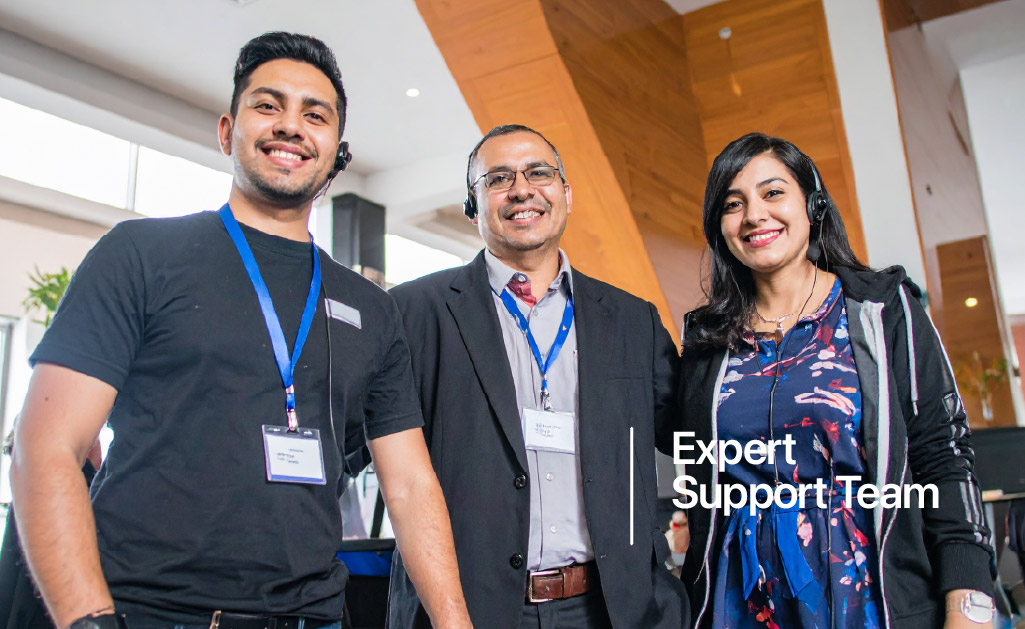
Why Modern Businesses Choose Outsourced Customer Support Services
Working with an outsourced provider brings immediate, measurable advantages that directly boost your bottom line and streamline your operations.
Here are the key benefits you can expect:
- Significant Cost Reduction: Access top-tier talent and technology for a fraction of what it costs to build an in-house team. Partnering with a nearshore provider like CallZent can slash operational costs by up to 60%.
- 24/7 Availability: Effortlessly provide round-the-clock support. No customer query will ever go unanswered, no matter the time zone, which is crucial for e-commerce and SaaS companies.
- Access to Specialized Talent: Instantly onboard a team of highly-trained agents who are true experts in customer engagement, technical troubleshooting, and quick-fire problem-solving.
- Focus on Core Business: Free up your internal team to concentrate on the big picture: innovation, product development, and strategic growth.
The Nearshore Advantage: A Better Outsourcing Model
Let’s be clear: where your outsourcing partner is located matters. A lot. For years, offshore was the default choice for pure cost savings, but it often came with frustrating time zone delays and cultural disconnects.
Nearshore partners, like our CallZent team in Tijuana, offer a far better model.
Our proximity to the U.S. guarantees cultural alignment and overlapping time zones, making real-time collaboration feel like we’re just an extension of your own office. Plus, our bilingual agents seamlessly serve both English and Spanish-speaking customers, instantly expanding your market reach. You can learn more about the strategic benefits of outsourcing your customer service in our in-depth guide.
The modern approach to outsourcing views customer support not as a cost center to be minimized, but as a vital, value-creating partnership that drives customer loyalty and business growth.
Ultimately, deciding to outsource is about transforming your customer experience from a reactive chore into a proactive, strategic asset.
Understanding Outsourced Customer Support Services
So, what exactly are outsourced customer support services? Forget the dry definitions. Think of it like this: your business is a race car, and you’re the driver focused on winning—innovating, growing, and beating the competition. An outsourced support team is your expert pit crew.
They handle the critical, moment-to-moment work of keeping your customers happy with precision and skill. This lets you stay on the track and focused on the finish line, instead of getting pulled into the operational weeds.
This model isn’t just a trend; it’s a massive shift in how businesses operate. The global Business Process Outsourcing (BPO) market, valued at over $280 billion in 2024, continues to grow as companies seek efficiency and expertise.
Why the huge demand? Companies are scrambling to meet customer demands for 24/7 service, especially in booming industries like e-commerce and healthcare. Plus, the savings are hard to ignore—businesses often see cost reductions of 40-60% by partnering with nearshore teams instead of building in-house.
But before you can build the right team, you have to know what you’re building. It’s essential to understand the core difference between customer service and customer support. They’re related, but they solve different problems.
Core Types of Outsourced Support Services
Outsourcing isn’t a one-size-fits-all deal. It’s more like a menu of specialized services you can mix and match to fit your exact needs. Most of these services fall into three main buckets.
-
Inbound Support: This is what most people think of when they hear “customer support.” Your agents are on the receiving end, handling communications from customers. This could be anything from answering product questions and processing new orders to providing technical help. For an e-commerce brand, this might look like a 24/7 phone and chat line for managing order inquiries and returns.
-
Outbound Services: Here, the roles are reversed—your agents are the ones initiating contact with customers or prospects. Think lead generation, customer satisfaction surveys, appointment setting, or even compliant debt collections. A fintech company, for example, could use a trained outbound team to manage sensitive collection calls, ensuring every interaction is professional and by the book.
-
Back-Office Support: This is all the essential, non-customer-facing work that happens behind the scenes. We’re talking about tasks like data entry, transaction processing, content moderation, and managing records. Outsourcing this frees your internal team from getting bogged down in repetitive but critical administrative work.
Finding the Right Mix of Services
A great BPO partner doesn’t just stick to one function; they integrate them. Imagine a customer calls your inbound team with a product issue. After the agent resolves the problem, they can switch hats to a back-office role by processing the product return and updating your inventory system on the spot.
A successful outsourcing strategy is not just about hiring an external team; it’s about building an integrated solution that handles multiple facets of the customer journey, from initial contact to behind-the-scenes processing.
This integrated approach is where a true BPO provider shines. By weaving different service types together, you build a seamless, efficient machine that just works. You can learn more about how BPO and call centers work together to create these powerful solutions in our guide.
The Nearshore Advantage: Why Proximity Matters for Outsourced Customer Support
When you’re shopping for outsourced customer support services, location isn’t just a pin on a map. It’s a strategic choice that impacts your costs, quality, and collaboration—hard. For years, offshoring to distant countries was the go-to play for saving money. But many businesses found that the communication gaps and brutal time zone differences created more headaches than the savings were worth.
This reality check fueled the rise of nearshore outsourcing. Think of it as the “best of both worlds” model. You get the significant cost savings you’re looking for, but without the logistical and cultural hurdles that come with a team halfway across the globe. A nearshore partner, like our operation in Tijuana, works in a familiar time zone and has a deep cultural connection to the North American market.
Real-World Example: The Power of Nearshore Outsourcing
Let’s look at a quick story to see what this means in the real world. Imagine a U.S. retail brand, “Urban Bloom.” To cut costs, they first outsourced their support to a team in Asia. Right away, the problems started. The huge time difference meant their U.S. managers got daily reports a day late, making it impossible to jump on emerging customer issues in real time. On top of that, cultural nuances kept getting lost in translation, leading to awkward customer chats and plummeting satisfaction scores.
Frustrated, Urban Bloom made a switch. They moved their support to a nearshore partner in Tijuana. The difference was night and day.
- Real-Time Collaboration: With both teams in the same time zone, managers could connect with support leads instantly. They could finally troubleshoot problems as they happened and adjust their strategy on the fly.
- Cultural Alignment: The nearshore agents just got it. They understood American slang, consumer habits, and customer expectations, which made their conversations feel natural and effective.
- Improved Satisfaction: The highly skilled bilingual agents resolved issues with more speed and empathy. The result? Customer satisfaction (CSAT) scores shot up by 25% in the very first quarter.
Urban Bloom got the cost savings they needed without having to sacrifice the quality and control they thought were off the table. This story gets right to the heart of the nearshore model’s strength.
The flowchart below shows a common support path, illustrating how smart automation and human agents can work in tandem.
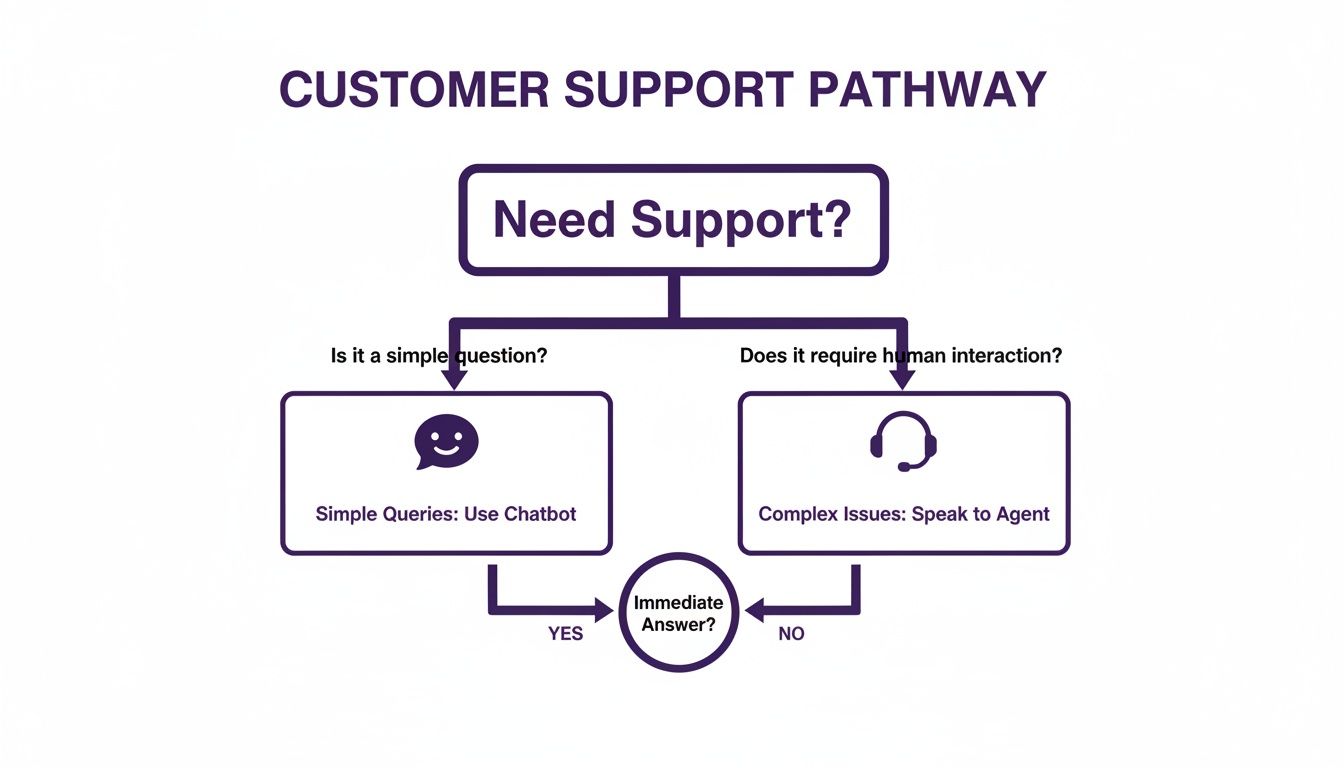
As you can see, simple queries get handled efficiently by bots. It’s the complex, high-value problems that are escalated to skilled human agents—a process that nearshore teams are perfectly positioned to manage.
Onshore vs. Offshore vs. Nearshore: A Clear Comparison
Making the right call means taking a clear-eyed look at all your options. Each outsourcing model—onshore, offshore, and nearshore—comes with a different mix of trade-offs across cost, culture, and control. Understanding these differences is the key to finding a partner that truly aligns with your business goals and customer expectations.
Here’s a detailed comparison to help you weigh the trade-offs between the three main outsourcing locations based on key decision-making factors.
| Factor | Onshore (USA/Canada) | Nearshore (Tijuana, Mexico) | Offshore (Philippines/India) |
|---|---|---|---|
| Cost | Highest cost, typically $25-$35+ per agent hour. | Moderate cost, typically $10-$25 per hour, offering 40-60% savings. | Lowest cost, often $7-$15 per agent hour. |
| Time Zone | Perfectly aligned with your business hours. | Fully or mostly aligned, enabling real-time collaboration. | Significant time difference (8-12+ hours), causing communication delays. |
| Cultural Affinity | High cultural alignment and brand understanding. | Very high cultural affinity due to geographical proximity and media exposure. | Low cultural alignment, which can lead to communication barriers. |
| Agent Talent | Access to a local talent pool, but at a high cost. | Access to a large, highly educated, and bilingual talent pool. | Access to a massive talent pool, but language proficiency can vary. |
| Travel & Oversight | Easy and inexpensive to visit for training and oversight. | Quick and affordable travel for hands-on management and team building. | Expensive and time-consuming travel, making site visits difficult. |
As the table shows, each location offers a distinct value proposition. While offshoring offers the lowest sticker price, the hidden costs of communication lags and cultural disconnects can quickly add up.
For companies that see the strategic value in geographic and cultural closeness, it can be a smart move to Hire LatAm Virtual Assistants to seriously level-up their customer support game.
Nearshore isn’t just about being closer; it’s about creating a true partnership where your outsourced team operates as a seamless extension of your own, driven by shared goals and real-time communication.
At the end of the day, the nearshore model offers a balanced and powerful solution. It gives you the cost efficiency you need without the common frustrations of working with a team on the other side of the planet. For any company that refuses to compromise on customer experience, it’s a strategic no-brainer.
How Technology Is Reshaping Customer Support
Let’s get one thing straight: the whole “robots are taking our jobs” panic is missing the point, especially in customer support. The reality is far more interesting. Technology like AI isn’t replacing good support agents; it’s creating a new breed of “supercharged agents.”
Think of it this way: technology is the ultimate sidekick. It equips your human agents with tools that can analyze a customer’s tone in real-time, pull up their entire history with a single click, and even suggest the smartest next step. This isn’t science fiction. It’s the new gold standard for high-performing outsourced customer support services, and it’s where the real magic happens.

The Smart Role of AI and Automation in Outsourced Support
The secret to a modern support strategy is simple: let the bots handle the boring stuff. This frees up your skilled human team to tackle the complex, high-stakes issues where empathy is everything. Chatbots are the perfect example. They’re built for speed and accuracy on high-volume, repetitive questions.
When a customer asks, “Where is my order?” or “What are your hours?” they don’t need a deep conversation. They need an answer. Fast. Chatbots deliver that 24/7. That’s why the chatbot market is projected to grow by over 23% annually. Businesses see huge efficiency wins when bots take the basics, letting skilled agents focus where they shine. You can learn more about the trends in contact center technology that are making this all possible.
But it’s a delicate balance. While many customers are perfectly happy using a bot for simple questions, they absolutely expect a smooth handoff to a real person when things get complicated.
The Rise of Omnichannel Platforms
Your customers don’t stick to one channel, so why should your support? They might start a conversation on your website’s live chat, send a follow-up email from their phone, and then call to get a final answer. An omnichannel platform ties all these loose threads into a single, continuous conversation.
For an agent, this is a game-changer. They see the entire story—every past email, chat, and call—on one screen. No more asking customers to repeat themselves. For the customer, it’s a fluid, stress-free experience.
A solid omnichannel strategy hinges on a few key components:
- Unified Agent Desktop: One clean interface where agents manage everything—phone, email, chat, and social media.
- Seamless Handoffs: A customer can switch from chat to phone without losing their place or their patience.
- Proactive Engagement: Using data to spot a potential issue and offer help before the customer even thinks to ask for it.
A true omnichannel experience has become a non-negotiable customer expectation. It’s the difference between a frustrating, fragmented journey and a smooth, supportive one that builds trust.
Here’s the best part. Partnering with a nearshore expert like CallZent means you get access to these enterprise-level tools without having to foot the massive bill for building and maintaining them yourself. We handle the tech so your supercharged agents can do what they do best—take care of your customers.
A Practical Checklist for Choosing Your Partner
Picking an outsourced customer support services partner is one of the biggest calls you’ll make. This isn’t just about finding a vendor; you’re handing over your customer relationships to a team that will become the voice of your brand. Let’s move past the generic advice and get into a real-world checklist to help you find a true collaborator.
Your goal is to find a provider that fits your company culture, gets your industry, and is genuinely invested in your long-term success. Use these steps to systematically vet your options and make a choice you can stand behind.
Assess Industry-Specific Expertise
Every industry has its own language, rules, and customer quirks. A one-size-fits-all support strategy just doesn’t cut it. Your first move should be to confirm that a potential partner has a proven track record in your specific field.
For example, a healthcare company needs to know its BPO partner is 100% HIPAA compliant to handle sensitive patient data. A fintech brand needs a team that lives and breathes financial regulations and security. Don’t be shy—ask for case studies and references from clients in your industry.
Evaluate Training and Quality Assurance
A great support team isn’t born; it’s made. That happens through solid training and never-ending quality checks. Dig into how a provider gets its agents ready to represent your brand. A partner worth their salt will be happy to walk you through their entire process.
Here’s what to look at:
- Onboarding Process: How do they drill agents on your brand voice, products, and specific customer scenarios?
- Quality Assurance (QA): What systems do they have for monitoring calls, chats, and emails to keep standards high?
- Performance Tracking: How do they measure agent success, and how do they share those metrics with you?
A partner’s dedication to training and QA directly reflects their commitment to your brand’s reputation. You want to see a structured, data-driven approach.
Scrutinize Technology and Security
Today, technology is the backbone of great support. A top-tier provider should have a modern tech stack that can handle omnichannel communication, plug into your existing CRM, and give you solid data analytics. According to recent studies, the demand for seamless omnichannel support is a primary driver of growth in the BPO market.
With 50% of organizations now outsourcing their help desks according to some reports, security is absolutely non-negotiable. Ask direct questions about their data protection protocols, compliance certifications (like SOC 2 or ISO 27001), and disaster recovery plans. You can find more on the help desk outsourcing trends shaping IT support at Auxis.com.
Understand Pricing Models for Outsourced Customer Support Services
Pricing for outsourced support can feel murky, but a good partner will lay it all out for you. The three most common models are:
- Per-Hour: You pay a set hourly rate for each agent. This is straightforward and works well if you have predictable support traffic.
- Per-Agent: You pay a flat monthly fee for a dedicated agent or team. This model is perfect when you need consistent, specialized support.
- Per-Resolution: You pay for each ticket or issue that gets successfully closed out. This performance-based model ties your costs directly to results.
Talk through these options to find a structure that fits your budget and how you operate. For a much deeper dive, check out our guide on how to find and vet the best call center outsourcing companies. Getting the right partner is the single most important step in making your outsourcing strategy a win.
So, you’ve done the hard work. You’ve vetted your options, run the numbers, and finally picked the perfect partner for your outsourced customer support services. The finish line is in sight.
But don’t pop the champagne just yet. The last—and most critical—step is the launch. A smooth transition from your team to your new partner doesn’t happen by accident. It’s a carefully choreographed dance, and one misstep can throw everything off balance.
Think of it like building a bridge. You wouldn’t just start laying pavement from both sides and hope they meet in the middle. You need a solid blueprint and a clear plan to ensure everything lines up perfectly.
This roadmap breaks the launch process into four key phases. Follow it, and you’ll sidestep the common pitfalls that trip up so many partnerships, setting yourself up for success from day one.
Phase 1: Discovery and Goal Setting
This is where you lay the foundation. Before a single agent picks up the phone, you and your new partner need to be in lockstep. This is all about alignment—translating your big-picture business goals into concrete, measurable actions.
Here’s what this phase looks like:
- Defining Key Performance Indicators (KPIs): Agree on the numbers that truly matter. This isn’t just about buzzwords; it’s about defining success. Get specific with metrics like First Call Resolution (FCR), Average Handle Time (AHT), and Customer Satisfaction (CSAT).
- Establishing Service Level Agreements (SLAs): This is your contract of expectations. Will 90% of calls be answered in under 30 seconds? Get it in writing. This formalizes everything from response times to availability.
- Mapping Customer Journeys: You know your customers best. Share detailed workflows for the good, the bad, and the ugly. Give your partner a playbook for handling every common (and not-so-common) scenario they’ll face.
Phase 2: Onboarding and Training
Now it’s time to make your partner’s team an extension of your own. The goal here is total immersion. Your outsourced agents aren’t just learning a script; they’re learning to become brand ambassadors.
This is a make-or-break phase that involves:
- Knowledge Transfer: Open the floodgates. Provide them with everything—your most detailed product docs, internal FAQs, and access to your knowledge base. Don’t hold back.
- Brand Voice Training: Go beyond what you sell. Immerse them in who you are. Share your mission, your values, and the exact tone and feel you want every customer to experience.
- Systems Training: Let them get their hands dirty. Get your new agents comfortable with the exact software and tools they’ll be using every single day, from your CRM to their chat platform.
Phase 3: Pilot Program and Calibration
Alright, time for a test flight. Instead of flipping the switch on the entire operation at once, you’ll start small with a pilot program. This is your chance to see how everything works in the real world, catch any unexpected bumps, and fine-tune your approach before going live.
A pilot typically involves a small group of your best new agents handling a limited, controlled volume of calls or chats. This allows you to listen in, provide instant feedback, and make sure the machine is running exactly as it should.
Phase 4: Scaling and Optimization
With a successful pilot in the books, you’re ready for the main event. It’s time to scale up. You’ll gradually ramp up the volume of inquiries, expand the team, and move toward full operation.
But this isn’t a “set it and forget it” moment. The launch is just the beginning of a continuous cycle of improvement.
A successful launch isn’t a one-day event; it’s the start of a partnership built on constant communication, shared goals, and a mutual obsession with getting it right.
By working hand-in-hand with your provider and diving deep into the performance data, you can keep refining workflows, optimizing scripts, and leveling up your agents’ skills for the long haul.
Ready to build your own roadmap to success? Contact us at CallZent, and let’s talk about making your transition to outsourced support a seamless victory.
Your Questions About Outsourcing Support, Answered
Handing over your customer relationships is a big step. Even with all the benefits laid out, it’s only natural to have a few nagging questions. It’s smart to be thorough.
Let’s tackle the questions we hear most often from businesses before they partner with an outsourced customer support services provider.
How Much Do Outsourced Customer Support Services Cost?
The price tag for outsourced support can swing wildly depending on where your team is located. Here’s a quick look at the typical hourly rates you can expect per agent:
- Onshore (USA/Canada): $25 – $35+
- Nearshore (Tijuana, Mexico): $10 – $25
- Offshore (Asia): $7 – $15
This is where nearshore shines. You get 40-60% savings compared to a US-based team, but without the time zone headaches or cultural disconnects that can sometimes pop up with offshore partners. Keep in mind that pricing isn’t always hourly—it can be structured per resolution or as a simple fixed monthly fee. The best partners don’t hide their pricing; they show you exactly how it connects to the results you get.
Will I Lose Control Over My Brand’s Customer Experience?
This is probably the number one concern we hear, and it’s a good one. But the short answer is no—not with a true partner. A good BPO works with you, not just for you. They become an extension of your own team.
You’re still in the driver’s seat. Your partner’s job is to collaborate with you to build scripts, drill agents on your brand’s unique voice, and set up tough quality assurance protocols that protect your standards on every single call, chat, or email.
You should have 24/7 access to performance dashboards and be deeply involved in shaping the KPIs. This isn’t about giving up control; it’s about gaining a team that’s 100% aligned with your vision.
What Is the Difference Between a BPO and a Call Center?
People often use these terms interchangeably, but they’re not the same thing. Think of it this way: a traditional call center is a specialist, usually focused on one thing—voice calls.
A Business Process Outsourcing (BPO) provider, on the other hand, is a multi-tool. A BPO might have a call center, but its capabilities go way beyond the phone. They handle everything from email and live chat support to social media management, data entry, and other back-office work. A partner like CallZent provides a full omnichannel solution, not just a team to answer calls.
How Long Does It Take to Launch an Outsourced Team?
The timeline depends on how complex your needs are, but a typical launch takes anywhere from a few weeks to a couple of months. The process is pretty straightforward.
- Discovery & Goal Setting (1-2 weeks): We get on the same page about your goals, KPIs, and overall strategy.
- Recruitment & Training (2-4 weeks): We hand-pick and train a team specifically for your brand.
- Pilot Program (2-4 weeks): We start small, testing and tweaking everything to perfection before a full rollout.
A well-oiled nearshore partner with a ready-to-go talent pool can definitely speed things up. The biggest factor for a quick, successful launch? Your involvement and willingness to share what makes your business tick.
🚀 Ready to Scale Your Customer Support?
Partner with CallZent to deliver world-class customer experiences with nearshore efficiency and bilingual expertise.
Talk to an ExpertReady to see what a customer experience team that feels like your own can do for your business? At CallZent, we don’t just build client lists—we build partnerships. Explore our custom-fit solutions and let’s talk about how our nearshore experts can help you scale smart and make your customers happier.