Skip to content
Home ›
Blog › Nearshore Outsourcing
Outsourcing in Mexico: The Smart Nearshore Advantage
Learn how outsourcing in Mexico helps U.S. businesses cut costs, access bilingual talent, and improve customer satisfaction while maintaining strong compliance and security.
TL;DR: Why Outsourcing in Mexico is a Smart Move
- Massive Cost Savings: Cut operational costs by 40–60% vs. U.S. operations.
- Bilingual Talent: Access a skilled, culturally aligned workforce fluent in English and Spanish.
- Proximity: Shared time zones simplify real-time collaboration and management.
- Security: Backed by USMCA and certifications like SOC 2 & ISO 27001.
- Beyond Call Centers: Includes IT, software dev, analytics, and back-office support.
👉 Nearshoring to Mexico with CallZent means savings, agility, and stronger customer experience.
Why is Outsourcing in Mexico a Game-Changer?
Choosing an outsourcing partner is one of the most critical decisions a growing company can make. For years, the default strategy involved looking halfway across the globe. That’s changing. A strategic pivot is underway as businesses uncover the immense advantages of nearshoring, with Mexico leading the charge.
This is about more than just geographical proximity. It’s about partnering with a team that operates on your schedule, understands your customers’ cultural nuances, and functions as a true extension of your in-house team. For instance, a US-based e-commerce brand can have its Mexican support team handle customer queries during peak business hours in real-time, without the communication delays typical of offshore models. This unique blend of benefits is why countless businesses are rethinking their global strategy and turning to outsourcing in Mexico.
The Strategic Rise of Nearshoring to Mexico
Mexico has firmly established itself as a premier nearshoring hub for U.S. and Canadian companies. The appeal is straightforward: it’s cost-effective, located next door, and filled with skilled, bilingual professionals. The country’s outsourcing industry has matured far beyond basic call centers. Today, you can find high-level expertise in IT development, data analytics, cybersecurity, and even AI.
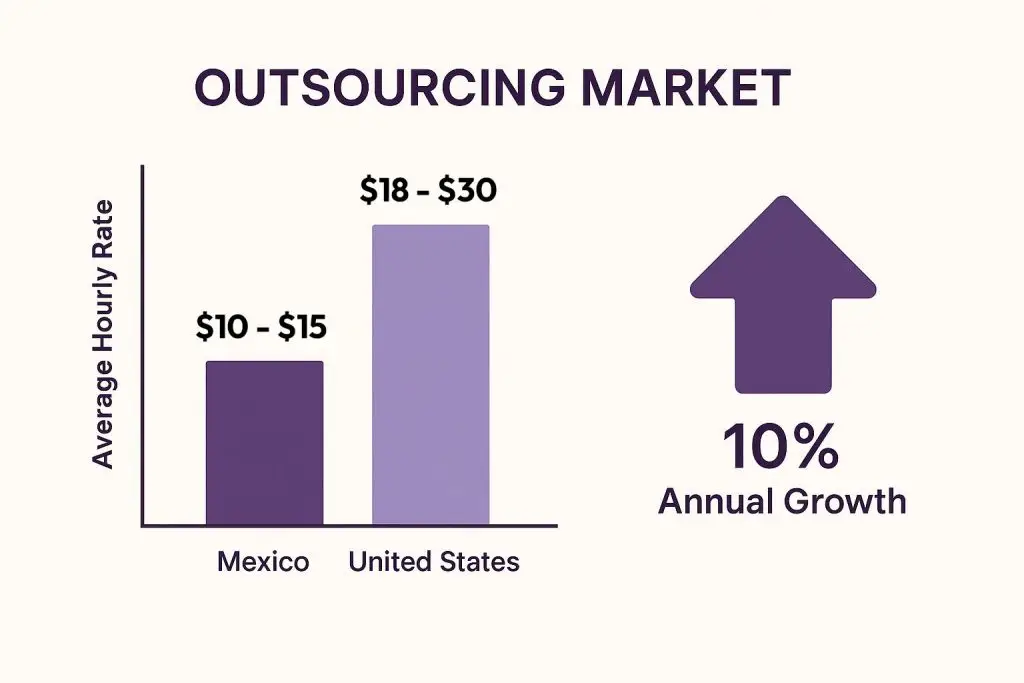
With labor costs often 40% to 60% lower than what you’d pay for equivalent talent in the U.S., Mexico offers exceptional value without compromising on quality. For a deeper dive into the specifics, you can explore detailed insights about outsourcing work to Mexico.
“Outsourcing to Mexico transformed our support from a cost center into a strategic asset for growth and customer loyalty.”
Here at CallZent, we’ve witnessed this transformation firsthand. We’ve helped businesses build powerhouse teams that deliver tangible results. The secret lies in finding a partner that does more than provide a service—they must integrate seamlessly into your company culture.
This visual breaks down the dramatic cost difference and market growth fueling the trend of outsourcing to Mexico.
The numbers are compelling. Businesses can achieve substantial savings while tapping into a rapidly expanding market. It’s a strategic move that balances financial prudence with high-quality operational performance, making it a go-to choice for companies looking to gain a competitive edge.
A Brief History and Today’s Landscape of Outsourcing in Mexico
Mexico’s rise as a nearshore outsourcing powerhouse didn’t happen overnight—it’s a story that spans decades and constantly adapts to global trends. The journey began back in the 1980s, when Mexican firms primarily provided basic manufacturing support to U.S. companies. That early groundwork attracted a surge of foreign investment throughout the ‘90s, especially as auto and electronics giants set up shop just across the border.
As cheaper manufacturing shifted towards China, Mexico didn’t skip a beat. Instead, the country doubled down on delivering higher-value services—especially customer support—for North American businesses eager to keep operations close to home without sacrificing quality or affordability. By the early 2000s, Mexico had firmly staked its claim as a nearshoring go-to, with an ever-expanding presence in IT, finance, and professional services.
Today, the country’s world-class infrastructure and sophisticated telecommunications network make launching and scaling outsourced teams a breeze. When you add in Mexico’s stable political environment and a labor force fluent in both English and Spanish, it’s no surprise that multinational brands like IBM, Accenture, and Teleperformance call Mexico their nearshore home base. And it’s not just about tech—the talent pool extends deep into data analytics, cybersecurity, and AI.
In short: Mexico delivers a blend of reliability, cost savings, and cross-cultural expertise that’s tough to match. All of these factors are driving companies to look past distant shores and build winning partnerships right next door.
What’s Fueling Mexico’s Momentum in the Global BPO Scene?
So, what exactly puts Mexico in the global spotlight for business process outsourcing? For starters, industry giants like PwC have singled out Mexico for its robust digital infrastructure, making it a prime choice for companies ready to shift operations closer to home. But the story doesn’t end with the tech.
Mexico’s edge comes from three key strengths:
- A highly skilled, bilingual talent pool ready to engage seamlessly with North American customers.
- Competitive labor costs—offering world-class expertise without the sticker shock.
- Cultural and time-zone alignment with the U.S. and Canada, making collaboration as effortless as a morning meeting over coffee.
This convergence of factors means companies aren’t just outsourcing—they’re upgrading their customer experience and operational agility, all while maintaining close ties and genuine integration with their core teams. It’s not a coincidence that international benchmarks are shining a spotlight on Mexico; it’s a direct result of sustained investment in talent, technology, and regional accessibility.
The Hidden Trade-Off: Operational Control with Traditional BPO Solutions
It’s tempting to think that outsourcing is a silver bullet for leaner operations and lower costs—but not all outsourcing models are cut from the same cloth. Classic, offshore BPO solutions, while widely used by major brands like IBM and Accenture, often come with an unexpected compromise: diminished control over your day-to-day processes.
Here’s where the challenge appears:
- Limited Visibility: Once you hand over your operations to a traditional BPO provider, you may find it harder to monitor quality and performance in real-time.
- One-Size-Fits-All Approach: Many legacy BPOs operate on rigid systems that don’t always adapt well to your unique workflows or evolving requirements.
- Barriers to Culture Integration: With teams often separated by time zones, language, and management layers, your company culture—and even your brand voice—can get lost in translation.
- Slower Feedback Loops: Making operational tweaks or implementing new procedures can drag out, since changes need to filter through external hierarchies.
In short, while the cost savings are tangible, traditional BPO often means relinquishing a level of control and agility—two ingredients essential for companies that want to move fast and stay close to their customers.
This is exactly why many organizations are pivoting toward nearshore solutions that keep you firmly in the driver’s seat, blending cost efficiency with the transparency and flexibility your business demands.
Navigating the Realities: Key Challenges When Outsourcing to Mexico
No business decision comes without its hurdles—outsourcing included. While Mexico shines as a nearshore powerhouse, it’s important to step in with eyes wide open about a few obstacles you’re likely to encounter along the way. The right approach and a strategic partner can make all the difference, but let’s demystify what to expect so you’re set up for success from day one.
1. Legal and Regulatory Hurdles
First up: the legal landscape. Doing business in Mexico means working within a different (and sometimes dizzying) regulatory framework. Labor laws there are notably protective—think guaranteed paid leave, mandatory contributions to social security and pension plans, and employee rights that may be unfamiliar if you’re used to navigating U.S. statutes.
Don’t forget the tax codes either—they’re intricate, and compliance can feel like a puzzle. Add in tougher health and safety standards, with regulations that in many industries surpass those in the U.S., as well as rigorous environmental rules in sectors like manufacturing and waste management. In short: it pays to have seasoned legal and compliance experts on your side so you won’t get tripped up by fine print.
2. Bridging the Culture Gap
Beyond process and paperwork, embracing the culture is just as crucial. While Mexico’s workforce often brings bilingual—and even bicultural—strengths to the table, there are nuances in business etiquette, communication styles, and values.
Personal relationships matter deeply. Face-to-face interactions and trust-building are often stepping stones to doing business, sometimes resulting in a slower decision-making rhythm than the direct, pace-pushing style common north of the border. Consensus and consultation are prized, meaning negotiations might take a little longer—but the rewards for patience can be substantial.
English is widely used in professional settings, but don’t assume universal fluency or identical expectations for business communication. Investing in cross-cultural training and seeking local insights can be a game-changer; alternatively, connect with partners who already know how to bridge these divides.
Setting the Stage for Success
Addressing these challenges is less about avoidance and more about adaptation. Whether it’s staying ahead of compliance changes, developing robust in-country operations protocols, or doubling down on cross-cultural savvy, the most successful companies are those that treat these complexities as opportunities for deeper integration—not barriers to entry.
With a thoughtful approach and the right local expertise in your corner, the risks are manageable—and the rewards within reach.
Navigating Mexico’s 2021 Labor Law Amendment: What’s Changed for Outsourcing?
But here’s a twist that every business leader should have on their radar: the landscape of outsourcing in Mexico was fundamentally reshaped by a major legal overhaul in 2021. When President Andrés Manuel López Obrador signed the Labor Reform Amendment into law, it wasn’t just legislative fine print—it was a game-changer for how outsourcing operates across the country.
So, what does this mean for your outsourcing plans? Let’s cut through the legal jargon and highlight what actually changed:
- Redefined What Can Be Outsourced: Companies must now clearly state their primary, “core” business activities. Only specialized services outside of these core activities can be outsourced. In other words, you can’t simply subcontract your company’s bread-and-butter work—you’ll need to keep that expertise in-house.
- Stronger Worker Protections: The reform took a hard look at employee rights, providing enhanced safeguards like improved unionization options and stricter health and safety standards. For those operating in sectors like maquiladoras, these new rules raise the bar on employee well-being.
- Profit-Sharing Now Standard: Mexican outsourcing firms are now required to share a portion of profits with staff, mandating a 10% share of taxable income (with a cap of three months’ salary per employee). This levels the playing field and ensures workers share in business success.
- Crystal-Clear Compliance Rules: The amendment clarifies the administrative maze, laying out exactly how companies must register with the Ministry of Labor and handle compliance with Social Security and related laws.
What’s the practical upshot? Partnering with a seasoned, compliant outsourcing provider—think industry leaders who were already prepared for these changes, like IBM or PWC—means you don’t have to lose sleep over complex regulatory hurdles. Instead, you can focus on leveraging Mexico’s nearshore advantages, knowing your operation ticks every compliance box.
Navigating the Realities of Remote Oversight
Of course, the nearshore model isn’t without its own set of operational hurdles. Relying on an outsourced manager or director in another country introduces complexity—no matter how aligned your business objectives may be. You’re putting a lot of trust in someone not just to run day-to-day operations, but to maintain the performance, culture, and direction of your remote team.
Some common challenges can include:
- Bridging Strategic Alignment: Communication gaps may surface, especially if your partner doesn’t fully grasp the nuances of your business vision or company values. Effectively translating your goals into on-the-ground action requires more than just fluent English—it demands a shared sense of purpose and long-term partnership.
- Balancing Oversight and Autonomy: You’ll be depending on a remote leader to relay the pulse of your operation, flag challenges early, and drive quality improvements. If their leadership style or reporting cadence doesn’t mesh with your expectations, bottlenecks or blind spots can arise.
- Ensuring Accountability: When your core team is distant from daily execution, it’s easy for small issues to snowball if not caught early. Clear reporting structures and regular performance metrics are essential to keep everyone marching in sync.
In short, the key to minimizing these hurdles is choosing a partner who not only excels operationally, but also acts as an extension of your leadership team—someone as invested in your outcomes as you are.
Unpacking the Financial Benefits of Outsourcing in Mexico
“Cost savings” is the phrase that grabs attention, but what does it actually mean for your bottom line? The financial advantages of outsourcing in Mexico go far beyond lower hourly wages. It’s about optimizing your entire operational budget to free up capital for what truly drives your business forward: growth and innovation.
When you compare the true cost of an in-house U.S. employee to a nearshore agent in Mexico, the picture becomes undeniably clear. A salary is merely the tip of the iceberg.
The Fully-Loaded Cost: A Clearer Comparison
To understand the real savings, you must look at the fully-loaded cost of an employee. This includes every expense associated with hiring and retaining team members.
Consider the hidden costs of a single U.S.-based call center agent:
- Recruitment Overhead: Fees for job postings, recruiters, background checks, and the countless internal hours spent on interviews.
- Salaries and Benefits: It’s not just the competitive wage. It’s also expensive health insurance, 401(k) matching, and paid time off.
- Infrastructure Costs: You are responsible for office space, utilities, high-speed internet, and costly software licenses for every agent.
- Training and Development: Onboarding and continuous training represent significant investments of both time and money.
When you partner with a nearshore provider in Mexico, these complexities are consolidated into a single, predictable fee. Your partner manages all recruitment, benefits, and infrastructure, simplifying your budget and significantly reducing financial risk. Our call center solutions are designed to deliver precisely this kind of transparency and financial impact.
How BPO Solutions Deliver Seamless Operations with Maximum Control
So, how do Business Process Outsourcing (BPO) solutions help companies expand full-time teams without losing their grip on quality or running into unwanted risk? It boils down to a combination of smart structure and strategic partnership.
With the right nearshore BPO partner, you retain full operational visibility and oversight—think of it as extending your headquarters across the border, not handing off control. Flexible service agreements allow you to scale teams up or down depending on business needs, all while maintaining consistent standards, workflows, and KPIs.
Because BPO providers handle recruitment, compliance, payroll, and HR headaches, you’re shielded from the risks and unpredictable costs of navigating complex local regulations or sudden spikes in demand. And with built-in reporting tools and transparent SLAs—much like what Fortune 500 companies demand from their call centers in Mexico City and Guadalajara—you’re always in the driver’s seat, making data-backed decisions in real time.
In short, a well-chosen BPO partnership empowers you to grow full-time operations with less financial exposure, rock-solid governance, and all the agility you need to stay ahead of the curve.
“True cost savings aren’t just about a lower wage. They’re about eliminating the hidden operational expenses that drain your budget and redirecting that capital toward innovation and market expansion.”
A Real-World Financial Scenario for Outsourcing in Mexico
Let’s make this tangible. Imagine an e-commerce company with a 100-person customer support team in the United States. The average fully-loaded cost for each agent could easily be around $55,000 per year. That’s a $5.5 million annual operating cost.
Now, shift that same operation to a nearshore partner in Mexico. The fully-loaded cost per agent could drop to about $30,000 per year. Suddenly, the total annual cost is $3 million.
That single strategic move generates $2.5 million in annual savings. This isn’t just a number on a spreadsheet; it’s fresh capital you can reinvest directly into the business.
With those funds, the company could:
- Launch an aggressive new marketing campaign.
- Invest in R&D to innovate past competitors.
- Expand into new international markets.
- Upgrade their technology stack for an even better customer experience.
This is the true power of outsourcing in Mexico. It’s not just about trimming costs—it’s about fueling your company’s growth engine.
Beyond Call Centers: Mexico’s High-Growth BPO Market
If your image of outsourcing is a large room of agents handling basic calls, it’s time for an update. The reality of outsourcing in Mexico today is a dynamic, modern, and rapidly expanding ecosystem. The country’s Business Process Outsourcing (BPO) and IT services sectors are attracting major global players looking for high-value, complex operational support.
This is not the outsourcing industry of a decade ago. We are talking about a sophisticated environment where innovation, technical skill, and strategic partnerships are the norm. This evolution is fueled by significant investments in infrastructure and a deep talent pool, making Mexico a powerhouse for more than just traditional support.
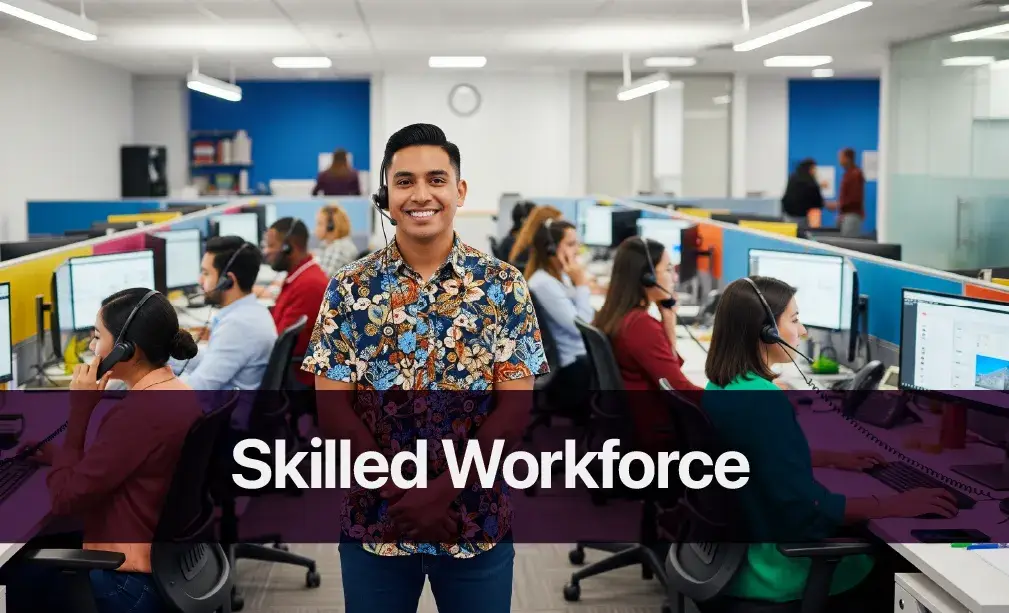
Flexible, Tailored Solutions—Not One-Size-Fits-All
Modern nearshore providers in Mexico have moved beyond rigid, cookie-cutter models. Today’s BPO solutions offer flexible, tailored approaches that can be customized to fit your unique workflows and business objectives. Companies can now design and directly manage dedicated teams, ensuring alignment with their culture, values, and quality standards—without losing the operational oversight that keeps things running smoothly.
Rather than settling for temporary staffing or detached teams, businesses are building long-term, integrated partnerships with their Mexican BPO providers. This shift guarantees consistency, quality, and the ability to scale up or down as your business needs evolve.
In other words, outsourcing in Mexico now means true collaboration: you retain visibility, control, and integration, while leveraging world-class talent and operational efficiency. This is the new face of outsourcing—one that supports innovation and drives sustainable business growth.
How Flexible BPO Service Solutions Supercharge Business Growth in Mexico
If you’re accustomed to rigid, cookie-cutter outsourcing models, it’s time to rethink what’s possible in Mexico’s BPO landscape. Modern flexible BPO services now put the power firmly back in your hands, letting you expand operations without surrendering control or compromising your brand.
Here’s how these next-gen solutions drive smarter, faster business growth:
1. Total Control, Seamless Integration
With flexible models, you aren’t just handing off a process—you’re designing an extension of your business. You retain the ability to define workflows, set performance standards, and make critical hiring decisions. Your new teams are built to mirror your company culture and integrate smoothly with your existing operations. Think of it as setting up a branch office, only faster, less costly, and without the headaches.
2. Access to Highly Skilled, Culturally Aligned Talent
The days of “any warm body” hiring are over. Mexico’s competitive BPO sector boasts a deep pool of bilingual, tech-savvy professionals skilled in everything from engineering and program management to marketing and healthcare administration. Rigorous recruitment ensures your talent fits—not just in terms of expertise, but also attitude and values.
3. Zero Infrastructure Hassles
No need to invest in office space, equipment, or IT infrastructure. Nearshore partners absorb these costs, providing turnkey environments that are ready on Day One. This keeps your capital free for initiatives that drive growth while ensuring your new team enjoys reliable connectivity and state-of-the-art tools.
4. Rapid, Customizable Scaling
Whether you need to launch a two-person back-office team or stand up a full global capability center, flexible solutions let you ramp up (or down) with precision and speed. Standardized onboarding processes and close alignment with your workflows mean new hires can start delivering value almost immediately—no long learning curves, no wasted time.
5. Full Visibility and Real-Time Communication
Modern BPO partnerships emphasize transparency. You’ll be able to monitor performance, communicate with your team in real time, and maintain oversight as if your nearshore operation were simply another floor in your own HQ. This operational visibility reduces risk and ensures consistent quality.
6. Fuel for Innovation and Competitive Edge
By taking operational tasks off your plate—yet keeping them tightly connected to your business—you free up resources and attention for what really matters. That means you can reinvest the savings into marketing, product development, customer experience, or expansion into new markets.
A Strategic Advantage Built for Today
Don’t just take our word for it. Reports like PwC’s Global Business Services Index spotlight Mexico for its robust digital infrastructure, time-zone convenience, and skilled workforce. The result? Companies shifting operations nearshore see both quality gains and cost reductions—sometimes achieving both better customer outcomes and millions in savings annually.
In the new era of outsourcing, flexible BPO solutions empower you to grow confidently and competitively—on your terms, at your pace, and with the kind of control, agility, and transparency that today’s fast-moving markets demand.
Flexibility: The Secret Ingredient in Modern BPO Solutions
In the fast-evolving world of outsourcing, adaptability has become non-negotiable. The days of rigid, cookie-cutter BPO models are over; today’s high-performing businesses demand solutions that are as unique as their own operations.
Why does flexibility matter so much? For starters, it allows companies to create teams that mirror their internal processes, values, and service standards—without compromise. By customizing every aspect of your outsourced team, from workflows to quality benchmarks, your organization ensures seamless integration with existing operations while maintaining full control and oversight.
But the advantages go deeper:
- Access The Exact Talent You Need: Flexible BPO models let you source, screen, and develop talent that’s not just technically qualified, but also a cultural fit—think Silicon Valley-level engineers, multilingual sales pros, or skilled account managers who just get your business.
- Expand Without the Overhead: Forget expensive office leases or hardware investments. Scale up (or down) as market demands shift, all without missing a beat or tying up capital.
- Stay Nimble in a Volatile Business Climate: With a flexible approach, you can respond to growth opportunities or changing customer expectations in real time. Need to move your support from basic troubleshooting to advanced analytics? No problem—your team can pivot with you.
In practice, companies leveraging these tailor-made BPO solutions have seamlessly recruited for everything from business development to operations management—proving just how versatile and powerful a flexible outsourcing partnership can be.
Ultimately, flexibility isn’t just a nice-to-have in outsourcing. It’s what allows businesses to remain innovative, responsive, and laser-focused on growth in a world where agility is the ultimate competitive frontier.
The Expanding Scope of Outsourcing Services in Mexico
While excellent customer service remains a core strength, Mexico’s BPO market has diversified significantly. The industry now excels in specialized services that require deep technical knowledge and sharp analytical skills.
Key growth areas include:
- Advanced Technical Support: Multi-tiered IT support for complex software, hardware, and enterprise systems. A real-world example is a SaaS company outsourcing its Tier 2 and Tier 3 technical support to a team in Guadalajara, allowing its in-house engineers to focus on new product development.
- Data Analytics and Insights: Analyzing large datasets to provide business intelligence, monitor performance, and inform strategic decisions.
- Software Development and QA: Full-cycle application development, including coding, testing, deployment, and maintenance.
- Complex Back-Office Processing: Handling intricate tasks like financial reconciliations, insurance claims processing, and regulatory compliance.
But the evolution doesn’t stop there. The versatility of Mexico’s talent pool means companies are now successfully outsourcing a much broader array of roles—far beyond traditional call center or tech support functions. Businesses are recruiting for positions such as Business Development, Engineering, Account Management, Business Administration, Operations Managers, and Program Management, all leveraging the expertise available in Mexico.
Whether you’re looking for Program Managers to oversee cross-border projects, Marketing Coordinators to drive your brand’s regional presence, Recruiters to scale your team efficiently, or Healthcare Admin Support to manage sensitive information, the Mexican BPO landscape has matured to deliver. This flexibility enables companies to scale with the right professionals at the right time, supporting core business objectives while maintaining quality and compliance.
Human Resources: Beyond the Basics
So, what HR functions can you actually outsource to providers in Mexico? The answer is: far more than just basic paperwork. Today’s Mexican HR partners act as true extensions of your in-house team, handling a wide spectrum of responsibilities that free up your internal resources and sharpen your organization’s focus.
Some standout HR services you can confidently delegate include:
- Recruitment and Talent Acquisition: Local experts manage everything from sourcing top candidates to coordinating interviews and onboarding, ensuring you tap into Mexico’s deep well of skilled professionals for both high-volume and niche roles.
- Payroll and Benefits Administration: Stay compliant with local tax laws and labor regulations as seasoned HR providers process payroll, manage benefits, and handle complex issues like bonuses, deductions, and employment contracts—all with market-leading accuracy.
- Employee Training and Development: Ongoing skill-building is key to retention and performance. Mexican outsourcing partners design and deliver custom training programs, leadership workshops, and compliance refreshers, so your team stays up to speed.
- Performance Management: Third-party HR teams oversee performance reviews, maintain employee records, and help establish systems for feedback and goal tracking, making continuous improvement a reality across your workforce.
In short, outsourcing HR through well-established Mexican providers can transform routine administration into a strategic advantage—supporting growth, maintaining compliance, and unlocking efficiencies for businesses of any size.
What Makes a Client-Centric BPO Model Stand Out?
So, what does it really look like when outsourcing partners in Mexico design their services around the needs of your business, rather than forcing you to fit into a rigid, one-size-fits-all mold? The best-in-class BPO models put transparency, flexibility, and control in your hands, so your brand experience and culture translate seamlessly—no matter where your team sits.
Here’s what sets a truly client-focused BPO approach apart:
- True Operational Visibility: You get full, real-time insight into your team’s performance, KPIs, and day-to-day workflow—everything you’d expect from managing your own in-house group.
- Recruitment Aligned With Your Brand: Talent sourcing and screening are tailored not just for technical chops, but for the softer skills that match your mission, values, and customer expectations.
- Rapid, Flexible Launch: Proven onboarding frameworks enable you to ramp teams quickly and adjust capacity as your needs evolve—without months of hand-holding or red tape.
- Cultural and Process Integration: Your offshore or nearshore talent is woven directly into your business systems, communication channels, and SOPs. For your customers, it feels like an extension of your core team, not a distant satellite.
- Full Control, Zero Headaches: You get to keep the strategic decisions and brand standards in-house, while the outsourcing partner handles infrastructure, compliance, and local HR complexities.
This kind of client-first outsourcing framework turns the typical BPO arrangement on its head—putting you in the driver’s seat while handling everything behind the scenes that would otherwise slow you down.
Laying the Groundwork: Essential Elements for Outsourcing Success
So, how do you set the stage for a truly productive partnership with your outsourcing provider? It starts by equipping your team—on both sides of the border—with the resources and expertise needed to hit the ground running.
Core Knowledge Transfer: Arm your outsourcing partner with a robust training curriculum, detailed process documentation, and a centralized knowledge base. Think of this as your company’s playbook; it ensures everyone is aligned, informed, and ready to tackle customer challenges with confidence.
Business Process Clarity: Clear, well-mapped workflows and defined expectations are your compass. By outlining key responsibilities, escalation paths, and required business applications, you give your extended team the structure they need to operate efficiently and deliver consistent results.
On-the-Ground Expertise: Involve your internal subject matter experts (SMEs) early and often during implementation and training. Their real-world insights, troubleshooting acumen, and hands-on guidance are invaluable for setting standards, smoothing wrinkles, and empowering the offshore team to represent your brand authentically from day one.
By laying this solid foundation, you don’t just outsource tasks—you build a high-performing, fully integrated extension of your team that’s equipped to deliver on your standards and exceed customer expectations.
Why Clear Communication Sets the Stage for Outsourcing Success
Establishing open, candid lines of communication with your outsourcing partner isn’t just a checkbox—it’s the linchpin for a high-performing relationship. When you set clear expectations from the get-go—defining roles, accountability, and deliverables—both you and your BPO team can hit the ground running and avoid missteps down the line.
A few best practices for fostering that transparency:
- Detailed Agreements: Make sure all responsibilities, service levels, and KPIs are outlined upfront. This clarity keeps everyone rowing in the same direction.
- Regular Syncs: Schedule consistent touchpoints (not just annual reviews) to celebrate wins, identify roadblocks, and refine goals together.
- Two-Way Feedback: Encourage an environment where feedback flows both ways. This builds trust and ensures your outsourcing team remains aligned as your business evolves.
Ultimately, when everyone is on the same page, your Mexico-based team genuinely becomes an extension of your own organization—working in lockstep to deliver real results.
How Industry Adoption Proves the Value of Outsourcing in Mexico
The true measure of Mexico’s BPO maturity is the caliber of companies that rely on its services. Major players in high-stakes industries are successfully partnering with Mexican firms.
For instance, the fast-paced fintech industry outsources everything from fraud detection to customer onboarding, relying on partners who understand the need for airtight security. Healthcare providers entrust Mexican BPOs with sensitive patient data for scheduling and billing, all while maintaining HIPAA compliance. The automotive sector leverages these services for supply chain management and customer relations.
Partnering with a modern Mexican BPO isn’t just about saving money anymore. It’s a strategic move to access specialized talent and drive operational excellence.
At CallZent, we have extensive experience supporting these demanding sectors. We understand the unique challenges and compliance requirements involved. To see how we tailor our services, explore the industries we serve.
The market data tells a clear story of a booming industry. The BPO market in Mexico was valued at around $5.5 billion in 2024 and is projected to reach nearly $7 billion by 2029. The IT outsourcing sector is growing even faster. For more data, you can discover more insights about Mexico’s outsourcing trends. This sustained growth reflects global business confidence in Mexico as a long-term, strategic partner.
Building a Custom BPO Solution for Your Unique Growth Strategy
Gone are the days when outsourcing was just a one-size-fits-all solution. Today, organizations seeking true business growth must craft tailored BPO strategies that support not only operational efficiency but also their long-term vision and brand values. If you’re considering how to get started, here’s how leading companies are successfully building BPO solutions that mirror their unique needs.
1. Start With Your Blueprint: Map Out Your Specific Needs
Every high-growth business is different, so begin by defining exactly what you want to achieve—whether that’s scaling technical support, expanding data analytics capabilities, or optimizing back-office processes. Consider what functions will drive your growth and how external teams can complement your in-house talent.
2. Prioritize Cultural and Operational Alignment
Look for partners that emphasize not just technical proficiency but also a deep cultural fit with your organization (think of how global leaders like Microsoft or American Express expect their values reflected in every customer interaction). That means developing recruitment and onboarding processes with tailored screening for soft skills, work culture, and language fluency.
3. Retain the Control That Matters Most
Modern BPO approaches give you full visibility and input throughout recruiting and ongoing operations. You’ll have a say in selecting candidates, defining workflows, and establishing quality benchmarks—ensuring your nearshore teams feel like a true extension of your business rather than an external resource.
4. Leverage Flexible Infrastructure and Rapid Scaling
One of the biggest advantages of today’s outsourcing landscape—especially in places like Monterrey and Guadalajara—is the ability to scale up or down quickly, without the hefty investment in real estate or technology. Global brands routinely use this flexibility to enter new markets, test new offerings, or respond to seasonal spikes with agility.
5. Focus on Seamless Integration
To unlock the true potential of a custom BPO solution, new hires must integrate effortlessly with your existing systems, tools, and processes. This means providing unified communication platforms, shared project management tools, and clear documentation. Efficiency goes up, silos come down, and your teams—across borders—function as a cohesive unit.
Custom Solutions That Grow With You
Organizations from fintech giants to healthtech innovators are moving beyond traditional outsourcing models. By actively shaping their BPO strategies—choosing the right roles to outsource, driving culture-first recruitment, maintaining operational oversight, and ensuring seamless integration—they’re building teams in Mexico and beyond that deliver not just support, but strategic value and competitive edge.
Navigating and Overcoming Outsourcing Challenges in Mexico
Every growth story comes with its own set of obstacles, and outsourcing is no exception. While Mexico offers immense potential, companies may face bumps on the road—from navigating local regulations to bridging cultural differences.
Here’s the good news: the most successful organizations don’t view these challenges as roadblocks, but as signposts pointing the way to sustainable, long-term partnerships. Here’s how they get ahead of the curve:
- Building Strong Foundations: Leading companies invest upfront in developing comprehensive onboarding and operational playbooks that clearly outline responsibilities, KPIs, and escalation protocols. This clarity sets the stage for smooth operations from day one.
- Bridging Cultural Gaps: Effective cross-cultural collaboration doesn’t happen by accident. Top-performing teams prioritize ongoing language and cultural training, invest in relationship-building activities, and leverage experienced local consultants who can guide U.S. teams through Mexico’s unique workplace dynamics.
- Proactively Addressing Compliance: From labor laws to data privacy standards, regulatory requirements can differ significantly. Successful partners stay ahead by routinely consulting legal experts and deploying compliance management systems tailored to cross-border operations.
- Maintaining Open Lines of Communication: Regular check-ins, transparent reporting, and unified communication channels keep both in-house and outsourced teams aligned. Many organizations also designate “culture champions” or liaisons on both sides to foster mutual understanding.
Whether you’re a Fortune 500 veteran or a scaling disruptor, the takeaway is clear: with a thoughtful plan, the right local guidance, and a commitment to partnership, your company can turn potential pitfalls into pathways for collaboration and growth.
Tapping Into Mexico’s Elite Bilingual Talent Pool
While cost savings are a significant draw, the true competitive advantage of outsourcing in Mexico lies in its people. You aren’t just filling seats; you are accessing a deep, well-educated, and culturally savvy talent pool ready to become your brand’s greatest advocates.
Mexico’s robust university system produces thousands of graduates each year with strong technical and business skills. These professionals enter the workforce with a solid understanding of global business practices and a genuine drive to succeed, making them ideal for challenging, customer-facing roles.
A Customer-First Mindset that Builds Loyalty
What truly sets the Mexican workforce apart is a natural, customer-first attitude. Agents are not just reading from scripts; they are empathetic problem-solvers who take ownership of customer issues. For any business focused on building loyalty and improving satisfaction scores, this is invaluable.
Imagine a frustrated customer contacts your support line. Instead of a robotic response, they connect with an agent in Mexico who actively listens, understands the cultural context of their frustration, and confidently guides them to a solution. That single positive interaction can transform a negative experience into a moment of brand loyalty, leading to higher CSAT and NPS scores.
“The true power of outsourcing in Mexico comes from agents who don’t just speak your customers’ language fluently but also understand their culture. This leads to more empathetic, effective, and human conversations that build lasting trust.”
A Thriving Hub for Bilingual Professionals
The bilingual talent in Mexico is a massive strategic asset. In major business hubs, a large portion of the professional population is fluent in both English and Spanish at a business-professional level. The experts on our team exemplify this high standard, effortlessly handling interactions for a diverse North American customer base.
This bilingual capability removes communication barriers and forges a more authentic connection with your customers. The numbers support this: Mexico’s IT services market is fueled by a local tech talent pool of around 800,000 skilled professionals. For a closer look, you can learn more about Mexico’s IT outsourcing landscape.
Key Outsourcing Hubs in Mexico and Their Specializations
| City | Primary Strengths | Key Industries Served |
|---|---|---|
| Tijuana | Proximity to the US, large bilingual talent pool, strong manufacturing base. | Customer Support, IT Services, Manufacturing, Logistics |
| Mexico City | Largest talent pool, diverse economy, major financial and tech hub. | Finance, Tech/Software Development, Media, BPO |
| Guadalajara | “Mexico’s Silicon Valley,” strong focus on tech and creative industries. | Software Development, IT, Electronics Manufacturing, Creative Design |
| Monterrey | Industrial powerhouse, highly educated workforce, strong business culture. | Manufacturing, Engineering, Financial Services, IT Support |
| Querétaro | Rapidly growing aerospace and automotive hub, excellent quality of life. | Aerospace, Automotive, IT, R&D |
By understanding these specializations, you can make a more strategic decision about where to build your nearshore team. Choosing outsourcing in Mexico means gaining a strategic partner backed by a world-class workforce ready to help you grow.
Data Security and Compliance When Outsourcing in Mexico
Handing over customer data and core business processes requires immense trust. It’s one of the biggest considerations for companies exploring outsourcing in Mexico. How can you be certain your sensitive information will be protected?
Outsourcing to a foreign company can introduce several perceived risks, such as losing direct control over critical business processes and work quality. As with any business partnership, it’s critical to work with a proven partner that has full security and compliance certifications, mitigating the potential risks associated with the sharing of confidential information and intellectual property.
The great news is that Mexico’s legal and security frameworks are designed for modern, secure business operations. Reputable BPOs operate with enterprise-grade security on par with what you’d expect in-house.

USMCA: A Solid Foundation for Secure Outsourcing
A key factor in this secure environment is the United States-Mexico-Canada Agreement (USMCA). This trade deal includes powerful protections for intellectual property and digital trade, creating a predictable legal landscape for U.S. and Canadian businesses. It means your data and IP are shielded by international law, making outsourcing in Mexico one of the safest nearshoring options available.
“True security goes beyond a signed contract. It’s about a partner’s demonstrated commitment to international compliance standards and a culture where data protection is everyone’s responsibility.”
Vetting a Partner: Look for Key Security Certifications
While legal agreements provide a foundation, day-to-day security depends on a BPO’s operational practices. Top-tier Mexican BPOs demonstrate their commitment by earning and maintaining internationally recognized security certifications.
These should be on your non-negotiable list:
- SOC 2 (Service Organization Control 2): A SOC 2 report proves a company has robust controls for security, availability, confidentiality, and data privacy.
- ISO 27001: The global gold standard for information security management, ensuring your partner has a comprehensive system for managing risks.
- HIPAA (Health Insurance Portability and Accountability Act): Mandatory for healthcare companies, this certification ensures a partner has the safeguards needed to protect sensitive patient information.
At CallZent, our entire operation is built around these standards. You can review our commitment to enterprise-grade security on our Compliance page.
Legal and Regulatory Requirements: What to Know Before You Outsource
Before you make the leap into outsourcing in Mexico, it’s crucial to get comfortable with the local legal environment. Every country has its own playbook—and Mexico’s is robust, with nuances that can directly impact your bottom line if not addressed upfront.
First, familiarize yourself with Mexico’s labor laws. These are generally more protective of employees than what you’ll find in many other countries. Expect regulations around paid leave, mandatory contributions to social security and pension funds, and formal onboarding and severance procedures. Labor compliance isn’t just a checkbox—it’s an ongoing commitment, and noncompliance can result in hefty fines or legal challenges.
Taxation is another area that requires serious attention. Mexico’s tax code is complex, with rules around income tax, value-added tax (VAT), and withholding taxes that may differ from U.S. or Canadian standards. It’s wise to engage a local tax specialist or a BPO partner experienced with international operations to ensure everything is reported and paid correctly.
Don’t overlook occupational health and safety rules, especially for manufacturing or logistics projects. Mexican authorities maintain high expectations for workplace safety, mandating not only protective equipment but comprehensive employee training and emergency preparedness measures.
If your outsourcing project touches sectors like manufacturing, waste management, or automotive, be prepared for strict environmental regulations. Compliance includes proper waste disposal, emissions controls, and regular environmental reporting.
In short, staying compliant isn’t just about avoiding penalties—it’s about ensuring a smooth, worry-free outsourcing experience. The right partner will have expertise navigating these requirements, helping you focus on growth rather than red tape.
Your Security Checklist for Vetting an Outsourcing Partner
Use this checklist to ensure you choose a partner who takes security seriously.
- Physical Security: Are facilities monitored 24/7 with controlled access (keycards, biometrics)? Are there strict policies against personal devices on the production floor?
- Cybersecurity: Do they use encrypted networks, secure VPNs, and advanced firewalls? Do they conduct regular vulnerability assessments?
- Data Handling: How is sensitive data stored, accessed, and destroyed? Do all employees undergo regular security training and background checks?
By asking these tough questions, you can move forward with outsourcing in Mexico with complete confidence.
Your Blueprint for a Successful Launch in Mexico
Turning the idea of outsourcing into a functioning operation requires a clear, strategic plan. A successful launch in Mexico needs a solid foundation built on clear goals, thorough vetting, and open communication.
Step 1: Define Your Business Goals
Before searching for partners, define what success looks like for your business with specific KPIs.
- Financial Example: Reduce per-interaction costs by 30% within the first year.
- Operational Example: Decrease customer wait times to under 60 seconds and expand support coverage to 24/7.
- Quality Example: Achieve a Customer Satisfaction (CSAT) score of 95% or higher.
Step 2: Conduct Rigorous Due Diligence
Finding the right partner is about more than comparing price quotes. You are looking for a provider that aligns with your company culture and meets your security standards.
- Site Visits: If possible, visit their facilities to see the work environment and infrastructure firsthand.
- Reference Checks: Speak with their current and former clients. Ask about the transition, communication, and how challenges were handled.
- Security Audits: Verify their compliance certifications like SOC 2 or ISO 27001 and review their data security protocols.
Dig Deeper: What Makes a Strong Outsourcing Partner in Mexico?
Outsourcing to Mexico unlocks major advantages: access to a skilled, educated workforce, competitive labor costs, robust infrastructure, and close proximity to the US. But to fully leverage these benefits, you need more than a surface-level assessment.
- Workforce Quality: Look for partners with proven experience in your industry and a track record of attracting and retaining top talent.
- Operational Strength: Evaluate their technical capabilities, management practices, and ability to scale with your needs.
- Cultural Alignment: Prioritize providers who demonstrate an understanding of your business values and goals, ensuring seamless collaboration.
- Local Expertise: Partners with deep local knowledge can help you navigate regulatory requirements and optimize operations within Mexico’s unique business landscape.
Thorough due diligence now sets the stage for a successful, long-term partnership—one that goes beyond transactional benefits and truly supports your growth.
Step 3: Create a Cultural Integration Plan
Treat your nearshore team as an extension of your in-house staff to build a unified “one team” culture.
“The most successful outsourcing relationships are built on a foundation of shared culture and mutual respect. When your nearshore team feels valued and connected to your mission, their performance reflects that commitment.”
To truly achieve this, go beyond simple introductions—focus on creating operational cohesion and transparency from the start.
Actionable steps include:
- Shared Onboarding: Include nearshore team leads in the same onboarding as your domestic employees. This sets clear expectations and fosters a sense of belonging from day one.
- Cross-Team Collaboration: Schedule regular video calls to build personal connections and open channels for real-time communication. Treat your nearshore team meetings with the same importance as those with your in-house staff.
- Brand Immersion: Ensure the team in Mexico deeply understands your brand voice, values, and customer promises. Provide access to the same training materials, guidelines, and knowledge bases that your internal teams use.
- Recruitment with Purpose: Collaborate with your provider to ensure that the hiring process focuses not just on skills, but on securing professionals who align with your company’s mission and values.
- Seamless Integration: Structure processes so new hires use your existing systems and workflows, just like your in-house employees. This operational consistency minimizes friction and keeps your standards high.
- Real-Time Visibility: Implement tools and reporting practices that give you transparency into your nearshore team’s progress and challenges, allowing you to address issues quickly and celebrate shared wins.
By prioritizing these integration steps, you lay the groundwork for a high-performing, cohesive team—no matter where they sit.
Ready to put your plan into action? Let our experts help you build a blueprint tailored to your needs. Schedule a consultation with CallZent today to start your journey.
Common Questions About Outsourcing in Mexico
Making a major business move like outsourcing naturally comes with questions. Let’s address the most common ones.
What are the main cultural differences to be aware of when outsourcing in Mexico?
The Mexican workplace culture is built on respect, collaboration, and a strong desire to serve. Teams are often highly loyal and dedicated. The primary “adjustment” for U.S. managers is adapting to a more polite and less direct communication style. A practical tip is to always provide feedback respectfully and invest time in building personal relationships, which strengthens professional collaboration.
How is my data and intellectual property protected?
Protection is twofold: legal frameworks and partner certifications. Legally, the USMCA provides robust protections for IP. Practically, your security comes from choosing a partner with verifiable certifications like SOC 2 and ISO 27001. These prove the provider has been audited and meets global data security standards.
Your data security isn’t just a promise; it should be a verifiable, certified reality. Never partner with a provider who cannot prove their compliance with international security standards.
What does a typical transition process for outsourcing to Mexico look like?
A well-managed transition is seamless and non-disruptive. It generally follows four phases:
-
- Discovery and Solution Design: We dive deep to understand your goals and design a custom solution. For example, for a retail client, we might design a blended team that handles both sales and service inquiries.
- Tailored Recruitment and Training: We recruit agents who fit your brand’s culture and train them on your specific products and processes. Our recruitment and screening process ensures every candidate not only brings the right technical skills but also fits your company values—making sure your new team feels like a true extension of your business. You stay in the driver’s seat for key decisions, including the final hiring call.
- Pilot Program: We launch a small, dedicated pilot team to test workflows and gather initial performance data. This flexible model allows you to maintain operational oversight while benefiting from local expertise and support.
- Full-Scale Launch: Once the pilot hits its KPIs, we scale the operation to full capacity with continuous quality assurance. This stage allows you to expand your service coverage without the burden of investing in new physical infrastructure.
With this approach, you can tap into highly qualified, culturally aligned talent—whether you need Business Development pros, Account Managers, Operations Managers, or even specialized roles like Engineering and Program Management. The transition isn’t just about moving tasks; it’s about building a team that understands your market and elevates your customer experience.
This structured approach ensures a successful start for your outsourcing in Mexico initiative.
Ready to Nearshore Smarter? 🇲🇽
See how CallZent helps U.S. companies cut costs, scale faster, and boost customer satisfaction with elite bilingual teams in Mexico.