Skip to content

Retail Customer Experience
Retail Customer Service:
The Revenue Engine Modern Brands Can’t Ignore
Discover how retail customer service drives sales, loyalty, and retention. Learn omnichannel strategies, KPIs, and nearshore solutions.
TL;DR — Quick Takeaways
- Shift the mindset: Retail customer service is a profit driver, not a cost center.
- Go omnichannel: Seamless experiences across web, social, and store increase loyalty.
- Track what matters: CSAT, NPS, and FCR reveal performance gaps and growth opportunities.
- Simplify returns: Easy returns increase repeat purchase intent.
- Scale smartly: Nearshore retail customer service reduces overhead while boosting quality.
Is your customer service actively winning you business, or is it silently costing you customers? In today’s cutthroat retail market, excellent retail customer service isn’t just a nice-to-have; it’s a powerful revenue driver and your strongest defense against churn. While products can be copied, a standout service experience is uniquely yours—a difference-maker that builds unbreakable loyalty.
 Why Modern Retail Customer Service
Is Your Greatest Asset
Too many retailers still treat customer service as a cost center—an unavoidable expense for handling complaints. That outdated view completely misses the opportunity. Every interaction, whether it’s a simple product question or a complex return, is a chance to strengthen your customer relationship and secure future sales.
The financial stakes are massive. Poor customer experiences put a staggering $4.7 trillion in global consumer spending at risk each year. The fallout is swift and unforgiving: research shows that 73% of consumers will switch to a competitor after just one bad experience, and 52% have already abandoned a brand due to poor service.
From Cost Center to Profit Center
Shifting your view of retail customer service from a cost to a strategic asset is a game-changer. Instead of just putting out fires, modern service teams focus on creating value.
This means your team becomes:
- Brand Ambassadors: They aren’t just answering emails; they are the living embodiment of your brand’s promise in every conversation. For example, an agent for a high-end fashion brand should exude sophistication and expertise, not just process a return.
- Sales and Retention Drivers: A great interaction directly influences whether a customer buys today and, more importantly, whether they return tomorrow. This is how you maximize customer lifetime value (CLV).
- Invaluable Insight Gatherers: Your service team is on the front lines, hearing what customers love and what they don’t. This feedback is gold for improving products, marketing, and your entire business strategy.
“Customer service isn’t a department; it’s an attitude. In retail, it’s the human element that transforms a transaction into a memorable experience, building the kind of loyalty competitors can’t replicate.”
This mindset turns your support channels into a genuine growth engine. A key part of this evolution is understanding the benefits of AI in customer service, which is revolutionizing how companies engage with their audience.
Ultimately, investing in high-quality support isn’t an operational expense—it’s a direct investment in your bottom line. An empowered, well-trained team is the key. To start, explore our guide on essential employee training tips for workplace success and see how developing your agents’ skills creates better customer outcomes. The most successful retailers know the truth: exceptional service is the most sustainable competitive advantage you can have.
How Great Retail Customer Service
Directly Drives Sales
You spend a fortune on your sales funnel—marketing creates awareness, ads generate clicks, and your website is optimized for conversions. But what happens after someone clicks “add to cart”? This is where many retailers drop the ball, failing to see that retail customer service is the final, most crucial step in the sales process.
Every support interaction is a high-stakes moment. It can either lock in a loyal, repeat customer for life or send them running to a competitor. A single positive experience—a quick answer, a smart product tip, an empathetic agent—doesn’t just save one sale. It lays the groundwork for countless future purchases, sending that person’s Customer Lifetime Value (CLV) soaring.
The Real-World Impact of Service Interactions
A happy customer doesn’t just buy again; they become your best (and cheapest) marketing asset. They leave glowing reviews, rave to friends and family, and defend your brand online. That word-of-mouth promotion is pure gold—it’s authentic, trustworthy, and something ad dollars can’t buy.
But the ripple effect works both ways. A negative interaction is just as powerful but far more destructive. One frustrating call, one unresolved issue, or one apathetic agent can erase all the goodwill you’ve built. That bad experience leads to lost sales, scathing reviews, and a tarnished reputation that takes years to repair.
Every customer interaction is a moment of truth where your brand’s promise is either fulfilled or broken.
This is a core principle we instill in every CallZent agent. They aren’t just trained to answer questions; they are taught to be brand ambassadors who understand this responsibility. When our agents represent your brand, their mission is to fulfill your promise and ensure every “moment of truth” strengthens the customer relationship—and your bottom line. To see how this applies online, read our guide to mastering customer support in e-commerce.
Turning Your Service Desk into a Profit Center
When your service team acts as an extension of your sales force, they transform from a reactive cost center into a proactive profit center. This requires a team skilled in communication, empathy, and creative problem-solving.
Here’s what this looks like in the real world:
- Proactive Problem-Solving: A customer receives a damaged item. Instead of just processing a return, the agent immediately ships a replacement and offers a small discount on their next order. The customer, initially angry, is now delighted and more likely to shop again.
- Consultative Upselling: A customer calls with a question about a basic coffee maker. A sharp agent answers it and, based on the conversation, recommends a higher-end model with features that better suit the customer’s stated needs. The inquiry becomes an upsell.
- Building Loyalty: A long-time customer has trouble with their loyalty points. The agent not only fixes the issue but adds a few bonus points to thank them for their business. This small gesture reinforces their value and solidifies their commitment.
Each example shows how expert retail customer service doesn’t just solve problems. It actively generates revenue, builds trust, and creates the loyalty that drives sustainable growth.
Proven Best Practices for Exceptional Retail Service
Knowing that great service drives sales is one thing. Implementing strategies that actually move the needle is another. This is your practical playbook for building a world-class retail customer service operation—actionable, proven methods that top retailers use to turn support into a growth engine.
Build a Truly Seamless Omnichannel
Retail Customer Service Experience
Today’s customers don’t think in channels; they just see your brand. A truly exceptional retail customer service strategy allows them to move fluidly between your website, mobile app, social media, and physical stores without friction or repetition. This is the heart of an omnichannel approach.
Imagine this practical example: a customer uses your website’s live chat to ask about a specific pair of shoes. Later, they visit your store. The associate pulls up that chat history on their tablet and says, “I see you were asking about these running shoes online. We have them in your size right here, and I can also show you the new insoles other runners have been loving.” That is a seamless, value-added experience.
This simple concept map shows the direct path from a positive interaction to a sale.
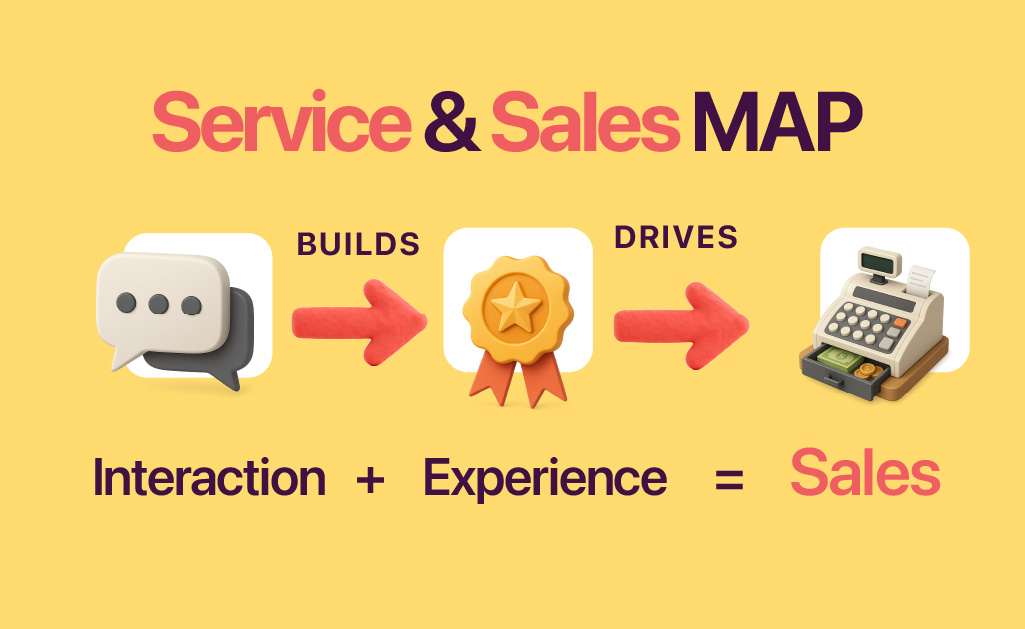
As you can see, each quality interaction builds a better customer experience, which in turn directly fuels sales. The journey from first contact to final purchase is a connected flow, not a series of isolated events.
But what separates a true omnichannel setup from a more basic multichannel one? Integration. While multichannel offers multiple ways to connect, omnichannel ensures those connections talk to each other, creating a single, unified conversation.
Omnichannel vs. Multichannel Support: What Retailers Need to Know
This table breaks down the crucial differences, highlighting why an integrated omnichannel strategy is the gold standard for modern retail.
| Feature | Multichannel Support | Omnichannel Support |
|---|---|---|
| Customer Experience | Disjointed and siloed. Customers often repeat themselves. | Unified and seamless. Conversation history follows the customer across all channels. |
| Channel Integration | Channels operate independently with no data sharing. | All channels are interconnected, sharing real-time data and context. |
| Agent Perspective | Agents have a limited view of the customer’s journey, confined to their channel. | Agents get a complete, 360-degree view of all customer interactions. |
| Business Focus | Brand-centric. Focus is on being available on multiple platforms. | Customer-centric. Focus is on creating a consistent, effortless journey for the shopper. |
Moving from multichannel to omnichannel is the leap from simply being available everywhere to being truly helpful everywhere. It’s a fundamental shift that puts the customer, not the channel, at the center of your universe.
Harness the Power of Hyper-Personalization
Personalization today goes far beyond using a customer’s first name in an email. It’s about using data to anticipate needs and offer tailored solutions—sometimes before the customer even knows they need them. This is hyper-personalization, and it’s a game-changer for retail.
By analyzing past purchases, browsing history, and support tickets, your agents can provide incredibly relevant assistance.
- Proactive Recommendations: If a customer previously bought a specific brand of coffee, an agent can let them know when a new blend from that brand is released.
- Anticipatory Support: If order tracking shows a delay, you can send an automated, empathetic message apologizing and offering a small discount on their next purchase—before they have a chance to complain.
- Customized Solutions: A customer who frequently buys eco-friendly products could be directed to a support agent specializing in your sustainable product lines.
“The best customer service is proactive. It’s about solving problems before they happen and delighting customers with a level of care they didn’t expect.”
This level of detail makes customers feel seen and valued, not just like another order number. It’s critical to improve ecommerce customer experience to ensure your brand feels cohesive no matter where people shop.
Turn Returns into a Retention Tool
Most retailers see returns as a logistical headache and a profit loss. But a smooth, hassle-free returns process can be one of your most powerful tools for building trust and securing loyalty. A difficult return is a fast way to lose a customer forever—in fact, 92% of consumers say they will buy again if the return process is easy.
A customer returning an item is already engaged with your brand. This is a critical opportunity to reinforce their decision to shop with you.
Here’s how to create a positive experience:
- Offer Multiple Options: Provide choices like in-store returns, pre-paid shipping labels, and drop-offs at partner locations. Convenience is key.
- Make it Simple: Don’t make customers jump through hoops. A simple online portal for initiating returns can make the process painless.
- Train for Empathy: Coach agents to treat a return not as a failure, but as an opportunity to help the customer find the right product.
By mastering these best practices, you create a service ecosystem that not only solves problems but actively builds relationships. Many of these strategies are central to our approach at CallZent. Learn more by exploring our overview of contact center best practices.
Measuring What Matters:
Key KPIs for Retail Customer Service
You can’t improve what you don’t measure. For retail, that old adage is gold. Data is your most reliable guide, and the right Key Performance Indicators (KPIs) reveal the true health of your customer service. These aren’t just numbers for a report; they are the vital signs that tell you where you’re succeeding and where you need to focus.
Understanding these metrics is the first step toward transforming your service from a reactive cost center into a proactive growth driver. It’s about making data-backed decisions that make customers happier and boost your bottom line.
Core Metrics to Track for Your Retail Customer Service
While you could track dozens of metrics, a few core KPIs offer the clearest picture of your performance. They measure customer sentiment, operational efficiency, and your team’s effectiveness.
Your essential retail customer service KPIs should include:
- Customer Satisfaction (CSAT): A direct pulse check on customer happiness. Usually measured with a post-interaction survey asking, “How satisfied were you with your experience?”, CSAT gives immediate feedback on a specific interaction. It helps you pinpoint star agents and areas needing more coaching.
- Net Promoter Score (NPS): This metric measures long-term loyalty by asking how likely a customer is to recommend your brand. A high NPS means you’re creating brand advocates who drive powerful word-of-mouth marketing.
- First Contact Resolution (FCR): This measures the percentage of issues resolved in the first interaction. A high FCR is a direct sign of efficiency and a massive factor in reducing customer frustration.
“A high First Contact Resolution rate doesn’t just mean your team is efficient; it means your customers can get back to their lives without hassle. That effortless experience is what builds unshakable loyalty.”
Each of these KPIs tells a different part of the story. CSAT captures the in-the-moment feeling, NPS predicts future growth, and FCR shows how effectively you’re solving problems. Together, they offer a holistic view of your service quality.
From Numbers to Actionable Insights
Tracking KPIs is only half the battle. The real value comes from turning those numbers into smart business decisions. For instance, a slipping CSAT score might signal a need for more agent training on a new product line. A low FCR rate could point to a gap in your knowledge base that’s preventing agents from finding answers quickly.
This is where a data-driven partner like CallZent becomes invaluable. We don’t just track metrics; we deliver transparent dashboards that turn raw data into actionable insights. We connect the dots, showing how an improvement in Average Handle Time can lower costs, or how a bump in NPS correlates directly with more repeat purchases.
For a deeper dive, explore our article to learn more about the most important KPIs in customer service and how to apply them. By focusing on the right data, you can stop guessing and start building a retail customer service strategy that delivers consistent results.
 The Strategic Advantage of
Nearshore Outsourcing for Retail Customer Service
Running a top-tier retail customer service team in-house is increasingly challenging. Retailers battle high overhead, the endless search for skilled agents, and the logistical nightmare of scaling for seasonal demand. On top of that, there’s a growing need for bilingual support to serve an increasingly diverse customer base.
These challenges are pushing more businesses to seek a strategic partner. This leads them to a critical choice: onshore, offshore, or nearshore? While onshore teams are expensive and offshore partners can create cultural and time-zone gaps, nearshore outsourcing has emerged as a powerful solution.
Unlocking the Nearshore Advantage for Your Retail Brand
The “nearshore advantage” delivers the perfect balance. It offers significant cost savings over US-based teams while maintaining the cultural alignment and time-zone compatibility lost with distant offshore locations. For retailers, this means higher-quality service without the sticker shock.
A nearshore partner like CallZent operates from a nearby country, such as our facility in Tijuana, Mexico. This proximity means agents share similar cultural touchstones and work the same business hours as your US customers, making every interaction feel natural and timely. It’s the ideal blend of cost-efficiency and quality.
Tangible Benefits of a Nearshore
Retail Customer Service Partnership
Working with a nearshore provider brings immediate, measurable results that solve the biggest retail pain points. Instead of getting bogged down by staffing and infrastructure, you gain a flexible, expert extension of your team.
Here’s what that looks like in practice:
- 24/7 Coverage to Capture Every Sale: In e-commerce, your doors never close. Nearshore teams offer round-the-clock support, ensuring you can help international shoppers and late-night buyers, turning browsing into sales at any hour.
- Access to a Bilingual Talent Pool: Serving both English and Spanish-speaking customers is a modern necessity. Nearshore hubs like Tijuana have a deep well of fluent, culturally savvy bilingual agents ready to support your entire customer base.
- Ultimate Flexibility for Seasonal Peaks: The holiday rush or a big product launch can swamp an in-house team. A nearshore partner lets you instantly scale your support staff up to handle the flood of inquiries, then scale back down without the HR headaches of hiring and layoffs.
“Strategic outsourcing isn’t about cutting costs; it’s about buying flexibility. A nearshore partner gives you the power to meet customer demand exactly when it happens, turning seasonal chaos into profitable opportunities.”
Consider a mid-sized apparel brand bracing for the holiday shopping frenzy. In the past, their small in-house team was overwhelmed, leading to long hold times and abandoned carts. By partnering with CallZent, they instantly added 50 trained agents for the peak season, effortlessly managing questions about orders and returns. Customer satisfaction soared, and they captured sales that would have otherwise been lost.
This model lets you trade high fixed costs for a predictable, scalable operating expense. To learn more about how we build expert teams for brands like yours, explore our nearshore outsourcing management services. The right partner is a strategic asset that will not only enhance your retail customer service but actively drive growth.
Your Top Retail Customer Service Questions Answered
Making a significant change to your customer service—whether implementing new tech or engaging a partner—is a major step. It’s natural to have questions. Here are the most common ones we hear from retailers, with straightforward advice to help you move forward confidently.
Can a small business really offer world-class service?
It’s a common myth that 24/7, world-class service is only for big-box giants. The truth is, it’s more accessible than ever, especially for small and medium-sized businesses. The secret is to shift from thinking of customer service as a massive fixed cost to a flexible operating expense.
Building an in-house team means you’re on the hook for major fixed costs:
- Salaries and Benefits: Competitive pay, healthcare, and retirement plans.
- Infrastructure: Office space, computers, software licenses, and utilities.
- Recruitment and Training: The endless cycle of finding, hiring, and onboarding new team members.
A nearshore partner like CallZent flips that model. All those unpredictable expenses are rolled into one predictable monthly fee. You get a team of trained professionals ready to go, without the overhead. This lets you scale support up or down based on your actual needs, allowing you to compete with major players on service but on a small-business budget.
What’s the first step toward an omnichannel experience?
The idea of going “omnichannel” can feel overwhelming, but it’s not an all-or-nothing leap. The best way to start is small, with a single, high-impact integration. For most retailers, that means connecting your Customer Relationship Management (CRM) system to your main helpdesk software, like email or chat.
By doing this, you create a unified customer profile. The next time an agent receives an email, they can instantly see that customer’s order history, past conversations, and loyalty status. This simple connection eliminates the common frustration of customers having to repeat their story.
“The journey to a true omnichannel experience begins with one simple goal: ensuring your customer never has to tell their story twice. Integrating your CRM and helpdesk is the first, most powerful step toward achieving that.”
Once you have that foundation, you can add more channels, like social media DMs or your phone system. The goal is to build a connected ecosystem piece by piece, where each addition makes a real difference. Starting small is always better than not starting at all.
Will an outsourced team truly understand my brand?
This is perhaps the most critical question for any retailer considering a partnership. An outsourced team is worthless if they don’t feel like a natural extension of your brand. The only way to get this right is through a deep, multi-layered approach to brand immersion and continuous training.
At CallZent, this is central to our process. Before any agent handles a customer interaction, we go through a rigorous brand immersion process.
- Deep-Dive Onboarding: We study your brand voice, mission, and values until our team speaks your language fluently.
- Intensive Product Training: Our agents become genuine product experts who can answer detailed questions and make smart recommendations.
- Shared Knowledge Bases: We build and maintain a living knowledge base so every agent has the latest information at their fingertips.
- Ongoing Quality Assurance: We constantly monitor interactions and provide regular coaching to ensure our team’s performance perfectly aligns with your brand standards.
This meticulous approach ensures that when your customer talks to a CallZent agent, they’re talking to someone who not only understands their problem but also represents your brand with the same care and expertise you would.
🚀 Ready to Elevate Your Retail Customer Service?
CallZent provides scalable, bilingual nearshore retail customer service solutions that increase loyalty and reduce operational costs.
Talk to an ExpertReady to turn your retail customer service into a powerful growth engine? CallZent offers scalable, bilingual, nearshore solutions that reduce costs while boosting customer loyalty. Schedule your free consultation today and discover how our expert teams can become a seamless extension of your brand.