Skip to content
Ever found yourself trying to solve an urgent problem, only to realize your outsourced team is 12 hours ahead and won’t be online for hours? It’s a frustratingly common scenario that can bring a critical project to a screeching halt.
This exact communication gap is what nearshore outsourcing was designed to fix. It’s a simple but powerful idea: instead of sending work halfway across the world, you partner with teams in neighboring countries. The result? Your outsourced staff feels less like a distant vendor and more like a true extension of your in-house team.
What Is Nearshore Outsourcing in Practice?
Key Takeaways:
Nearshore outsourcing is a business strategy where you delegate work to a partner in a nearby country that shares a similar time zone. For most U.S. businesses, this means teaming up with talent in Latin America. It’s all about creating seamless collaboration and cultural alignment, striking a perfect balance between the high price of onshore help and the communication hurdles of offshore models.
At its core, nearshore outsourcing is less about geography and more about creating operational harmony. You’re not just flinging tasks across the globe to an offshore team; you’re intentionally partnering with skilled professionals in places like Mexico, Costa Rica, or Colombia.
Think of it as working with a colleague in the next city over versus one on a different continent. The biggest and most immediate advantage is time zone alignment.

The Power of a Shared Workday
When your nearshore partners are working the same hours you are, collaboration becomes fluid. That back-and-forth that can take a full 24 hours in an offshore relationship? Gone. A simple question gets an answer in minutes, not the next day.
This real-time connection is a total game-changer, especially for fast-moving projects. A U.S.-based e-commerce brand, for example, can work side-by-side with its nearshore customer support team during peak business hours. When an urgent customer issue pops up, it gets resolved right then and there. No overnight waits for feedback, just happy customers and a more efficient team. Check out how our bilingual call center services make this a reality for businesses every day.
Nearshore outsourcing prioritizes operational synergy and project velocity over pure cost savings, leading to a higher total value and better outcomes.
More Than Just Proximity
It’s not just about the clock, though. Nearshore partnerships thrive on a strong cultural affinity. Teams in Latin America often have a solid grasp of U.S. business etiquette, communication styles, and even cultural references. This natural alignment cuts down on misunderstandings and helps build a genuine sense of rapport.
This cultural closeness has real, practical benefits:
- Smoother Onboarding: New team members get up to speed much faster.
- Clearer Communication: Instructions are understood the first time, with less risk of being lost in translation.
- Stronger Relationships: Your teams mesh into a single, cohesive unit focused on the same goals.
Ultimately, nearshore outsourcing is a strategic move for businesses that value operational excellence. It’s the “Goldilocks” model—not too far, not too different, but just right for blending cost savings with the kind of seamless collaboration that gets real results.
Onshore vs. Nearshore vs. Offshore: Choosing Your Model
To really get what nearshore outsourcing is all about, it helps to see how it stacks up against the other two big players. Picking an outsourcing model isn’t just about choosing a spot on the map; it’s a strategic move that will define how your project unfolds. Let’s break down the three main options: onshore, nearshore, and offshore.
Think of onshore outsourcing as the premium, high-touch option. You’re hiring a team right here in your own country, maybe just a few states over. This gives you maximum control and zero cultural or time zone headaches, but it also comes with the steepest price tag.
On the complete other end of the spectrum, you have offshore outsourcing—the classic cost-cutting model. This means partnering with a team in a faraway country, like India or the Philippines. While it’s known for having the lowest hourly rates, it often brings big challenges, like major time zone differences (5-12 hours) and cultural gaps that can really slow a project down.
The Strategic Hybrid Model
This is where nearshore outsourcing steps in as the smart hybrid, designed to give you the best of both worlds. It finds that sweet spot between saving money and getting the collaboration you absolutely need. By working with teams in neighboring countries—like a U.S. company partnering with talent in Mexico or Costa Rica—you get lower operational costs without giving up on real-time communication.
The best outsourcing strategy isn’t about finding the cheapest provider; it’s about finding the smartest extension of your team.
This approach is a game-changer for businesses that run on agile workflows and need that daily back-and-forth.
Let’s put this into a real-world scenario. Imagine a U.S.-based software company that lives and breathes agile development. Their success hinges on daily stand-up meetings, quick feedback, and solving problems on the fly.
- An offshore team in India would be clocking in just as the U.S. team is heading home. That massive 10-hour gap makes daily sync-ups a logistical nightmare and can turn a simple question into a 24-hour delay.
- An onshore team would be perfect for collaboration, no doubt. But the premium cost could easily blow the project budget.
- A nearshore team in Mexico, though, is on a similar or even identical time zone. Daily stand-ups are easy to schedule, developers can jump on a call to fix a bug together, and the whole project just moves faster.
This visual really drives home how a nearshore model allows for smart financial planning while keeping your team tightly connected.
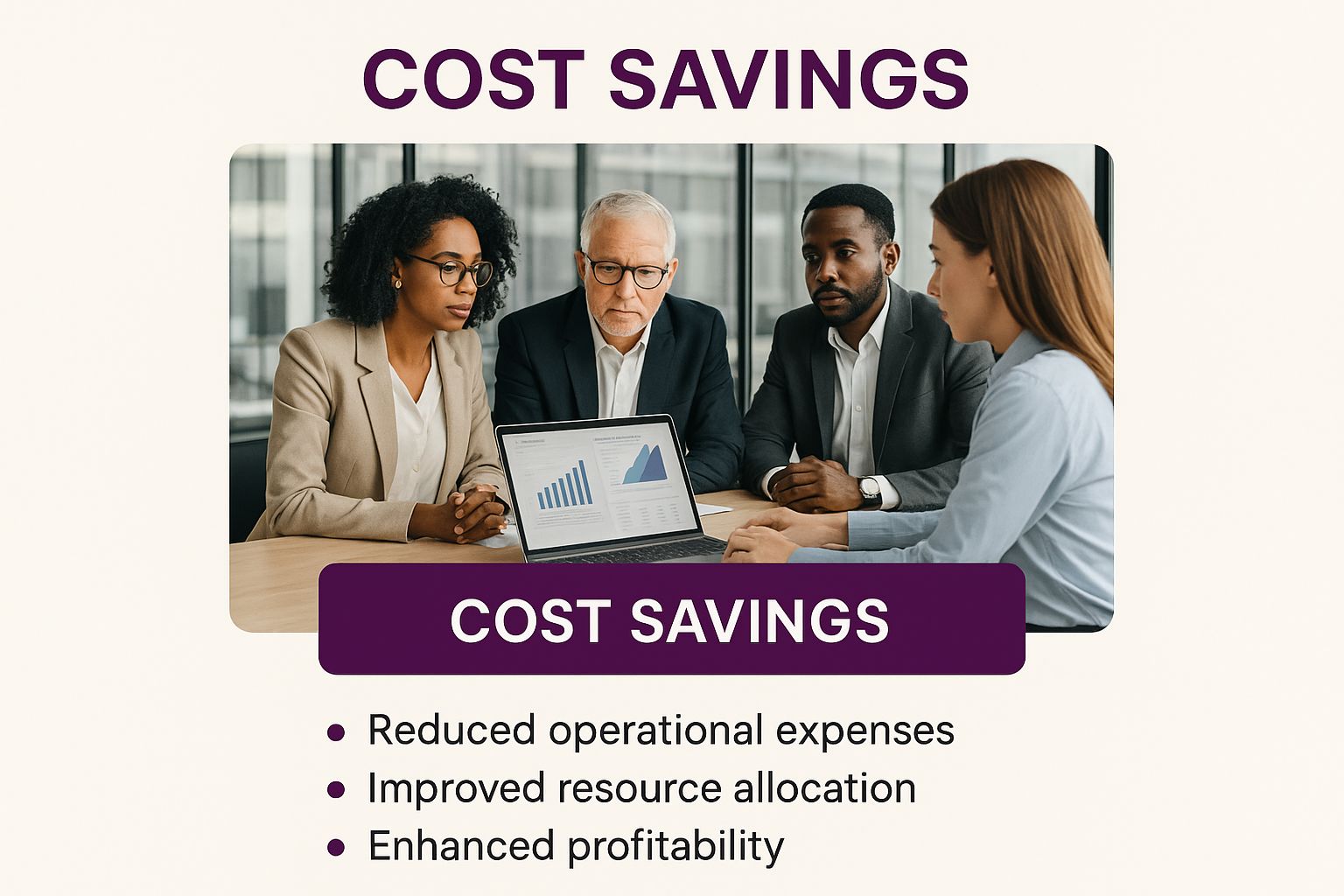
The key takeaway here is that nearshore delivers serious cost savings without the communication breakdowns that so often plague offshore partnerships.
To give you a clearer picture, let’s lay out the three models side-by-side. This table breaks down the core differences in a way that makes it easy to see the trade-offs you’re making with each choice.
Outsourcing Models at a Glance: Onshore vs. Nearshore vs. Offshore
| Factor | Onshore (Domestic) | Nearshore (Neighboring Country) | Offshore (Distant Country) |
|---|---|---|---|
| Cost | Highest | Moderate (significant savings over onshore) | Lowest |
| Time Zone Overlap | Identical (100% overlap) | High (0-3 hours difference) | Low (5-12+ hours difference) |
| Collaboration | Seamless, real-time | Easy, real-time | Challenging, often asynchronous |
| Cultural Alignment | High | High to Moderate (strong cultural affinity) | Low (potential for significant differences) |
| Travel & Access | Easy, low cost | Relatively easy, moderate cost | Difficult, high cost |
| Talent Pool | Local, may be limited | Broad, access to skilled bilingual talent | Vast, but can vary in specialization |
As you can see, there isn’t a single “best” answer—it all comes down to what you’re trying to achieve. The right model is the one that aligns with your specific project goals and business priorities.
Choosing the Right Model for Your Goals
Ultimately, the choice lands squarely on your priorities. If your main goal is hitting rock-bottom costs for repetitive tasks that don’t need much collaboration, an offshore model could work. If budget is no issue and you need total control, onshore is a solid bet.
For a growing number of businesses, however, nearshore offers that ideal balance. It allows you to weigh the trade-offs between cost, control, and collaboration, making it a forward-thinking choice for scaling your operations without the usual headaches. This balanced approach is at the heart of the customer support solutions we build at CallZent, making sure our partners get incredible value without having to make compromises.
The Strategic Edge of a Nearshore Partnership
So, what’s the real advantage of going nearshore? It’s more than just a convenient middle ground between onshore and offshore. The benefits are tangible, driving real efficiency, better collaboration, and a stronger return on your investment.
One of the biggest wins is how time zone alignment puts your projects in the fast lane. This isn’t just about finding a good time for meetings. It means your teams are working together, in real-time. This is huge for agile development, squashing bugs the moment they appear, and solving problems on the fly. An issue that pops up in the morning can be fixed by the afternoon, completely avoiding the 24-hour delays that can grind offshore projects to a halt.
Creating a Truly Integrated Team
Then there’s cultural affinity. It might sound a bit fluffy, but it has a massive impact on day-to-day work. It means your nearshore partners just get it—they understand U.S. business culture, have similar ways of communicating, and might even be celebrating some of the same holidays. This shared ground cuts down on friction and miscommunication, making them feel like a genuine extension of your team, not just a vendor you hired.
The numbers back this up. More and more companies are ditching traditional offshore models because they’re chasing better collaboration and results. In fact, studies show that a whopping 90% of companies report better project outcomes when nearshoring. That’s a world away from the 60% success rate often seen with offshore teams. You can dive deeper into how nearshore outsourcing statistics confirm this major shift toward quality.
“The true value of a nearshore partner isn’t just in the tasks they complete, but in their ability to integrate seamlessly and function as a proactive extension of your core team.”
Getting More Bang for Your Buck
Finally, let’s talk about money. While nearshore hourly rates can look a little higher than offshore at first glance, the total cost of ownership is often much, much lower. You have to look beyond the price tag to see the real financial picture.
Think about these financial wins:
- Lower Travel Costs: Being so close geographically means occasional face-to-face visits are simple and affordable, helping build strong relationships without draining the budget.
- Fewer Costly Mistakes: When everyone is on the same page culturally and communicatively, you get fewer errors. That means less time and money spent on rework.
- Faster Time-to-Market: Real-time work means projects can get done up to 40% faster. That gets your product or service out the door sooner, which means you start making money faster.
By picking a nearshore partner, you’re not just trimming expenses. You’re investing in a smarter, more integrated way of working. This is exactly the kind of high-quality, cost-effective customer support outsourcing we focus on at CallZent.
Exploring Top Nearshore Outsourcing Destinations

Once you’ve decided nearshore is the right move, the next logical question is: where to? The world of nearshore outsourcing isn’t just one place; it’s a map of strategic talent hubs, each with its own unique strengths. For businesses in North America and Europe, two regions have really emerged as powerhouses of skill and accessibility.
There’s a clear geographic split. You’ve got Latin America and Eastern Europe, and each one primarily serves a different market. Eastern European countries like Poland and Romania are top choices for EU-based companies. It makes sense—minimal time zone differences and they’re already up to speed on GDPR compliance.
On the other hand, Latin America has become a massive hotspot for North American companies. We saw a 70% increase in the hiring of South American remote workers between 2021 and 2022 alone. This boom is fueled by simple geography and a fast-growing talent pool. For a closer look at these trends, you can explore more about regional outsourcing dynamics and trends.
This split helps companies find a partner that’s not just close on the map but also lines up with their specific market and regulatory needs.
Latin America: The Go-To Hub For North America
For U.S. and Canadian companies, Latin America is easily the number one destination for nearshore partnerships. It’s a powerful trifecta: aligned time zones, strong English skills, and a culture that’s deeply familiar with the North American way of doing business.
Here are a few of the top players in the region:
- Mexico: Sharing a border with the U.S. makes Mexico an unbelievably convenient choice. It has mature IT and manufacturing sectors, and its talent is well-practiced in supporting businesses to the north. At CallZent, our own operations are based in Tijuana, which gives our partners incredible access and seamless integration.
- Colombia: This country is quickly becoming a major tech hub, offering a workforce that is both highly skilled and cost-effective. Colombia has invested heavily in tech education, creating a solid pipeline of talent in software development and customer support.
- Costa Rica: Known for its political stability and a highly educated population, Costa Rica is a magnet for companies that need top-tier technical and professional services. It’s really carved out a niche as a center of excellence for life sciences, finance, and tech.
The key to a successful nearshore strategy is choosing a location that offers more than just cost savings—it’s about finding a talent market that fuels your specific business goals, whether that’s tech innovation, customer service excellence, or operational support.
Eastern Europe: A Powerhouse For European Businesses
For companies based in Western Europe, the talent pools in Eastern Europe offer a similar strategic edge. These countries are known for their strong engineering traditions, exceptional tech skills, and a smooth integration with the EU’s business and regulatory world.
Key destinations here include:
- Poland: With a massive pool of highly skilled developers, Poland is a true leader in software development and IT services.
- Romania: This country stands out for its strong multilingual capabilities and a high concentration of senior-level tech talent.
- Ukraine: Despite recent challenges, Ukraine’s tech sector is resilient and world-class, known for its innovation and engineering prowess.
Ultimately, choosing the right destination is all about matching your specific needs with a region’s strengths. Whether it’s the agile customer support from Mexico or the robust engineering from Poland, the right nearshore location acts as a powerful, natural extension of your home team.
Is Nearshore the Right Move for Your Business?
Picking an outsourcing model is a huge strategic decision, not just another line item on a spreadsheet. It’s one thing to understand the idea of nearshore outsourcing, but it’s another thing entirely to know if it’s the right fit for your company. The answer depends on your operational DNA and what your projects demand day in and day out.
Before you even think about signing a contract, get your leadership team together and run through a few practical questions. This isn’t about finding the cheapest hourly rate; it’s about finding the smartest possible extension of your existing team. The answers will point you toward the model that truly clicks with how you operate.
A Quick Diagnostic Checklist
Start by getting real about your daily workflow and project needs with these questions:
- How crucial is real-time collaboration? Be honest. If your teams live and breathe agile sprints, daily stand-ups, and on-the-fly problem-solving, a shared workday is a must-have. Time zone alignment isn’t a “nice-to-have”—it’s your top priority.
- How complex are your projects? For straightforward, rinse-and-repeat tasks that don’t need much back-and-forth, an offshore model might work just fine. But for those big, strategic projects with moving parts and evolving requirements, you need a partner who can jump on a call and pivot with you instantly.
- Does cultural context matter for success? If your customer support or sales teams need to get the subtle cues and unspoken expectations of your market, cultural closeness is everything. A deep, intuitive grasp of your customers’ world can be the difference between a transaction and a relationship.
- What does your budget actually look like? You have to look past the hourly rate and see the total cost of ownership. Go ahead and factor in the hidden costs of rework, communication breakdowns, and the extra management time that almost always comes with massive time zone differences.
Answering these questions honestly will give you a pretty clear picture of whether the nearshore model’s unique blend of close collaboration and cost-efficiency is what you’re looking for.
When Nearshore Really Shines
The nearshore model isn’t a silver bullet for every business, but it absolutely excels in a few key areas. If your company operates in one of these spaces, nearshore should be at the top of your list.
- Agile Software Development: Teams that need daily scrums, pair programming, and collaborative coding sessions thrive when their partners are working the same hours. No more waiting overnight for a simple code review.
- Integrated Customer Support: When you want to deliver seamless, high-touch service, you need a team that works when you do and truly understands your customers. Our own bilingual call center services are a perfect example of this principle in action.
- Collaborative Design and Creative Projects: Great design is iterative. When the feedback loop needs to be tight and fast, having a creative partner who can hop on a video call at a moment’s notice is a game-changer.
If your business is built on speed, seamless integration, and high-value teamwork, the nearshore model is practically designed for you. It offers a way to grow your operations intelligently, without sacrificing the quality and connection that make your brand what it is.
Your Next Steps in Strategic Outsourcing
So, where do we go from here? We’ve covered a lot of ground, showing that nearshore outsourcing is much more than a buzzword. It’s a real-world strategy for scaling your business smartly—balancing cost, culture, and close collaboration.
The main takeaway is pretty clear. Nearshore helps projects move faster, makes your teams feel more connected, and ultimately delivers better value for your investment. It’s that sweet spot between the high costs of keeping everything onshore and the communication headaches that can come with traditional offshore models.
Translate Knowledge into Action
The next step is to turn these ideas into action. Start by taking a hard look at your current operations. Where are the bottlenecks? Think about how much friction could be eliminated just by having a partner working in a compatible time zone.
The right partner doesn’t just complete tasks; they elevate your entire operation by becoming a seamless, strategic extension of your team.
This is the crucial mindset shift. When you stop seeing outsourcing as just a way to cut costs and start seeing it as a way to drive growth, you’re on the path the most successful companies take.
To put this knowledge to work, we invite you to explore CallZent’s tailored nearshore solutions. Let’s have a conversation about how we can help you build a smarter, more connected global team. Finding a partner who gets your vision and has the tools to make it happen is your next big move in strategic outsourcing.
Frequently Asked Questions About Nearshore Outsourcing
If you’re exploring nearshore outsourcing, you’re probably asking some of the same questions we hear all the time. Business leaders want to know what the real-world hurdles are, which industries see the most success, and—most importantly—how to find a partner they can trust. Let’s get right into it.
What Are the Main Challenges of Nearshore Outsourcing?
Even though a nearshore model dodges many of the big headaches you’d find with offshore teams, it’s not completely without its own set of challenges. Most of the time, these are small bumps in the road, like navigating different national holidays that can mess with scheduling, understanding local labor laws, and ironing out minor cultural differences.
The best way to handle these things is to not have to handle them alone. A partner with a solid track record has already figured this stuff out. Look for a provider who invests in cross-cultural communication training and gives you a clear, transparent rundown of their legal and operational setup from day one. This turns what could be problems into simple details to manage.
Which Industries Benefit Most From Nearshore Models?
Tech and software development teams were some of the first to jump on the nearshore train. It just made sense—agile development thrives on real-time collaboration, which is a whole lot easier when you’re in the same or a similar time zone. But the benefits don’t stop with code.
Plenty of other industries are getting fantastic results with nearshore partners. A few big ones include:
- Financial Services: For secure, compliant operations and customer support that’s available when your customers are.
- E-commerce: To build a customer service and supply chain management experience that feels completely connected.
- Healthcare: For HIPAA-compliant patient support and data management that operates on your schedule.
The numbers back this up. While software development still accounts for about 64% of outsourced services, the financial services industry isn’t far behind. Around 63% of financial firms across the globe are using nearshore teams to deliver better service and bring down costs.
How Do You Choose the Right Nearshore Partner?
This is it—the single most important decision you’ll make in this entire process. You’re not just hiring a vendor to check off tasks. You’re looking for an extension of your own team.
The right partner doesn’t just complete tasks; they elevate your entire operation by becoming a seamless, strategic extension of your team.
The nearshore outsourcing market is booming—it’s expected to jump from $2.67 billion in 2025 to nearly $3.995 billion by 2034. That means you have a lot of options. To cut through the noise, focus on providers who get what you’re trying to do. They should understand your business goals and your industry. Ask to see their portfolio, and don’t be shy about requesting case studies that are relevant to your work.
Also, check for security certifications like SOC 2 or GDPR to make sure they take compliance seriously. You can dive deeper into the growing nearshore market to get a better handle on these trends.
Ready to build a smarter, more connected global team? At CallZent, we provide tailored nearshore solutions that align with your business goals, offering seamless collaboration and exceptional quality. Discover how our strategic approach can help you scale intelligently.
More Resources
- Top 5 Benefits of Mexican Call Centers
- Nearshore vs Offshore: Smarter Call Center Outsourcing
- Best Call Center in Mexico | Why Tijuana Leads the Way (and Why CallZent Sets the Standard)
Book a 30 minute discovery call with us to learn more about your outsourcing needs.