Skip to content
Contact Center Quality Assurance
QA Contact Center: A Complete Guide to Quality, Compliance, and Coaching
Build a stronger QA contact center program with practical scorecards, AI monitoring, bilingual calibration, coaching workflows, KPIs, and a 90-day roadmap.
TL;DR — Quick Takeaways
- Traditional manual quality assurance reviews only a small portion of contact center interactions, leaving substantial blind spots.
- AI-assisted QA can evaluate far more voice and digital interactions, but human oversight remains essential.
- Effective scorecards connect compliance, resolution quality, customer experience, and business outcomes.
- Calibration makes scoring consistent across reviewers, teams, languages, queues, and client programs.
- QA findings should lead directly to coaching, training updates, process corrections, and service recovery.
- For nearshore teams serving the United States, bilingual QA can improve coverage while preserving cultural and operational accuracy.
A QA contact center usually breaks the same way: a queue spikes, a compliance miss slips through, and a manager asks why the report didn’t catch it sooner. That frustration is familiar because many operations are still trying to govern customer conversations with a sampling model built for a much smaller volume of work. In a nearshore operation serving U.S. healthcare, finance, and e-commerce, QA can’t be a paperwork exercise anymore, it has to function like an operating system for coaching, risk control, and service recovery.
TL;DR: Traditional manual QA only sees a small slice of interactions, while modern AI-based QA can score all of them across voice and digital channels. The best programs use scorecards tied to real risk, regular calibration, coaching that changes behavior, and governance that can handle regulated calls in English and Spanish. For nearshore teams in Tijuana, bilingual QA becomes a practical advantage when it’s structured well, because it improves coverage without sacrificing consistency.
What a QA Contact Center Program Actually Does
A strong QA program doesn’t sit on the side of the operation. It turns every customer interaction into evidence that managers, coaches, and compliance leads can use to improve the next conversation. When the program works, the analyst is not just grading calls, they’re feeding a loop that changes behavior, tightens processes, and reduces repeat mistakes.
The reason this matters is simple. Traditional manual QA typically reviews only 2% to 5% of total call volume, while legacy systems sometimes monitor just 1% to 2% of interactions, and each analyst can usually review only 8 to 10 calls per day call center QA statistics. That sampling gap leaves most interactions unassessed, even in a center handling thousands of calls a day. The result is predictable, a few good calls can hide a lot of bad ones.
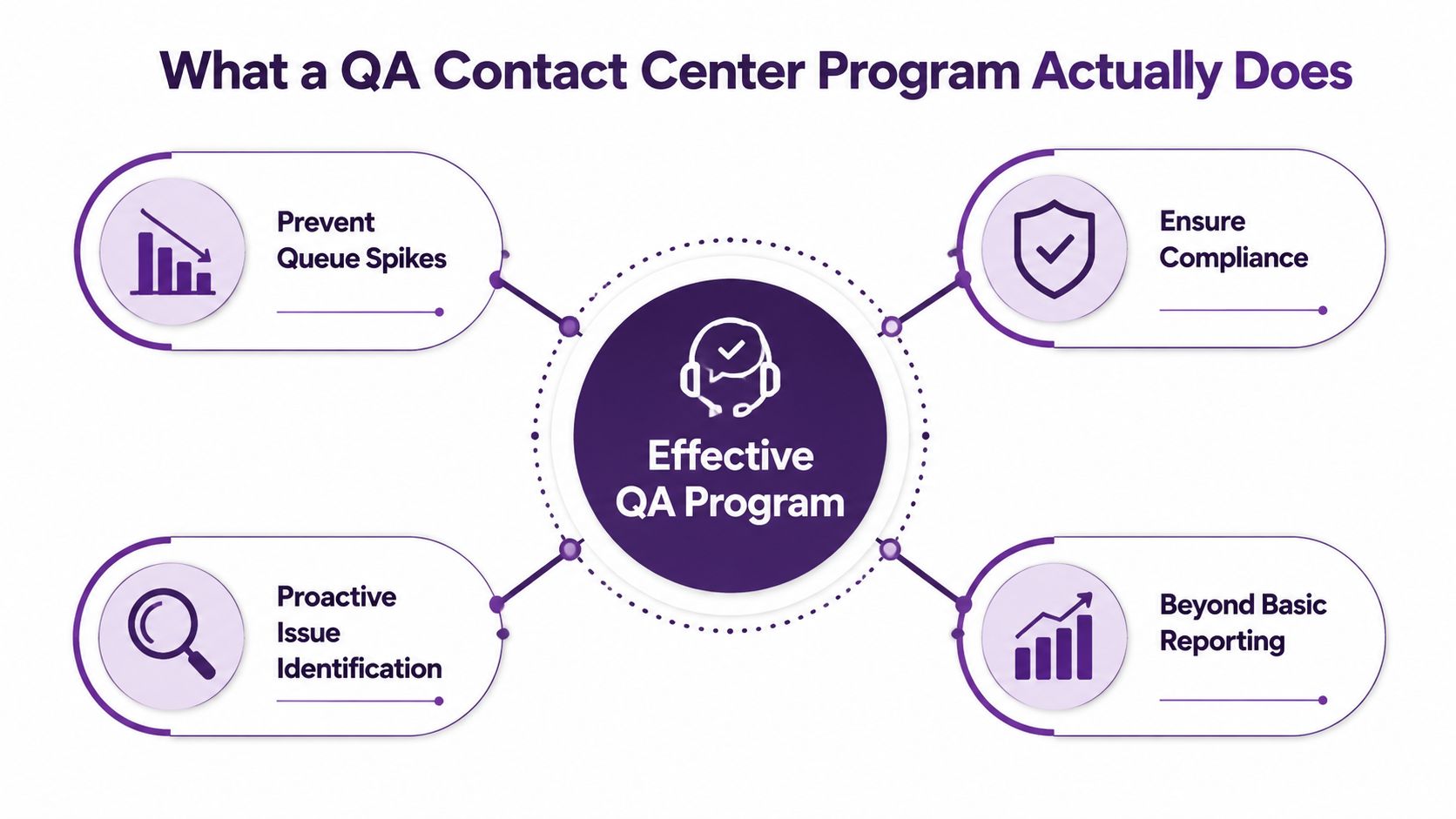
The four jobs every program has to do
A useful qa contact center program has four jobs. It must measure what happened, surface risk and opportunity, coach people on specific behaviors, and improve the system so the same failure doesn’t keep returning. If one of those jobs is missing, the whole thing turns into a report factory.
Practical rule: if QA findings don’t change training, scripts, or escalation paths, they’re just expensive notes.
That’s why a modern QA model is broader than after-call review. AI-based QA can score up to 100% of customer interactions across voice and digital channels, which reduces selection bias and helps surface compliance-risk events that small samples often miss Verint quality assurance best practices. For teams that serve U.S. clients from Tijuana, that shift matters because bilingual conversations often contain the edge cases that manual sampling skips.
If you’re mapping a practical starting point, the MakeAutomation QA guide is a useful cross-check for how teams think about automation without losing operational control. For a service model closer to home, the same logic should also map to your own call center quality standards, not just a generic checklist.
Designing Scorecards, Sampling, and Calibration
Scorecards only work when they reflect the kind of interaction being evaluated. A billing dispute, a retention call, and a technical troubleshooting call don’t fail in the same way, so the rubric shouldn’t pretend they do. The best scorecards are specific enough to guide coaching and strict enough to catch real risk without over-penalizing style.
Build the scorecard around outcomes, not habits
The most predictive categories are compliance disclosures, process adherence, first-contact resolution, escalation handling, communication clarity, and customer empathy Zoom quality assurance guidance. That list matters because it captures what affects whether a call was safe, clean, and useful. A scorecard that rewards pretty language but misses a disclosure failure is the wrong scorecard.
Sampling deserves the same discipline. Random sampling is easy, but it misses concentrated risk. Risk-based sampling is harder to manage, but it’s what you use when certain queues, languages, products, or call types are more likely to create problems. Stratified sampling sits in the middle, because it helps you spread reviews across teams and interaction types instead of overfocusing on one noisy pocket.
A working calibration rhythm looks like this:
- Review the same call together: Each evaluator scores the same interaction before discussing it, so drift becomes visible.
- Disagree on purpose: The point isn’t harmony, it’s alignment on definitions.
- Write the edge case down: If one example caused confusion, that clause probably needs tightening.
- Revisit scoring after policy changes: A scorecard that doesn’t change with the process stops being useful.
The best calibration sessions feel less like a meeting and more like a standards lab. When evaluators agree on what good looks like, QA data becomes reliable enough to drive coaching, script revisions, and process fixes instead of noisy feedback. That’s the part many underestimate, because the hard work isn’t scoring calls, it’s making sure two people would score the same call the same way.
For a practical operations view on how evaluators keep standards consistent, the call center quality monitoring best practices page is a useful internal reference point for teams building their own review rhythm.
KPIs and Dashboards That Actually Drive Decisions
A dashboard only helps when somebody can act on it. If you’ve ever opened a QA report packed with thirty widgets and closed it five minutes later, you already know the problem. Too much data creates the illusion of control, but it rarely changes a coaching conversation.
Separate agent behavior from business outcome
QA should not try to measure everything the same way. Agent-behavior metrics tell you how the conversation was handled, while business-outcome metrics tell you what that handling caused. Industry guidance increasingly argues that QA has to tie to revenue, churn risk, and operational outcomes, not only script adherence or AHT, and some practitioners recommend an 80/20 approach focused on the contact types that drive most dissatisfaction Verint glossary on quality assurance best practices.
That doesn’t mean you ignore the softer pieces. It means you connect them to something a manager can move. If empathy scores are weak on one queue, that may be a training issue. If the same queue also has repeat contacts and escalations, that’s a process issue too.
| QA Contact Center KPI by Decision Owner | What it measures | Owner | Cadence |
|---|---|---|---|
| Compliance pass rate | Whether required disclosures and steps were completed | QA lead, compliance | Weekly |
| First-contact resolution trend | Whether issues were solved without callbacks | Operations manager | Weekly |
| Escalation quality | Whether transfers and handoffs were correct | Team lead | Weekly |
| Coaching follow-through | Whether feedback turned into behavior change | Supervisor | Weekly |
| Repeat issue concentration | Which contact types keep generating dissatisfaction | QA manager, client lead | Monthly |
A smaller dashboard often works better than a bigger one. Keep board-level attention on the metrics that show risk, resolution, and customer pain. Put the day-to-day behavior signals on the huddle board where team leads can use them immediately.
If you need a clean operations view that connects scoring to leadership reporting, the monitor call center performance page gives a useful structure for thinking about which metrics belong at which level.
Coaching and Training Workflows That Close the Loop
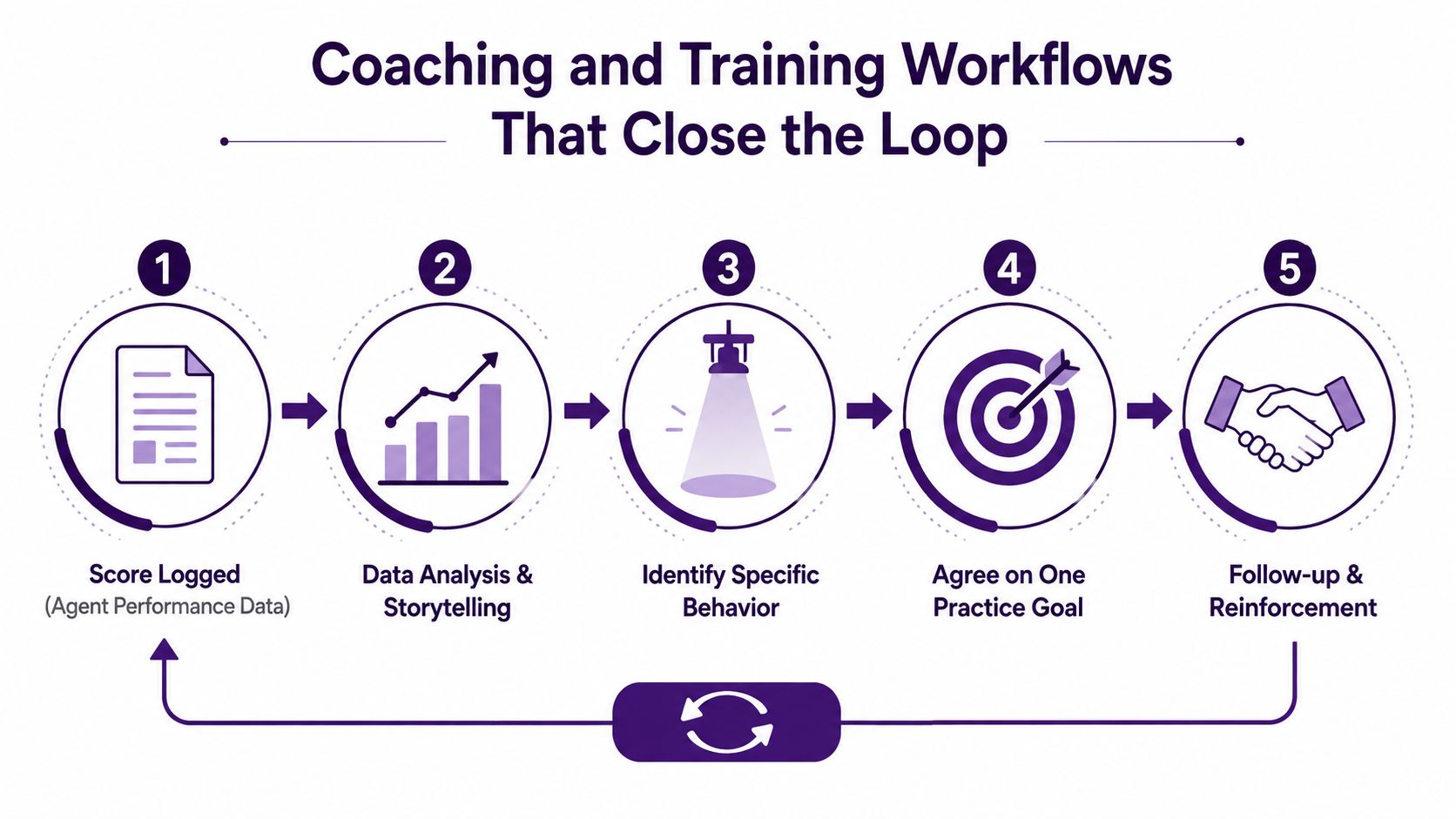
A score without a follow-up is a dead number. The teams that get real value from QA don’t just review calls, they build a repeatable coaching motion around the finding. That motion needs to be specific enough that the agent knows what to change on the next call, not just what went wrong on the last one.
Turn the score into a behavior change
An effective coaching conversation usually follows the same pattern. Start with the data, not the accusation. Name the exact behavior, not a personality trait. Agree on one practice goal, then check it later in another interaction. That keeps the discussion focused and makes follow-through possible.
The strongest coaching sessions leave the agent with one thing to do differently on the next call, not five things to remember.
The best QA programs tier coaching by audience. Some findings belong in a floor-wide refresh if the same issue appears across multiple agents. Other findings belong in team coaching when one queue or shift is drifting. A third group needs a private 1:1, especially when the issue involves judgment, tone, or repeated compliance misses.
QA findings should also shape onboarding and refreshers. If new hires miss the same verification step, that’s not just an agent issue, it’s a training design problem. If seasoned agents struggle with a new policy update, the fix may be side-by-side listening, a short refresher, and a clearer job aid.
A simple operating rhythm helps:
- Weekly: Review current misses, coach one behavior, and verify follow-up.
- Monthly: Look for repeat patterns across teams and update side-by-side examples.
- Quarterly: Refresh standards, training assets, and calibration examples.
That rhythm keeps QA from becoming a policing function. It also gives team leads a usable cadence, because nobody can coach well when the only output is a spreadsheet full of old call scores. The ultimate aim is to make quality part of the learning system, not a separate audit layer.
Technology Stack for Monitoring, Speech Analytics, and QA Platforms
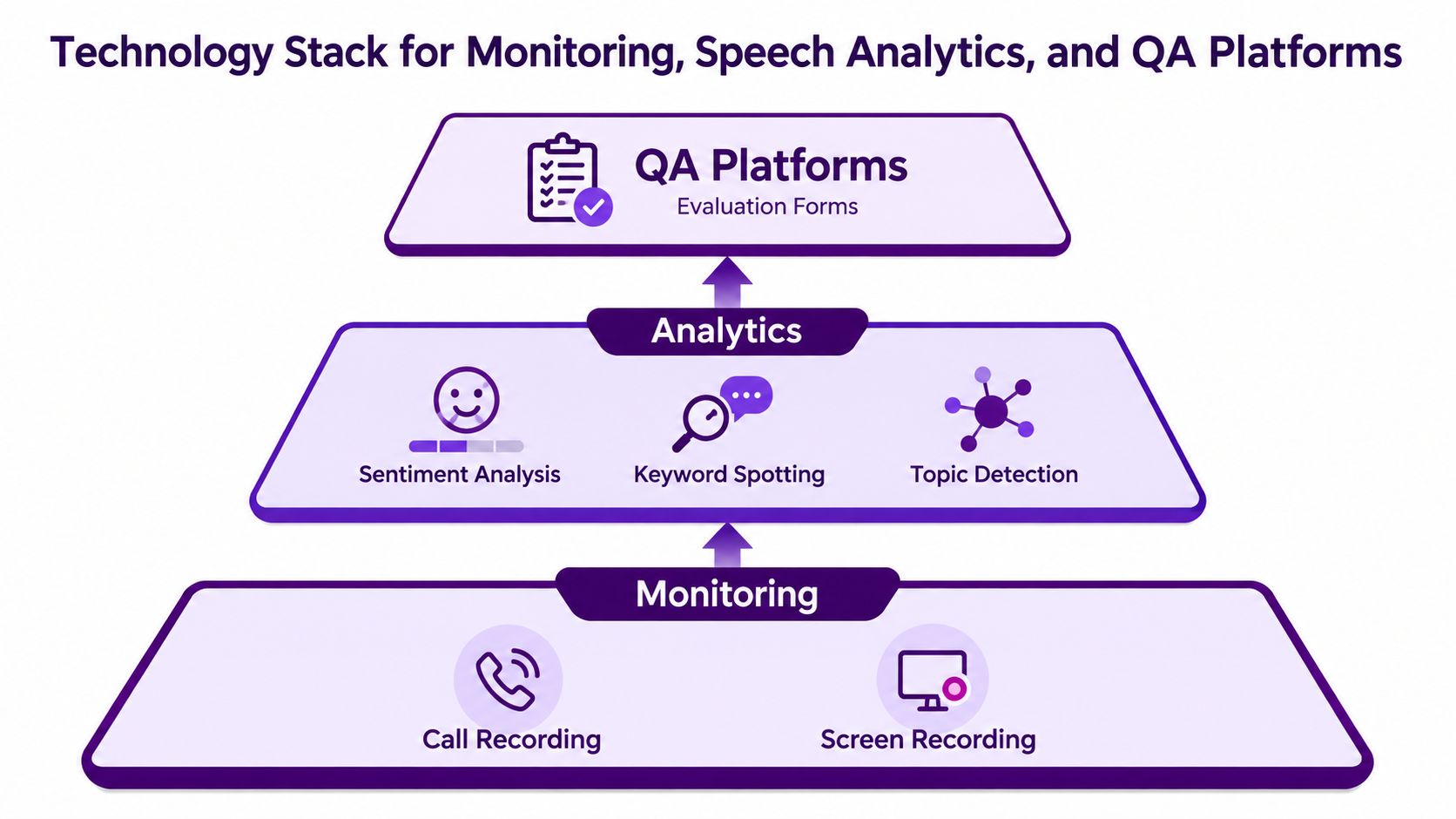
A practical QA stack separates what happened, what it means, and how the team should act on it. In a nearshore program, that separation matters because the wrong tool can create more noise than insight.
Three layers with different jobs
Monitoring sits at the bottom. It captures call recordings, screen activity, and speech-to-text so reviewers can verify the interaction itself. That layer gives you evidence, but it does not explain the agent’s intent, the customer’s frustration, or the policy pressure behind a decision.
Speech analytics sits above that. It looks for sentiment shifts, keyword triggers, and topic patterns so supervisors do not have to listen to every interaction manually. In bilingual queues, it also helps teams find the calls worth reviewing before they spend time on the wrong samples. The output still needs human judgment, especially when a customer switches languages mid-call or a phrase means one thing in English and something different in Spanish.
QA platforms sit on top of the stack. They handle scorecards, calibration, reporting, and coaching follow-up, so quality work becomes a repeatable process instead of a loose review habit.
AI-based QA can score a very large share of customer interactions across voice and digital channels, which helps reduce sample bias and surface compliance-risk events that manual reviews often miss. Verint quality assurance guide That sounds attractive on paper, but the essential question is whether the model stays consistent across languages, channels, and edge cases. In regulated work, a score that looks clean but misses a policy exception creates more risk than a smaller manual sample.
A better buying conversation starts with trust, not feature lists. Human review still matters because coaches need to point to the exact phrase, pause, or transfer that drove the score, otherwise the agent treats QA as a black box. For teams that need to see how automation fits into a broader support workflow, the AI WhatsApp support agent page is a useful reference point. It shows how digital automation can sit inside the support stack without removing the need for disciplined QA.
For a closer look at how call insights feed into review and coaching decisions, the conversational intelligence page is a useful companion piece when you compare platforms.
Industry Standards and Bilingual QA for Nearshore Operations
Industry standards change the scorecard, because the risks are different. A healthcare call isn’t judged the same way as a retail return or a finance verification. Nearshore teams in Tijuana have a real advantage here, but only if QA is built to respect the industry, the language, and the call type at the same time.
Healthcare, finance, and retail need different controls
In healthcare, QA needs to catch HIPAA-aware scripts, disclosure handling, and escalation paths without flattening empathy. If the agent is careful but cold, the call still failed. If the agent is warm but misses a required handoff, that’s a bigger failure.
In finance and debt collection, the priority shifts. Identity verification, tone under pressure, and traceable decisions matter more because the call carries legal and financial risk. QA in that environment has to be strict enough to protect the business and clear enough that the agent knows why a missed step matters.
Retail and e-commerce are different again. Order accuracy, return handling, refund tone, and social-channel consistency drive the scorecard. The interaction may not carry regulatory weight, but it can still damage trust fast if the explanation is sloppy or the policy sounds inconsistent.
Practical rule: in regulated queues, score compliance and customer experience together, not against each other.
That balance is harder than a lot of guides admit. Sources note that governance in regulated or high-risk conversations such as healthcare, finance, debt collection, and identity verification rarely explains how to balance compliance scoring with customer experience on a single call Dialpad quality assurance guidance. That gap matters because the same call can create both legal risk and churn risk.
The bilingual layer changes things again. Spanish calls often include code-switching, accented speech, and phrasing that can confuse speech analytics if the model wasn’t tuned carefully. A Tijuana team can turn that into an advantage because bilingual reviewers can spot whether the issue was language, process, or tone, then calibrate the scorecard accordingly.
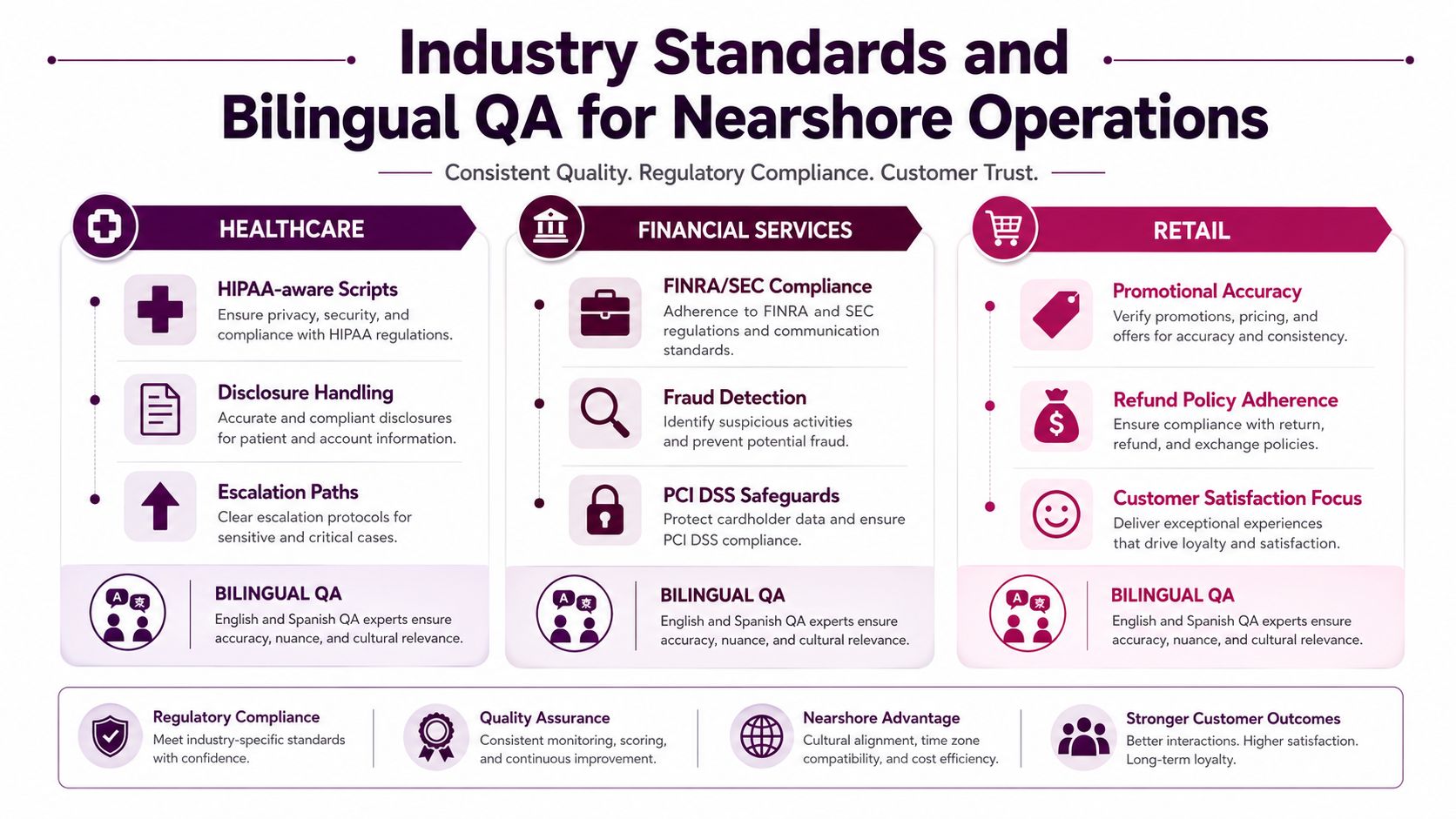
A good nearshore QA model treats bilingual coverage as a quality control feature, not a translation layer. That’s where proximity and fluency matter, because the same team can evaluate the conversation, coach the behavior, and document the risk in a way U.S. clients can use.
Sample Scorecard Template and 90-Day Implementation Roadmap
A usable scorecard is usually smaller than teams expect. For a generic inbound customer support queue, a practical template might include greeting and verification, problem discovery, resolution accuracy, empathy and clarity, compliance, and call closure. The point isn’t to score everything. The point is to score the behaviors that predict whether the interaction was safe and useful.
A simple scorecard structure
For a balanced support queue, keep the heaviest weight on the highest-risk items and the next heaviest on resolution quality. That way the score reflects what matters most when the call is over. If you run sales, tech support, or bilingual care teams, adapt the categories, but don’t dilute the critical ones just to make the sheet look friendlier.
The operational gap is still real. Around 92% of contact centers have a formal QA program, but only about one-third formally track Internal Quality Score, which shows how often teams have QA in place without measuring it consistently customer support QA statistics. That gap is usually a process problem, not a software problem.
A realistic 90-day rollout often looks like this:
- Days 1 to 14: Establish baseline calls, define criteria, and agree on weights.
- Days 15 to 42: Run pilot calibration and AI-assisted scoring on a narrow queue.
- Days 43 to 70: Wire QA into coaching, reporting, and team huddles.
- Days 71 to 90: Share results with stakeholders, tune the scorecard, and expand coverage.
What good looks like at each milestone is straightforward. At the start, evaluators should agree on the basics. By the middle, the same call should score nearly the same way across reviewers. By the end, the QA findings should already be changing coaching conversations and training priorities.
That sequence gives leaders a realistic way to decide whether to expand or pause. If the scorecard keeps changing because the standards are unclear, stop and fix the criteria. If the scores are stable but no one is coaching from them, the issue is adoption, not evaluation.
Evaluating a BPO Partner on QA Maturity
A partner’s QA maturity shows up fast in a pilot. Ask to see how they score a live interaction, how they handle bilingual calls, and how they turn a missed disclosure or failed escalation into coaching. If the answer is vague, the program is probably still immature.
One useful way to compare providers is to ask how they separate tools, people, and governance. The customer service outsourcing guide is a helpful external reference when you’re framing broader outsourcing decisions, but the ultimate test is whether the BPO can explain its own standards without hiding behind platform buzzwords. A strong nearshore partner should be able to show you the same logic in English and Spanish, not just promise that it exists.
Quick buyer questions that expose QA strength
- How do you calibrate reviewers? If they can’t explain it clearly, scores won’t be consistent.
- What happens after a miss? Strong programs attach coaching and process fixes to the finding.
- How do you handle bilingual reviews? Translation alone isn’t enough, because code-switching and tone matter.
- How fast can the QA data affect training? If the answer is “eventually,” the loop is too slow.
The global call center AI segment is projected to grow from $1.6 billion in 2022 to $4.1 billion by 2027, a 21.3% CAGR, which signals how quickly AI-based QA tools are being adopted call center AI market projection. That growth doesn’t guarantee maturity, but it does raise the bar for buyers. If a partner still relies on tiny samples and vague coaching, they’re falling behind the market.
For a deeper internal checklist on selection criteria, the vendor evaluation criteria page gives a practical place to pressure-test the next shortlist.
CallZent builds bilingual nearshore support in Tijuana with QA discipline woven into daily operations, not added after the fact. If you want a partner that can handle healthcare, finance, and e-commerce conversations with tighter calibration and stronger coaching loops, visit CallZent and see how a structured QA model can support your team.
Strengthen Your Contact Center Quality Program
CallZent builds bilingual nearshore support teams in Tijuana with quality assurance, calibration, coaching, and performance visibility integrated into daily operations.
Talk to an ExpertFrequently Asked Questions
1. What is a QA contact center program?
It is a structured system for evaluating customer interactions, identifying compliance and service risks, coaching agents, and improving the processes that shape customer outcomes.
2. What does a contact center QA analyst do?
A QA analyst evaluates interactions against an approved scorecard, documents findings, participates in calibration, identifies trends, and supplies evidence that supports coaching and process improvement.
3. How many calls should a contact center review?
There is no universal number. The appropriate volume depends on interaction risk, queue size, regulatory requirements, evaluator capacity, and available automation. Programs should combine baseline sampling with targeted reviews of higher-risk interactions.
4. Can AI evaluate every contact center interaction?
AI-assisted tools can analyze a much larger share of interactions than manual review alone. However, accuracy varies by language, channel, model, and use case, so human validation remains important—especially for high-risk decisions.
5. What should a QA scorecard include?
A scorecard commonly includes verification, process adherence, problem discovery, resolution accuracy, communication, empathy, compliance, documentation, escalation handling, and interaction closure.
6. Why is QA calibration important?
Calibration aligns evaluators around the same standards. It makes scores more consistent and gives managers, agents, clients, and compliance teams greater confidence in the resulting data.
7. How does QA improve agent coaching?
QA gives coaches concrete examples of behaviors that affected an interaction. Coaches can then agree on a specific improvement action and review a later interaction to confirm that the behavior changed.
8. What is bilingual contact center QA?
Bilingual QA evaluates interactions in their original language while considering cultural context, terminology, customer intent, operational requirements, and language switching. It goes beyond simply translating the transcript.
9. How often should QA calibration sessions occur?
Many programs calibrate weekly or monthly, depending on risk and volume. Additional sessions should follow important policy, product, script, client, or scorecard changes.
10. How can a company evaluate a BPO provider’s QA program?
Ask the provider to demonstrate its scorecards, calibration process, bilingual review capabilities, critical-failure rules, coaching workflows, reporting, evaluator governance, and procedures for converting findings into operational improvements.