
ANSWERING SERVICE OUTSOURCING
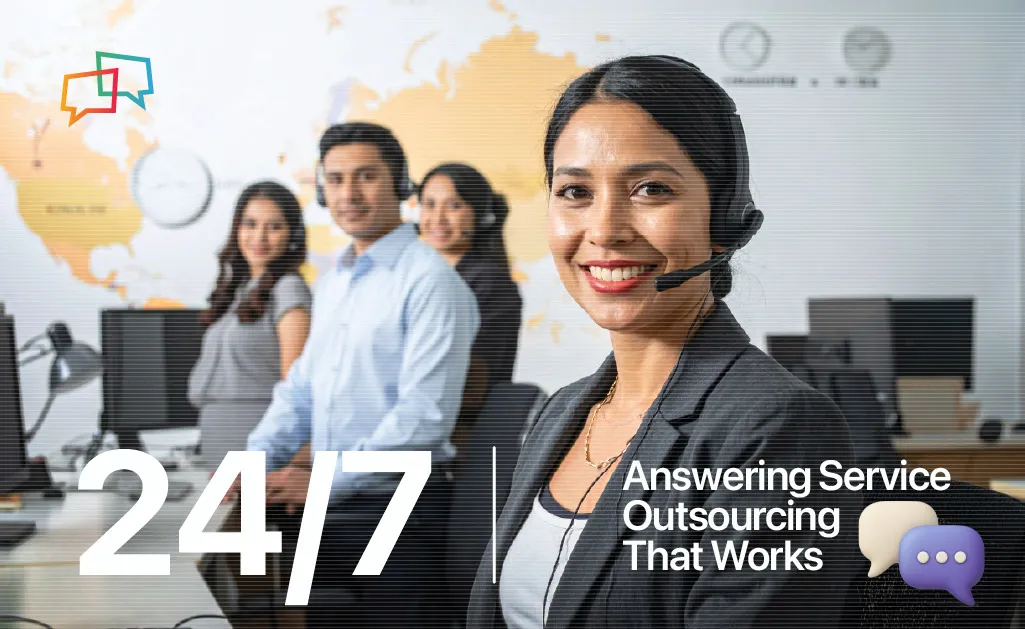
24/ 7 Answering Service Outsourcing That Works
Learn how 24/ 7 answering service outsourcing helps businesses capture missed calls, improve after-hours support, reduce staffing pressure, and protect customer trust.
TL;DR — Quick Takeaways
- 24/ 7 answering service outsourcing helps businesses stay available after hours, on weekends, and during call spikes.
- The value is not just answering the phone. A strong program improves intake, escalation, documentation, customer experience, and operational continuity.
- Building an internal 24/7 team can be expensive and difficult to manage because it requires multiple shifts, training, supervision, and quality control.
- Nearshore answering service support can give U.S. companies bilingual coverage, time-zone alignment, and easier collaboration.
- The right partner should feel like an extension of your business, not a disconnected vendor taking generic messages.
A missed call at 2:13 a.m. does not stay small for long. For a law firm, it can mean a lost intake. For a healthcare group, it can create patient frustration. For an e-commerce brand, it can turn into a canceled order by morning. That is why 24 7 answering service outsourcing has become less of a nice-to-have and more of an operating decision that affects revenue, retention, and brand trust.
The companies that benefit most are not always the largest. In many cases, they are growing businesses that have reached the point where voicemail, on-call rotations, and overextended front desk staff are no longer enough. They need real coverage, but they also need cost control, flexibility, and a partner that can represent the business well after hours, on weekends, and during peak call periods. For small businesses thinking through growth decisions, the U.S. Small Business Administration business guide is a useful external resource.
What 24 7 Answering Service Outsourcing Really Solves
The obvious benefit is constant availability. Customers can reach a live person at any time instead of hearing a recording or waiting for the next business day. But the deeper value is operational stability.
When a business handles every call internally, the pressure tends to fall on a small group of employees. They cover overflow, pick up after hours, and absorb call spikes that were never part of the original staffing plan. Over time, service quality becomes inconsistent. Some callers get excellent help. Others are rushed, transferred too often, or missed entirely.
Outsourcing changes that model. A dedicated answering service program gives you structured coverage, trained agents, escalation rules, and reporting. That means fewer gaps and fewer moments where customer experience depends on who happens to be available.
This matters across industries. A property management company may need maintenance calls screened and routed based on urgency. A legal practice may need new leads captured accurately and compassionately. A healthcare provider may need non-clinical support that follows clear protocols. The common thread is that every call has a business consequence, even when it looks routine at first.
For companies comparing service models, CallZent’s guide to smart sourcing and outsourcing strategy</a> can help clarify when outsourcing becomes a stronger operational choice than stretching internal teams further.
Why Companies Outsource Instead of Building
an In-House 24 7 Team
On paper, hiring internally sounds like the most controlled option. In practice, building true 24 7 coverage is expensive and difficult to sustain. It requires hiring for multiple shifts, covering breaks, managing absenteeism, training new employees, and maintaining quality at all hours. Once you factor in management overhead, benefits, turnover, and scheduling complexity, the real cost rises quickly.
That does not mean outsourcing is automatically better in every case. If your operation requires highly specialized, licensed, or tightly regulated handling for every interaction, a fully internal model may still make sense for some call types. But many businesses do not need every overnight or overflow call managed by a full in-house team. They need dependable first-line coverage, strong documentation, and clear escalation when a live issue requires immediate action.
That is where outsourcing becomes practical. You can extend service hours without carrying the full cost of a round-the-clock internal department. You can also scale more easily during seasonal surges, product launches, weather events, or promotional campaigns.
Zendesk’s customer service outsourcing guide</a> is a helpful external reference for understanding the broader pros, cons, and planning steps behind outsourcing customer support.
What Good 24 7 Answering Service Outsourcing Looks Like
Not all providers deliver the same experience. The difference is rarely just whether someone answers the phone. The real question is how well they answer it.
A strong program should sound like an extension of your business, not a disconnected third party. That starts with onboarding. The provider should learn your brand voice, your call flows, your service standards, and the types of situations that require escalation. Scripts can help with consistency, but they should not make conversations sound robotic.
Coverage quality also depends on staffing design. If your provider treats your account as a generic queue with little context, callers will notice. If agents understand your business, your common customer issues, and your preferred outcomes, the interaction feels more confident and more helpful.
Reporting matters too. You should know call volume patterns, response times, common reasons for contact, and where calls are being routed. A 24/7 answering service is not just there to catch what your team misses. It should also give you visibility into what customers need outside standard business hours.
For businesses that want stronger visibility across calls and service performance, CallZent’s article on contact center analytics benefits explains how reporting can turn customer interactions into operational insight.
The Nearshore Advantage for U.S. Businesses
For U.S. companies, nearshore outsourcing adds a practical edge that offshore and domestic-only models do not always match. Time zone alignment is easier. Communication tends to feel more natural. Oversight and collaboration are more manageable. For businesses serving both English- and Spanish-speaking customers, bilingual support becomes a real advantage rather than a separate operational challenge.
That is one reason many companies look to Mexico-based teams for answering service support. A nearshore model can reduce labor costs while preserving the responsiveness, cultural familiarity, and schedule overlap that leaders need. It is not only about lower expenses. It is about building a support function that feels connected to the business and accessible to internal stakeholders.
CallZent’s article on the benefits of nearshore outsourcing goes deeper into why proximity, bilingual talent, and collaboration can make nearshore support a strong fit for North American companies.
When the provider also emphasizes agent training and retention, the benefits grow. Experienced, engaged agents handle calls with better judgment, stronger empathy, and more consistency. That has a direct impact on customer perception. At CallZent that connection between agent satisfaction and customer outcomes is treated as an operational advantage, not a slogan.
Where Outsourcing Can Go Wrong
The biggest mistake is choosing based on price alone. A low per-minute or per-call rate can look attractive until missed details start creating downstream problems. If appointment information is incomplete, if urgent calls are not escalated properly, or if customers feel brushed off, the cheap option becomes expensive very quickly.
Another common issue is poor process design. Businesses sometimes outsource before they have clarified what should happen on different call types. If agents do not have clear instructions for emergencies, lead qualification, scheduling, or after-hours messages, they are forced to improvise. That leads to inconsistency.
There is also the issue of overpromising. Some providers say yes to every workflow without having the operational depth to support it. A better partner will be honest about what should be automated, what should be agent-led, and what needs a more specialized support model.
For healthcare organizations, outsourcing also requires careful attention to privacy and vendor responsibilities. The U.S. Department of Health and Human Services explains that covered entities working with business associates must have written arrangements that protect health information. Yoxx HHS HIPAA guidance on covered entities and business associates</a> for more context.
How to Choose the Right Partner
Start with fit, not just coverage claims. Ask how the provider handles training, quality assurance, escalation planning, and account customization. If your business has industry-specific requirements, look for examples of similar programs. A generic answering service may be enough for simple message-taking, but it will not deliver the same result for legal intake services, healthcare scheduling, or high-value customer support.
You should also ask about flexibility. Your needs today may be after-hours coverage, but six months from now you may need overflow support, bilingual service, appointment setting, or outbound follow-up. A provider that can grow with you reduces the need to rebuild systems later.
Contract structure matters as well. Long commitments can create hesitation, especially if you are testing outsourced coverage for the first time. Transparent pricing and a risk-aware start make adoption easier and show confidence in the service.
Finally, pay attention to how the provider talks about partnership. If the conversation centers only on seat count and pricing, that is a warning sign. Good answering service outsourcing is not a commodity purchase. It works best when the provider is invested in your customer experience, not just your call volume.
If you are comparing providers, CallZent’s guide on how to find and vet the best call center outsourcing companies can help you evaluate fit, process, and long-term partnership quality.
Measuring Success After Launch
Once the program is live, success should be measured beyond answer rate. Of course, calls need to be picked up quickly, but speed alone does not tell you whether the service is helping your business.
Look at lead capture quality, appointment accuracy, customer satisfaction signals, escalation compliance, and how many issues are resolved on first contact. Review transcripts or call recordings where appropriate. Pay attention to what your internal team says too. If outsourced agents are reducing workload, improving documentation, and making handoffs easier, that is a strong sign the program is doing its job.
It is also worth tracking what happens outside the contact center. Are fewer opportunities being missed? Are customers less frustrated on Monday mornings? Are managers spending less time covering schedule gaps? Those are often the clearest indicators that the investment is paying off.
A well-run answering service does more than keep the phones on. It protects continuity when your team is offline, stretched thin, or growing faster than your internal staffing model can support. The right outsourcing partner brings structure to that pressure and helps you stay available without sacrificing quality.
If your business is at the point where every missed call carries a cost, round-the-clock coverage is no longer just about being open. It is about being ready when your customers need you most.
Ready to explore a reliable 24 7 answering service outsourcing with bilingual nearshore support? Contact CallZent to build a coverage model that fits your business, customers, and growth goals.
🚀 Build Reliable 24 7 Answering Service Coverage With CallZent
CallZent helps North American businesses build bilingual nearshore answering service, after-hours support, overflow coverage, customer service, and call center programs designed around quality, flexibility, and growth.