

Outbound Sales & Call Center Strategy
Outbound Call Center Agents Guide for 2026:
Best Practices for Growth
Learn how to build, manage, and scale outbound call center agents with the right metrics, hiring, scripts, technology, and nearshore strategy for North American growth.
TL;DR — Quick Takeaways
- Outbound call center agents create demand: They drive lead generation, appointment setting, collections, and customer reactivation.
- Performance depends on quality, not just volume: Metrics like contact rate, conversion quality, and occupancy matter more than dial counts.
- Hiring and coaching are critical: Resilience, empathy, and adaptability outperform scripted behavior.
- Nearshore models improve scalability: Bilingual teams aligned with North America reduce cost and increase retention.
Most companies don’t have an outbound problem. They have a strategy problem.
They hire people to make calls, then wonder why activity goes up but pipeline quality doesn’t. That happens when leaders treat outbound call center agents like a volume machine instead of a growth function. The job isn’t just dialing. It’s identifying the right prospects, starting the right conversations, and moving opportunities forward without burning through lists or agents.
A strong outbound team can open doors for sales, revive dormant accounts, book qualified appointments, support collections, gather market feedback, and protect revenue that would otherwise leak out of the funnel. A weak one creates noise, misses targets, and damages brand trust.
Your Proactive Engine for Business Growth
If your business is waiting for demand to arrive on its own, you’re leaving growth to chance.
Outbound call center agents give you a proactive way to create momentum. They don’t sit back and react to incoming contacts. They initiate conversations with prospects, customers, patients, policyholders, debtors, or lapsed buyers. Done well, that work becomes a repeatable engine for revenue and retention.

Key takeaway: Outbound works when you build a system for conversations and outcomes, not just a team that makes calls.
A practical outbound operation is part sales discipline, part service discipline, and part operations discipline. You need clear lists, realistic goals, strong supervision, useful reporting, and agents who can sound human under pressure.
This is the gap in conventional thinking. Many teams focus on script wording before they’ve fixed targeting, hiring, and coaching. The better approach is to build the engine first, then tune the message.
Defining the Modern Outbound Call Center Agent
An easy way to explain the role is this. If inbound agents are the catchers, outbound call center agents are the pitchers.
Inbound teams field what comes to them. Outbound teams start the play. They place the call, set the tone, carry the objective, and handle the first resistance. In many businesses, they’re the first real human interaction a prospect has with the brand.
That matters more than many leaders realize. The first voice on the line shapes how the company is perceived. If the agent sounds rushed, robotic, or poorly prepared, the brand sounds the same way.
More than old-school cold calling
The outdated stereotype is a rep reading a rigid script to a random list. Modern outbound work is narrower, smarter, and more targeted.
Today’s outbound call center agents often work from segmented lead lists, CRM notes, prior interactions, campaign intent, and business rules. A healthcare outreach campaign doesn’t sound like a SaaS trial follow-up. A financial services appointment-setting team shouldn’t sound like a retail win-back desk. The role changes based on the business objective.
That’s why job design matters. Many companies under-hire because they define the role too broadly. “Make outbound calls” is not a useful operating description. A better starting point is understanding what responsibilities, tone, and skills the role requires. That’s where a practical framework like this guide to call center job descriptions for employers can help clarify what you are hiring for.
What the role looks like in practice
A modern outbound agent usually does some combination of the following:
- Initiates contact: Reaches prospects or customers for a specific business reason.
- Qualifies quickly: Confirms fit, interest, timing, authority, or account status.
- Handles objections: Responds calmly when the first answer is “not interested,” “not now,” or “send me information.”
- Documents accurately: Leaves clean notes so the next step isn’t guesswork.
- Protects brand tone: Balances persuasion with professionalism.
- Creates next actions: Books a demo, schedules a callback, collects a payment, updates details, or closes the loop.
Outbound agents don’t just generate activity. They create movement in accounts that would otherwise stay untouched.
The best ones are commercially aware without sounding aggressive. They know how to ask one more question, but they also know when to stop pushing. That judgment is what separates a productive outbound operation from one that just irritates people.
Core Responsibilities and Outbound Campaign Types
Outbound call center agents do different work depending on the campaign. That sounds obvious, but it’s where many outsourced and in-house teams go wrong. They staff every outbound program with the same profile, same script logic, and same performance expectations.
That doesn’t work. A debt collection call, a warm lead callback, and a market research conversation require different pacing, different compliance habits, and different emotional control.
Sales and telemarketing
This is the most recognized outbound use case. The agent contacts prospects to introduce an offer, qualify interest, and move toward a sale.
A simple example is a software company calling businesses that downloaded a guide and asking whether they’d like a walkthrough. Another is a retailer calling past buyers about a replenishment order. In both cases, the call should feel relevant, not random.
For this type of work, outbound call center agents typically handle 80 to 150 calls per day in high-volume cold calling, 40 to 80 for warm leads and follow-ups, and 20 to 50 for complex sales, with predictive dialers able to boost call volume by 20 to 30%, according to the verified data provided for this article.
Lead generation and qualification
Lead generation sounds simple until teams confuse names with opportunities.
A lead gen agent’s real job is to separate curiosity from intent. That often means confirming fit, budget context, decision-maker access, geography, urgency, or product need before handing anything to sales. If the qualification step is weak, sales teams stop trusting the channel.
A practical example is an insurance broker campaign. The agent might confirm renewal timing, current carrier, line of coverage, and openness to comparison before scheduling a licensed advisor.
Appointment setting
Appointment setting is one of the cleanest uses for outbound because the objective is narrow. You’re not trying to close on the first call. You’re trying to earn the next conversation.
This works well for:
- Healthcare providers: Re-engaging patients for checkups or follow-up care
- Financial advisors: Booking consultation slots with qualified prospects
- Telecom teams: Scheduling service reviews or retention calls
- Home services businesses: Filling the calendar for estimates or inspections
The mistake here is rewarding only booked meetings. Teams also need to review show quality. A full calendar is useless if the appointments are poorly qualified.
Market research and surveys
Outbound agents are often the fastest path to hearing what customers think.
A company launching a new service can use outbound calls to ask former buyers what stopped them from purchasing again. A clinic can call patients after visits to collect service feedback. A retailer can test reactions to a product category before investing in a larger campaign.
This work requires curiosity and listening discipline. Agents who talk too much ruin the value of the call.
Operational rule: If your market research agents are trying to sound like closers, you’re using the wrong people for the campaign.
Collections and payment recovery
Collections is where tone control matters most. The objective is recovery, but the path often depends on empathy, clarity, and firmness in the right order.
Strong collection agents do more than demand payment. They confirm the account context, explain the issue clearly, listen for the reason behind nonpayment, and work toward a practical next step. In many businesses, that might mean updating details, agreeing on a payment arrangement, or resolving confusion before the account escalates.
Customer win-back and reactivation
Some of the easiest revenue to recover is already in your database.
Businesses use outbound teams to contact former subscribers, inactive buyers, abandoned applicants, or past customers who haven’t reordered. A good reactivation call isn’t “we noticed you haven’t bought lately.” It’s “you used this service before, something changed, and we’d like to understand whether the timing, experience, or offer no longer fits.”
That kind of campaign often gives leadership useful feedback beyond immediate revenue. It tells you what broke.
Essential Metrics for Outbound Performance
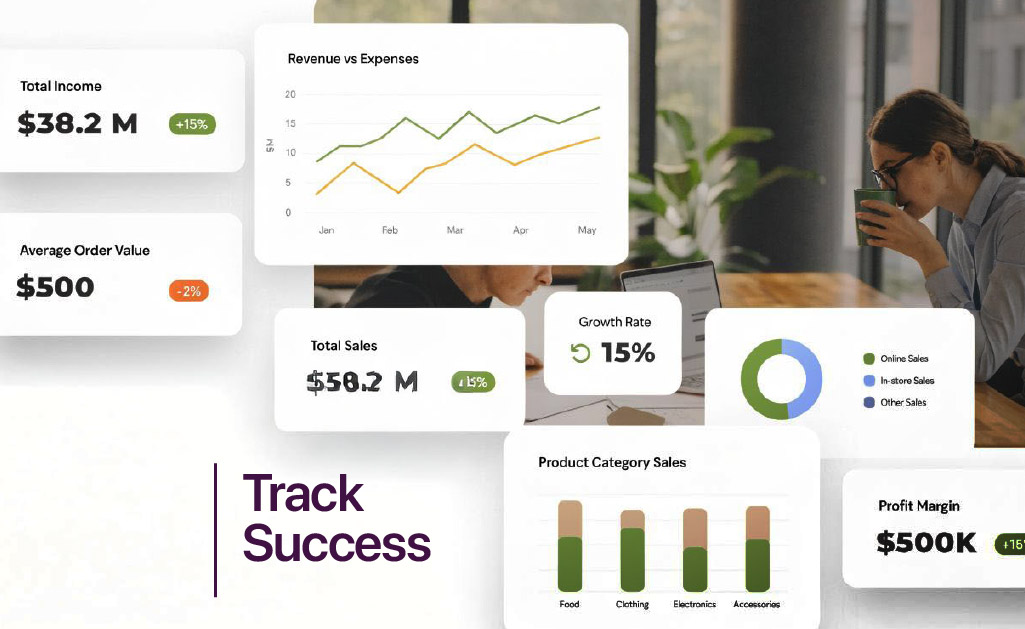
A lot of managers overvalue activity because activity is easy to count. Calls made. Minutes worked. Lists touched. Those numbers matter, but they don’t tell the whole story.
The useful question is whether your outbound call center agents are reaching the right people, having productive conversations, and doing it at a pace that the team can sustain.
Contact rate and pickup rate
These two numbers tell you whether your campaign even has a chance to work.
Per the verified data from Balto’s outbound call center performance metrics overview, contact rates of 5 to 15% for cold calls and 15 to 40% for warm calls are core benchmarks, and call pickup rates should ideally be 60% or higher. When those numbers are weak, the problem often isn’t agent effort. It’s list quality, bad timing, weak number reputation, or poor dialing strategy.
If a manager sees low conversions and immediately blames the script, that’s usually premature. First check whether agents are reaching enough live people.
Calls per agent and what it really means
Calls per agent is a foundational efficiency measure, but it’s easy to misuse.
A high call count in a cold campaign may be healthy. The same number in a complex consultative campaign may signal rushed conversations and shallow discovery. The metric only makes sense in context. You have to line it up with campaign type, average call complexity, and actual business outcome.
That’s why teams need a narrow dashboard, not a data dump. A useful starting point is a reporting framework that keeps supervisors focused on action. Such a framework is greatly enhanced by well-designed call center reporting and KPI dashboards.
Occupancy and utilization
These metrics tell you whether the engine is balanced.
According to the verified data, agent occupancy should be benchmarked at 70 to 80%, while pushing it above 85% significantly increases burnout risk and higher turnover. Many operators make the same mistake. They see idle time, panic, and crank occupancy up too far.
That creates a short-term productivity bump and a longer-term staffing problem. Agents need enough live work to stay productive, but they also need breathing room to reset between difficult conversations, complete notes properly, and stay sharp.
Practical rule: Don’t optimize outbound by squeezing every idle minute out of the day. Optimize it by keeping skilled agents effective for the long haul.
Conversion quality
Conversion rate matters, but the word “conversion” should be defined carefully before the campaign starts.
For one program, conversion might mean a completed sale. For another, it might mean a qualified appointment, payment secured, verified lead, completed survey, or retained customer. If leadership doesn’t define that clearly, reporting gets messy fast.
A strong outbound manager doesn’t just ask, “How many converted?” They ask:
- Was the conversion valid?
- Did it meet the qualification standard?
- Did it create revenue or just internal follow-up work?
- Would sales, finance, or operations accept it as real progress?
A simple scorecard that works
You don’t need twenty metrics on the screen. A short list helps teams manage better.
| Metric | What it tells you | What a problem usually means |
|---|---|---|
| Contact rate | Whether the list and timing are viable | Bad data, weak timing, poor segmentation |
| Pickup rate | Whether calls are connecting efficiently | Reputation issues, dialing windows, list decay |
| Calls per agent | Whether pace matches campaign design | Either underuse or rushed calling |
| Occupancy | Whether workload is balanced | Too much idle time or too much pressure |
| Conversion quality | Whether activity produces business value | Weak qualification, poor call control |
Quality beats raw volume. A team that reaches fewer people but books the right meetings, recovers the right payments, or reactivates the right accounts is usually outperforming a louder team with prettier dial counts.
Building a World-Class Outbound Team
Outbound performance is usually blamed on scripts or leads. In practice, hiring is where wins and losses begin.
The wrong person can read the right script and still fail. The right person can work from a rough outline and still create momentum because they know how to listen, recover, and keep the conversation moving.
What to hire for
Most resumes won’t tell you who can handle repeated rejection without becoming flat, defensive, or careless.
The traits that matter most are usually these:
- Resilience: The agent can hear “no” repeatedly without losing pace or tone.
- Coachability: They’ll adjust quickly when QA or team leads correct approach.
- Empathy: They can hear hesitation, confusion, or frustration and respond like a person.
- Persistence: They don’t give up after the first objection.
- Verbal discipline: They can stay natural while still covering required points.
A practical hiring test often works better than a polished interview. Give candidates a short scenario, have them handle a basic objection, and listen for tone, recovery, and composure.
Training that actually sticks
Initial onboarding is necessary, but it’s never enough for outbound work. Agents need repetition under supervision.
The training model that tends to hold up in production includes role-play, call listening, objection drills, note-taking standards, and campaign refreshers when offer details change. Managers should also teach agents when not to push. That judgment protects the brand.
One of the most useful coaching habits is reviewing both wins and failed calls in the same session. Agents learn faster when they hear what worked, not just what broke.
The goal of coaching isn’t to make every agent sound the same. It’s to make every agent reliably effective.
Why culture is an operations issue
Turnover isn’t just an HR headache in outbound. It’s an operations cost.
The verified data for this article states that turnover in outbound roles often runs 30 to 50% annually due to rejection stress. It also states that nearshore bilingual models like those in Tijuana can see 20 to 30% lower attrition rates by building an agent-centric culture, and that fostering agent agency can lift loyalty metrics by 25%.
That’s the business case for better team design. Supportive coaching, realistic pacing, strong floor leadership, and a culture that treats agents like professionals aren’t soft perks. They protect consistency, reduce replacement churn, and preserve campaign knowledge.
Businesses that want practical ways to strengthen coaching and day-to-day execution can borrow from proven approaches to improving call center agent performance. The point isn’t theory. It’s creating a floor environment where good agents want to stay.
The Strategic Choice In-House Versus Nearshore Outsourcing
Every growing business eventually reaches the same question. Do we build our own outbound team, or do we partner with a specialist?
There isn’t a universal answer. There is a practical one based on your stage, hiring capacity, management bandwidth, compliance needs, and target market.
Where in-house makes sense
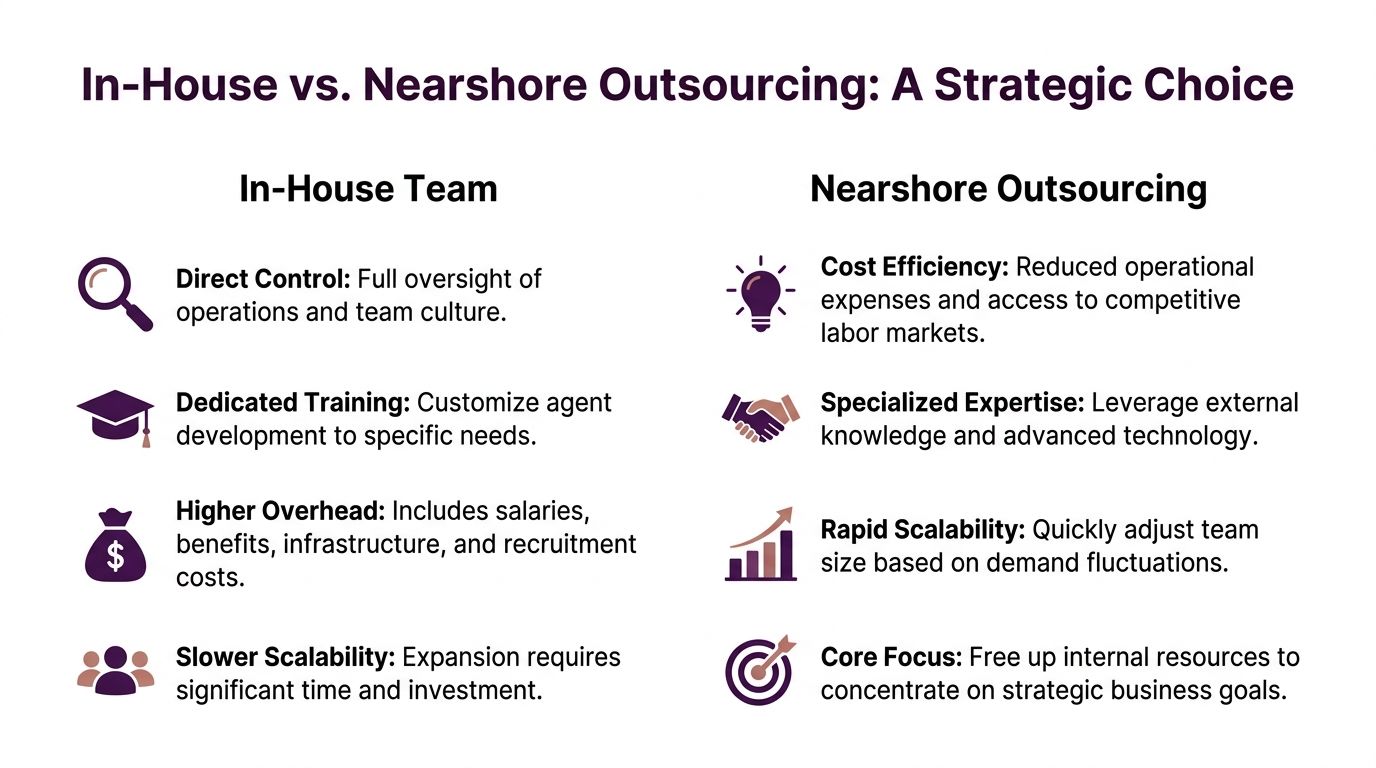
An in-house team can work well when outbound is tied to a complex product, highly sensitive customer relationships, or a tightly integrated revenue motion. You get direct oversight. You shape the culture yourself. You can change scripts, priorities, and workflows quickly.
For some businesses, that control is worth the added effort.
But control comes with operating weight. You have to recruit, train, supervise, monitor quality, maintain systems, and absorb turnover. If you’re still proving the outbound motion, that can become an expensive way to learn basic lessons.
Where nearshore changes the equation
Nearshore outsourcing becomes attractive when a business needs capability quickly and wants alignment with North American buyers.
A nearshore partner in Tijuana can offer bilingual staffing, cultural familiarity, and time-zone overlap that is often easier to manage than distant offshore operations. That matters in outbound because speed of feedback, script tuning, and manager access all affect results.
The model also helps companies avoid building every layer from scratch. Instead of creating a recruiting pipeline, QA system, coaching structure, workforce process, and reporting stack internally, they can plug into an existing operation.
The broader build-versus-buy question is easier to frame when you compare options directly. Businesses evaluating geography, oversight, and operating fit often start with a guide like this one on offshore vs. nearshore contact center outsourcing.
Decision Checklist In-House vs. Nearshore Outsourcing
| Factor | In-House Team | Nearshore Outsourcing (with CallZent) |
|---|---|---|
| Hiring speed | Depends on your recruiting team and local talent pool | Faster access to established recruiting and onboarding processes |
| Bilingual support | Must be built intentionally | Built into the operating model for English and Spanish support |
| Management overhead | Managed internally across supervisors, QA, and operations | Shared with an external operating team |
| Process control | Highest direct control | Strong control if governance, reporting, and QA are defined clearly |
| Technology access | You select, buy, implement, and maintain tools | Often available as part of the service model |
| Scalability | Slower if you need space, hiring, and training capacity | Easier to ramp up or down by campaign need |
| Cost structure | Fixed staffing and infrastructure burden | More flexible operating model for many growing businesses |
| North American alignment | Strong if your team is local | Strong with nearshore time-zone and cultural alignment |
The real trade-off
The choice isn’t “control versus no control.” That’s too simplistic.
The trade-off is direct ownership versus operational scaling. With in-house, you own more moving parts. With a nearshore model, you give up some day-to-day ownership in exchange for speed, labor flexibility, and delivery infrastructure.
That’s often a good trade if your company wants to focus internal resources on product, sales leadership, compliance oversight, or customer experience design rather than staffing a call floor.
What works and what doesn’t
What works:
- Clear campaign ownership: Someone on your side still needs to own goals, approvals, and feedback.
- Shared definitions: Qualified lead, completed contact, valid appointment, and escalation must mean the same thing to both teams.
- Tight reporting cadence: Weekly review beats vague monthly recaps.
- Pilot discipline: Start with a defined campaign scope before broadening.
What doesn’t work:
- Handing over a list with no strategy
- Changing the offer every few days
- Measuring only volume
- Assuming bilingual means bicultural selling skill automatically
- Treating the partner like a vendor instead of an operating extension
A nearshore outbound team performs best when the client brings clarity and the partner brings execution discipline.
For many North American companies, nearshore is strongest when they need a serious outbound function without the drag of building one department by department.
Technology and Scripting for Modern Outbound Success
Good outbound call center agents still need good tools. Talent alone won’t fix weak routing, poor data hygiene, or a script that sounds like a legal disclaimer.
The strongest setups usually combine a CRM, a dialer, call recording, QA workflows, and reporting that supervisors can act on quickly. Add AI carefully, and the operation gets sharper without becoming robotic.

Use technology to support judgment
The most practical tech stack does a few things well.
- CRMs keep context visible: Agents need prior interactions, notes, purchase history, and follow-up tasks in one place.
- Dialers reduce wasted effort: They help agents spend more time talking and less time navigating no-answers.
- Analytics reveal patterns: Supervisors can identify weak lists, poor talk tracks, and coaching needs faster.
- Infrastructure keeps calls stable: Businesses running distributed or outsourced operations also need dependable voice quality and network support. For teams reviewing infrastructure options, this guide to reliable telephony and data connectivity solutions is a useful reference.
Personalization is no longer optional
The verified data for this article notes an emerging shift toward AI and advanced data analytics for hyper-personalized outbound campaigns, with engagement gains of 20 to 40% in North American markets when teams tailor outreach using customer segmentation and purchase history.
That doesn’t mean every business needs an elaborate AI stack. It means generic outreach is losing ground. Agents should know enough about the contact to open with relevance. A reorder reminder should reference prior use. A retention call should reflect recent account activity. A win-back campaign should acknowledge that the customer had a relationship with the brand before.
One practical option for businesses that want this capability through an outsourced model is using a provider such as CallZent, which offers bilingual outbound support tied to campaign workflows and business process support.
Scripts should feel like frameworks
Rigid scripts fail for one simple reason. Buyers can hear the script.
A stronger approach is to give agents a call framework:
- Opening and reason for the call
- Relevance statement
- Discovery question
- Objection paths
- Next-step close
- Required compliance language
That structure keeps calls consistent without making them stiff. Agents sound better when they understand the purpose of each part and can phrase it naturally.
Outbound Campaign FAQ and Sample Scripts
Leaders usually ask the same practical questions before launching outbound. The answers are straightforward if the operation is designed properly.
FAQ that comes up on real campaigns
How do you keep outbound compliant?
Start with your legal and compliance requirements before training begins. Calling windows, consent rules, disclosures, opt-out handling, and data handling should be built into list management, scripts, and QA reviews. Compliance can’t be a footnote added after launch.
How long before a campaign shows useful results?
Expect an early learning period. Lists need cleaning, openings need refinement, and supervisors need time to hear patterns in objections. Good operators look for signal first, then scale what’s working.
Can outbound calls still build real relationships?
Yes, when the call has relevance and the agent sounds informed. Outbound damages trust when it feels random. It builds trust when it solves a timing, information, or service gap.
Sample framework for a warm lead follow-up
Use this when someone has already shown interest.
- Opening: Confirm who you’re speaking with and reference the recent inquiry or interaction.
- Reason: Explain why you’re calling now, not in generic terms.
- Discovery: Ask what prompted the interest and what they’re evaluating.
- Clarify fit: Confirm need, timing, and next decision step.
- Advance: Offer a specific next action such as a demo, quote review, consultation, or callback slot.
A natural example sounds like this in structure: you reached out recently about our service, I wanted to follow up personally, and I’d like to understand what you’re trying to solve before suggesting the next step.
Sample framework for a cold appointment-setting call
Use this when there’s no prior relationship.
- Permission opener: Ask for a brief moment rather than launching into a pitch.
- Reason for targeting: Give a relevant reason the business or role was selected.
- Value hook: Keep it narrow. One problem you help solve.
- Qualify lightly: Ask one or two questions to see whether the issue matters now.
- Close to meeting: Don’t oversell. Ask for a short appointment if there’s a fit.
If a cold call tries to do the full sales cycle in one pass, agents usually lose control of the conversation.
The best scripts are brief on paper and strong in practice. They guide the conversation without replacing the agent’s judgment.
🚀 Scale Your Outbound Team with Confidence
Partner with CallZent to build a high-performance outbound call center with bilingual agents, proven processes, and nearshore efficiency.
Talk to an ExpertIf your business needs outbound capability but doesn’t want to build every layer alone, CallZent can be evaluated as a nearshore option for bilingual outreach, appointment setting, lead generation, collections, and customer engagement support across North America.