Bilingual Answering Services
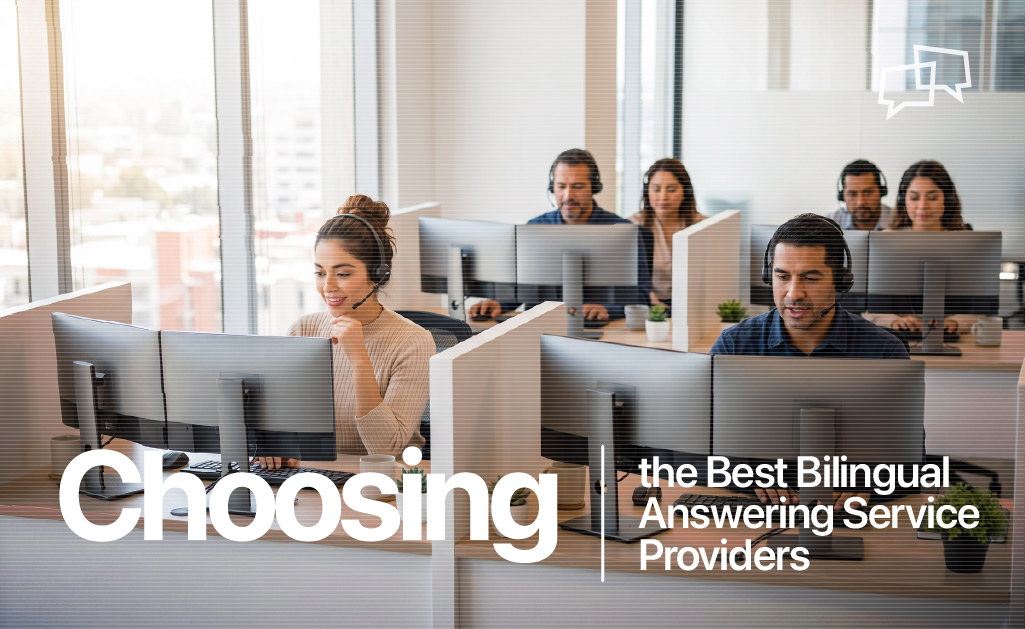
How to Choose the Best Bilingual Answering Service Providers
Compare the best bilingual answering service providers by language quality, coverage, training, compliance, integrations, pricing, and nearshore capabilities.
TL;DR — Quick Takeaways
- The best bilingual answering service providers deliver equally clear, accurate, and empathetic support in English and Spanish.
- Compare live-agent coverage, training, escalation procedures, industry experience, integrations, reporting, security, and pricing.
- Match the service model to your real call volume instead of paying automatically for unnecessary 24/7 coverage.
- Healthcare, legal, finance, e-commerce, and technical-support calls require different scripts, controls, and agent skills.
- Use realistic English and Spanish call scenarios to test providers before signing a long-term agreement.
- A nearshore bilingual team in Mexico can offer U.S. companies compatible time zones, cultural familiarity, and easier collaboration.
A missed call is rarely just a missed call. It may be a patient trying to schedule care, a prospective client with an urgent legal question, or a customer ready to place an order. For companies serving English- and Spanish-speaking customers, choosing among the best bilingual answering service providers is about more than extending phone coverage. It is about protecting revenue, trust, and the experience people have with your brand at a critical moment.
The right provider gives callers a confident, helpful human response in the language they prefer. The wrong one can create confusion, mishandle a sensitive request, or make a customer feel like an afterthought. That difference matters most when your internal team is busy, call volume is rising, or customers need help outside regular business hours.
A professional phone answering service can close these coverage gaps while preserving the tone, procedures, and service standards customers associate with your business.
What Makes a Bilingual Answering Provider “Best”?
There is no single best choice for every business. A medical practice has different needs than an eCommerce brand, law firm, property manager, or IT company. The strongest bilingual answering service is the one that can consistently represent your business, handle the calls you actually receive, and scale without forcing you into a rigid contract or an expensive in-house hiring cycle.
Start with language quality. “Bilingual” should mean more than an agent who can recognize basic Spanish phrases. Agents need the fluency, listening skills, and cultural awareness to understand regional accents, explain next steps clearly, and avoid the awkward handoffs that frustrate callers.
For many U.S. businesses, English and Spanish customer support is the priority, but the level of Spanish-language support should match the complexity of the calls. U.S. Census Bureau language data can help companies evaluate the communities they serve and determine where bilingual coverage may be most relevant. The agency’s American Community Survey language tables provide a useful starting point.
A simple message-taking program and a healthcare triage workflow should not be staffed or scripted the same way. When calls involve appointments, intake details, payment questions, technical troubleshooting, or urgent escalations, the provider must demonstrate that agents can communicate accurately in both languages while following documented procedures.
The Capabilities to Compare Before You Sign
A provider’s marketing language can sound similar from one company to the next. The practical differences appear in operations: who answers, what agents can do, how information moves to your team, and what happens when a call becomes urgent.
Live answering that reflects your brand
Ask whether live agents answer every call or whether automated systems sit in front of them. Automation can help route basic requests, but it should not become a barrier when a caller needs reassurance or has a time-sensitive issue.
Look for customized call scripts, account-specific training, and clear escalation paths. A provider should be able to greet callers using your company name, ask the appropriate qualifying questions, and deliver messages in a format your team can act on.
Agent preparation should include realistic call scenarios, knowledge checks, supervised practice, and ongoing coaching. CallZent’s explanation of how bilingual agents are trained offers a practical reference for evaluating whether a provider’s training process goes beyond script memorization.
If agents sound like a generic call center or cannot explain your procedures confidently, customers will notice.
Coverage that matches demand, not a brochure
Some companies need after-hours answering only. Others need overflow support during busy periods, weekend coverage, or 24/7 availability. Define your current coverage gap before comparing providers.
Paying for round-the-clock service makes sense when missed calls create real risk or lost revenue. It may be less valuable when customers only need support during predictable business hours.
Also ask how the provider handles spikes. A seasonal retailer, tax service, restaurant group, or growing healthcare practice may experience significant changes in volume. The best partner has a staffing plan for these moments rather than treating every increase as an exception.
Review historical call patterns by hour, day, season, promotion, and billing cycle. That information will help the provider develop a coverage plan based on actual demand rather than a generic service package.
Industry knowledge and compliance discipline
Industry experience is not a cosmetic credential. In healthcare, agents may need to follow privacy requirements and distinguish an appointment request from an emergency. In legal services, intake teams must collect information carefully without giving legal advice. In consumer finance, payment and account conversations require strong verification and documentation practices.
Organizations evaluating healthcare answering and support services should confirm whether the provider may receive or access protected health information. The U.S. Department of Health and Human Services explains that vendors performing certain functions involving protected health information may qualify as business associates under HIPAA and require appropriate contractual and security safeguards.
Legal practices should similarly evaluate whether providers have structured processes for conflict-sensitive information, urgent escalation, and accurate intake. CallZent’s overview of legal intake services outlines several capabilities relevant to law firms comparing providers.
Request examples of workflows similar to yours. Then ask how quality is measured, how agents are coached, and how the provider protects sensitive information. A clear answer should include documented procedures, supervisor involvement, call monitoring, access controls, and a process for correcting errors quickly.
Technology that helps your team act faster
Your answering service should fit into the way your business already works. Depending on your requirements, that may include integrations with a CRM, scheduling platform, ticketing system, practice-management application, or messaging tools.
The objective is not to add technology for its own sake. It is to prevent leads, messages, and customer details across multiple channels from being copied manually or lost between systems.
Confirm how messages are delivered, how quickly they arrive, and whether your team can review call records. If a caller requests a callback, books an appointment, or reports an issue, the follow-up process should be visible and accountable.
Ask which system owns each record, how failed integrations are detected, and whether agents have a fallback process when an application is unavailable. A connection that works during a sales demonstration is not enough; it must remain reliable during everyday operations.
Communication accessibility beyond language
Bilingual service and communication accessibility are related but distinct requirements. Some callers may use relay services or require other accommodations because of hearing, speech, or vision disabilities.
The U.S. Department of Justice explains that covered organizations must communicate effectively with people who have communication disabilities and that staff answering phones should treat telecommunications relay calls like other calls. Its ADA effective-communication guidance is a useful reference when designing call-handling procedures and agent training.
A Practical Way to Evaluate Bilingual Answering Services
Rather than comparing only advertised prices, run a short evaluation based on your own call scenarios. Share realistic examples with each prospective provider, such as:
- A Spanish-speaking caller requesting an appointment
- A frustrated customer seeking help with an order
- A prospective client requesting a quote
- An after-hours issue requiring immediate escalation
- A caller who begins in English but prefers to continue in Spanish
- A customer using a telecommunications relay service
Pay attention to the questions each provider asks. A strong partner wants to understand your call types, volume patterns, service standards, systems, customer profiles, and risk areas. A weak provider may rush to quote a generic package without learning what success looks like for your operation.
During the evaluation, assess four areas together:
- Language performance: Are English and Spanish interactions equally clear, professional, accurate, and empathetic?
- Operational control: Can you define scripts, escalation rules, service hours, integrations, and reporting expectations?
- Commercial flexibility: Are pricing, minimums, overage charges, implementation costs, and contract terms transparent?
- Partnership quality: Will you have a responsive point of contact who helps improve the program over time?
This process reveals an important trade-off. The lowest per-minute or per-call rate may look attractive, but it can become expensive if agents cannot convert leads, capture accurate messages, or resolve routine customer needs.
A premium service model is not automatically better if it includes capabilities your company will never use. The best value comes from the appropriate level of service delivered consistently. A detailed call center pricing comparison can help buyers look beyond headline rates and evaluate the complete operating model.
Why Nearshore Bilingual Support Changes the Equation
For U.S. companies, a nearshore provider in Mexico can offer meaningful advantages over distant offshore delivery. Geographic proximity supports overlapping business hours, simpler communication with management, and faster collaboration when procedures change.
Cultural familiarity with U.S. customers can also make conversations feel more natural, particularly for businesses serving diverse communities across the Southwest and other regions with significant English- and Spanish-speaking populations.
Nearshore support is not simply a labor-cost decision. It can also be a customer experience decision. When agents have strong English and Spanish fluency, understand the expectations of North American callers, and receive thoughtful training, they are better positioned to represent the business as an extension of its internal team.
Businesses considering this model can review the operational advantages of a nearshore bilingual call center, including time-zone alignment, access to bilingual talent, and closer management collaboration.
Agent experience also deserves attention during provider selection. High turnover, weak training, and disconnected management eventually appear in customer conversations. Providers that invest in agent empowerment, coaching, and retention are more likely to provide the consistency clients need.
Better-supported agents tend to listen more closely, take greater ownership, and create the real human connections that build loyalty.
CallZent takes this approach through customized nearshore programs designed around each client’s workflows, service standards, technology, and growth plans. For organizations that want bilingual support without unnecessary contract pressure, flexibility and transparent operating expectations can make the transition less risky.
Questions That Reveal the Right Fit
Before selecting a provider, ask:
- Who will own our account after launch?
- How often will performance be reviewed?
- How do you test spoken English and Spanish proficiency?
- How is bilingual quality evaluated separately from general call handling?
- What happens when a caller requires an immediate escalation?
- How quickly can scripts, schedules, and workflows be changed?
- What is the staffing plan if call volume doubles unexpectedly?
- Which security controls protect customer and account information?
- How are integration failures detected and resolved?
- Can the program expand into appointment setting, intake, order support, or customer service?
You should also understand the onboarding process. A well-run launch includes discovery, script development, workflow mapping, agent training, testing, and a plan for early feedback. It should not require your team to hand over a phone number and hope for the best.
The provider needs enough context to make sound decisions, while your internal team needs enough visibility to remain in control.
Finally, consider whether the relationship can grow with you. An answering service may begin as after-hours coverage and later expand into appointment setting, lead qualification, customer service, order processing, or back-office support.
A partner with broader capabilities can reduce disruption when your needs change, provided it continues delivering the quality that earned your trust.
The right bilingual answering service does more than make sure someone picks up. It gives every caller a clear path forward in the language that makes them feel understood, while giving your internal team more capacity to focus on the work that moves the business ahead.
Give Every Caller a Helpful Human Response
CallZent builds dedicated bilingual answering teams in Mexico around your callers, workflows, service standards, technology, and growth plans.
Frequently Asked Questions
1. What is a bilingual answering service?
A bilingual answering service uses trained agents to answer calls in two languages, commonly English and Spanish, on behalf of another organization. Agents may take messages, schedule appointments, qualify leads, answer questions, or escalate urgent requests.
2. What distinguishes the best bilingual answering service providers?
Strong providers combine verified language proficiency, brand-specific training, dependable coverage, clear escalation rules, quality assurance, secure operations, useful integrations, transparent pricing, and accountable management.
3. How should a business test bilingual agents?
Use realistic English and Spanish calls that reflect actual customer situations. Evaluate comprehension, fluency, vocabulary, empathy, information accuracy, process adherence, and the ability to explain next steps clearly.
4. Does every business need a 24/7 answering service?
No. Coverage should match customer behavior and business risk. Some companies need continuous support, while others receive better value from after-hours, overflow, weekend, or peak-season coverage.
5. How much does a bilingual answering service cost?
Pricing depends on call volume, duration, operating hours, agent specialization, workflows, integrations, languages, and contract structure. Providers may charge per minute, call, hour, agent, or through a customized model.
6. Can bilingual answering services schedule appointments?
Yes. A properly integrated service can schedule, modify, or cancel appointments according to approved availability, verification rules, scripts, and escalation procedures.
7. Can an answering service support healthcare organizations?
Yes, but healthcare organizations should verify the provider’s training, privacy controls, access procedures, incident response, contractual safeguards, and ability to follow approved scheduling and escalation workflows.
8. What is a nearshore bilingual answering service?
It is an answering operation located in a nearby country. For U.S. businesses, Mexico can provide English and Spanish talent, compatible time zones, cultural familiarity, and easier management collaboration.
9. Which metrics should a bilingual answering service report?
Useful metrics include answer speed, abandonment, message accuracy, appointment completion, lead capture, escalation response, call quality, English and Spanish quality scores, customer satisfaction, and service-level performance.
10. How long does it take to launch a bilingual answering program?
Timing depends on workflow complexity, required integrations, staffing, security review, scripts, training, and testing. A focused program may launch faster than a regulated or highly integrated operation.