

OUTBOUND CALL CENTER
Outbound Call Center Solutions for Business Growth and ROI
Outbound call center solutions help businesses generate leads, increase sales, and improve ROI with proactive outreach and nearshore bilingual teams.
TL;DR — Quick Takeaways
- Outbound call center solutions create pipeline instead of waiting for inbound leads
- Businesses using outbound strategies can see up to 42% more growth
- Modern outbound combines technology, CRM, and structured workflows
- Nearshore bilingual teams improve ROI through cost and quality balance
If your team is waiting for inbound leads to show up, you’re giving up control of your pipeline.
That approach works when demand is already high and your brand is top of mind. Most businesses aren’t operating in that environment every day. They need a repeatable way to start conversations, qualify interest, and move prospects forward without waiting for a form fill or a referral.
A strong outbound program does exactly that. It turns growth from a passive hope into an operating system.
Growing Your Business Can’t Be a Waiting Game
What happens when paid ads get more expensive, referrals slow down, and your sales team has too few qualified conversations on the calendar? Most companies feel it immediately. Revenue gets harder to forecast, managers start chasing short-term fixes, and the pipeline becomes reactive.
Outbound call center solutions solve a different problem than inbound support. They create demand instead of just handling it. That matters because companies that integrate outbound cold calling into their strategy experience 42% more growth than those that don’t, and proactive contact leads to 92% of consumers viewing brands more positively, according to Readymode’s call center statistics and trends.

Passive pipelines break under pressure
A passive growth model usually looks like this:
- Marketing waits for clicks: Leads depend too heavily on ad spend, search traffic, or seasonal spikes.
- Sales works old lists: Reps call inconsistently because prospecting isn’t built into operations.
- Managers lack visibility: Nobody knows whether low output comes from weak targeting, poor timing, or inconsistent follow-up.
That setup creates uneven results. One good month hides three weak ones.
Outbound creates controllable momentum
A disciplined outbound motion gives you more levers to work with. You can adjust targeting, scripts, call windows, list quality, offer positioning, and follow-up cadence. That’s far easier than hoping market conditions improve.
A practical example is a regional service company that wants more booked consultations. Instead of waiting for website inquiries, it can run a focused outbound campaign to past leads, no-decision prospects, and dormant accounts. The team doesn’t need to close every call. It needs to restart qualified conversations.
Key takeaway: Businesses grow faster when they actively create sales conversations instead of waiting for them.
Outbound also works well when it connects to a broader process. Lead lists should be segmented. Scripts should match the audience. Follow-up should continue across channels where appropriate. That’s why many teams start by tightening their outbound lead generation strategies before they scale headcount.
Understanding Outbound Call Center Solutions
An inbound team is like a storefront. People walk in because they already know you, need something, or have a problem to solve.
Outbound call center solutions are different. They go into the market, find the right people, start the conversation, and move it toward a business goal.
Outbound is a business function, not just a call queue
Too many companies treat outbound as simple phone work. It isn’t. A good outbound operation combines targeting, timing, scripting, call handling, CRM discipline, and follow-up. The call is only one step in the workflow.
Many business owners benefit from a plain-language breakdown like What Is Outbound Sales and How Does It Work?, which explains the mechanics behind proactive outreach and how it fits into the sales process.
What outbound call center solutions are actually built to do
The purpose of outbound isn’t “make more calls.” It’s to produce one or more of these outcomes:
- Create pipeline: Reach prospects who haven’t engaged yet.
- Qualify interest: Find out who has need, timing, authority, or urgency.
- Book next steps: Set demos, consultations, callbacks, or site visits.
- Recover stalled opportunities: Re-engage old leads and inactive accounts.
- Collect information: Gather survey responses, customer feedback, or market signals.
- Resolve account issues: Handle payment reminders, collections, and account follow-up.
Those are distinct motions. A healthcare provider calling to confirm appointments needs a different cadence than a telecom sales campaign. An e-commerce brand running win-back outreach needs different scripting than an insurance broker booking policy reviews.
The strategic shift most teams miss
The biggest change with outbound is mindset. You’re no longer asking, “How do we respond faster?” You’re asking, “Who should we contact next, why now, and what outcome are we driving?”
That changes how you staff, measure, and manage the work.
Outbound works when the campaign has a clear target, a clear reason for calling, and a clear next step.
A company that sells into SMBs might use outbound to identify decision-makers and hand qualified meetings to account executives. A finance team might use it to support collections while protecting customer relationships. A retail brand might use it to reactivate lapsed buyers before a seasonal launch. Same channel. Different strategy.
That’s why outbound call center solutions should be designed around commercial intent, not generic call volume.
Key Services Offered by Outbound Call Centers
The easiest way to understand outbound services is to look at what agents do during the day. The best programs aren’t broad for the sake of being broad. They match a service model to a specific revenue or retention problem.
Lead generation and prospect qualification
A B2B software company often starts with a list of target accounts, not warm leads. Agents call into those accounts to identify the right contact, confirm role and need, and qualify whether there’s a real opportunity. If the prospect isn’t ready, the call still adds value by updating the CRM with accurate buying context.
For this kind of campaign, the script matters. Not because agents should sound robotic, but because they need a consistent opening, a sharp value proposition, and a reliable way to handle objections. A practical guide to building that structure is a strong call center script framework.
Appointment setting for sales and service teams
Appointment setting sounds simple until you run it at scale. The agent has to determine whether the contact is worth a calendar slot, position the meeting clearly, and reduce no-show risk.
A financial advisory firm is a good example. Its outbound team may call older website leads, referral introductions, or prior clients due for a review. The goal isn’t to explain every planning service on the first call. The goal is to secure a qualified consultation with the advisor.
A healthcare practice might use the same model differently. Agents can confirm patient interest, explain the next step in plain language, and book time with the right department.
Telemarketing and direct sales
Telemarketing still has a place when it’s targeted and professionally managed. It works best when the offer is specific and the audience fit is already defined.
A home services company might call prior estimate requests that never converted. An e-commerce brand might reach out to high-value customers with a replenishment reminder or a new offer. A telecom provider may use outbound to upsell current customers into a more suitable plan.
What doesn’t work is broad, list-first telemarketing with weak targeting. That burns time, hurts brand perception, and gives management the false impression that outbound itself is ineffective.
Surveys and market research
Some of the most useful outbound campaigns don’t sell anything on the call. They collect information that improves retention, messaging, or product decisions.
Examples include:
- Post-purchase surveys: An online retailer calls recent buyers to understand delivery, fit, or support issues.
- Brand perception checks: A regional business tests how customers compare its service against local competitors.
- Voice-of-customer research: A healthcare provider gathers feedback on scheduling friction or service clarity.
These calls work because customers often say more in a conversation than they do in a short form.
Collections and payment reminders
Debt collection is sensitive work. The wrong tone creates complaints. The right process protects cash flow without treating people poorly.
A strong outbound collections team doesn’t just demand payment. It confirms the issue, explains the balance clearly, offers an acceptable next step, and documents everything. In bilingual markets, this becomes even more important because clarity lowers confusion and conflict.
Practical rule: The more sensitive the campaign, the more process discipline matters. Script quality, agent training, and call documentation become non-negotiable.
The Modern Technology Stack for Outbound Success
What makes one outbound program produce pipeline while another burns payroll on unanswered calls and bad follow-up? In practice, the difference is rarely effort alone. It is the stack behind the agents.
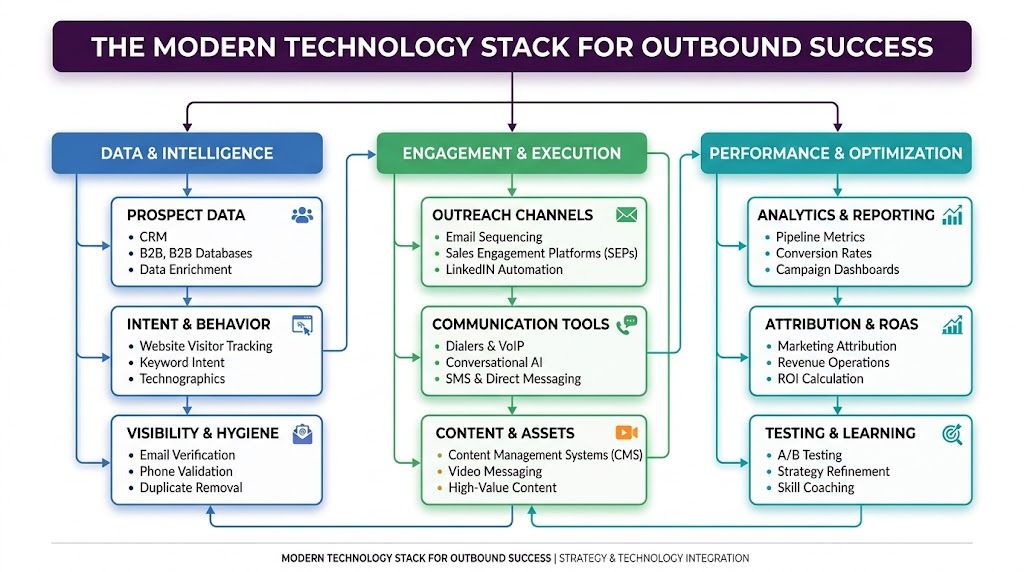
Dialers determine pace and efficiency
Dialing mode should match the job.
Predictive dialers fit high-volume campaigns where speed matters and contact records are reasonably clean. Nextiva’s guide to outbound call centers notes that predictive dialing can increase calls per agent by 20% to 50%. That gain is real, but only if answer rates, staffing, and compliance settings are managed tightly. Run predictive too aggressively on a weak list, and connect quality drops fast.
Power dialers give teams a steadier cadence. They work well when managers want tighter control over pacing, or when the call requires a cleaner handoff between answer and agent.
Progressive and preview dialing belong in higher-consideration work. That includes B2B prospecting into niche accounts, collections, and any campaign where the agent needs to review history, language preference, or prior objections before speaking.
For SMBs, this choice has a direct ROI effect. A cheaper dialing setup that creates wasted connects, short calls, or repeat callbacks often costs more than a better-configured system with fewer total dials and more productive conversations. Teams evaluating providers should review how predictive dialing tools improve outbound productivity before they compare hourly rates alone.
Caller identity now affects contact rates
A lot of outbound underperforms before the agent says a word. The number looks suspicious, gets flagged, or goes unanswered because the caller identity lacks trust signals.
Current platforms address that with branded calling, STIR/SHAKEN verification, and faster routing between answer and agent. Those features matter because they protect connect rates and reduce the dead air that causes hang-ups. For a nearshore team serving U.S. customers, that matters even more. If a bilingual agent is ready with the right script and CRM context, but the call never gets answered or drops in the first seconds, labor cost rises without creating any selling opportunity.
This is one of the missed advantages of a nearshore partner. A Tijuana-based team supporting North American campaigns can pair lower operating cost with U.S.-market calling infrastructure, but the savings only show up if the platform protects answer quality.
CRM integration protects margin
The dialer gets attention. The CRM determines whether the campaign stays profitable after day one.
Agents need live access to contact history, prior outcomes, language preference, product interest, and next-step rules while the call is happening. Managers need disposition data they can trust. Without that, every problem looks the same. Teams blame the script when the list is poor, blame the agent when the offer is off, and blame outbound when the workflow is broken.
A workable outbound setup should include:
- List hygiene: remove duplicates, invalid numbers, and stale records before launch
- Disposition standards: use consistent call outcomes so reporting and follow-up stay accurate
- Callback routing: send each contact to the correct queue, sequence, or owner
- Supervisor visibility: monitor live activity and spot breakdowns early
- Language logic: route Spanish-speaking contacts correctly instead of treating bilingual support as an afterthought
That last point matters more than many buyers expect. In healthcare, home services, legal intake, and specialty retail, bilingual routing improves contact quality and conversion quality at the same time. It also prevents the expensive handoff failures that happen when a prospect answers, shows interest, and then gets transferred poorly or called back too late.
Analytics and AI shorten the correction cycle
Good outbound teams do not wait for weekly reports to figure out what went wrong. They watch live performance and make changes while the campaign is still salvageable.
That includes pickup trends, answer-to-agent delay, voicemail patterns, conversion by list segment, and agent-level outcomes. AI tools can help if they are tied to operational decisions instead of treated as a feature checklist. Real-time prompts can improve objection handling. Conversation analysis can surface recurring friction. AI-powered lead scoring can also help teams rank outbound lists so agents spend more time on contacts with a stronger chance of converting.
The trade-off is straightforward. More automation increases throughput, but it also raises the cost of bad data and weak process design. A fast system with poor inputs scales waste.
The right stack fits the campaign and the buyer
Outbound technology should reflect the economics of the campaign. A high-volume appointment setting program needs one setup. A niche B2B offer with a small TAM needs another. A collections workflow with bilingual payment conversations needs another.
That is why provider fit matters as much as features. CallZent is one example of a provider supporting outbound programs with bilingual agents, nearshore delivery, and outbound workflows for North American campaigns. The real test is whether a partner can explain, in operational terms, how its dialer, CRM, caller identity tools, and analytics will lower cost per conversation and improve revenue yield for your specific use case.
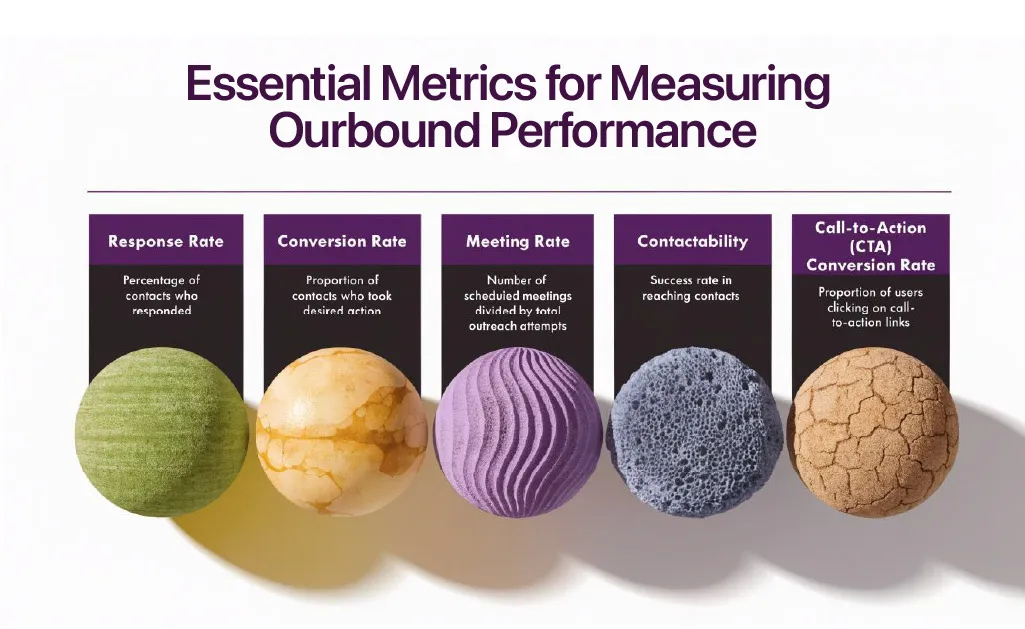 Essential Metrics for Measuring Outbound Performance
You don’t know whether outbound is working by looking at total dials. High dial volume can hide bad data, weak scripting, and poor connect quality. The metrics that matter are the ones that tell you whether conversations are happening efficiently and turning into business outcomes.
The KPIs that actually tell you what’s happening
According to NICE’s guide to outbound call centers, top-performing campaigns maintain agent occupancy above 85%, keep abandon rate below the 3% regulatory threshold, and tune predictive dialing so hold times stay under 4 seconds.
Those benchmarks are useful because each one points to a different operational issue.
| Metric | What it tells you | What to do if it’s off |
|---|---|---|
| Occupancy rate | Whether agents are spending enough of the shift in productive talk time | If it’s low, look at dialing mode, list quality, and idle gaps |
| Abandon rate | Whether the dialer is creating answered calls with no timely agent connection | If it’s high, reduce dial aggression and review staffing |
| Hold time | How long a person waits after answering before reaching an agent | If it drifts upward, customers drop and trust falls |
| Conversion rate | Whether real conversations turn into the intended result | If it’s weak, test script openings, offer fit, and targeting |
| AHT | How long the full interaction takes | If it’s inflated, simplify call flow and tighten scripting |
Metrics should lead to action, not reporting theater
A healthy outbound dashboard helps managers make decisions. It shouldn’t exist just to decorate a weekly meeting.
A few practical reads:
- Good occupancy with poor conversion usually means the team is busy but not persuasive.
- Good pickup with poor talk quality often points to a bad opening or bad audience fit.
- Long AHT with weak outcomes can mean agents are overexplaining, searching systems, or handling unclear objections.
- High abandon pressure usually means the dialer is tuned for volume at the expense of experience.
For lead generation teams, prioritization matters too. If you’re refining who should be contacted first, a primer on AI-powered lead scoring is useful because it shows how qualification signals can improve outbound sequencing.
Dashboards should connect performance to ROI
Executives want more than activity. They want to know whether outbound is creating profitable movement.
That means your reporting should connect campaign results to business questions such as:
- Are qualified meetings increasing?
- Are callbacks happening on time?
- Which lists produce the best outcomes?
- Which agents convert well on which campaign types?
- Which script versions create better next-step rates?
A proper KPI layer makes those conversations easier. That’s where a strong call center reporting and metrics dashboard becomes part of management, not just oversight.
When a provider can’t explain poor performance with data, they’re usually guessing.
Navigating Compliance and Security in Outbound Calling
Plenty of outbound campaigns fail before the first live conversation because the compliance model is weak. Others hit their numbers for a while, then create complaints, reputation issues, or legal exposure that costs more than the campaign ever returned.
Compliance protects revenue and brand trust
Outbound teams need clear rules for who can be contacted, when they can be contacted, and how opt-outs are handled. That starts with scrubbing against the National Do Not Call Registry and keeping internal suppression lists current.
This isn’t only about avoiding penalties. It also affects response quality. If your outreach feels careless, people don’t separate the bad call from your brand. They remember the interruption.
A practical example is a multi-location business running seasonal promotions. If list management is loose and prior opt-outs aren’t respected, the campaign doesn’t just generate complaints. It reduces trust in future calls, even when the next offer is relevant.
Security requirements change by industry
Outbound work often touches sensitive information. Healthcare campaigns may involve protected health information. Financial services teams may handle payment conversations. Insurance, retail, and telecom operations all store customer data that needs controlled access and disciplined workflows.
A reputable provider should be able to explain, in plain English:
- How agents access customer records
- How call notes are controlled
- How recordings are handled
- How permissions are managed by role
- How opt-outs and suppression requests are applied across campaigns
If a provider answers those questions vaguely, that’s a warning sign.
Multi-channel outreach adds another layer
Many modern campaigns combine voice with SMS or other follow-up channels. That can improve continuity, but it also increases operational risk if consent handling and data controls are inconsistent.
The right approach is simple. Every channel should follow the same contact rules, the same data governance logic, and the same documentation standards. The customer should never have to repeat an opt-out because one team owns calls and another owns texts.
Strong outbound providers don’t treat compliance like paperwork. They build it into list prep, agent training, QA, and reporting.
Good compliance discipline also improves daily operations. Clean lists reduce wasted effort. Clear scripts lower agent improvisation. Structured documentation makes audits and dispute review far less painful.
How to Choose a Provider and Maximize Your ROI
Most outbound failures aren’t caused by the channel. They’re caused by provider mismatch.
A business buys on price, gets poor visibility, weak scripting, and inconsistent agents, then concludes outbound doesn’t work. In reality, the model was wrong for the campaign.
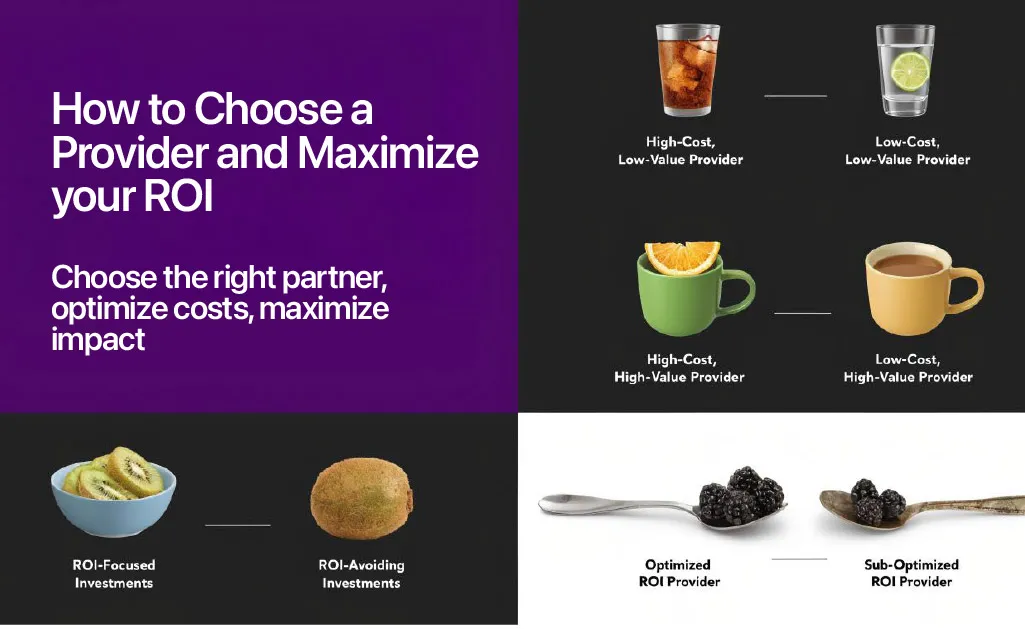
Start with the operating model, not the pitch deck
There are three common ways to run outbound:
| Model | Best fit | Trade-off |
|---|---|---|
| In-house | Teams that want direct control and already have management, tools, and hiring capacity | Higher internal complexity and slower scaling |
| Offshore | Cost-focused programs with high volume and tightly defined workflows | Potential friction around language nuance, time zone alignment, and customer experience |
| Nearshore | North American businesses that need cost control plus closer cultural and operational fit | Requires choosing a partner with real process maturity |
For SMBs and niche industries, nearshore often lands in the sweet spot. It gives companies external capacity without pushing the operation too far from the customer.
Why nearshore ROI is often stronger than it looks on paper
The obvious cost line isn’t the whole story. Setup friction, retraining, slow communication, missed nuance, and low conversion quality all affect actual ROI.
According to CallZent’s overview of outbound call center outsourcing, nearshore outsourcing from locations like Tijuana can deliver 20% to 30% lower costs than offshore alternatives and a 15% higher customer satisfaction rate because of cultural proximity and bilingual fluency. The same source notes that this model is particularly effective for smaller businesses that often abandon other solutions because setup costs and weak ROI outweigh the benefits.
That combination matters in practice.
A bilingual e-commerce brand selling across the U.S. and Spanish-speaking households doesn’t just need lower labor cost. It needs agents who can switch languages naturally, understand customer context, and coordinate with U.S.-based managers during the same business day.
A healthcare support campaign may need extra care around communication clarity and process discipline. A finance or insurance campaign may require a more controlled, trust-first call style. Nearshore teams tend to fit those requirements better than low-cost, far-shore setups built primarily around labor arbitrage.
Pricing model affects behavior
Pricing changes how providers operate. That’s why buyers should ask not just “what does it cost?” but “what behavior does this pricing encourage?”
Consider the common models:
- Hourly billing: Good when the campaign is still being refined and management wants flexibility. Less useful if the provider hides behind activity without delivering outcomes.
- Dedicated agent model: Strong when you need continuity, training depth, and a team that learns your business over time.
- Pay-for-performance: Attractive on paper, but sometimes encourages cherry-picking easy wins or shallow qualification unless definitions are very tight.
A collections campaign, for example, may need a more controlled dedicated-agent structure. A short-term appointment setting push may fit a different model. The key is aligning price structure with campaign reality.
Questions that expose provider quality fast
A serious provider should answer these clearly:
- How do you segment lists before launch?
- Which dialing mode do you use for this campaign type, and why?
- How do you handle bilingual interactions?
- What does QA review every week?
- How do you report performance and exceptions?
- How quickly can campaign adjustments be made?
- How do you apply opt-outs and suppression rules?
If the answers are generic, the operation probably is too.
For buyers comparing vendors, a practical screening guide on how to find and vet the best call center outsourcing companies helps narrow the field before you get into final pricing.
The best ROI usually comes from fit
The cheapest partner often becomes the most expensive one to fix. The highest ROI usually comes from a provider whose agents, technology, reporting, language coverage, and management cadence match the campaign.
Buy for operating fit. Cost matters, but mismatch is what kills ROI.
For SMBs especially, that’s the overlooked advantage of a nearshore bilingual partner. You get meaningful savings, easier collaboration, better language flexibility, and fewer hidden costs from misalignment.
Launch Your Outbound Growth Engine Today
A good outbound program does more than increase call volume. It creates a controlled way to generate pipeline, book revenue opportunities, recover stalled prospects, and support retention with measurable discipline.
The pattern is consistent. Strong results come from matching the right service model to the right campaign, using a modern tech stack, tracking the metrics that matter, and treating compliance as part of operations instead of an afterthought.
Businesses that win with outbound call center solutions don’t wait for ideal market conditions. They define their audience, build the workflow, and start conversations with purpose.
If you’re evaluating your next move, keep the decision simple:
- Choose clear campaign goals
- Match the dialer and workflow to the job
- Demand transparent reporting
- Prioritize provider fit over low headline cost
- Use a nearshore model when bilingual quality and North American alignment matter
That’s how outbound becomes a growth engine instead of a cost center.
Frequently Asked Questions About Outbound Solutions
Businesses usually reach the same set of questions once they move past the basic idea of outbound and start evaluating execution. The answers below focus on practical decision points.
| Question | Answer |
|---|---|
| What are outbound call center solutions used for? | They support proactive business outreach such as lead generation, appointment setting, telemarketing, customer surveys, follow-up calls, retention campaigns, and collections. The best use case depends on whether you need pipeline growth, better follow-up discipline, account recovery, or customer insight. |
| Are outbound call center solutions only for large companies? | No. Smaller businesses often benefit because outbound gives them a repeatable way to generate conversations without building a full internal department. The main requirement is a clear goal, a defined audience, and a provider or internal team that can run the process consistently. |
| When should a company outsource outbound instead of building in-house? | Outsourcing makes sense when internal teams lack bandwidth, outbound management experience, or the technology stack needed to run campaigns well. It also helps when speed matters and you need trained agents, reporting, and workflow support sooner rather than later. |
| What industries get the most value from outbound? | E-commerce, healthcare, telecom, finance, insurance, retail, and B2B services all use outbound effectively. The difference is in execution. Healthcare may focus on reminders and follow-up. Finance may prioritize controlled account conversations. E-commerce often uses outbound for reactivation and customer touchpoints. |
| What should I ask before hiring an outbound partner? | Ask how they handle list prep, script development, bilingual coverage, dialer selection, QA, compliance, reporting, and campaign changes. You also want to know who manages day-to-day performance and how quickly issues are surfaced and corrected. |
| How long does it take to see results from outbound? | It depends on the campaign. Some appointment-setting and reactivation programs produce early traction quickly. More complex B2B or high-consideration campaigns usually take longer because list testing, script refinement, and qualification standards need to settle before performance becomes consistent. |
| Do I need omnichannel follow-up or just calling? | Voice-only can work, especially for direct outreach or simple appointment campaigns. But many teams improve follow-through when calls connect to SMS, CRM tasks, or other follow-up steps. The right answer depends on your buyer behavior and compliance requirements. |
| Why do nearshore outbound teams appeal to North American businesses? | Nearshore teams can offer closer time-zone alignment, easier collaboration, bilingual support, and stronger cultural fit than more distant outsourcing models. That tends to matter most when campaigns rely on conversational quality, coordination speed, and customer trust. |
If you’re weighing outbound call center solutions and want a nearshore option with bilingual support, operational visibility, and North American alignment, CallZent is a practical place to start the conversation.
🚀 Ready to Scale Your Outbound Strategy?
CallZent helps businesses build high-performing outbound programs with bilingual agents, modern technology, and nearshore efficiency.
Talk to an Expert