
Bilingual Healthcare Support
Best Healthcare Scheduling Services: How to Choose the Right Partner
A practical guide to comparing patient scheduling partners, expanding bilingual access, and building a more reliable appointment workflow.
TL;DR — Quick Takeaways
- The best healthcare scheduling service fits your appointment rules, patient needs, systems, and coverage gaps.
- Compare answering, dedicated, overflow, and blended models before committing to a team size.
- Prioritize booking accuracy, clear bilingual communication, privacy safeguards, and clinical escalation.
- Start with a controlled scope and measure access, booking quality, and patient feedback before expanding.
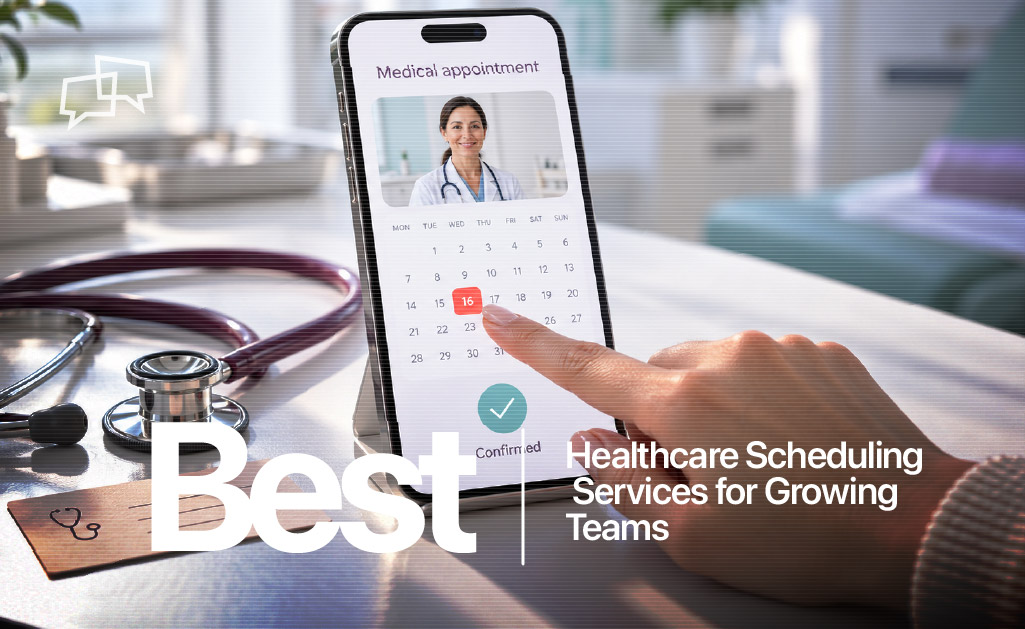
A patient who cannot reach your office when they are ready to book may not call back. That is why the best healthcare scheduling services do more than fill calendar slots. They protect patient access, reduce administrative pressure, and give healthcare organizations a reliable way to manage demand without asking internal teams to do more with less.
For growing practices, clinics, specialty groups, and healthcare networks, scheduling is often where the patient experience begins. It is also where lost revenue, long hold times, incomplete intake details, and avoidable no-shows can quietly accumulate. The right service model turns scheduling into a controlled, measurable part of operations rather than a daily staffing scramble.
What Makes a Healthcare Scheduling Service Worth Choosing?
The best provider is not necessarily the one with the largest call center or the lowest quoted hourly rate. Healthcare scheduling requires people, processes, and technology that can support the way your organization actually operates.
A strong service should handle appointment requests accurately, follow your scheduling rules, document interactions correctly, and know when an issue requires escalation. It should also fit naturally into your existing workflow, whether patients call for a primary care appointment, a specialist referral, a diagnostic test, a telehealth visit, or post-discharge follow-up.
Most importantly, the service should improve access without making patients feel transferred into an impersonal system. A warm, informed conversation can make a meaningful difference for someone who is worried, in pain, or trying to understand what happens next.
Patient experience comes before speed alone
Fast answer times matter, but speed without clarity creates its own problems. A scheduling representative must be able to listen carefully, explain available appointment options in plain language, verify basic information, and set appropriate expectations. If a caller needs to bring identification, obtain a referral, complete paperwork, or arrive early, those details need to be communicated consistently.
Look for providers that train agents to represent your practice as an extension of your team. Scripts have value, especially for compliance and consistency, but they should guide conversations rather than make every interaction sound mechanical.
Healthcare knowledge must match the assignment
Not every scheduling program needs clinical triage. However, every healthcare scheduling team should understand the boundaries of its role. Agents need clear escalation paths for urgent symptoms, medication questions, insurance concerns, and clinical requests that should be handled by licensed staff.
The best healthcare scheduling services create detailed workflows for these moments. They do not ask nonclinical agents to make clinical judgments. Instead, they ensure the patient gets to the right person quickly while the interaction is documented correctly.
Coverage should reflect actual demand
Many organizations discover that their biggest scheduling gaps happen outside standard office hours. Calls arrive during lunch breaks, after work, on weekends, and when an internal coordinator is already assisting another patient. Missed calls during these periods can mean missed appointments.
Extended-hour or
24/7 coverage
can be valuable, but it is not automatically necessary for every practice. A dermatology office may need evening overflow support, while an urgent care network may require continuous coverage. The right model depends on call volume, service lines, patient demographics, and the cost of an unanswered call.
Key Service Models to Compare
Healthcare scheduling support generally falls into a few practical models. The right choice depends on how much ownership your internal team wants to retain and where patient access is breaking down.
An answering and
appointment-setting service
is often a strong fit for practices that need help capturing calls, booking approved appointment types, and routing urgent issues after hours. This model can reduce missed opportunities without requiring a complete change to front-desk operations.
Dedicated outsourced scheduling teams work well for larger organizations with sustained call volumes, multiple locations, or complex provider calendars. These agents can be trained around specific specialties, scheduling protocols, and patient communication standards. The trade-off is that this approach requires more upfront planning, training, and governance.
Overflow scheduling support gives internal teams backup during predictable peaks, such as seasonal surges, marketing campaigns, open enrollment, or staffing shortages. It offers flexibility, although handoffs must be designed carefully so patients receive the same experience whether they reach an in-house coordinator or an outsourced agent.
A blended model combines in-house scheduling with outsourced coverage for after-hours calls, bilingual patient support, confirmations, recalls, referral follow-up, or high-volume appointment types. For many growth-stage healthcare organizations, this is the most practical starting point because it addresses clear gaps without forcing an all-or-nothing decision.
| Service model | Best fit | What to define first |
|---|---|---|
| Answering and appointment setting | Practices needing call capture and approved bookings | Bookable visit types, escalation contacts, and coverage hours |
| Dedicated scheduling team | Networks with sustained volume and multiple calendars | Training, access permissions, staffing, and quality ownership |
| Overflow support | Busy periods, staff absences, and seasonal demand | Routing triggers, handoffs, and callback ownership |
| Blended coverage | Organizations retaining an internal scheduling team | Which tasks stay internal and which move to the partner |
How to Evaluate the Best Healthcare Scheduling Services
Before comparing providers, document what happens between the first patient call and the completed appointment. This exercise often reveals where the real problem sits. It may be insufficient coverage, unclear scheduling rules, outdated provider calendars, slow referral processing, or a lack of bilingual support.
Then evaluate potential partners against the operational details that affect results.
Integration and workflow discipline
A scheduling provider must work accurately within your chosen systems. That may include an electronic health record, practice management platform, customer relationship management system, phone system, or secure scheduling portal. Ask how agents access calendars, record notes, update patient details, and manage changes or cancellations.
Integration is not only a technical question. The provider should be able to explain its quality controls. How are double bookings prevented? What happens when provider availability changes? Who owns schedule templates? How quickly are workflow updates communicated to agents? Clear answers signal operational maturity.
Bilingual access
For many U.S. healthcare organizations, Spanish-language scheduling is a meaningful patient access requirement. Bilingual agents can help patients understand appointment details and communicate their scheduling needs in their preferred language. Measure the effect on completed bookings and patient feedback in your own program.
Nearshore support
can be especially useful here. Teams based in Mexico can provide bilingual coverage with close cultural alignment, compatible time zones, and easier real-time collaboration than many offshore models. A bilingual nearshore team can handle approved administrative conversations while clinical questions follow your escalation rules.
Evaluate language proficiency through realistic scheduling scenarios, including location names, dates, preparation instructions, and read-back confirmation.
Compliance, privacy, and accountability
Healthcare leaders should expect clear processes for protecting patient information. A potential partner should be prepared to discuss secure access, agent training, call documentation, quality monitoring, and procedures for handling sensitive data. Your organization and its partners each need to understand their applicable responsibilities, so vague assurances are not enough.
When a scheduling partner acts as a business associate and handles protected health information on behalf of a HIPAA-covered organization, a business associate agreement is generally required. Review the proposed relationship and safeguards before enabling access. HHS explains these requirements in its
business associate guidance.
A signed agreement should be supported by operational controls; it does not replace them.
Ask how quality is measured beyond call volume. Useful indicators include answer rate, abandonment rate, appointments booked, scheduling accuracy, conversion from inquiry to appointment, cancellation rate, no-show rate, average speed of answer, and patient satisfaction. The specific metrics should align with your goals.
What a Reliable Patient Scheduling Workflow Looks Like
A good scheduling conversation produces an accurate booking and a clear next step. Document the workflow before training begins, and assign an owner to every exception.
- Identify the request.
Establish whether the patient needs a new appointment, a change, a cancellation, or a transfer to another department. - Verify information.
Follow your approved identity-verification procedure and collect only the information required for the task. - Apply scheduling rules.
Confirm visit type, provider, location, appointment length, and any referral or authorization requirements within the agent’s assigned scope. - Book or escalate.
Use authorized calendar availability. Route clinical questions or exceptions to the designated team instead of guessing. - Read back the details.
Confirm date, time, location or telehealth instructions, and practice-approved preparation information. - Document the outcome.
Record the booking, transfer, or callback request in the approved system, with clear responsibility for follow-up.
For example, an agent scheduling a specialist consultation may discover that the referral is missing. The correct outcome may be a documented referral follow-up rather than an immediate booking. Track these cases separately so a necessary handoff does not look like a failed conversation.
Healthcare Scheduling KPIs That Show What Is Working
Use a baseline from your existing operation and agree on definitions before comparing results. Segment reporting by location, language, appointment type, and coverage period when volume allows.
| Metric | How to measure it | What it reveals |
|---|---|---|
| Answer rate | Answered inbound calls ÷ offered inbound calls × 100 | Whether patients reach the team |
| Abandonment rate | Calls abandoned in queue ÷ offered calls × 100; document any short-abandon exclusions | Where waiting creates friction |
| Scheduling accuracy | Correct bookings ÷ audited bookings × 100 | Whether agents follow calendar and visit rules |
| Booking conversion | Booked appointments ÷ eligible scheduling inquiries × 100 | How effectively bookable requests become appointments |
| No-show rate | No-show appointments ÷ appointments expected to occur × 100; define cancellation exclusions | Attendance patterns that may need further investigation |
| Patient satisfaction | Positive survey responses ÷ valid responses × 100; define the rating scale | How respondents experience the interaction |
Do not evaluate agents on average handle time alone. A shorter call has little value if it creates a wrong appointment or forces the patient to call again. Review speed alongside accuracy, patient feedback, and completed follow-up. No-shows also depend on factors outside the scheduling team’s control, including transportation, cost, and changes in patient circumstances.
Questions to Ask Before Choosing a Provider
- Which appointment types can your agents book, and which require internal review?
- How will you train agents on our calendars, terminology, and bilingual patient conversations?
- What happens when a patient raises an urgent or clinical concern?
- How are access permissions, call recordings, retention, and incident reporting handled?
- What happens during system downtime or an unexpected volume spike?
- Who reviews booking errors, owns corrective actions, and communicates workflow changes?
- What does the quote include for training, supervision, coverage, reporting, and technology?
Compare total program scope rather than hourly rates alone. A quote for simple message-taking is not equivalent to one covering appointment management across multiple locations. Ask providers to price the same task list, coverage window, and quality requirements.
Build the Program Around Outcomes, Not Headcount
Outsourced scheduling is sometimes treated as a simple staffing purchase. That approach can lead to disappointment because adding agents does not automatically solve a broken workflow. The stronger approach is to define the business outcomes first.
Maybe your priority is reducing abandoned calls. Maybe it is booking more consultations, shortening referral wait times, supporting a new location, or giving your front-desk employees room to focus on in-office patients. Each goal requires different staffing levels, training, call handling rules, and reporting.
Start with a controlled scope when possible. Assign a provider to after-hours appointment requests, overflow coverage, or a single service line. Review real call outcomes, patient feedback, and scheduling accuracy. Once the process is performing consistently, expand coverage with confidence.
This approach also protects internal teams. Front-desk staff should not feel replaced or left out of the process. They often hold the practical knowledge that makes a scheduling program work, from provider preferences to common patient questions. Involving them in workflow design creates better handoffs and stronger patient communication.
The Decision Comes Down to Trust
The best healthcare scheduling service is one that makes it easier for patients to get care and easier for your team to deliver it. Price matters, but the cheapest option can become expensive if it produces inaccurate bookings, frustrated patients, or extra work for clinical staff.
Choose a partner that listens closely, documents your requirements, communicates openly, and treats every patient interaction as part of your brand. When scheduling support is built on that kind of partnership, each answered call becomes a practical opportunity to earn trust before the patient ever walks through the door.
Frequently Asked Questions
What are healthcare scheduling services?
Healthcare scheduling services help organizations manage appointment requests, bookings, rescheduling, cancellations, and related administrative communication. The exact scope depends on the practice’s systems, calendar rules, coverage needs, and approved escalation procedures.
How do I choose the best healthcare scheduling service?
Compare workflow accuracy, patient communication, bilingual capability, coverage, system access, privacy safeguards, and reporting. Start with a defined scope and evaluate real booking outcomes before expanding the program.
Can outsourced scheduling agents work in our EHR or practice management system?
They may be able to work in an approved system when access, licensing, security requirements, and workflows permit it. Confirm compatibility, individual user permissions, training, and audit procedures before launch. Do not assume every platform or integration is supported.
Do healthcare scheduling services provide clinical advice?
Administrative scheduling agents should not diagnose, interpret symptoms, or provide clinical advice. Clinical requests and urgent concerns must follow the healthcare organization’s approved escalation procedures and be routed to authorized clinical staff or the appropriate service.
Is a business associate agreement needed for outsourced patient scheduling?
A business associate agreement is generally required when a scheduling partner acts as a business associate and handles protected health information on behalf of a HIPAA-covered organization. Confirm the relationship, agreement, and applicable safeguards before granting access.
Can a practice outsource only overflow or after-hours scheduling?
Yes. A practice can define a program for overflow calls, after-hours requests, or selected appointment types. Specify routing rules, booking permissions, callback ownership, and how updates return to the internal team.
Does outsourced scheduling guarantee fewer no-shows?
No. Clear appointment details, confirmations, and accessible rescheduling can support attendance, but no-show rates depend on several factors. Measure results against a baseline and review scheduling performance alongside other patient access barriers.
Bilingual Healthcare Support
Make It Easier for Patients to Reach Your Team
Discuss your scheduling, intake, reminders, and nonclinical patient communication needs with CallZent. Define bilingual coverage, approved systems, escalation rules, and reporting around your healthcare operation.