Call Center Pricing and Procurement
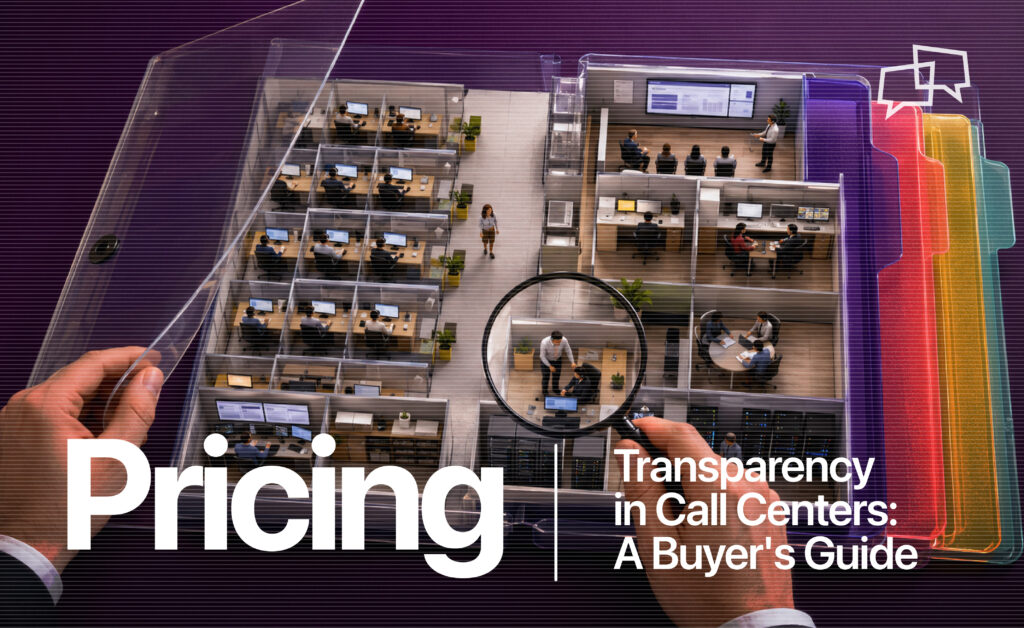
Pricing Transparency in Call Centers: A Buyer’s Guide
How to compare nearshore BPO proposals, expose hidden charges, normalize pricing models, and negotiate a contract that makes the monthly invoice predictable.
TL;DR — Quick Takeaways
- A clear agent rate is not the same as a transparent total cost.
- Ask vendors to identify every recurring fee, one-time charge, minimum, overage trigger, and pricing assumption.
- Compare proposals using the same staffing, hours, channels, languages, volume, technology, supervision, and quality scope.
- Per-minute, per-seat, FTE, transaction, and outcome-based models allocate demand risk differently.
- Technology, onboarding, training, QA, reporting, overtime, and seasonal ramp charges are common sources of budget surprises.
- Require written rate-change limits, billing definitions, service remedies, and approval for charges outside the agreement.
- A transparent provider should be able to explain the future invoice before the program begins.
82% of U.S. shoppers say clear pricing and no hidden fees are essential, and 29% want transparency in how prices are set. In call center and BPO buying, that still doesn’t guarantee a clean invoice, because a rate that looks transparent on paper can hide usage triggers, platform fees, and contract language that changes the cost.
Why Your Call Center Invoice Still Feels Surprising
The mistake most buyers make is assuming a clear hourly rate means pricing transparency. In practice, a vendor can publish a neat rate card and still leave room for charges that only show up after launch, after volume changes, or after a service review that nobody expected to be billable. The result is simple, and expensive, the invoice is “transparent” only after the money is already gone.
That’s why the consumer preference for clear pricing matters here. Eighty-two percent of U.S. shoppers in a 2025 report said clear pricing and no hidden fees are essential, and 29% demanded more transparency in how prices are set (consumer report). Buyers of nearshore call center services want the same thing, but they often get a proposal that reads cleanly while still hiding triggers for overtime, technology access, QA reviews, or minimums that don’t match actual demand.
CallZent’s outsourcing cost guide is useful here because it reflects the question every buyer should ask, what exactly is included, and what is not. If a vendor cannot show the whole cost picture upfront, you’re not buying clarity, you’re buying a low-friction sales document.
Practical rule: A transparent proposal lists every recurring fee, every one-time fee, every usage trigger, and every assumption that can change your monthly bill.
What usually gets missed
A buyer may compare two vendors and see the same agent rate, then discover the quote excludes platform licensing, reporting, supervisor coverage, bilingual staffing premiums, or a minimum seat commitment. That is where budgeting breaks down. The sticker price looked comparable, but the operating model was not.
The smarter standard is stricter. True pricing transparency means a vendor is willing to show the full cost stack, not just the headline rate. It also means the vendor can explain where the rate comes from, what workload assumptions it depends on, and which fees are conditional instead of fixed.
How Call Center Pricing Models Work
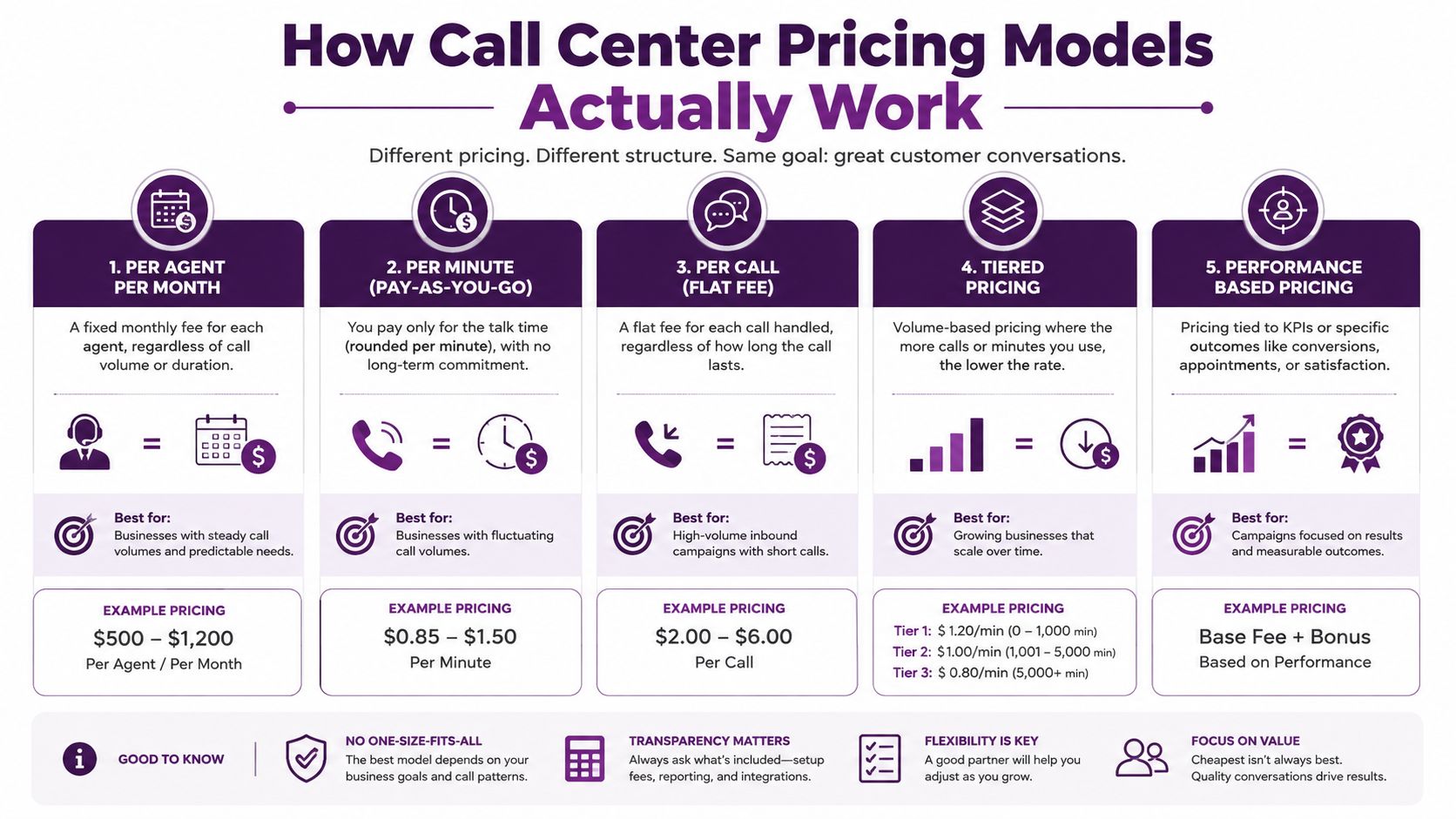
A proposal can look simple and still leave the buyer exposed. In nearshore call center buying, the pricing model decides whether you are paying for labor time, reserved capacity, managed staffing, or measured results. That choice changes who carries the risk when volume shifts, calls run long, or the scope is wider than expected.
The four models buyers see most often
- Per-minute billing: You pay for each minute handled. It can fit short, repeatable interactions, but longer bilingual calls or complex cases push the bill up quickly.
- Per-seat pricing: You pay for a fixed number of staffed agents. Budgeting is easier, but you may still cover idle capacity if demand softens.
- FTE-based pricing: You pay for a fully managed full-time equivalent. Procurement is simpler, though overhead can be folded into the rate with limited visibility.
- Outcome-based pricing: You pay against measurable results, such as resolution or satisfaction targets. It can align incentives, but only if the deliverables are written clearly and measured the same way by both sides.
A model can be logical and still work against the buyer if the assumptions are loose. Per-minute pricing can punish long bilingual conversations. Seat-based pricing can fit predictable support, but not seasonal spikes. FTE pricing can work well for steady back-office operations, yet scope creep becomes a problem if the contract does not define what sits inside the rate.
Call Center Pricing Models at a Glance
| Pricing Model | What You Pay For | Best Fit | Common Risk |
|---|---|---|---|
| Per minute | Time handled | Short, repeatable contacts | Long calls raise cost quickly |
| Per seat | Dedicated staffing | Stable demand | Idle capacity |
| FTE | Managed labor unit | Ongoing, structured support | Hidden overhead |
| Outcome based | Measured performance | Mature programs with clear KPIs | Metrics can be vague or disputed |
Before you compare vendors, review how the rate is built. CallZent’s pricing page is a practical reference point for that conversation. The headline rate only matters when the underlying model matches the actual workload.
A pricing model sets who absorbs the variance, the buyer, the vendor, or both.
What Research Shows About the Real Value of Transparent Pricing
Transparent pricing matters most when it changes bargaining power, not just perception. A 2025 natural-experiment study found that gradual disclosure of medical procedure prices reduced negotiated allowed amounts by 5.1% for surgical procedures and 9.1% for radiology procedures (PubMed study). The reduction came mainly from provider-insurer bargaining, which is a useful lesson for service buyers, price visibility helps most when the buyer can use it in negotiation.
That same research also showed the effect was uneven, with lab services showing no clear change. In business terms, that means disclosure works better for discrete, shoppable offerings than for bundled or opaque services. Call center buying behaves the same way. It’s easier to compare a defined inbound support program or a specific appointment-setting scope than a blended “customer experience solution” with vague deliverables.
Transparency only helps when the numbers are usable
A technical review found that disclosed prices become more decision-useful when they’re paired with benchmarks such as Medicare reimbursement rates, because raw prices alone don’t give buyers a fair basis for comparison (Frontiers review). The same idea applies to nearshore BPO. A quote without a reference point, scope normalization, or usage assumptions is just a number on paper.
CallZent’s total cost of ownership guide fits this lens because real purchasing decisions depend on the full economic picture, not one headline line item. If a vendor won’t help you translate their pricing into a comparable model, they’re asking you to trust the label instead of the math.
What this means for buyers
- Ask for normalized pricing: Compare the same service scope, not loosely similar titles.
- Request a benchmark: Use your own current costs, or a reference rate structure, to see whether the quote is competitive.
- Test shoppability: If the service can’t be separated into discrete units, don’t assume price transparency will automatically drive savings.
In practical terms, transparency is strongest when it exposes negotiated rates for clearly defined work. If a provider can’t define the work cleanly, then the pricing conversation is already less transparent than it appears.
Hidden Fees That Undermine Call Center Budgets
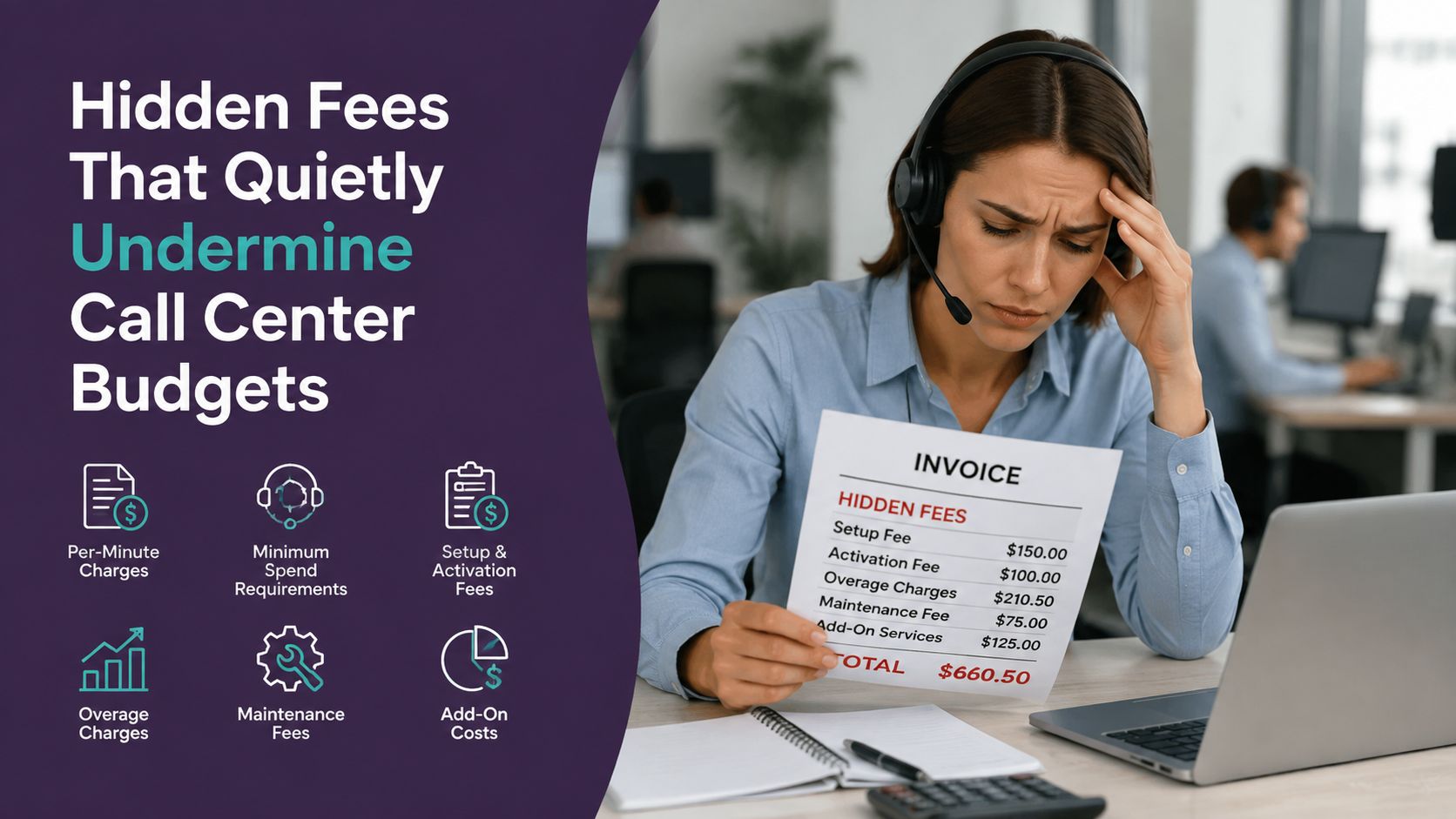
Hidden fees usually do not show up as fraud. They show up as structure. A vendor may price the core service fairly, then recover margin through add-ons that look minor on their own but change the total cost once the contract is active.
The fee patterns to watch
- Technology access charges: These are billed separately from staffing and often cover the platform the vendor says is “included.”
- Implementation or onboarding fees: These can be presented as setup work, even when they are part of getting the contract started.
- Minimum commitment penalties: You pay for volume you may not need, even when demand drops.
- Overage charges: Peak seasons, campaign swings, or higher contact rates can push you into a more expensive tier.
- QA or reporting fees: These can sound optional, then appear in the invoice as a standard operating cost.
- Escalation clauses: Annual increases tied to vague indices can expand the contract over time.
The pattern is simple. Vendors want the base rate to look competitive. If you compare only the headline price, you may choose the contract with the most attractive opening number and the least predictable final bill. That is why “transparent” pricing can still leave room for a price structure that favors the seller.
For buyers who need a fuller breakdown, this call center outsourcing cost guide is useful because it forces each line item into the open before the contract is signed.
Research on fee-inclusive pricing found that when fees are revealed, some sellers raise base prices while others lower fees, so transparency does not automatically make a market cheaper or simpler (RePEc discussion paper). It changes how sellers package the price, which means buyers have to read the structure, not just the disclosure.
Warning sign: If the pricing document says “additional fees may apply” without listing them, the contract shifts cost risk to the buyer rather than providing clarity.
For nearshore BPO buyers, the practical move is to treat every unlabeled line item as a budget threat until the vendor proves otherwise. If the fee is legitimate, it should be defined, measurable, and approved in writing before billing starts.
Vendor Evaluation Checklist and Contract Clauses
A vendor conversation should feel like an audit of assumptions, not a pitch. For bilingual nearshore support, the quote has to be readable by finance, operations, and customer experience in the same way, or billing disputes usually show up later.
Questions to ask before you sign
| Evaluation Criterion | Question to Ask Vendor | Transparent Answer Standard |
|---|---|---|
| Full fee schedule | What fees are included, and what fees are separate? | A complete line-by-line list, not a summary |
| Billable unit | What exactly counts as a minute, seat, or FTE? | A written definition tied to the contract |
| Volume assumptions | What call volume, handle time, or utilization rate is this quote based on? | Clear assumptions with stated thresholds |
| Overage handling | What happens if demand spikes? | Predefined surcharge or capacity plan, not a surprise bill |
| Service drops | What happens if service levels fall below target? | Remedies, credits, or escalation steps in writing |
| Metrics ownership | Who measures outcomes? | Independent or jointly validated reporting |
| Rate changes | How can pricing change during the term? | Written cap, notice period, and approval process |
Clauses worth pushing for
Use language that forces specificity. Weak wording says, “additional fees may apply.” Strong wording says, “all fees must be listed in this agreement, and no surcharge may be billed without prior written approval.” Weak wording says, “rates may be adjusted annually.” Strong wording says, “any increase is capped, requires written notice, and must reference the exact adjustment formula.”
Ask for a schedule that lists implementation charges, technology access, reporting, training, bilingual staffing premiums, and any minimums. If the vendor offers outcome-based pricing, require the measurement method, the reporting source, and the dispute process to be defined in writing. That is where many billing surprises begin.
A practical benchmark for clarity is simple. If an operations manager cannot forecast the invoice from the contract alone, the pricing structure still leaves too much room for cost risk. That applies whether you are buying lead generation, customer care, technical support, or back-office work.
Building a Transparent Pricing Partnership with a Nearshore Bilingual Provider
Pricing transparency works better when the provider is close enough, culturally and operationally, to keep the scope honest. Nearshore teams reduce the friction that often creates billing disputes, because faster communication makes it easier to adjust staffing, confirm assumptions, and spot mismatches before they become invoice problems.
That matters in bilingual BPO work, where scope creep often starts with small misunderstandings. A campaign can look simple in English, then become more expensive once Spanish support, escalation paths, or extra QA reviews are added without clear approval. A provider that documents cost structure carefully is usually more disciplined about staffing, training, and service boundaries too.
For buyers, the best approach is blunt. Ask for a fully itemized pricing document. Validate utilization assumptions against your real call patterns. Negotiate rate caps and escalation limits. Then schedule regular billing reviews so the finance team can compare what was promised with what was delivered.
CallZent’s nearshore pricing guide is a helpful reference point if you’re comparing how a bilingual provider frames service cost and contract structure. If you also want broader context on support operations and outsourcing models, the guide to outsourcing support offers another useful angle on how service design affects cost and accountability.
Takeaway: Pricing transparency isn’t just about seeing a rate. It’s about proving the rate can survive real usage without hidden expansion.
For a nearshore provider, that means being willing to explain the invoice before the invoice exists. It also means giving buyers enough detail to compare options, protect margin, and keep service quality intact without paying for avoidable surprises.
Get a Clear Nearshore Call Center Proposal
CallZent helps U.S. companies build bilingual support teams in Mexico with clearly defined scope, staffing, service expectations, and pricing. Bring your forecast and requirements—we will help you understand the complete cost before launch.
Request a Detailed QuoteIf you’re comparing bilingual nearshore call center options and want a pricing conversation that stays clear from the first quote to the final invoice, visit CallZent and ask for a detailed, line-by-line proposal you can review with your finance and operations teams.